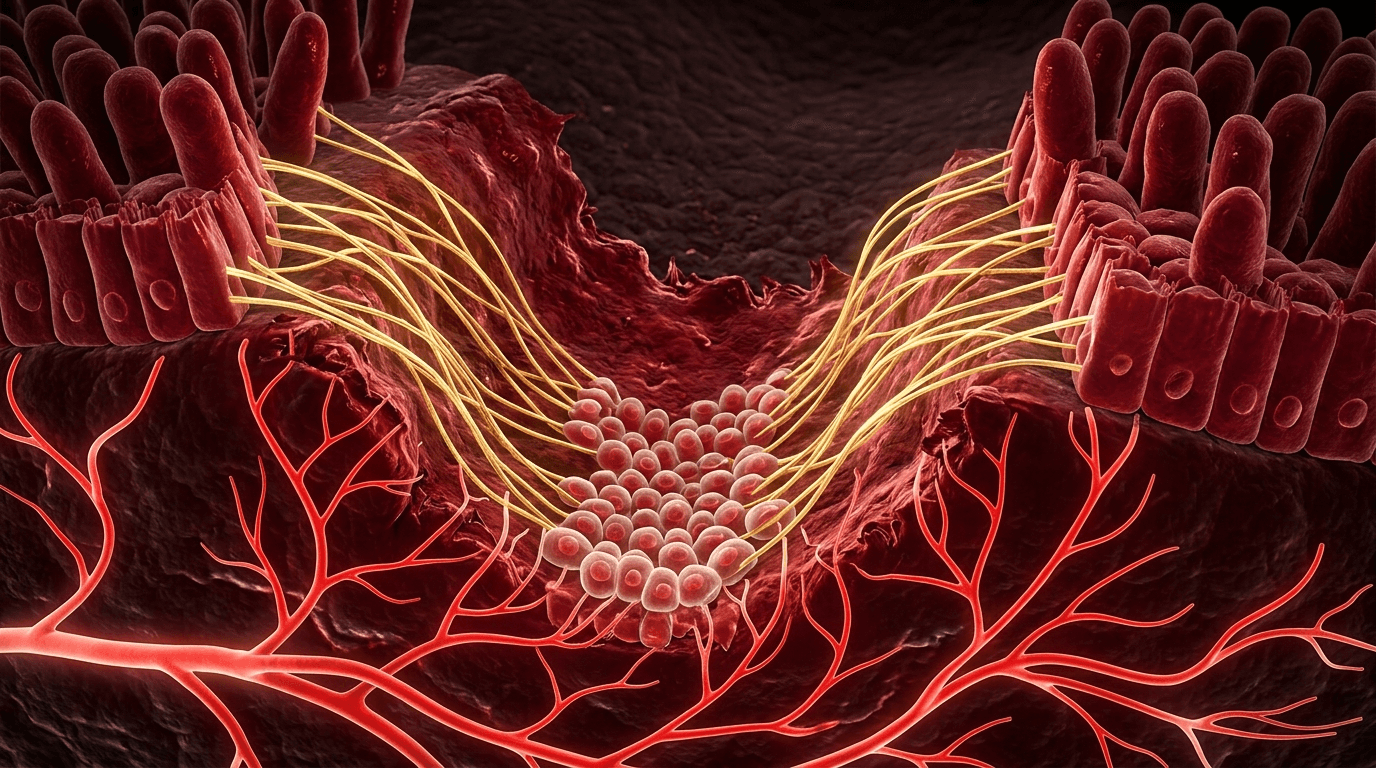
BPC-157 was removed from FDA 503A compounding lists in 2023, triggering one of the loudest regulatory controversies in the peptide space. Here is what the science actually shows about this Croatian-discovered gut peptide: healing mechanisms, oral vs SubQ debate, real evidence vs hype, and how to find verified material.
In 2023, the FDA added BPC-157 to its list of bulk drug substances that cannot be used in 503A compounding — effectively banning pharmacies from making it to prescription order. The backlash from physicians, patients, and the peptide community was immediate and loud. Congressional inquiries were filed. Multiple physicians published open letters about patients losing access to treatments that were helping their IBD, Crohn's disease, and sports injuries. The FDA's rationale cited insufficient evidence of safety and efficacy for human use. [9]
Here's the scientific irony: BPC-157 (Body Protection Compound 157) has more published animal research than almost any other peptide in this space — hundreds of studies from Dr. Predrag Sikiric's group in Zagreb, Croatia, spanning nearly three decades. The evidence for gut healing, tendon repair, wound healing, and neuroprotection in animal models is robust and consistent. The problem isn't that the research doesn't exist. The problem is that almost none of it is human RCT data.
This guide navigates that tension honestly: what the Croatian data shows and why it's compelling, why the FDA's concern isn't unreasonable from an evidentiary standard perspective, what the oral vs SubQ debate is really about, and what a rational research protocol looks like in 2026.
What Is BPC-157?
BPC-157 is a 15-amino-acid pentadecapeptide with the sequence Gly-Glu-Pro-Pro-Pro-Gly-Lys-Pro-Ala-Asp-Asp-Ala-Gly-Leu-Val. "BPC" stands for Body Protection Compound — the name given by Sikiric's group to a family of protective peptides they identified in human gastric juice. BPC-157 is a synthetic fragment derived from the larger BPC protein sequence, specifically engineered for stability (it's resistant to enzymatic degradation in the GI tract). [1]
Its stability is what makes the oral route credible: unlike most peptides, BPC-157 survives passage through the stomach and small intestine largely intact, which is why its original therapeutic rationale centered on gut disease. It was initially developed as a potential treatment for inflammatory bowel disease, gastric ulcers, and gut injury — conditions where getting the peptide to the intestinal tissue orally is more efficient than systemic injection. [2]
The wider community application — systemic healing, tendon repair, neuroprotection — extends the use case beyond the gut via SubQ or IM injection, which provides systemic bioavailability. This is the oral vs SubQ debate at its core: route of administration determines where BPC-157 concentrates, and the optimal route depends on what you're trying to heal.
How BPC-157 Works: Four Key Mechanisms
BPC-157's breadth of healing effects across tissue types — gut, tendon, muscle, bone, nerve — is explained by several converging mechanisms that are active in multiple biological systems simultaneously.
1. Angiogenesis (VEGF Upregulation)
The most well-characterized mechanism is BPC-157's potent promotion of angiogenesis — the formation of new blood vessels. This occurs through upregulation of VEGF (Vascular Endothelial Growth Factor) and nitric oxide synthesis in endothelial cells. [4,5] Angiogenesis is foundational to healing: without new blood vessel formation, tissue repair stalls because nutrients and immune cells can't reach the injury site.
This mechanism explains why BPC-157 works across such diverse tissue types — the bottleneck in healing tendons, gut tissue, muscles, and bone all involves inadequate vascular supply to the injury. BPC-157's strong pro-angiogenic effect addresses this bottleneck regardless of the specific tissue type.
2. Nitric Oxide and Growth Hormone Receptor Upregulation
BPC-157 modulates nitric oxide (NO) production and upregulates growth hormone receptors on local cells at injury sites. This growth hormone receptor upregulation means that circulating GH has more available targets to engage, effectively amplifying the healing signal from endogenous GH without requiring additional GH. [1,7]
This is why BPC-157 is commonly combined with TB-500 (thymosin beta-4) in the "Wolverine Stack" — TB-500 promotes actin polymerization and cell migration while BPC-157 drives angiogenesis and GH receptor signaling. The mechanisms are additive rather than redundant. See the Wolverine Stack guide for the combined protocol details.
The Evidence: What Sikiric's Three Decades of Research Shows
The BPC-157 evidence base is dominated by Sikiric's Zagreb research group, which has published hundreds of rodent studies across virtually every organ system. The consistency of findings across study types is striking — and the independence concern is real. Here's an honest breakdown:
| Indication | Animal Evidence | Human Evidence | Strength |
|---|---|---|---|
| GI ulcers / IBD | Extensive; multiple rodent models showing mucosal healing | No published RCTs | Strong preclinical, unproven clinical |
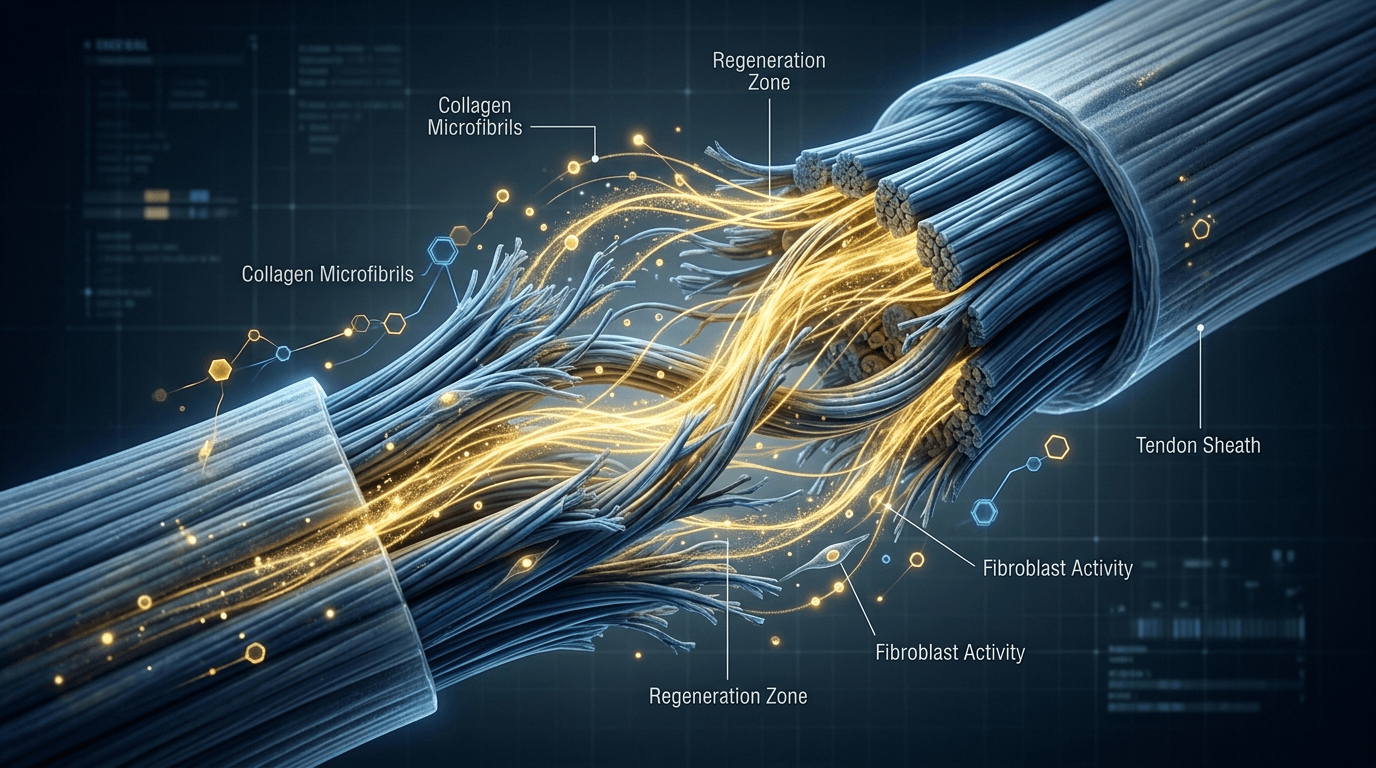
| Tendon/ligament repair | Multiple rat studies; accelerated tendon healing vs controls | No published RCTs | Strong preclinical, unproven clinical |
| Wound healing | Alkali burn, surgical wound, corneal injury models all show acceleration | No published RCTs | Strong preclinical, unproven clinical |
| Bone repair | Segmental bone defect models show enhanced callus formation | No published RCTs | Moderate preclinical |
| Neuroprotection | TBI models, spinal cord, Parkinson's models show benefit | No published RCTs | Moderate preclinical |
| NSAID gastroprotection | Prevents gastric damage in aspirin/ibuprofen rodent models | No published RCTs | Strong preclinical |
BPC-157 Healing Acceleration vs Control (Animal Studies)
Reported Healing Speed Improvement: BPC-157 vs Control Group (%)
Synthesized from PMID 21030671 (tendon), 21827393 (GI), 26203237 (wound), 29984635 (vascular). All animal data — human equivalence not established.
Oral vs SubQ: The Route of Administration Debate
The oral vs SubQ (subcutaneous injection) debate around BPC-157 is one of the most practically important questions for users, and the answer is: both routes work, but they work best for different targets.
Oral BPC-157 reaches high concentrations in the GI tract — stomach, small intestine, colon — because the peptide's stability means it survives transit largely intact. For gut-specific conditions (IBD, Crohn's, leaky gut, NSAID-induced gastric injury, reflux), oral administration is the most efficient route. Doses of 500 mcg-1 mg orally in research contexts produce detectable GI effects in animal models. The oral route is also easier, eliminates injection site reactions, and is more practical for longer-term use. [1,2]
SubQ injection provides systemic bioavailability — the peptide reaches the bloodstream and can act on tissues throughout the body: tendons, muscles, bones, the brain. For musculoskeletal injury, neuroprotective applications, or systemic healing, SubQ is the appropriate route. Some research protocols use peri-lesional injection (injecting near the injury site) for even higher local concentration.
The community debate sometimes frames oral and SubQ as competing approaches. They're actually complementary routes for different therapeutic targets. Users seeking gut healing use oral; users seeking tendon/muscle repair use SubQ; users wanting both use both.
BPC-157 Dosage Protocol
BPC-157 dosage in animal research is typically administered in microgram-per-kilogram ranges. The most common community protocols are derived from body-weight scaling of rodent effective doses:
| Route | Dose | Frequency | Cycle | Best For |
|---|---|---|---|---|
| Oral (capsule/solution) | 500 mcg - 1 mg | Once or twice daily, fasted | 4-12 weeks | GI healing, IBD, gut inflammation, NSAID protection |
| SubQ injection | 200-500 mcg | Once daily | 4-8 weeks | Systemic healing, musculoskeletal injury |
| Peri-lesional SubQ | 200-300 mcg | Once daily near injury site | 2-4 weeks | Acute tendon/ligament injury, localized healing |
| Wolverine Stack (with TB-500) | 250-500 mcg BPC + 2-2.5 mg TB-500 | BPC daily SubQ, TB-500 2× weekly | 4-6 weeks on / 4 weeks off | Comprehensive injury recovery |
Safety Profile and Side Effects
BPC-157's safety profile in animal studies is exceptionally clean — it's been administered at very high doses (far above community research doses) with no observed toxicity in rodent and other animal models. Community reports mirror this: BPC-157 is consistently described as one of the better-tolerated research peptides, with few significant adverse effects reported across thousands of user reports. [6,7]
Reported side effects are generally mild: nausea (typically dose-dependent and often resolvable by taking with food for oral use), lightheadedness (especially with fasted SubQ dosing), and injection site discomfort. There are no documented cases of serious adverse events in the published research literature.
The cancer concern sometimes raised regarding any pro-angiogenic compound deserves brief mention: VEGF upregulation theoretically could support tumor vascularity. Available animal data does not show BPC-157 promoting tumor growth; some data suggests anti-tumor properties through immune mechanism interactions. However, no human oncology safety data exists. Those with active malignancies should discuss this with an oncologist.
PeptideTech.is
EU Pharma StandardsBPC-157
Check site for current pricing
EU pharma-grade manufacturing. Third-party HPLC and mass spec COAs verify the correct 15-amino-acid sequence and molecular weight. Ships internationally with consistent batch documentation.
Modified Aminos
Oral & SubQ OptionsBPC-157
Check site for current pricing
US-based with batch-specific third-party testing. Both lyophilized powder (for injection) and oral capsule formulations available. COAs on request.
AminoUSA
US DomesticBPC-157
Check site for current pricing
US domestic shipping. BPC-157 is one of their flagship products with consistent stock. Multiple quantity options for longer research protocols.
VANDL Labs
Free BAC WaterBPC-157
Check site for current pricing
Free BAC water included on orders over $200. Accredited third-party COAs. Good value for Wolverine Stack bundles (BPC-157 + TB-500).
Frequently Asked Questions
Why did the FDA ban BPC-157 from compounding pharmacies?
In 2023, the FDA added BPC-157 to its list of bulk drug substances that cannot be used by 503A compounding pharmacies (those filling individual patient prescriptions). The stated rationale was insufficient evidence of safety and efficacy to meet the standard required for compounding eligibility. Critics noted the irony that hundreds of animal studies exist but no human RCTs have been conducted — largely because the compound exists in regulatory limbo that discourages investment in human trials. The ban applies to 503A pharmacies but not to 503B outsourcing facilities, and BPC-157 remains legal to possess and use for research purposes.
Should I take BPC-157 orally or inject it?
The answer depends on your target. For GI healing (IBD, leaky gut, GERD, gastric ulcers, NSAID-induced damage), oral is most efficient because it delivers high concentrations directly to intestinal tissue without needing systemic absorption. For musculoskeletal healing (tendons, ligaments, muscles, joints), SubQ injection provides the systemic bioavailability needed to reach those tissues. For systemic and general recovery, SubQ is preferred. Many researchers use both simultaneously when treating overlapping conditions.
How long does BPC-157 take to work?
Community reports suggest initial effects within 1-2 weeks for acute injury applications, with more complete healing effects at 4-8 weeks. Animal studies show measurable acceleration of healing within days, but the degree of acceleration in humans, and the appropriate duration of treatment, has not been formally studied. For gut conditions, some users report symptomatic improvement within 1-2 weeks; for tendon injuries, meaningful improvement typically takes 3-6 weeks of consistent use.
Is BPC-157 safe long-term?
No long-term human safety study exists. Animal data across decades of Sikiric's research shows an exceptionally clean safety profile even at high doses, and there is no published evidence of harm from long-term BPC-157 use in animals. The community experience with repeated cycles over years is broadly positive with no major safety signals. However, "no evidence of harm in animals and a safe community experience" is not the same as "formally proven safe for long-term human use" — that data simply does not exist yet.
Can BPC-157 heal leaky gut?
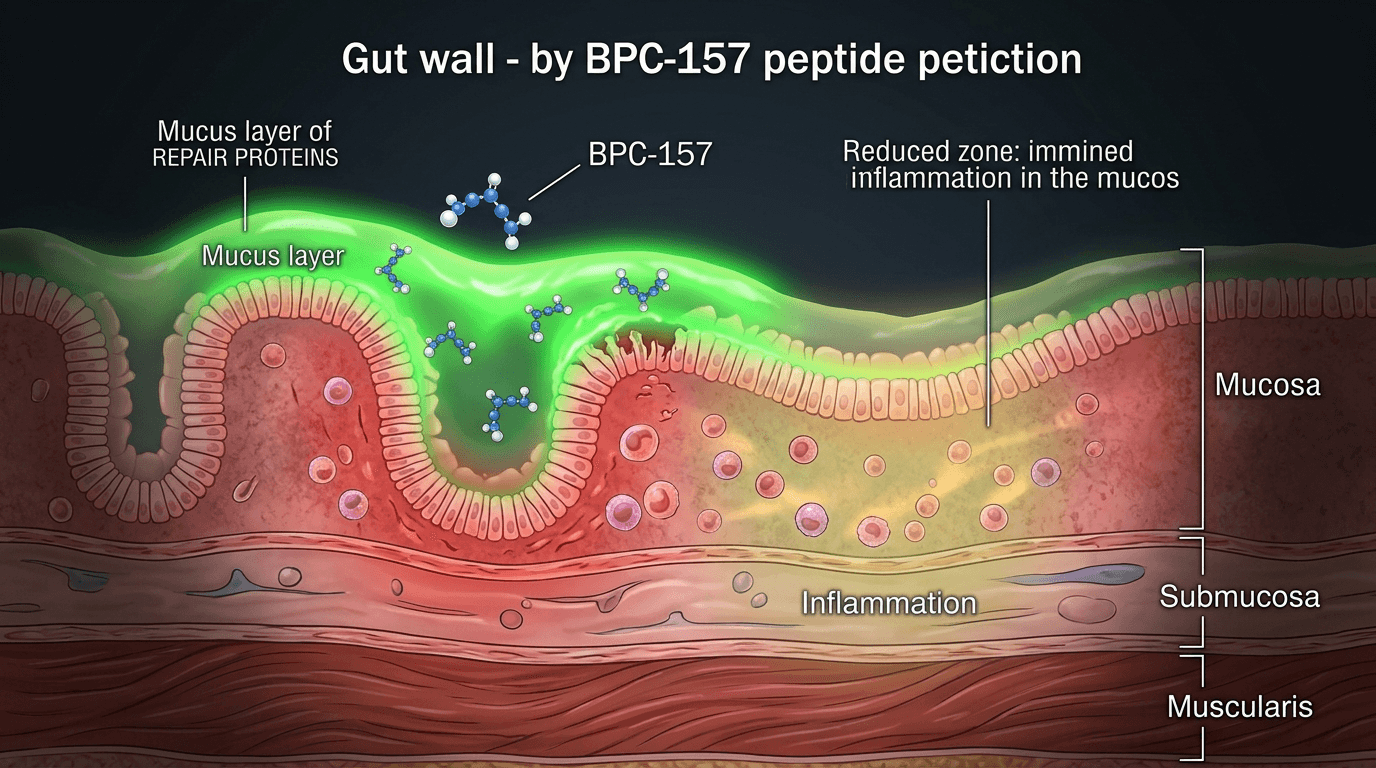
This is one of the most searched BPC-157 questions and the most supported by its mechanism. "Leaky gut" (intestinal permeability) involves damage to tight junctions between intestinal epithelial cells. BPC-157 promotes epithelial cell proliferation and migration, upregulates protective mucus layer proteins, and drives angiogenesis in the intestinal mucosa — all of which directly address the mechanism of intestinal permeability. Multiple animal IBD models show significant mucosal healing. Human data is absent, but the mechanistic case is strong.
Can I stack BPC-157 with other peptides?
BPC-157 stacks well with TB-500 (thymosin beta-4) in the Wolverine Stack for comprehensive injury recovery. It is also commonly combined with CJC-1295/Ipamorelin for faster overall recovery and body composition, since GH secretagogues complement BPC-157's GH receptor upregulation mechanism. Some researchers stack it with Thymosin Alpha-1 for immune modulation alongside healing — particularly for autoimmune gut conditions where both healing and immune regulation are needed.
The Bottom Line on BPC-157
BPC-157 sits in a frustrating position: extraordinary preclinical evidence, regulatory obstacles that have prevented human trials, and a growing community of people reporting meaningful healing effects that they're unable to discuss with most physicians. The FDA's 503A ban doesn't reflect a judgment that BPC-157 is dangerous — it reflects the absence of human clinical trial data meeting the evidentiary standard for compounding eligibility. Those are different things. [9]
The consistency of BPC-157's pro-angiogenic, anti-inflammatory, and tissue-regenerative effects across diverse tissue types and animal models — studied over nearly 30 years by Sikiric's group — is genuinely unusual in the peptide space. Most peptides have one or two replicated findings; BPC-157 has hundreds. The limitation is the source concentration: independent replication by labs outside Zagreb is needed and largely lacking. [7]
The practical guidance for 2026: oral BPC-157 for gut-specific conditions, SubQ for musculoskeletal injury, and peri-lesional for acute injuries. Start at lower doses, cycle appropriately, and use verified sources with sequence confirmation via COA. For live pricing, see PeptideWiki's comparison tool. For the combined healing stack, see the Wolverine Stack guide.
Sources & References
- 1.Sikiric P, Seiwerth S, Rucman R, Turkovic B, Rokotov DS, Brcic L, Sever M, Klicek R, Radic B, Drmic D, Ilic S, Kolenc D, Aralica G, Stupnisek M, Suran J, Balenovic D, Kos J. "Stable gastric pentadecapeptide BPC 157: novel therapy in gastrointestinal tract" — Current Pharmaceutical Design, 2011. DOI: 10.2174/138161211797361452.View source
- 2.Sikiric P, Seiwerth S, Rucman R, Kolenc D, Batelja Vuletic L, Drmic D, Grgic T, Strbe S, Zukanovic G, Crvenkovic D, Madzarac G, Hrabar D, Sucic M, Baric M, Ziger T, Kujundzic M, Sever M, Holjevac J, Klicek R, Tvrdeic A, Berkopic L. "Brain-gut Axis and Pentadecapeptide BPC 157: Theoretical and Practical Implications" — Current Neuropharmacology, 2016. DOI: 10.2174/1570159X13666151104103828.View source
- 3.Chang CH, Tsai WC, Lin MS, Hsu YH, Pang JH. "The promoting effect of pentadecapeptide BPC 157 on tendon healing involves tendon outgrowth, cell survival, and cell migration" — Journal of Applied Physiology, 2011. DOI: 10.1152/japplphysiol.00945.2010.View source
- 4.Sikiric P, Drmic D, Sever AZ, Radic B, Slak Justic M, Anic T, Zoricic I, Seiwerth S. "Pentadecapeptide BPC 157 and Angiogenesis" — Current Pharmaceutical Design, 2018. DOI: 10.2174/1381612824666180706093907.View source
- 5.Huang T, Zhang K, Sun L, Xue X, Zhang C, Shu Z, Mu N, Gu J, Zhang W, Wang Y, Zhang Y, Bhatt DL. "Body protective compound-157 enhances alkali-burn wound healing in vivo and promotes proliferation, migration, and angiogenesis in vitro" — Drug Design Development and Therapy, 2015. DOI: 10.2147/DDDT.S82030.View source
- 6.Sikiric P, Seiwerth S, Rucman R, Turkovic B, Drmic D, Ilic S, Kolenc D, Vrcic H, Sebecic B, Buljat G, Balenovic D, Aralica G. "Toxicity by NSAIDs. Counteraction by stable gastric pentadecapeptide BPC 157" — Current Pharmaceutical Design, 2013. DOI: 10.2174/1381612811319060011.View source
- 7.Novaes RD, Sarandy MM, Goncalves RV, Freitas MB. "Review Article: Stable Gastric Pentadecapeptide BPC 157 as Promising Candidate for Clinical Use" — Frontiers in Pharmacology, 2021. DOI: 10.3389/fphar.2021.627156.View source
- 8.Sikiric P, et al. "Therapeutic Efficacy of the Stable Gastric Pentadecapeptide BPC 157 Dramatically Shows Up in the Heroin-Treated Rats" — Journal of Physiology and Pharmacology, 2019.View source
- 9.US FDA Center for Drug Evaluation and Research. "Bulk Drug Substances Nominated for Use in Compounding Under Section 503A of the FD&C Act — BPC-157 Removal Notice" — FDA Docket FDA-2023-N-1217, 2023.View source