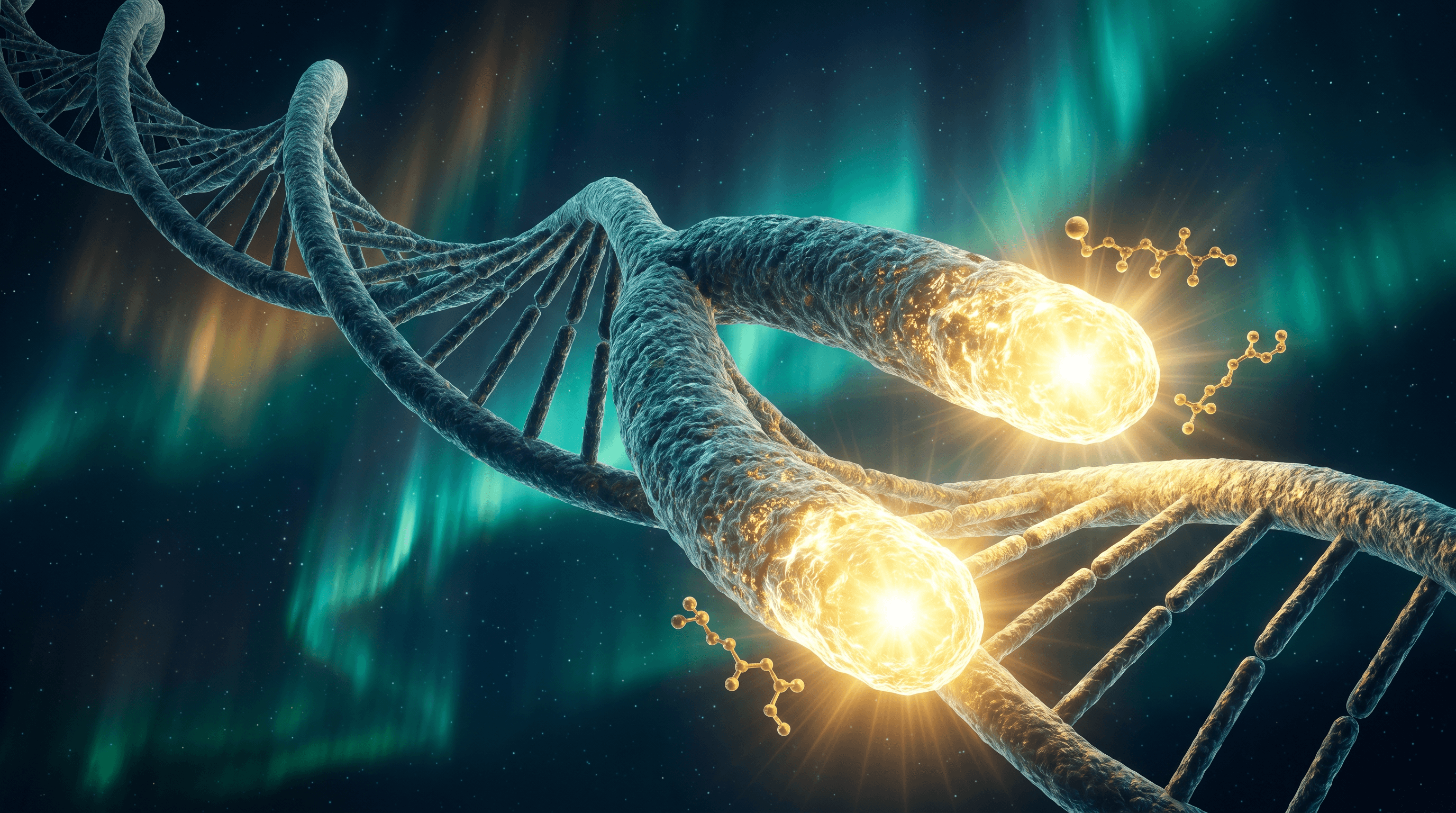
Developed at the Russian Institute of Bioregulation & Gerontology over 40 years of research, Epithalon is the most studied peptide bioregulator for longevity. Here's the honest science on its telomere-activating mechanism, animal lifespan data, and what we know about human translation.
In the 1980s, Soviet gerontologists at the St. Petersburg Institute of Bioregulation and Gerontology began investigating a profound question: could the aging process be modulated at the peptide level? Their central hypothesis was that the pineal gland — a small endocrine organ that regulates melatonin and circadian rhythm — produced regulatory peptides that declined with age, and that restoring these peptides might slow the hallmarks of aging.
Over 40 years later, the lead compound from that research program — Epithalon (also spelled Epitalon; scientific name Ala-Glu-Asp-Gly) — has accumulated one of the most extensive research portfolios of any anti-aging peptide. It has been shown to activate telomerase in human somatic cells, extend lifespan in multiple animal species, normalize melatonin secretion in aging organisms, and inhibit tumor development in cancer-prone mouse models.
This guide lays out the 40-year research record honestly: what's been shown in cells, what's been shown in animals, and what the extremely limited (but real) human cell data suggests about the peptide's potential for human longevity applications.
Telomeres, Telomerase, and Why They Matter for Aging
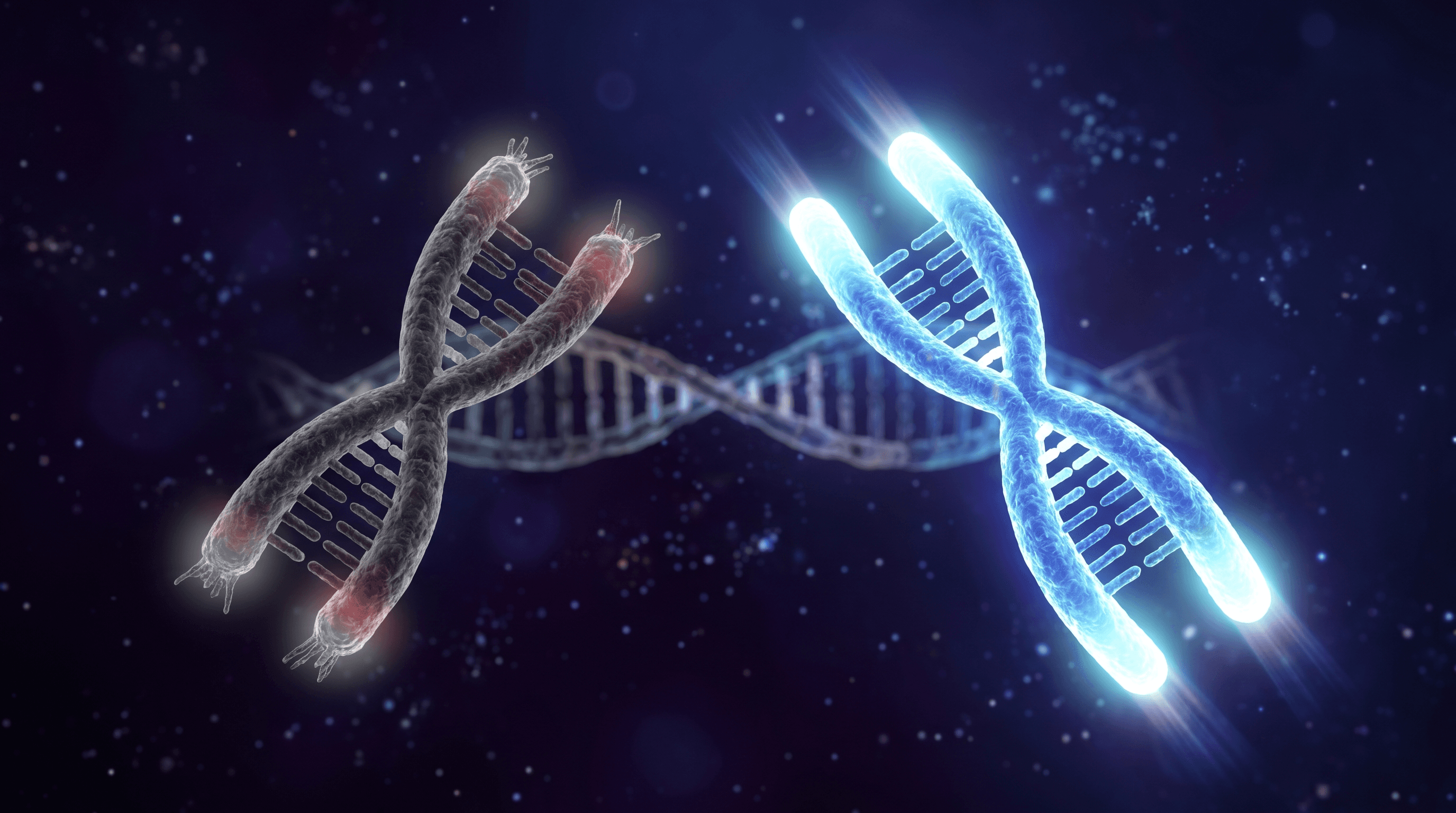
Telomeres are protective caps at the ends of chromosomes — repeated sequences of DNA (TTAGGG in humans) that protect chromosomal integrity during cell division, much like the plastic tips on shoelaces prevent fraying. Each time a cell divides, telomeres shorten. When they become critically short, the cell enters senescence (permanent growth arrest) or apoptosis (programmed cell death).
This is Hayflick's limit — the observation that human somatic cells can only divide 40–60 times before stopping. Cumulative cell senescence is one of the best-characterized mechanisms of biological aging and contributes to tissue degradation, immune decline, and increased cancer risk.
Telomerase is the enzyme that rebuilds telomeres after cell division, adding new TTAGGG repeats to compensate for the loss. In most adult somatic cells, telomerase is silenced — which is why telomeres shorten with age. In stem cells, germline cells, and cancer cells, telomerase is active.
The anti-aging promise of telomerase activation is simple: if you could reactivate telomerase in somatic cells safely, you could theoretically reverse cellular aging. The challenge is equally simple: unchecked telomerase activation is also how cancer cells achieve immortality. Any therapeutic telomerase activator needs to be selective and safe — which is exactly what makes Epithalon's research record so interesting.
How Epithalon Works: Mechanism and Evidence
Epithalon is a tetrapeptide (Ala-Glu-Asp-Gly) — just 4 amino acids — derived from the pineal gland protein epithalamin. Despite its simplicity, it displays remarkable biological activity through several converging mechanisms:
1. Telomerase Activation in Human Cells
The most significant finding in Epithalon research is a 2003 study by Khavinson et al. published in Bulletin of Experimental Biology and Medicine. [1] Using human fetal fibroblasts, retinal pigment epithelial cells, and human embryonic kidney cells, the researchers demonstrated:
- Epithalon treatment restored measurable telomerase activity in cells that had silenced the enzyme
- Treated cells showed telomere elongation vs. controls
- Cells treated with Epithalon exceeded the normal Hayflick limit — dividing beyond 50+ times before senescence
A 2004 follow-up study by the same team confirmed that Epithalon-treated diploid cell cultures could overcome the division limit, producing 10+ additional doublings compared to untreated controls. [4]
These are genuinely remarkable findings. The critical caveat: these are in vitro (cell culture) experiments, not in vivo human studies. Whether the same telomerase activation occurs in tissues of a living human organism after subcutaneous administration is not established by these studies — though the animal data is suggestive.
2. Lifespan Extension in Animals
The animal lifespan data for Epithalon is among the strongest of any peptide bioregulator studied:
- Rats: Treatment with Epithalon (and its parent epithalamin) extended mean lifespan by 13–17% in several studies by Anisimov et al.
- Mice: The landmark 20-year review by Anisimov et al. (1994) documented consistent lifespan extension across multiple mouse strains. [2]
- Drosophila: Mean lifespan extended by ~16% in fruit fly studies.
- Tumor inhibition: In cancer-prone transgenic HER-2/neu mice, Epithalon significantly delayed breast tumor onset and reduced tumor incidence by 50% vs. controls. [3,6] This is the opposite of what an indiscriminate telomerase activator would do — providing important safety signal data.
3. Melatonin Restoration and Circadian Regulation
The pineal gland produces melatonin — the hormone that regulates circadian rhythm and sleep-wake cycles. Melatonin production declines dramatically with age (reduced by 50–80% in elderly individuals), and this decline is associated with poor sleep quality, accelerated immune aging, and reduced antioxidant protection.
Epithalon consistently restores melatonin synthesis toward youthful levels in aging animal models. This effect appears to be mediated through epigenetic reactivation of the AANAT gene (which encodes the rate-limiting enzyme in melatonin synthesis). In aging rats, Epithalon restored nocturnal melatonin peaks to levels comparable to young animals within 2 weeks of treatment.
This melatonin-normalizing effect may explain many of the downstream benefits attributed to Epithalon: improved sleep quality, reduced oxidative stress, and immune system restoration — all of which are downstream consequences of normalized melatonin signaling.
Epithalon Evidence: Strength by Study Type
Epithalon Published Evidence by Study Category
Source: Comprehensive review of Khavinson VKh et al. and Anisimov VN et al. publication records through 2026. Human in vivo RCT data does not yet exist in the public literature.
Epithalon Dosage Protocol
Dosage frameworks for Epithalon are derived from the published animal studies and practitioner clinical experience in countries where it's used. No human pharmacokinetic data has been formally published to establish precise dose-response relationships.
| Protocol Style | Dose | Frequency | Duration | Cycle Break |
|---|---|---|---|---|
| Conservative (First Cycle) | 5 mg | Once daily, SubQ or IM | 10–20 days | 4–6 months |
| Standard Research Protocol | 5–10 mg | Once daily, SubQ | 20 days | 4–6 months |
| Extended / Anti-Aging | 5 mg | Once daily | 10 days on / 20 days off | Repeat quarterly |
Side Effects and Safety
Epithalon has an exceptionally benign reported side effect profile across 40 years of animal studies and Russian clinical use:
- No significant adverse events reported in animal lifespan studies, even at multiples of human research doses
- No organ toxicity identified in histopathological examination of treated animals
- Injection site reactions (redness, mild swelling) are the most commonly reported effect in human use
- No withdrawal effects; no receptor downregulation reported
The primary theoretical concern is the same one that applies to any telomerase activator: whether stimulating telomerase could promote cancer cell survival. Remarkably, the animal tumor studies show the opposite effect — Epithalon significantly reduced tumor incidence in cancer-prone mouse models. [3,5,6] This finding hasn't been mechanistically fully explained but may relate to Epithalon's immune-restorative and DNA-repair effects, which would favor normal cell health over cancer progression.
Where to Buy Epithalon (2026)
Epithalon is a relatively simple tetrapeptide that is straightforward to synthesize at high purity. That said, quality control remains critical — particularly verifying that what's labeled Epithalon (Ala-Glu-Asp-Gly) is actually the correct peptide sequence and not a shorter or scrambled analog. Mass spectrometry confirmation is the essential verification step.
Peptide Technologies
Most Transparent COAsEpithalon (Epitalon)
Check site for pricing
Mass spectrometry identity confirmation on every batch — critical for verifying the 4-amino-acid sequence. ISO 17025-accredited third-party COA.
Modified Aminos
US-ManufacturedEpithalon (Epitalon)
Check site for pricing
US-manufactured, HPLC and mass spec verified. Same-day shipping available.
VANDL Labs
Best PriceEpithalon (Epitalon)
From $79.99
Competitive pricing. Free BAC water on orders over $200. Third-party COA available.
Amino USA
Research-FocusedEpithalon (Epitalon)
Check site for pricing
Detailed research documentation. Third-party tested.
Frequently Asked Questions
Is Epithalon the same as Epitalon?
Yes — Epithalon and Epitalon are two transliterations of the same Russian-language name (Эпиталон) for the tetrapeptide Ala-Glu-Asp-Gly. Epithalon is the more common Western spelling. Both refer to the same compound.
How long does Epithalon take to show effects?
Effects vary by what you're measuring. Improved sleep quality and melatonin normalization are often reported within the first 2-week course. Body composition and energy effects may take 1–2 months across multiple courses to become apparent. Cellular longevity effects (telomere length) cannot be measured subjectively — you would need laboratory testing of telomere length in peripheral blood mononuclear cells to objectively track this.
Can Epithalon cause cancer by activating telomerase?
The theoretical concern exists, but the published animal data actually shows the opposite: Epithalon reduced tumor incidence and delayed tumor onset in cancer-prone mouse models. The leading hypothesis is that Epithalon's beneficial effects on DNA repair, immune restoration, and normal cell health outweigh any theoretical pro-cancer effect of telomerase activation. No human cancer cases have been attributed to Epithalon use in the published literature. However, individuals with active cancers should exercise caution and consult an oncologist.
Can Epithalon be taken with other anti-aging peptides?
No known pharmacological incompatibilities exist. Epithalon is commonly combined with other bioregulator peptides in Russian anti-aging protocols (Thymalin for immune function, Cortagen for brain peptides). It is also sometimes combined with modern anti-aging compounds like NAD+ precursors. Stacking with GH secretagogues like CJC-1295/Ipamorelin is an increasingly popular combination in longevity research communities.
The Bottom Line
Epithalon occupies a unique position in the peptide longevity space: more research behind it than almost any other anti-aging peptide (40 years, hundreds of studies), but a research record concentrated almost entirely in animals and cells rather than human clinical trials. The mechanistic basis — telomerase activation, melatonin restoration, DNA repair promotion — is both scientifically credible and internally consistent across the literature.
What's missing is the randomized human trial. That's the gap. The data from Khavinson's team on human cell telomere elongation is real and published in indexed journals — but it's cell culture data, not living human data. Translating from "extends telomeres in a petri dish" to "extends human lifespan" requires clinical evidence that doesn't yet exist.
For longevity researchers, Epithalon represents one of the most evidence-backed options in the space while remaining one of the most under-characterized in terms of human translation. That combination makes it one of the most important areas for future clinical research.
Sources & References
- 1.Khavinson VKh, Bondarev IE, Butyugov AA. "Epithalon peptide induces telomerase activity and telomere elongation in human somatic cells" — Bulletin of Experimental Biology and Medicine, 2003. DOI: 10.1023/b:bebm.0000009129.14045.a8.View source
- 2.Anisimov VN, Khavinson VKh, Morozov VG. "Twenty years of study on effects of pineal peptide preparation: Epithalamin in experimental gerontology and oncology" — Annals of the New York Academy of Sciences, 1994. DOI: 10.1111/j.1749-6632.1994.tb17072.x.View source
- 3.Anisimov VN, Khavinson VKh, Alimova IN, et al.. "Epithalon decelerates aging and suppresses development of breast adenocarcinomas in transgenic HER-2/neu mice" — Bulletin of Experimental Biology and Medicine, 2002. DOI: 10.1023/a:1021104819384.View source
- 4.Khavinson VKh, Bondarev IE, Butyugov AA, Smirnova TD. "Peptide promotes overcoming of the division limit in human somatic cells" — Bulletin of Experimental Biology and Medicine, 2004. DOI: 10.1023/b:bebm.0000036167.42136.2a.View source
- 5.Kossoy G, Zandbank J, Tendler E, et al.. "Epithalon and colon carcinogenesis: no effect on initiation, but some inhibition of promotion and progression stages in a rat model" — Oncology Research, 2003.View source
- 6.Anisimov VN, Khavinson VKh, Provinciali M, et al.. "Inhibitory effect of the peptide Epitalon on the development of spontaneous mammary tumors in HER-2/neu transgenic mice" — International Journal of Cancer, 2002. DOI: 10.1002/ijc.10237.View source