Thymosin Alpha-1 (thymalfasin / Zadaxin) is approved in 37+ countries for hepatitis B and C but not in the US. It has been used as a cancer immunotherapy adjunct in China for decades and is now emerging as a Long COVID immune restoration tool. Here is the complete science behind the most clinically validated immune peptide.
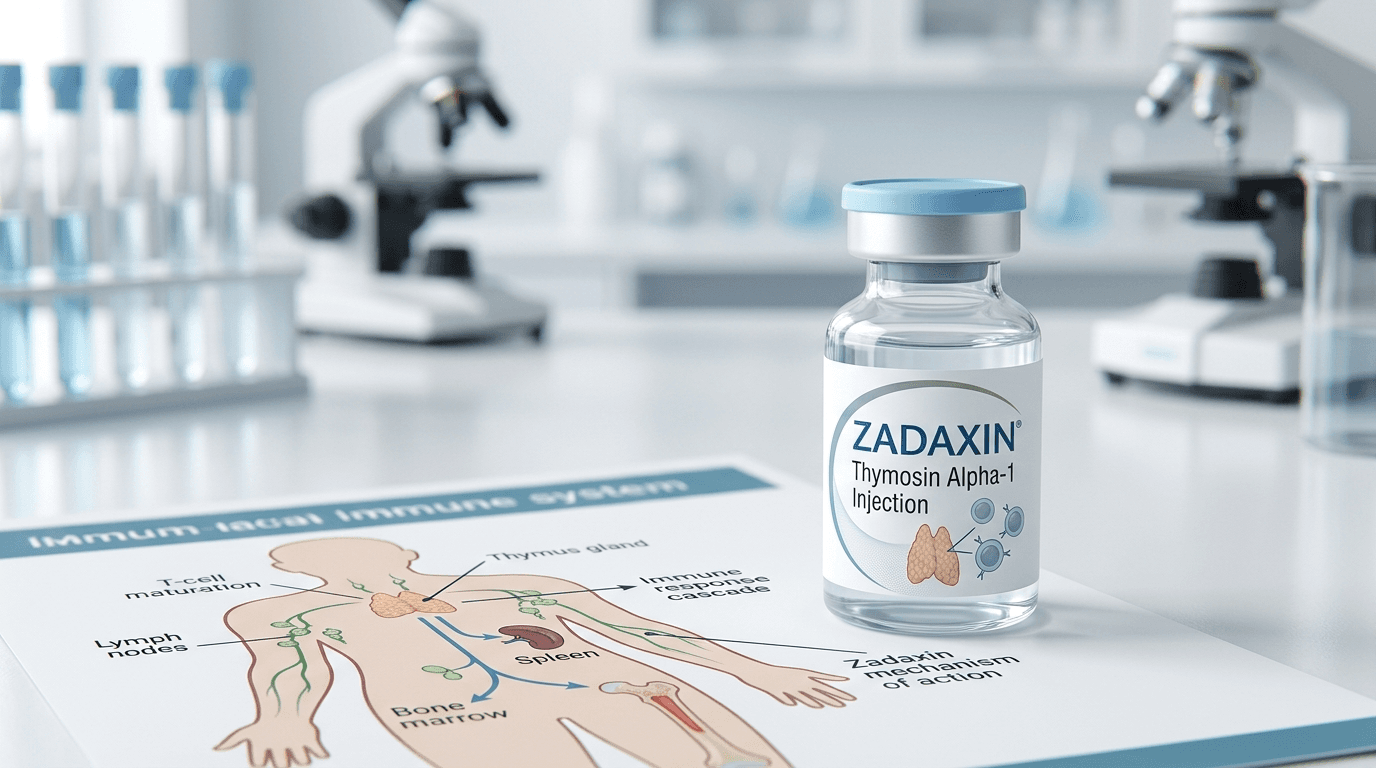
Thymosin Alpha-1 (Ta-1, thymalfasin, brand name Zadaxin) has something almost no other compound in the research peptide space can claim: it is approved by regulatory agencies in 37+ countries, has been used in clinical practice for over two decades, and has a safety profile characterized across tens of thousands of patients in published trials. [1,9]
The United States is not on that list. The FDA has not approved Zadaxin, citing insufficient evidence from US-standard RCTs — a regulatory gap that leaves American patients accessing it through research channels while patients in China, Italy, Southeast Asia, and much of the developing world receive it by prescription for hepatitis B, hepatitis C, and immune deficiency.
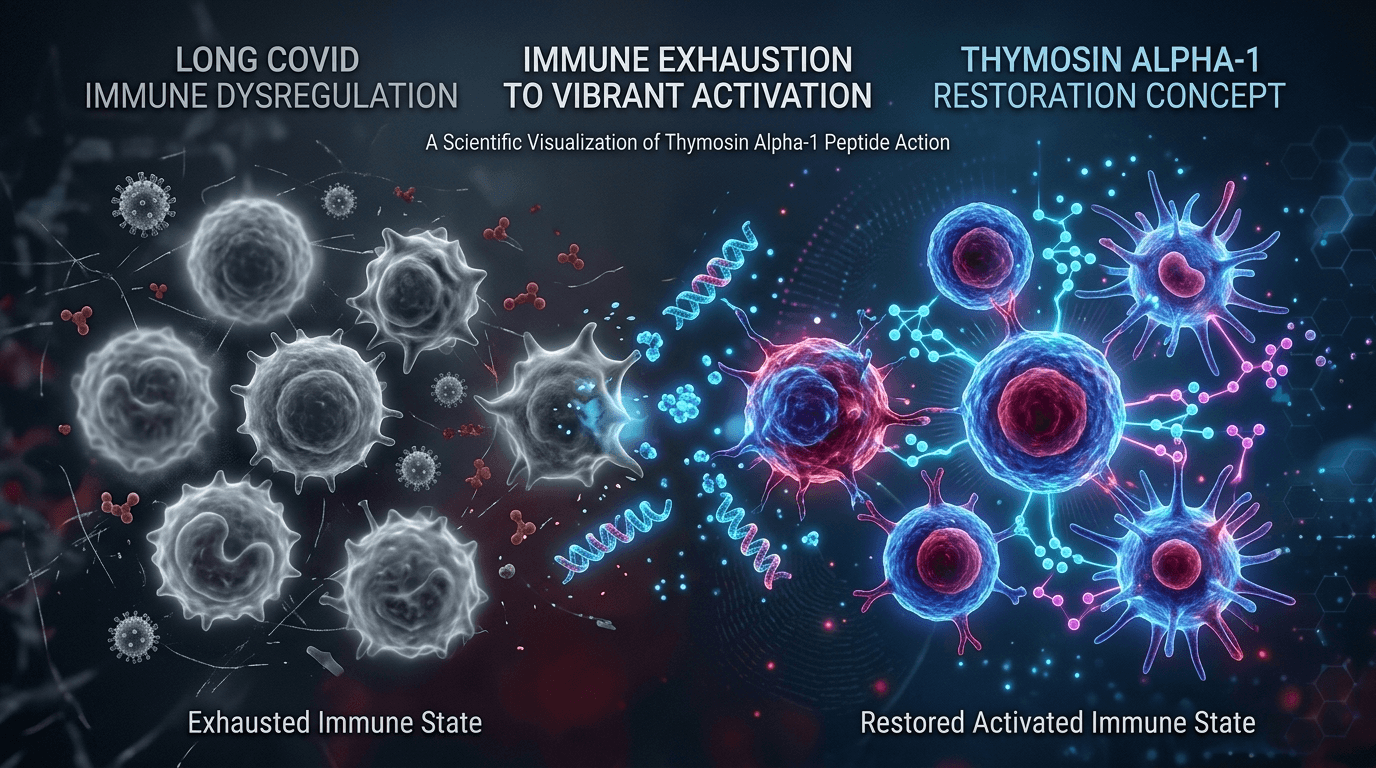
The emergence of Long COVID as a major public health problem has given Thymosin Alpha-1 renewed attention: its mechanism — restoration of T cell function, promotion of Th1 immune responses, and reduction of immune exhaustion — maps directly onto the immune pathology documented in Long COVID and post-acute sequelae of SARS-CoV-2. Multiple Chinese RCTs published in 2020-2021 showed dramatic reductions in COVID-19 severity and mortality with Ta-1 treatment. [5,6] This is not anecdote — it is human trial data.
What Is Thymosin Alpha-1?
Thymosin Alpha-1 is a 28-amino-acid peptide naturally produced by the thymus gland. It was first isolated in 1977 by Dr. Allan Goldstein and colleagues at George Washington University from thymosin fraction 5 — a natural thymic extract that had shown immune-restorative properties in animal studies and early human trials.
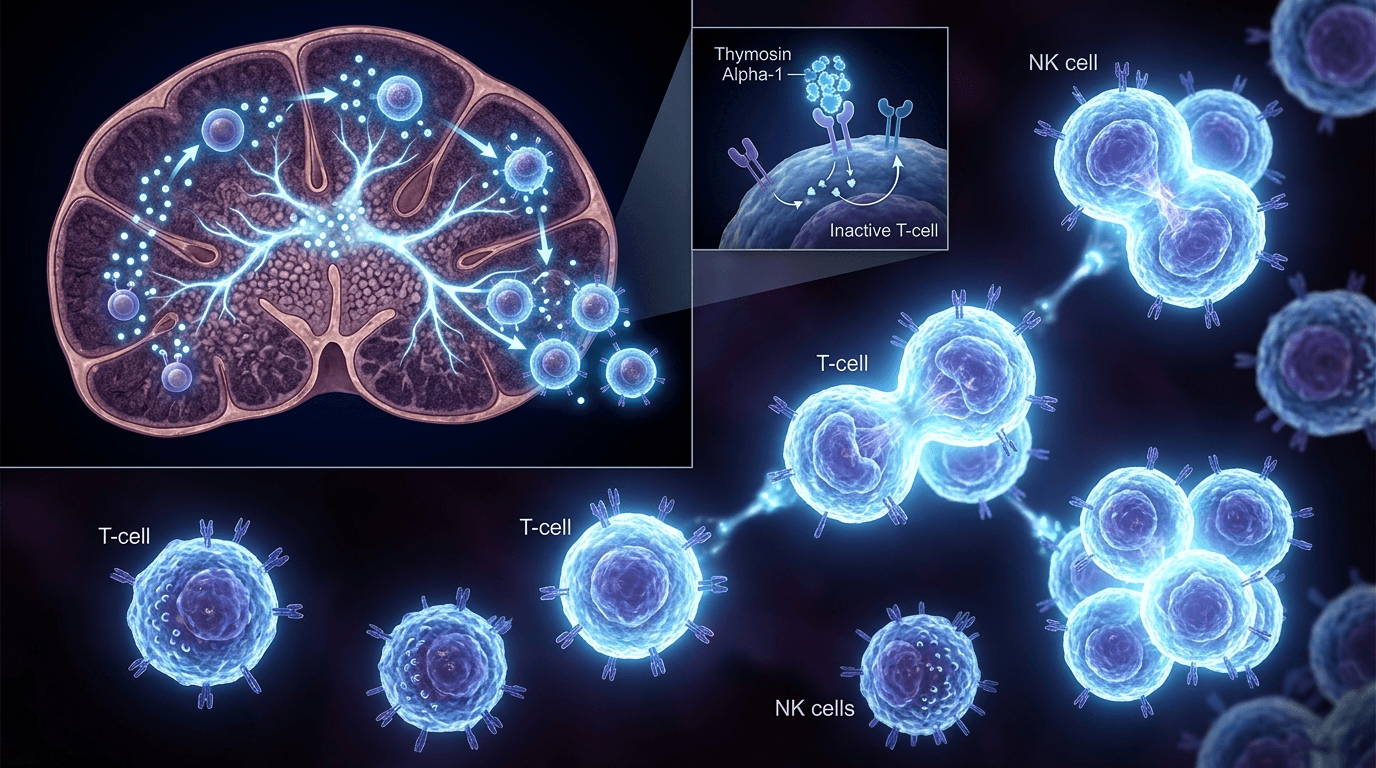
The thymus gland is the master organ of T cell maturation. It's where naive T cells go to become educated and differentiated into the various T cell subtypes that drive adaptive immunity. The thymus is most active in youth and involutes progressively with age — a process called thymic involution that contributes significantly to immune aging. Thymosin Alpha-1 is one of the primary thymic hormones that coordinates this T cell education process. [1,8]
As the thymus involutes with age, thymosin alpha-1 production declines, T cell output decreases, and immune competence deteriorates. This is why the elderly are more vulnerable to infections, less responsive to vaccines, and more susceptible to cancer immune evasion. Ta-1 supplementation addresses the hormonal decline associated with thymic involution.
How Thymosin Alpha-1 Works: TLR Signaling and Th1 Polarization
Thymosin Alpha-1 exerts its immune effects through multiple intersecting mechanisms. The most important are:
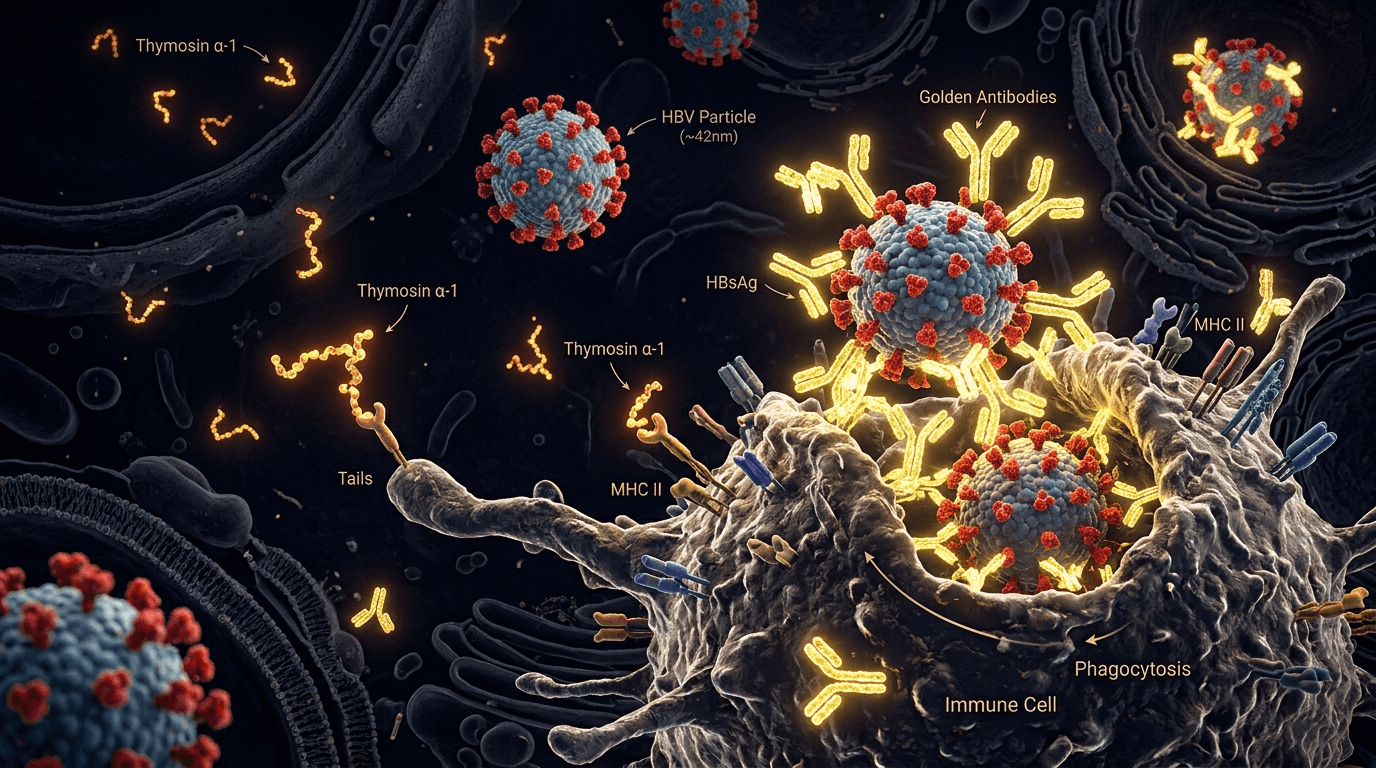
- TLR-2 and TLR-9 activation — Ta-1 activates Toll-like receptors 2 and 9 on dendritic cells and macrophages, triggering innate immune activation and downstream adaptive immune priming. [2]
- Th1 polarization — Ta-1 promotes interferon-gamma (IFN-γ) production and drives CD4+ T cell differentiation toward Th1 (cellular immunity) rather than Th2 (antibody/allergy) phenotype. This is critical for antiviral and anti-tumor immunity.
- NK cell activation — Natural killer cell cytotoxicity is enhanced by Ta-1, improving surveillance against virally infected cells and tumor cells.
- T cell exhaustion reversal — In chronic viral infections and some cancers, T cells become "exhausted" — they lose their killing function. Ta-1 has demonstrated ability to reverse exhaustion markers including PD-1 and TIM-3 expression. [6]
- Regulatory T cell (Treg) modulation — Ta-1 can modulate excessive inflammatory responses by calibrating Treg activity, providing both immune activation and immune regulation depending on the pathological state.
Clinical Evidence: What the Human Trials Show
Unlike most research peptides, Thymosin Alpha-1 has a substantial human trial evidence base. The clinical data spans hepatitis, cancer, COVID-19, and immune deficiency across multiple countries and research groups — not limited to a single lab.
Hepatitis B and C: The Foundation Evidence
The original approved indication for Zadaxin is hepatitis B treatment. A 2014 systematic review and meta-analysis in World Journal of Gastroenterology analyzed 16 randomized trials comparing Thymosin Alpha-1 to interferon-alpha for chronic hepatitis B, finding comparable efficacy with significantly better tolerability — Ta-1 produces none of the flu-like symptoms and psychiatric effects that make interferon therapy so difficult for patients. [3]
Hepatitis C data showed similar patterns: Ta-1 combined with standard antiviral therapy produced higher sustained virologic response rates than antivirals alone in multiple trials. The approval of direct-acting antivirals (DAAs) for hepatitis C in 2014-2016 reduced the relevance of Ta-1 for HCV specifically, but the immune restoration data remains valid and applicable to other chronic viral conditions.
COVID-19: The Most Recent Human Data
The COVID-19 pandemic generated a surge of Thymosin Alpha-1 clinical trials in China, where Zadaxin is approved and rapidly accessible. The 2020 paper in Clinical Infectious Diseases by Zhang et al. (with 80+ co-authors from multiple Chinese hospitals) showed that Ta-1 treatment in severe COVID-19 patients significantly reduced lymphocytopenia (the dangerous drop in lymphocyte count seen in severe COVID), reduced T cell exhaustion markers, and was associated with 30-day mortality reduction. [6]
A 2021 meta-analysis confirmed these findings across multiple trials. The mechanism makes complete pathophysiological sense: severe COVID-19 is characterized by T cell lymphodepletion and exhaustion — exactly the immune dysfunction Ta-1 addresses. This data is not from biohacking forums; it's peer-reviewed human trial data from academic hospitals.
| Indication | Evidence Quality | Key Finding | Countries Used |
|---|---|---|---|
| Chronic Hepatitis B | Meta-analysis of 16 RCTs | Comparable efficacy to IFN-α with superior tolerability | China, Italy, SE Asia (approved) |
| Chronic Hepatitis C | Multiple RCTs | Enhanced SVR when combined with antivirals | China, Italy (approved) |
| Severe COVID-19 | Multiple RCTs + meta-analysis | Reduced mortality, reversed lymphopenia, reduced T cell exhaustion | China (RCT data 2020-2021) |
| Non-Small Cell Lung Cancer | Meta-analysis (7 RCTs) | Improved 1-year survival and response rate as immunotherapy adjunct | China (standard of care) |
| Sepsis | Multiple RCTs | Reduced mortality in lymphopenic sepsis patients | China, Italy |
| Long COVID / PASC | Case series + mechanistic studies | Promising CD4+ restoration and fatigue improvement | Early data only; no large RCT yet |
Thymosin Alpha-1 Dosage: From Clinical to Research Protocols
The clinical dose of Zadaxin (thymalfasin) is well-established from decades of human trials across multiple indications. Research community protocols are largely derived from the clinical dose, which provides a solid reference point unlike most research peptides.
| Protocol | Dose | Frequency | Duration | Context |
|---|---|---|---|---|
| Zadaxin clinical (approved) | 1.6 mg SubQ | 2× per week | 6-12 months for hepatitis | Approved clinical dose; extensively studied |
| COVID-19 / acute viral | 1.6 mg SubQ | Daily for 5-7 days, then 2× weekly | 4-8 weeks | Adapted from COVID-19 trial protocols |
| Cancer adjunct (Chinese protocols) | 1.6-3.2 mg SubQ | 2-3× per week during chemotherapy | Duration of chemo + 3 months | Standard adjunct in Chinese oncology |
| Long COVID / immune restoration | 1.6 mg SubQ | 2× per week | 8-12 weeks | Community-adapted from clinical dose |
| Immune optimization (healthy) | 0.8-1.6 mg SubQ | 1-2× per week | 4-8 weeks, 2× per year | Longevity/prevention protocol; not studied |
Safety Profile: Decades of Human Data
Thymosin Alpha-1 has one of the cleanest safety profiles in the peptide world — backed by decades of human use, tens of thousands of patients, and multiple independent research groups. The adverse event profile across all indications is minimal: occasional mild injection site reactions (redness, swelling), rare mild flu-like symptoms in the first 1-2 weeks, and no documented serious drug interactions. [1,8]
No hepatotoxicity, nephrotoxicity, or serious systemic adverse events have been attributed to Ta-1 in decades of clinical use. This stands in sharp contrast to interferon therapy — its historical comparator for hepatitis treatment — which produces severe flu-like syndrome, depression, and thyroid dysfunction in many patients.
The theoretical concern about immune activation in autoimmune conditions warrants mention: Ta-1 promotes Th1 responses, and some autoimmune diseases are Th1-driven (Crohn's, type 1 diabetes, multiple sclerosis). Clinical data doesn't show worsening of autoimmune conditions with Ta-1, but caution is appropriate, and Ta-1 use in active autoimmune disease should involve physician oversight.
PeptideTech.is
EU Pharma StandardsThymosin Alpha-1
Check site for current pricing
EU pharma-grade standards. Thymosin Alpha-1 MW is 3,108 Da — mass spec COA confirms correct molecular weight. Ships internationally. One of the few vendors with consistent Ta-1 stock in correctly formulated lyophilized powder.
Modified Aminos
Batch-TestedThymosin Alpha-1
Check site for current pricing
US-based with batch-specific third-party testing. Thymosin Alpha-1 available in 5 mg and 10 mg vials for longer protocols. COAs provided with each batch.
AminoUSA
US DomesticThymosin Alpha-1
Check site for current pricing
US domestic. Consistent stock of Thymosin Alpha-1. Both 5 mg and 10 mg vial sizes available for clinical-scale protocols.
VANDL Labs
Free BAC WaterThymosin Alpha-1
Check site for current pricing
Free BAC water included on orders over $200. Accredited third-party COAs. Free shipping over $250.
Frequently Asked Questions
Why isn't Thymosin Alpha-1 approved in the US?
The FDA requires US-conducted randomized controlled trials meeting US regulatory standards for drug approval. Thymosin Alpha-1's approval is based primarily on trials conducted in China, Italy, and other countries. SciClone Pharmaceuticals conducted a Phase 3 trial in the US for hepatitis B (1999-2002), but the results were inconclusive in the context of emerging better therapies. With direct-acting antivirals for hepatitis C and nucleoside analogs for hepatitis B dominating those indications, the commercial incentive to fund additional US trials has been insufficient. The FDA's non-approval doesn't reflect a finding that Ta-1 is unsafe — it reflects an absence of US-standard RCT data.
Can Thymosin Alpha-1 help Long COVID?
The mechanistic case is strong: Long COVID immune pathology includes CD4+ T cell depletion, elevated exhaustion markers (PD-1, TIM-3), Th1/Th2 imbalance, and chronic low-grade inflammation — all of which Thymosin Alpha-1 directly targets. COVID-19 RCT data shows it reverses these immune defects in acute disease. No large RCT has been conducted specifically in Long COVID populations, but mechanistic alignment and COVID-19 trial data make it one of the most rationally justified compounds for Long COVID immune dysfunction.
Is Thymosin Alpha-1 safe for someone with an autoimmune disease?
The data in autoimmune disease is limited. Ta-1 promotes Th1 immune responses, and some autoimmune conditions (Crohn's, type 1 diabetes, MS, psoriasis) are Th1-driven. Clinical experience from hepatitis trials doesn't show worsening of autoimmune conditions, but prospective study of Ta-1 in autoimmune patients is limited. Use in active autoimmune disease requires physician oversight. Paradoxically, some autoimmune conditions involving immune exhaustion (certain lupus presentations, secondary Sjögren's) might benefit from Th1 restoration. This is genuinely complex immunology that requires individual clinical assessment.
What is the difference between Thymosin Alpha-1 and TB-500 (Thymosin Beta-4)?
These are completely different peptides from the same protein family. Thymosin Alpha-1 (28 amino acids) is a thymic hormone that modulates immune function — T cell maturation, Th1 polarization, antiviral immunity. Thymosin Beta-4 (43 amino acids, though TB-500 is a fragment) promotes tissue repair, wound healing, and anti-inflammatory effects through actin regulation and angiogenesis. One is an immune modulator; the other is a healing compound. The naming similarity creates confusion but the biology is entirely distinct.
Can I use Thymosin Alpha-1 with cancer treatment?
Chinese oncology protocols have used Thymosin Alpha-1 as an immunotherapy adjunct with chemotherapy for decades, particularly in non-small cell lung cancer and hepatocellular carcinoma. A meta-analysis of 7 RCTs showed improved 1-year survival and tumor response rates. However, this is a clinical decision requiring oncologist involvement — cancer immunotherapy is complex, and the interaction between Ta-1 and specific chemotherapy agents or modern checkpoint inhibitors requires case-by-case assessment by a physician familiar with the relevant literature.
How is Thymosin Alpha-1 different from Thymosin Alpha-1 1.6?
"Thymosin Alpha-1 1.6" or "Ta-1 1.6 mg" typically refers to the standard Zadaxin dose of 1.6 mg, not a different molecule. The compound (Thymosin Alpha-1, also called thymalfasin) is always the same 28-amino-acid peptide. The "1.6" in various product references is the dosage amount in the approved Zadaxin formulation, not a variant of the peptide sequence itself.
The Bottom Line on Thymosin Alpha-1
Thymosin Alpha-1 is the most clinically validated peptide in this guide — full stop. With approval in 37+ countries, decades of human trial data across multiple independent research groups, a well-characterized mechanism, and a safety profile accumulated from tens of thousands of patients, it stands in a different evidentiary category from most compounds discussed in the research peptide space. [1,3,8]
The US regulatory gap is a genuine anomaly driven by commercial rather than scientific factors. The FDA's non-approval doesn't mean Ta-1 doesn't work or isn't safe — it means no company has invested in the US trial program needed for approval, because the competitive landscape for its original indications (hepatitis B, C) has shifted with better treatments.
For 2026, the most compelling new application is Long COVID and post-viral immune restoration. The mechanistic alignment is exact, the COVID-19 trial data is strong, and the Long COVID population represents millions of people with the specific immune dysfunction — T cell depletion and exhaustion — that Thymosin Alpha-1 is designed to address. [5,6]
The practical guide: clinical dose of 1.6 mg SubQ twice weekly is the starting point, derived from extensive human trial data. Source from vendors with mass spec COA confirming the correct 3,108 Da molecular weight. For pricing, use PeptideWiki's comparison tool. For broader immune protocols combining Ta-1 with BPC-157 for gut-immune axis optimization, see the BPC-157 guide.
Sources & References
- 1.Goldstein AL, Goldstein AE. "From lab to bedside: emerging clinical applications of thymosin alpha 1" — Expert Opinion on Biological Therapy, 2009. DOI: 10.1517/14712590902932716.View source
- 2.Romani L, Bistoni F, Gaziano R, Bozza S, Montagnoli C, Perruccio K, Pitzurra L, Bellocchio S, Velardi A, Rasi G, Di Francesco P, Garaci E. "Thymosin alpha 1 activates dendritic cells for antifungal Th1 resistance through Toll-like receptor signaling" — Blood, 2004. DOI: 10.1182/blood-2003-11-3932.View source
- 3.Li W, Liu T, Hao XP, He XB, Liu XG, Chen M. "Clinical outcomes of hepatitis B patients treated with thymosin alpha-1 versus those treated with interferon-alpha: a systematic review and meta-analysis" — World Journal of Gastroenterology, 2014. DOI: 10.3748/wjg.v20.i18.5500.View source
- 4.Garaci E, Di Francesco P, Pica F, Rasi G, Mastino A. "Combination treatment with thymosin alpha1 and interleukin-2 in mice infected with Friend leukaemia retrovirus" — International Journal of Cancer, 1994. DOI: 10.1002/ijc.2910580523.View source
- 5.Liu F, Sun J, Wang H, Zhang Y, Li J, Zhu L, Xu X, Dou D, Shi L. "Thymosin alpha-1 treatment improved the clinical outcomes of patients with COVID-19" — International Immunopharmacology, 2021. DOI: 10.1016/j.intimp.2021.107651.View source
- 6.Zhang Y, Chen Y, Li Y, Huang F, Luo B, Yuan Y, Xia B, Ma X, Yang T, Yu F, Liu J, Liu B, Song Z, Chen J, Yan S, Wu L, Pan T, Zhang X, Li R, Huang W, He X, Xiao F, Zhang J, Wu H, Zhao Z, Zhang S, Chen Y, Zhang F, Chen X, Li H, Xiao Y, Yu S, Yuan J, Zhang Z, Hu Y, Chen J, Lin Y, Liu R, Gao Z, Zhang W, Wei J, Wang J, Yu X, Yu Y, Luo Z, Chen F, Liu L, Guan Y, Peng Y, Zhang D. "Thymosin alpha-1 (Tα1) reduces the mortality of severe COVID-19 by restoration of lymphocytopenia and reversion of exhausted T cells" — Clinical Infectious Diseases, 2020. DOI: 10.1093/cid/ciaa630.View source
- 7.Liu F, Guo J, Huang W, Guo Y. "A meta-analysis of the efficacy and safety of thymosin alpha-1 in the treatment of non-small cell lung cancer" — Chinese Medical Journal, 2013.View source
- 8.Dominari A, Hathaway D 3rd, Pandav K, Brent WI, Uwins C, Prior A, Marmouzi I, Zaidi S, Alhumaidi AH, Shafaat O, Patel S, Thevuthasan S. "Thymosin alpha 1: A comprehensive review of the literature" — World Journal of Virology, 2020. DOI: 10.5501/wjv.v9.i1.1.View source
- 9.SciClone Pharmaceuticals. "Zadaxin (thymalfasin) prescribing information: approved indications in hepatitis B and immune deficiency states" — Zadaxin Product Monograph, 2022.View source