Everything you need to know about the most popular healing peptide combination — the Wolverine Stack. How BPC-157 and TB-500 work, what the clinical data actually says, the optimal protocol, and where to source them.
There's a peptide combination that biohackers, athletes, and sports medicine practitioners have been calling "the Wolverine Stack" — and for good reason. Pair BPC-157 (Body Protective Compound-157) with TB-500 (Thymosin Beta-4), and you get a one-two punch for tissue repair that targets injury from two completely different molecular angles simultaneously.
Is it as dramatic as the X-Men character's healing factor? No. But the science behind why these two peptides work together is genuinely impressive — and in 2026, there's more human evidence to point to than ever before.
This guide breaks down the complete picture: how each peptide works, what the human research actually shows (including the first Phase 2 RCT currently enrolling for BPC-157), the optimal dosage protocol, safety considerations, and where to source pharmaceutical-quality material with verified certificates of analysis.
What Is the Wolverine Stack?
The "Wolverine Stack" is the informal name for combining two research peptides that are widely regarded as the most potent tissue-repair agents in peptide science:
- BPC-157 — A 15-amino-acid peptide derived from a protein found in human gastric juice. Primarily a local repair agent: it upregulates growth factor receptors, stimulates angiogenesis (new blood vessel growth), and directly accelerates healing of tendons, ligaments, muscles, and gut tissue.
- TB-500 / Thymosin Beta-4 — A 43-amino-acid peptide that regulates actin polymerization in cells. It's a systemic agent, reducing inflammation throughout the body while promoting cell migration, differentiation, and tissue regeneration at sites of injury.
The logic behind stacking them is mechanistic: BPC-157 works from the injury site outward (building new vasculature, upregulating healing growth factors like VEGF and GH receptors), while TB-500 works systemically (reducing systemic inflammation, mobilizing stem cells, and accelerating cell migration to the site). Together, they address the injury from both the local and the systemic level — which is why many practitioners describe the combination as producing healing faster than either peptide alone.
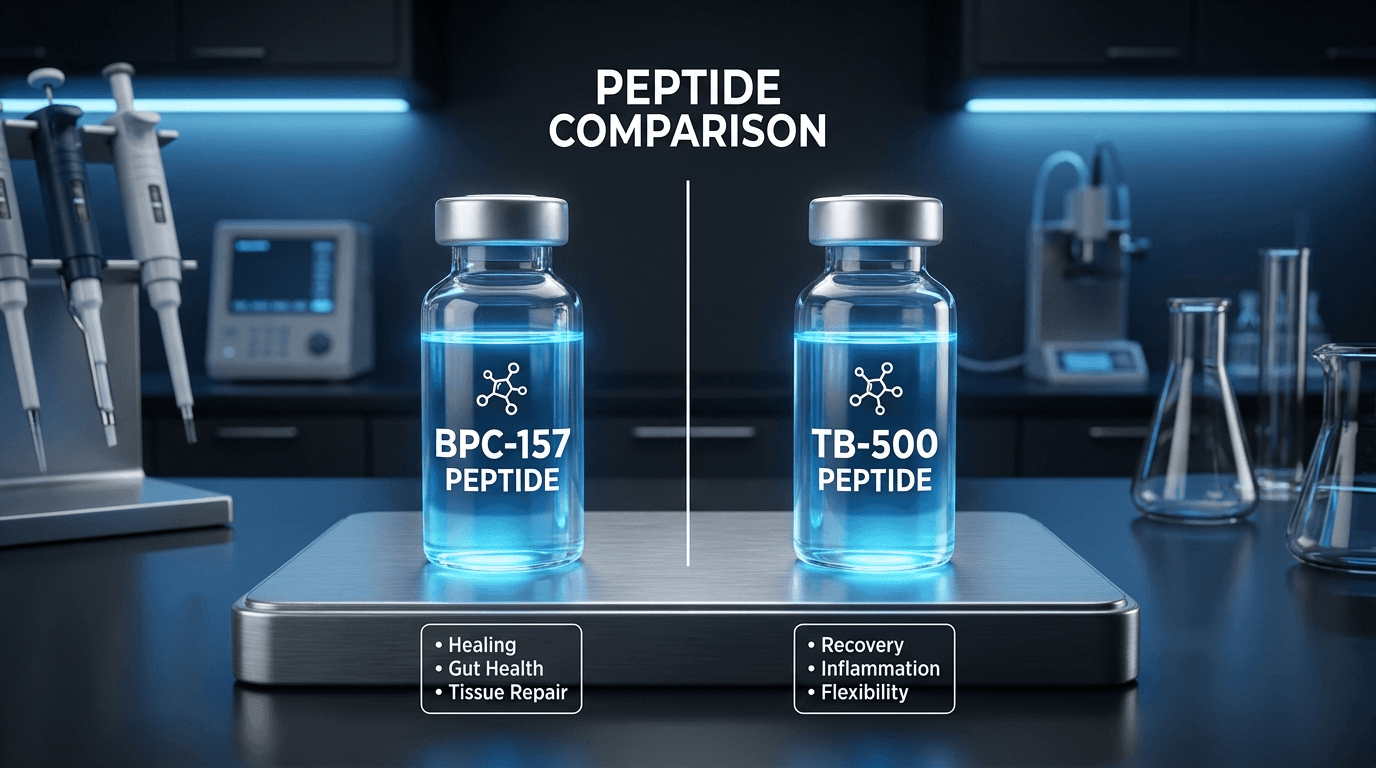
BPC-157: The Gut-Born Healer
BPC-157 (Body Protective Compound-157) was isolated from a protein in human gastric juice in the 1990s by Croatian researcher Dr. Predrag Sikiric. Its formal chemical name is a 15-amino-acid peptide with the sequence Gly-Glu-Pro-Pro-Pro-Gly-Lys-Pro-Ala-Asp-Asp-Ala-Gly-Leu-Val.
What makes it unusual is the sheer breadth of tissues it appears to help repair — it's been studied in tendons, muscles, ligaments, bones, gut tissue, nerves, and even the cornea across hundreds of preclinical studies.
How BPC-157 Works at the Molecular Level
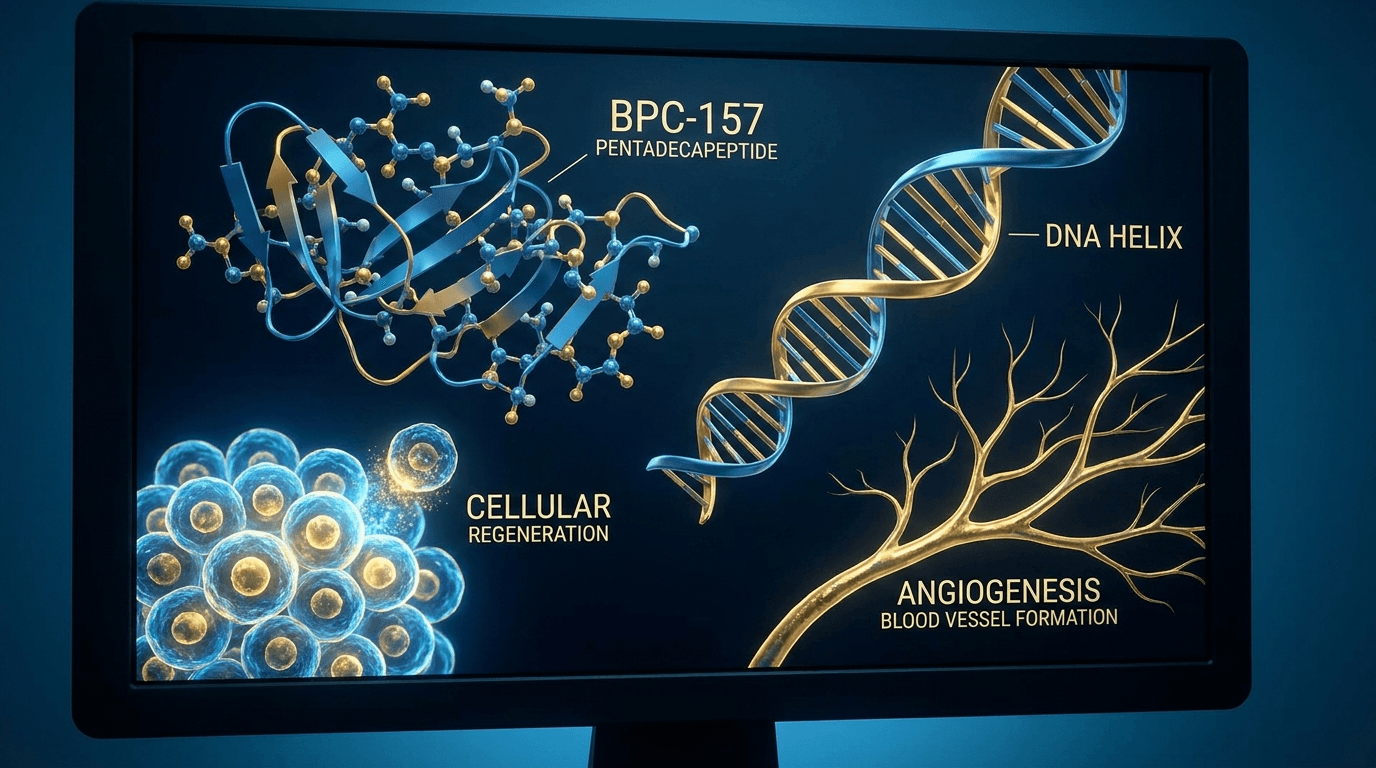
BPC-157 operates through several distinct pathways:
- VEGF upregulation — BPC-157 dramatically increases vascular endothelial growth factor, which drives the formation of new blood vessels (angiogenesis) at the injury site. Without adequate blood supply, healing stalls. BPC-157 essentially builds the "supply chain" for repair. [3,7]
- GH receptor sensitization — A 2021 study in Molecules found that BPC-157 upregulates growth hormone receptor expression in tendon fibroblasts, meaning the cells responsible for rebuilding tendons become more responsive to growth hormone signals. [6]
- FAK-paxillin signaling — BPC-157 activates focal adhesion kinase (FAK) and paxillin pathways, which control cell migration — critical for getting fibroblasts, tenocytes, and myocytes to the site of damage.
- COX-2 and NO modulation — It modulates nitric oxide synthesis and cyclooxygenase pathways, reducing pathological inflammation while preserving the pro-healing inflammatory signals needed for repair.
- Gut-mucosal protection — In gastric and intestinal tissue specifically, BPC-157 reinforces tight junctions, increases mucus production, and restores intestinal barrier integrity — which may explain why many users report improved gut health as a "side effect."
Human Clinical Evidence for BPC-157
Here's where we have to be honest with you: the human data for BPC-157 is limited but growing — and 2025-2026 marks a watershed moment for the field.
A landmark 2025 systematic review published in the Orthopaedic Journal of Sports Medicine (Vasireddi et al.) screened 544 articles on BPC-157 for orthopaedic applications and found 36 studies meeting inclusion criteria — but only 1 was a human clinical study, with the other 35 being preclinical animal models. [1] The conclusion? The animal evidence is robust and consistent, but controlled human trials are urgently needed.
The human studies that do exist paint an encouraging picture:
- IV Safety Study (2025) — A Phase I pilot study reported 2 adults tolerated up to 20mg IV BPC-157 with no serious adverse events. [8]
- Knee Pain (2021) — An uncontrolled study with 16 patients reported 87.5% experienced significant pain relief at 6–12 month follow-up after intra-articular injection.
- Interstitial Cystitis (2024) — A small series with 12 patients showed 80–100% symptom resolution after bladder administration.
Most significantly: NCT07437547, a randomized double-blind placebo-controlled Phase 2 trial, is currently enrolling 120 patients with acute Grade II hamstring strains. Participants receive daily subcutaneous BPC-157 vs. placebo for 14 days alongside standardized physiotherapy, with MRI-confirmed healing as a co-primary endpoint. [2] Results from this trial are expected to be the highest-quality evidence to date.
BPC-157 Evidence Base by Study Type
BPC-157 Published Studies by Type (2025 Systematic Review)
Source: Vasireddi et al., OJSM 2025 + ClinicalTrials.gov search June 2026
TB-500: The Systemic Repair Agent
TB-500 is the synthetic version of Thymosin Beta-4 (Tβ4), a naturally occurring protein found in virtually every cell in the human body. With a molecular weight of approximately 4,964 Da and 43 amino acids, it's larger than BPC-157 and acts differently — systemically rather than locally.
Your body already makes Thymosin Beta-4. It's released in large quantities at sites of injury as part of the natural healing cascade. TB-500 essentially amplifies that signal — telling your body to shift into repair mode faster and more aggressively than it would on its own.
How TB-500 Works
Thymosin Beta-4's primary mechanism is actin sequestration. Actin is the protein that forms the cytoskeleton — the internal scaffolding of cells. By binding to G-actin (monomeric actin), Tβ4 regulates how cells change shape, migrate, and divide.
In practical terms, this means:
- Accelerated cell migration — TB-500 speeds up the movement of repair cells (fibroblasts, endothelial cells, keratinocytes) to the site of injury. [4]
- Anti-inflammatory action — It downregulates pro-inflammatory cytokines including TNF-α and IL-6, reducing the chronic inflammatory state that prevents healing in overuse injuries and chronic wounds. [5]
- Stem cell mobilization — Tβ4 mobilizes CD34+ progenitor cells from bone marrow and promotes their differentiation into tissue-specific repair cells.
- Angiogenesis support — Like BPC-157, TB-500 also promotes new blood vessel formation, reinforcing the vascular infrastructure at the injury site.
- Collagen synthesis — It upregulates collagen production in fibroblasts, directly contributing to the structural repair of tendons, ligaments, and skin.
Human Phase I safety data exists for Thymosin Beta-4 (the parent molecule) through clinical trials in cardiac applications, where it has been shown to be safe and well-tolerated. The synthetic TB-500 shares the same active region but has not undergone independent Phase I trials.
Why Stack Them? The Synergistic Rationale
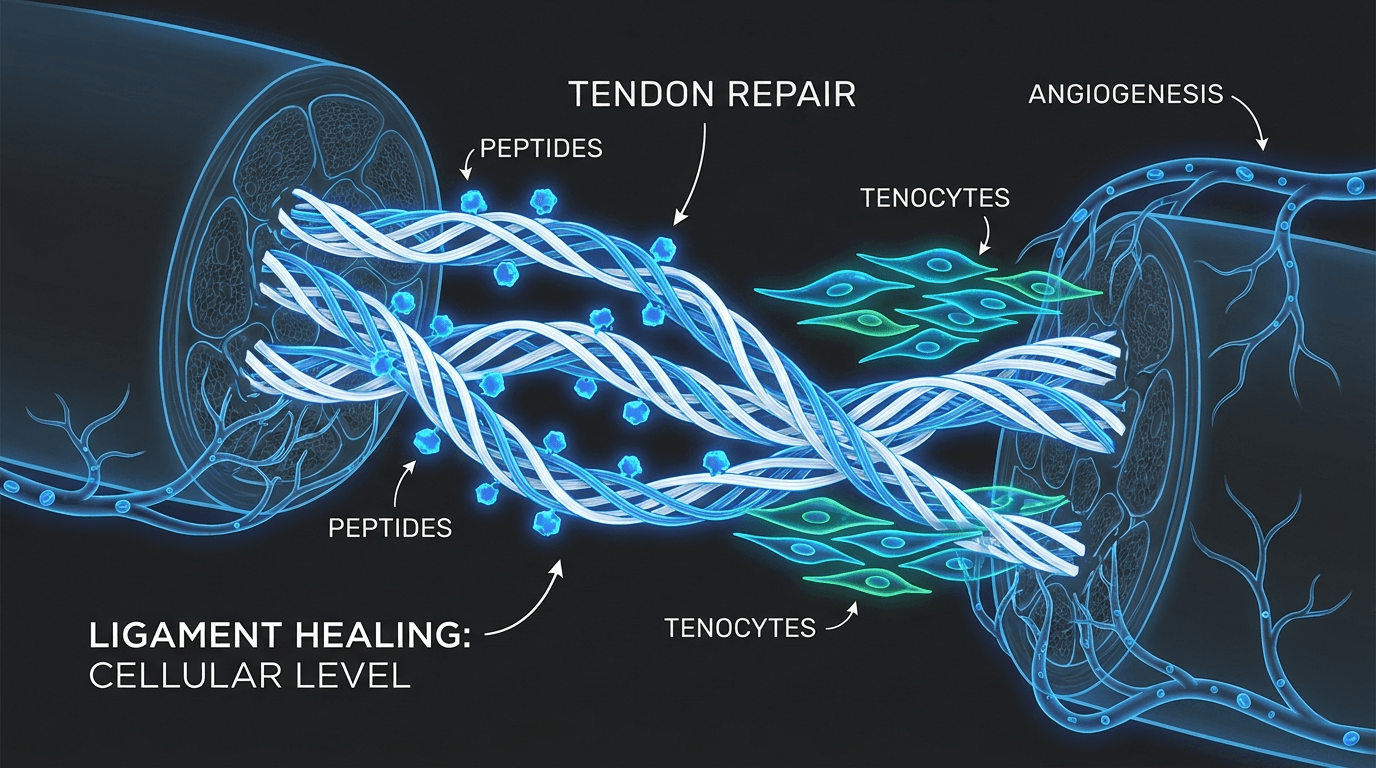
The core argument for combining BPC-157 and TB-500 is complementary mechanism coverage. They hit different targets in the healing cascade:
| Property | BPC-157 | TB-500 |
|---|---|---|
| Primary Action | Local tissue repair | Systemic inflammation control + cell mobilization |
| Size | 15 amino acids (~1.4 kDa) | 43 amino acids (~4.9 kDa) |
| Key Pathway | VEGF, GH receptor, FAK-paxillin | Actin sequestration, TNF-α, IL-6 |
| Angiogenesis | Strong (local) | Moderate (systemic) |
| Anti-inflammatory | Moderate | Strong |
| Human Evidence | 3 small studies + 1 Phase 2 RCT active | Phase I safety data via parent molecule |
| WADA Status | Prohibited (S2) | Prohibited (S2) |
| Typical Form | Lyophilized powder, SubQ injection | Lyophilized powder, SubQ injection |
Think of it this way: TB-500 quiets the inflammatory storm system-wide and gets repair cells to the injury. BPC-157 then ensures those repair cells have the vascular infrastructure and growth factor signaling they need to rebuild the damaged tissue effectively. One prepares the environment; the other executes the construction.
No published trial has tested the combination directly — every stacking protocol in use today is practitioner-derived, built on mechanistic rationale and clinical observation rather than an RCT. That's an important caveat. The individual evidence bases are strong for animal models and suggestive in limited human data, but the combination as a stack remains in the clinical evidence gap.
Wolverine Stack Dosage Protocol
Research-Based Dosage Framework
| Phase | Duration | BPC-157 | TB-500 |
|---|---|---|---|
| Loading Phase | Weeks 1–4 | 250 mcg twice daily (SubQ) | 2.5 mg twice weekly (SubQ) |
| Maintenance Phase | Weeks 5–8 | 250 mcg once daily (SubQ) | 2.5 mg once weekly (SubQ) |
| Extended Protocol | Weeks 9–12 (optional) | 250 mcg once daily (SubQ) | 2 mg every 10 days |
- •BPC-157 is typically injected on an empty stomach or at bedtime.
- •Reconstitute with bacteriostatic water (BAC water) — NOT sterile water, which degrades faster.
- •Store reconstituted peptides refrigerated and use within 30 days.
- •These are research protocols. This is not medical advice.
- •Both peptides are WADA-prohibited for competitive athletes.
Side Effects and Safety Profile
Both peptides have favorable safety profiles in the existing data, but it's important to understand what "favorable" means in a context where human evidence is limited.
BPC-157 reported side effects (from available studies):
- Injection site discomfort (most common)
- Mild nausea in some users
- Dizziness (typically transient)
- Theoretical concern: VEGF upregulation could theoretically promote growth in dormant cancers — this is entirely hypothetical but is the basis for caution in oncology patients
TB-500 reported side effects:
- Injection site reactions (redness, mild swelling)
- Fatigue in the first few days
- Headache (infrequent)
Where to Buy the Wolverine Stack: Verified Sources (2026)
If you're sourcing peptides for legitimate research purposes, quality verification is non-negotiable. You want vendors who provide third-party certificates of analysis (COAs) from ISO 17025-accredited labs, with HPLC purity testing and mass spectrometry identity confirmation on every batch.
Here are the vendors currently stocked with both BPC-157 and TB-500, all of which the PeptideWiki database tracks for inventory and pricing:
Amino USA
Best Value ComboBPC-157 + TB-500 Blend (5mg each)
Check site for pricing
Pre-blended Wolverine Stack vial — both peptides in a single vial, third-party tested.
Modified Aminos
Fastest ShippingBPC-157 & TB-500 (separate)
Check site for pricing
US-made, same-day shipping on orders placed before 2 PM CST. Full COA on every batch.
VANDL Labs
Free BAC WaterBPC-157 & TB-500 (separate)
BPC-157 from $159.99 · TB-500 from $39.99
Free BAC water on peptide orders over $200. Free shipping over $250. COAs from accredited third-party labs.
Peptide Technologies
Most Transparent COAsBPC-157 & TB-500 (separate)
Check site for pricing
QR-code COA on every product. Dual ISO 17025-accredited lab testing (HPLC, mass spec, endotoxin, sterility, heavy metals).
Frequently Asked Questions
Can I inject BPC-157 and TB-500 in the same syringe?
Many researchers do mix them in the same syringe to reduce injection frequency, and there are no known chemical incompatibilities between the two peptides. That said, no published stability data exists confirming they don't interact in solution. Vendors like Amino USA sell pre-blended vials, which represents the most research-consistent approach to co-administration.
How long before you feel the Wolverine Stack working?
In anecdotal reports and uncontrolled observations, users typically report reduced pain and swelling within 1–2 weeks of starting the loading protocol. Structural healing (tendon/ligament repair) takes longer — most protocols run 8–12 weeks for meaningful connective tissue repair. BPC-157's gut-healing effects are often reported within days.
Is BPC-157 legal?
Legal status varies by country. In the United States, BPC-157 is a research compound and is not FDA-approved. It is legal to purchase for research purposes. In April 2026, the FDA removed BPC-157 from the bulk compounding list, which restricts its use by compounding pharmacies. It is prohibited by WADA for competitive athletes. Always check your local regulations.
Do you need to cycle the Wolverine Stack?
Standard practice in research settings is an 8–12 week active cycle followed by 4–8 weeks off. The rationale is to prevent potential receptor desensitization and to allow assessment of healing progress. There is no published data on optimal cycle lengths specifically for this stack.
What is BAC water and why does it matter?
Bacteriostatic water (BAC water) contains 0.9% benzyl alcohol, which inhibits bacterial growth. It's the correct diluent for reconstituting peptides because sterile water alone has no preservative — once opened, it can become contaminated. VANDL Labs includes free BAC water with qualifying orders.
The Bottom Line on the Wolverine Stack
The Wolverine Stack is the most mechanistically well-reasoned healing peptide combination available in the research peptide space. BPC-157's local tissue-repair and angiogenesis effects combine with TB-500's systemic anti-inflammatory and cell-mobilization actions to address injury recovery from two complementary angles.
The honest picture of the evidence in 2026: animal data is abundant and consistent across multiple injury models. Human clinical data is limited but no longer nonexistent — and the Phase 2 RCT (NCT07437547) currently recruiting is set to provide the strongest controlled evidence yet. The gap between animal promise and human proof is narrowing.
If you're researching these peptides, prioritize quality: get vendors with dual third-party COAs (HPLC + mass spec), use bacteriostatic water for reconstitution, and keep accurate research logs. And stay up to date — the regulatory environment around both peptides is shifting in 2026.
For real-time pricing across all verified vendors, use PeptideWiki's comparison tool or check the individual pages for BPC-157 and TB-500.
Sources & References
- 1.Vasireddi N, Hahamyan H, Salata MJ, Karns M, Calcei JG, Voos JE, Apostolakos JM. "Emerging Use of BPC-157 in Orthopaedic Sports Medicine: A Systematic Review" — Orthopaedic Journal of Sports Medicine, 2025. DOI: 10.1177/15563316251355551.View source
- 2.ClinicalTrials.gov. "BPC 157 for Acute Hamstring Muscle Strain Repair (Phase 2, RCT)" — ClinicalTrials.gov, 2026.View source
- 3.Seiwerth S, Rucman R, Grabarevic Z, et al.. "Stable Gastric Pentadecapeptide BPC 157 and Wound Healing" — Frontiers in Pharmacology (PMC), 2021. DOI: 10.3389/fphar.2021.627533.View source
- 4.Goldstein AL, Hannappel E, Kleinman HK. "Thymosin beta4: actin-sequestering protein moonlights as regulator of cell migration and tissue repair" — Trends in Cell Biology, 2005. DOI: 10.1016/j.tcb.2004.12.003.View source
- 5.Turchan-Cholewo J, et al.. "Thymosin beta-4 and its derivative N-acetyl seryl-aspartyl lysyl proline protect against muscle cell death and maintain contractile function" — Journal of Clinical Investigation, 2010. DOI: 10.1172/JCI42028.View source
- 6.Chang CH, Tsai WC, Hsu YH, Pang JH. "Pentadecapeptide BPC 157 enhances the growth hormone receptor expression in tendon fibroblasts" — Molecules, 2021. DOI: 10.3390/molecules26030627.View source
- 7.Huang T, Zhang K, Sun L, et al.. "Body protective compound-157 enhances alkali-burn wound healing in vivo and promotes proliferation, migration, and angiogenesis in vitro" — Drug Design, Development and Therapy, 2015. DOI: 10.2147/DDDT.S84731.View source
- 8.Sosič-Jurjevič B, et al.. "Safety of Intravenous Infusion of BPC157 in Humans (Phase I Pilot Study)" — Alternative Therapies in Health and Medicine, 2025.View source