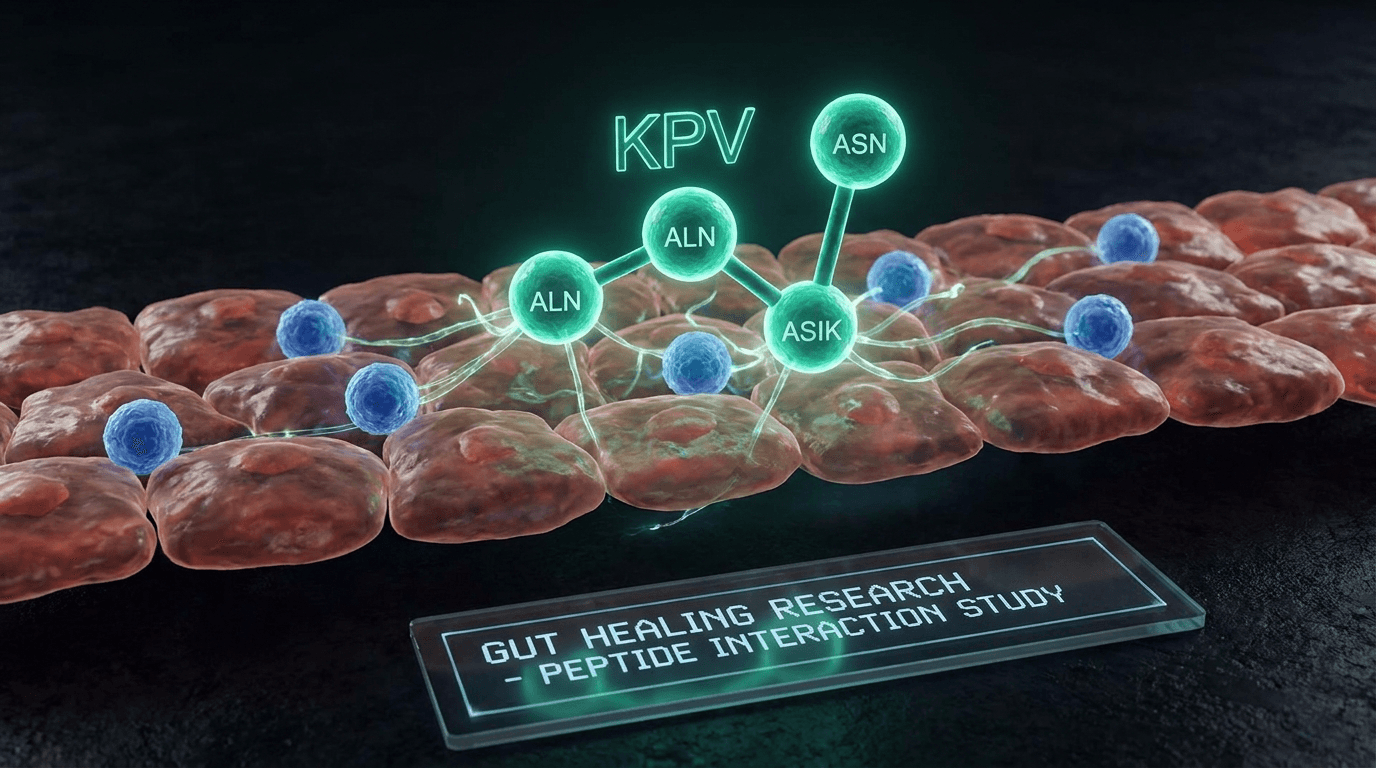
A research deep dive into KPV (Lys-Pro-Val) — the C-terminal tripeptide fragment of alpha-MSH that independently inhibits NF-κB, crosses intestinal epithelium via PepT1 transporter uptake, and demonstrates striking efficacy in colitis and IBD animal models without immunosuppression.
Among the expanding catalog of research peptides, KPV (Lysine-Proline-Valine) stands out for a deceptively simple reason: it's tiny. At just three amino acids, it's shorter than most peptides by an order of magnitude — yet its anti-inflammatory mechanism is grounded in decades of serious molecular pharmacology, its gut bioavailability exceeds that of most peptides through a specific transporter-mediated mechanism, and its preclinical evidence base in inflammatory bowel disease models is genuinely striking.
KPV is the C-terminal tripeptide fragment of alpha-melanocyte-stimulating hormone (α-MSH), a 13-amino-acid neuropeptide derived from proopiomelanocortin (POMC) cleavage. Alpha-MSH itself has well-documented immunomodulatory properties mediated through melanocortin receptors (MCRs), particularly MC1R and MC3R on immune cells. But the tripeptide KPV — representing just the final three amino acids (Lys¹¹-Pro¹²-Val¹³) — retains a surprising proportion of the parent molecule's anti-inflammatory activity through a mechanism that doesn't require MC receptor binding. [1]
This guide covers KPV's molecular identity, its direct NF-κB inhibition mechanism, the critical role of the PepT1 transporter in gut epithelial uptake, the preclinical evidence in colitis models, and what current research suggests about its potential as a non-immunosuppressive anti-inflammatory tool.
From Alpha-MSH to KPV: The Fragmentology of Anti-Inflammation
Understanding KPV requires understanding its parent: alpha-MSH (Ac-Ser-Tyr-Ser-Met-Glu-His-Phe-Arg-Trp-Gly-Lys-Pro-Val-NH₂). Produced primarily in the pituitary, skin melanocytes, and neurons, α-MSH's immunomodulatory properties — particularly anti-inflammatory and antipyretic effects — are well-established across decades of research. [2]
The anti-inflammatory activity of α-MSH maps primarily to two regions:
- The central "heptapeptide" core (residues 4-10): Mediates MC receptor-dependent anti-inflammatory signaling via cAMP and transcription factor modulation (MC1R, MC3R)
- The C-terminal tripeptide KPV (residues 11-13): Retains anti-inflammatory activity independently of MC receptor binding — a receptor-independent intracellular mechanism
The discovery that KPV alone could inhibit inflammation without MC receptor engagement was significant and mechanistically unusual. It meant that the smallest structural unit of α-MSH capable of anti-inflammatory activity was identifiable as a simple tripeptide — manufacturable cost-effectively, orally deliverable via specialized transport mechanisms, and pharmacologically distinct from full-length α-MSH in ways that opened new research possibilities. [5]
NF-κB Inhibition: The Core Anti-Inflammatory Mechanism
Nuclear Factor kappa B (NF-κB) is the master transcription factor of inflammation — the molecular switch that, when activated by inflammatory stimuli (LPS, TNF-α, IL-1β, oxidative stress), drives transcription of hundreds of pro-inflammatory genes including TNF-α, IL-6, IL-8, COX-2, iNOS, and MCP-1. Chronically activated NF-κB is the central driver of inflammatory bowel disease, rheumatoid arthritis, atherosclerosis, and numerous other chronic inflammatory conditions. Targeting it is the pharmacological strategy behind major biologics including anti-TNF antibodies (infliximab, adalimumab).
KPV inhibits NF-κB signaling through mechanisms identified in multiple cell culture models:
IκB Kinase Pathway Modulation
Under basal conditions, NF-κB is held inactive in the cytoplasm bound to inhibitory proteins (IκBs). Inflammatory stimuli activate IκB Kinase (IKK), which phosphorylates IκB, targeting it for ubiquitin-proteasomal degradation — releasing NF-κB for nuclear translocation and pro-inflammatory gene transcription. KPV appears to interfere with IKK activation or IκB phosphorylation, preventing NF-κB nuclear accumulation. [4]
Cytokine Suppression Downstream
Downstream of NF-κB inhibition, KPV treatment in inflammatory models consistently reduces secretion of TNF-α, IL-6, and IL-8 — the primary cytokines driving mucosal inflammation in IBD. These reductions are measured in both cell culture systems (LPS-stimulated macrophages, inflamed colonocytes) and in vivo colitis models with histological confirmation of reduced inflammatory infiltration.
Receptor-Independent Mechanism: Why It Matters
Critically, KPV's NF-κB effects occur in cells lacking MC1R and MC3R expression, confirming that the mechanism is receptor-independent. [5] Most peptide anti-inflammatory effects require extracellular receptor engagement; KPV operates through a direct intracellular route. This means its activity doesn't depend on receptor expression levels in target tissues and isn't subject to receptor desensitization — a significant pharmacological advantage for chronic inflammatory states where receptor downregulation often limits therapeutic peptide effects.
PepT1: The Transporter That Makes Gut-Targeted KPV Work
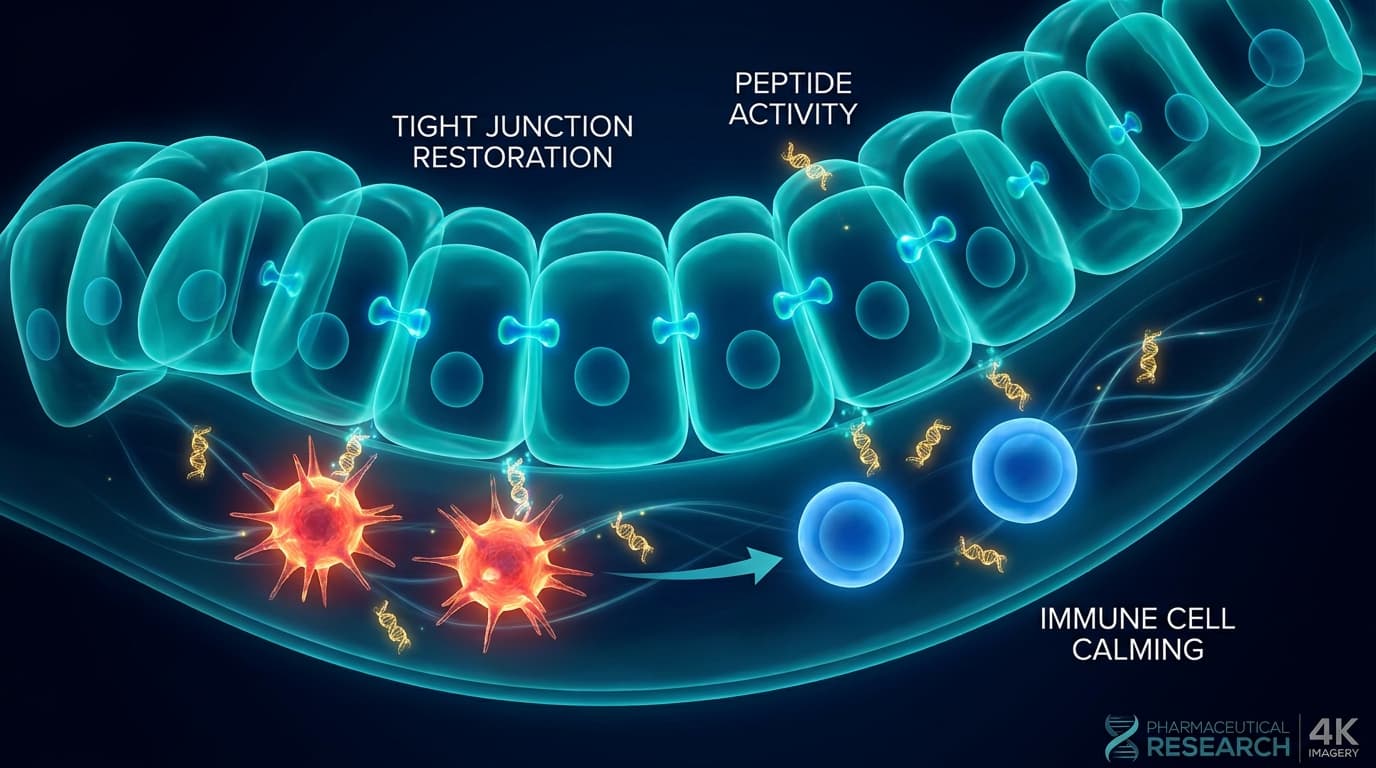
The 2008 Gastroenterology paper by Dalmasso et al. is the most clinically important KPV publication: "PepT1-mediated tripeptide KPV uptake reduces intestinal inflammation." It identified the mechanism by which KPV reaches its intracellular targets in intestinal tissue: the oligopeptide transporter PepT1 (SLC15A1). [3]
PepT1 is an electrogenic proton-coupled transporter expressed on the apical membrane of intestinal epithelial cells. Its primary physiological role is absorbing dietary di- and tripeptides from the gut lumen into enterocytes — one of the primary routes for nitrogen absorption in the intestine. Dalmasso et al. demonstrated that KPV is a substrate for PepT1 and is actively transported into intestinal epithelial cells in an energy-dependent, pH-dependent manner.
This has profound implications for gut-targeted drug delivery:
- Oral bioavailability at the mucosa: Unlike most therapeutic peptides (which are rapidly degraded by brush-border peptidases or poorly absorbed), KPV's tripeptide structure makes it a PepT1 substrate — enabling mucosal uptake before systemic circulation. The peptide reaches the target tissue (inflamed mucosa) before being cleared systemically.
- Precision targeting: PepT1 expression is highest at the intestinal epithelium — exactly the target layer for IBD treatment — meaning KPV delivery via this mechanism is anatomically precise.
- Enhanced uptake in disease state: PepT1 expression is upregulated in inflamed intestinal tissue — meaning uptake is enhanced precisely where disease is active. This disease-state pharmacokinetic advantage is remarkably rare in drug development and represents a built-in targeting mechanism. [3]
In the Dalmasso study, orally administered KPV in DSS colitis mice reduced colitis severity measurably across clinical, histological, and molecular endpoints — establishing oral efficacy via the PepT1-mediated uptake route.
KPV Efficacy in Colitis Models: Reduction in Inflammatory Markers
DSS Colitis Model: KPV Treatment Effect on Key Inflammatory Endpoints
Schematic based on Kannengiesser et al. (2008) and Dalmasso et al. (2008). Represents approximate relative reductions across inflammatory markers in DSS colitis models. Values are model-specific and not extrapolatable to humans.
IBD Preclinical Evidence: Colitis Models Consistently Show Efficacy
KPV's anti-inflammatory profile has been tested in multiple rodent models of inflammatory bowel disease with consistent findings:
DSS (Dextran Sodium Sulfate) Colitis
DSS colitis is the most widely used murine IBD model, producing reproducible colonic inflammation similar to ulcerative colitis. KPV administered by IP injection, oral gavage, or intracolonic instillation consistently reduces DSS colitis severity: clinical disease activity index improves, colon shortening (a hallmark of colonic inflammation) is reduced, histological damage scores improve, and mucosal TNF-α, IL-6, and IL-8 levels decrease. [3][4]
TNBS (Trinitrobenzene Sulfonic Acid) Colitis
TNBS colitis models Th1-mediated intestinal inflammation with a pathophysiology closer to Crohn's disease. Kannengiesser et al. (2008) demonstrated KPV efficacy in this model as well, showing reduced inflammatory infiltration, lower mucosal cytokine profiles, and improved histological scores — confirming that KPV's anti-inflammatory effects are not limited to one inflammatory mechanism or model system. [4]
Intestinal Permeability Effects
Beyond direct cytokine suppression, some studies have reported KPV effects on intestinal barrier function — specifically improved tight junction integrity under inflammatory conditions. Intestinal permeability ("leaky gut") is both a cause and consequence of IBD mucosal inflammation; compounds that simultaneously reduce cytokine-driven inflammation and restore barrier function address the disease at multiple mechanistic levels rather than just suppressing one downstream effector. [6]
KPV vs. Other Anti-Inflammatory Research Peptides
KPV occupies a mechanistically distinct niche compared to other anti-inflammatory peptides in the research landscape:
- BPC-157: Promotes healing primarily through angiogenesis, NO synthesis upregulation, and growth factor stimulation. BPC-157 accelerates tissue repair; KPV suppresses the inflammatory cytokine cascade. They are mechanistically complementary — BPC-157 rebuilds the tissue while KPV dampens the inflammatory environment enabling repair.
- Thymosin Alpha-1 (Tα1): Immunomodulatory thymic peptide operating primarily through T-cell regulation and dendritic cell activation. More relevant to immune deficiency and infection contexts; KPV is more relevant to sterile chronic inflammation (IBD, colitis).
- Full-length α-MSH: More potent MC receptor-mediated anti-inflammatory effects, but poor oral bioavailability and requires injection. KPV provides access to the C-terminal anti-inflammatory domain with superior gut mucosal delivery via PepT1 — a route not available to the larger parent molecule.
- Traditional IBD therapies: Corticosteroids suppress inflammation systemically with significant side effects. Anti-TNF biologics block one specific cytokine. KPV's NF-κB mechanism is broader (upstream of multiple cytokines simultaneously) and non-immunosuppressive — a potentially important distinction for research contexts where preserving immune competence matters.
Sourcing Research-Grade KPV in 2026
KPV (Lys-Pro-Val) is a simple tripeptide with a well-defined molecular weight of 344.41 Da. Its small size actually makes purity verification more technically demanding in some respects — short peptides can co-elute with related tripeptide impurities in some HPLC systems. Look for suppliers using C18 reverse-phase HPLC with UV detection at 214 nm and mass spectrometry confirmation of the 344.41 Da target molecular weight.
PeptideTech
Gold Standard COAsKPV Tripeptide Research Grade
Check site for current pricing
Full HPLC and mass spectrometry verification on every batch. QR-code COA links to ISO 17025-accredited lab data. KPV confirmed at exact 344.41 Da molecular weight.
Modified Aminos
Best for IBD ResearchKPV Lyophilized Powder
Check site for current pricing
Research-first approach, same-day US shipping. KPV and BPC-157 bundle available for combined gut healing and anti-inflammatory research protocols.
AminoUSA
Best Blend SelectionKPV Research Peptide + BPC-157/KPV Blend
Check site for current pricing
ISO-certified US manufacturer offering KPV alone and in pre-blended BPC-157/KPV combination — ideal for gut inflammation research targeting both healing and NF-κB suppression.
VANDL Labs
Best ValueKPV Tripeptide Vial
Check site for current pricing
Third-party COAs on all products with free BAC water on peptide orders over $200. Free shipping over $250. KPV particularly notable for GI inflammation research applications.
KPV Peptide Research: Frequently Asked Questions
What does KPV stand for and where does it come from?
KPV stands for Lysine-Proline-Valine, the single-letter code for the three amino acids comprising the tripeptide. It corresponds to positions 11-13 of alpha-melanocyte-stimulating hormone (α-MSH), the C-terminal tripeptide of the 13-amino-acid neuropeptide.
How does KPV inhibit inflammation without binding melanocortin receptors?
KPV inhibits NF-κB signaling through a receptor-independent intracellular mechanism — likely interfering with IKK activation or IκB phosphorylation — in cells that lack MC1R or MC3R expression. The exact intracellular binding partner has not been definitively identified, but the MC-receptor-independence is clearly established across multiple experimental systems including MC receptor-null cell lines.
What is PepT1 and why does it matter for KPV research?
PepT1 (SLC15A1) is an intestinal oligopeptide transporter on the apical membrane of enterocytes that absorbs dietary di- and tripeptides from the gut lumen. Dalmasso et al. (2008) demonstrated that KPV is a substrate for PepT1 and is actively transported into intestinal epithelial cells. This enables oral or intracolonic KPV to produce local mucosal anti-inflammatory effects via intracellular NF-κB inhibition directly at the disease site. PepT1 is upregulated in inflamed intestinal tissue, so uptake is enhanced precisely when and where it matters most.
What IBD models has KPV been shown to be effective in?
KPV has demonstrated anti-inflammatory efficacy in DSS (dextran sodium sulfate) colitis — the most common murine ulcerative colitis model — and in TNBS (trinitrobenzene sulfonic acid) colitis, which models Th1-mediated inflammation closer to Crohn's disease. Reductions in disease activity index, histological damage scores, colon shortening, TNF-α, IL-6, and IL-8 have been documented in both models.
How does KPV compare to BPC-157 for gut research?
BPC-157 and KPV work through mechanistically complementary pathways. BPC-157 promotes gut healing primarily through angiogenesis promotion (VEGF upregulation), NO synthesis, and growth factor stimulation — it rebuilds and repairs damaged tissue. KPV primarily suppresses the inflammatory cytokine cascade via NF-κB inhibition — it reduces the inflammatory environment that drives mucosal damage. Using both together (as in AminoUSA's BPC-157/KPV blend) addresses gut pathology from two different angles simultaneously.
Research Outlook: KPV as a Model for Peptide Gut Therapeutics
KPV may be the smallest peptide in the PeptideWiki research catalog, but the science surrounding it touches on some of the most conceptually interesting territory in the field: the idea that minimal structural units — far smaller than conventional drugs — can produce potent, mechanism-specific biological effects through direct intracellular pathway engagement, bypassing extracellular receptor binding entirely. That is mechanistically unusual and scientifically important. [5]
The combination of a clearly defined mechanism (NF-κB inhibition), a well-characterized delivery route (PepT1-mediated gut uptake with disease-state enhancement), and consistent preclinical efficacy across multiple inflammatory models positions KPV as one of the more compelling anti-inflammatory peptides in current gut biology research. The PepT1 upregulation in inflamed tissue creates a pharmacokinetic self-targeting property that most drugs can only dream about — higher uptake exactly where you want it, when disease is active. [3]
What KPV lacks is human clinical data. Unlike AOD9604 (HGH Fragment 176-191) which completed Phase II trials, or BPC-157 which has Phase I/II IBD safety data, KPV remains entirely in the preclinical research domain. That gap between animal model efficacy and human application is substantial — but it's also the gap that characterizes every promising early-stage research compound, and it's the reason continued preclinical investigation matters.
For researchers in gastroenterology, mucosal immunology, or epithelial biology, KPV provides a clean, well-characterized pharmacological tool for interrogating NF-κB-dependent mucosal inflammation with a compound that has defined uptake mechanisms, established preclinical benchmarks, and a known parent molecule with decades of supporting anti-inflammatory pharmacology behind it.
For the other major gut healing research peptide, see PeptideWiki's BPC-157 Comprehensive Research Guide 2026 — which includes detail on the BPC-157/KPV combination protocols. For the metabolic peptide landscape including GLP-1 agents with gastrointestinal research implications, see the GLP-1 Peptide Research Guide. For melanocortin receptor pharmacology related to alpha-MSH research, see the PT-141 Research Guide.
Sources & References
- 1.Lipton JM, Catania A.. "Anti-inflammatory actions of the neuroimmunomodulator alpha-MSH" — Immunology Today, 1997.View source
- 2.Catania A, Gatti S, Colombo G, Lipton JM.. "Targeting melanocortin receptors as a novel strategy to control inflammation" — Pharmacological Reviews, 2004.View source
- 3.Dalmasso G, Charrier-Hisamuddin L, Nguyen HT, et al.. "PepT1-mediated tripeptide KPV uptake reduces intestinal inflammation" — Gastroenterology, 2008.View source
- 4.Kannengiesser K, Maaser C, Heidemann J, et al.. "Melanocortin-derived tripeptide KPV has anti-inflammatory potential in murine models of inflammatory bowel disease" — Inflammatory Bowel Diseases, 2008.View source
- 5.Brzoska T, Luger TA, Maaser C, Abels C, Bohm M.. "Alpha-melanocyte-stimulating hormone and related tripeptides: biochemistry, antiinflammatory and protective effects in vitro and in vivo, and future perspectives" — Endocrine Reviews, 2008.View source
- 6.Nguyen HT, Dalmasso G, Yan Y, et al.. "Butyrate modulates nuclear factor-κB activation and IL-8 production in colonic cells via PepT1" — Journal of Biological Chemistry, 2009.View source