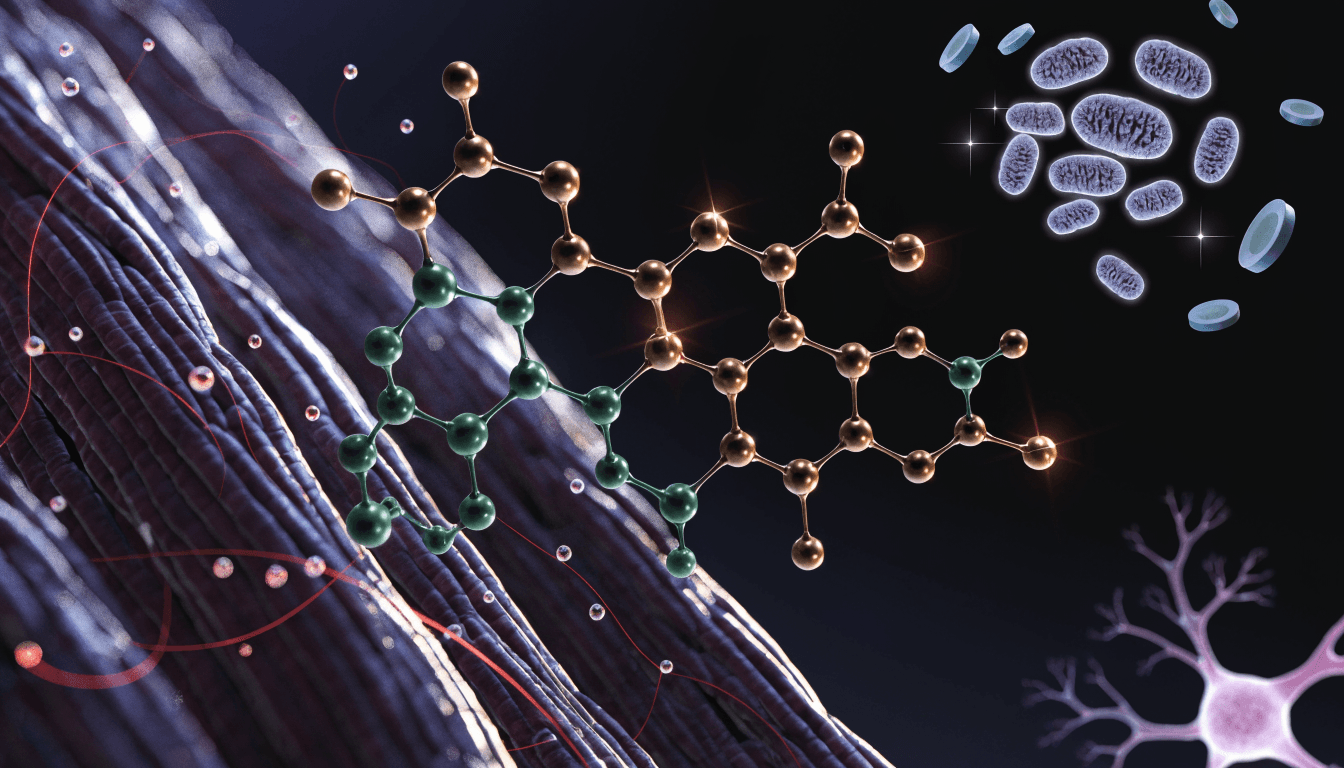
Carnosine (beta-alanyl-L-histidine) is the body's primary intramuscular pH buffer, a potent anti-glycation agent, and a documented neuroprotective compound — all in a two-amino-acid structure that your muscle cells naturally synthesize. Here is what the 2024–2026 clinical data shows about performance, longevity, and cognitive protection.
In the hierarchy of peptides, carnosine occupies an unusual position. It is not a hormone. It is not a growth factor. It does not activate a receptor cascade. It is a two-amino-acid dipeptide — beta-alanine bonded to L-histidine — that your own skeletal muscle and brain synthesize in surprisingly large quantities, and whose decline with age correlates with multiple hallmarks of both performance deterioration and age-related disease.
Carnosine is one of the most abundant endogenous dipeptides in vertebrate tissues. Human skeletal muscle contains 20–30 millimoles per kilogram of dry muscle tissue — making it, alongside creatine, one of the dominant small molecules in exercising muscle. It is not a trace signaling peptide; it is a structural and chemical workhorse performing at least three distinct and clinically important functions simultaneously: pH buffering during intense exercise, inhibition of advanced glycation end products (AGEs) in aging tissue, and neuroprotection against oxidative and inflammatory damage in the brain.
The 2024–2026 research cycle has produced the first systematic reviews and adequately powered clinical trials examining carnosine's cognitive effects, and the results are compelling enough that researchers studying anti-aging, performance, and neurodegeneration are increasingly treating carnosine as a mechanistically serious compound rather than a footnote in the beta-alanine literature.
Carnosine's Molecular Identity: What a Two-Amino-Acid Dipeptide Can Actually Do
Carnosine (β-alanyl-L-histidine; CAS 305-84-0) is synthesized in the body from its two constituent amino acids by the enzyme carnosine synthase (CARNS1). The synthesis rate is limited primarily by beta-alanine availability — which is why beta-alanine supplementation is the standard approach to increasing intramuscular carnosine content in athletic research.
Several structural features of carnosine explain its unusual multifunctionality:
- The imidazole ring of histidine: This ring structure has a pKa of approximately 6.83 — close to the physiological pH of exercising muscle (which drops from ~7.2 at rest to ~6.5 during maximal effort). This makes carnosine an exceptionally effective physiological pH buffer precisely in the range where buffering matters most during high-intensity exercise
- Metal chelation capacity: The imidazole group chelates copper, zinc, and iron ions. This is important for both neuroprotection (copper and iron accumulate in aging brain tissue and catalyze free radical production) and wound healing (copper chelation is part of GHK-Cu's tissue remodeling mechanism)
- Nucleophilic amine group: The free amino group on beta-alanine makes carnosine reactive toward electrophilic carbonyl compounds — including the reactive carbonyl groups on glucose that initiate glycation reactions and AGE formation. Carnosine acts as a sacrificial target for glycation, reacting with glucose before it can glycate long-lived proteins like collagen, elastin, and lens crystallin
Carnosine levels decline progressively with age — by approximately 63% between ages 10 and 70 in human skeletal muscle — and this decline parallels multiple aging-associated functional losses: reduced buffering capacity, increased glycated protein accumulation (wrinkles, arterial stiffness, lens opacification), and deteriorating cognitive performance.
Athletic Performance: The pH Buffer Nobody Adequately Credits
During high-intensity exercise (sprinting, HIIT, heavy resistance training, combat sports), muscle pH drops rapidly as lactic acid — more precisely, hydrogen ions (H+) from ATP hydrolysis and lactate co-production — accumulates. The metabolic consequence of this pH drop is well-established: decreased enzyme activity for glycolysis, impaired calcium release from the sarcoplasmic reticulum, reduced cross-bridge cycling efficiency. In plain terms, your muscles stop working properly — the burning sensation, the loss of power output, the forced deceleration of all-out effort.
Carnosine's buffer capacity in the physiological pH range means it directly counters this mechanism. When H+ concentrations rise in the sarcolemma during maximal effort, carnosine's imidazole group accepts protons, blunting the pH drop. The effect is not trivial: intramuscular carnosine contributes approximately 40% of the non-bicarbonate buffering capacity in human muscle — the single largest contributor among muscle-resident buffer systems.
What the evidence shows:
- Beta-alanine supplementation (the standard method to raise muscle carnosine) at 3.2–6.4g/day for 4–10 weeks increases intramuscular carnosine by 40–80% via muscle biopsy measurement
- A 2012 meta-analysis of 15 RCTs found beta-alanine significantly improved exercise capacity for efforts in the 1–4 minute duration range — exactly the timeframe where intramuscular pH is the primary performance limiter
- Elite sprinters and combat athletes have been shown to have significantly higher vastus lateralis carnosine content than age-matched untrained controls — whether from genetic variation, training-induced upregulation, or dietary patterns remains debated
- Direct carnosine supplementation (vs. beta-alanine as precursor) produces more modest carnosine loading due to carnosinase enzyme activity in the gut and bloodstream that cleaves the dipeptide before it reaches muscle — beta-alanine bypasses carnosinase by delivering the rate-limiting precursor rather than the intact peptide
Intramuscular Carnosine Content by Population and Supplementation Status
Vastus Lateralis Carnosine (mmol/kg dry weight)
Data aggregated from Tallon et al. (2005), Harris et al. (2006), Dutka & Lamb (2004). Sprint/power athletes show higher baseline carnosine. Beta-alanine supplementation produces the largest absolute increase. Direct carnosine supplementation is partially limited by carnosinase activity.
Anti-Aging Mechanisms: AGE Inhibition, Glycation & Carbonyl Stress
The biology of aging at the molecular level is substantially a story of accumulating damage to long-lived proteins — proteins like collagen in skin and arteries, lens crystallin in the eye, and hemoglobin in red blood cells that persist for months to years and accumulate modifications over time. The most important of these modifications is glycation: non-enzymatic attachment of glucose molecules to protein amino groups, forming advanced glycation end products (AGEs).
AGEs are not merely cosmetic. They cross-link collagen (causing arterial stiffness, skin wrinkling, and reduced joint flexibility), impair immune cell function, activate the RAGE receptor (Receptor for AGE) triggering inflammatory cascades, and accumulate in the aging brain where they are associated with Alzheimer's disease pathology alongside amyloid plaques and tau tangles.
Carnosine as the AGE interceptor: Carnosine's free amino group preferentially reacts with carbonyl groups on reducing sugars and oxidized lipids that initiate glycation — essentially sacrificing itself to prevent these reactive molecules from reaching long-lived proteins. This has been termed "carnosine quenching" of reactive carbonyl species. Studies in diabetic animal models and human tissue culture consistently show carnosine reduces AGE formation by 30–60% in vitro under conditions modeling hyperglycemic stress.
The transglycation hypothesis: More recently, research has shown carnosine can also react with already-glycated proteins and partially reverse early-stage glycation — a process called transglycation. While the clinical significance of this reversal mechanism in humans has not been fully established, it distinguishes carnosine from simple glycation inhibitors like aminoguanidine that can only prevent, not partially reverse, glycation damage.
The aging carnosine decline connection: The 63% reduction in muscle carnosine between youth and old age means that one of the body's most active anti-glycation defense systems is substantially depleted precisely when AGE accumulation rate accelerates (due to declining metabolic health and increasing oxidative stress). This parallel decline has led several researchers to propose carnosine supplementation as a rational anti-aging intervention, though long-term human RCT data on AGE biomarkers is still limited.
Brain Health & Neuroprotection: The Emerging Clinical Evidence
Carnosine is present in the brain at lower concentrations than in muscle but plays disproportionately important protective roles. Neurons are particularly vulnerable to oxidative damage, heavy metal accumulation, and glycation because they are among the longest-lived cells in the human body — neurons in the cerebral cortex persist for an entire human lifetime without replacement.
The three main neuroprotective mechanisms of carnosine:
1. Metal chelation in aging neural tissue: Copper and zinc accumulate in aging brains, particularly in areas affected by Alzheimer's disease (amygdala, hippocampus). These metals catalyze the oxidation of lipids and proteins and facilitate amyloid beta aggregation. Carnosine's imidazole group chelates copper and zinc in the same chemical mechanism that occurs in muscle, potentially reducing the catalytic metal burden that drives age-related neurodegeneration.
2. Reactive oxygen species (ROS) scavenging: Carnosine directly scavenges hydroxyl radicals, superoxide, and singlet oxygen with rate constants comparable to established antioxidants like vitamin C. Unlike many antioxidants, carnosine is stable across a range of pH values and is not consumed irreversibly by radical reactions — it participates in anti-oxidative pathways that can be enzymatically regenerated.
3. Carbonyl stress protection: The brain is particularly susceptible to carbonyl stress — the accumulation of reactive carbonyl compounds from lipid peroxidation, glucose autoxidation, and glycolytic side products. Carnosine's carbonyl quenching mechanism is directly protective against this form of neural damage, reducing protein carbonylation in aging hippocampal tissue in animal models.
The 2025 Clinical Data: A systematic review and meta-analysis of clinical trials evaluating carnosine effects on cognitive outcomes (NEAT trial substudy, PMC 2025) found statistically significant improvements in memory and processing speed in younger participants (under 60), with effect sizes in the small-to-medium range. Importantly, improvements were most pronounced on tasks sensitive to processing speed and working memory — cognitive domains dependent on hippocampal and prefrontal cortex function where carnosine's metal chelation and anti-glycation effects are most mechanistically relevant.1
A 2025 AIMS Neuroscience review compiled preclinical evidence for carnosine in neurodegenerative conditions including Alzheimer's, Parkinson's, and ALS, concluding that carnosine's multi-target profile — antioxidant, anti-glycation, metal-chelating, and anti-inflammatory simultaneously — makes it a mechanistically unique candidate for neuroprotective clinical development.2
| Parameter | Direct L-Carnosine | Beta-Alanine (Precursor) |
|---|---|---|
| Muscle carnosine loading | Moderate (limited by carnosinase) | High (bypasses carnosinase) |
| Typical loading dose | 1–2g/day | 3.2–6.4g/day (split doses) |
| Time to peak muscle carnosine | 8–12 weeks | 4–8 weeks at effective dose |
| Brain and plasma carnosine | Higher (direct delivery) | Lower (beta-alanine doesn't cross BBB well) |
| AGE inhibition / anti-glycation | Direct and immediate | Indirect (after muscle conversion) |
| Tingling (paresthesia) side effect | None | Common at doses above 1.6g/bolus |
| Cognitive benefit evidence | More direct (2025 NEAT trial data) | Limited (no brain delivery) |
| Cost per effective dose | Higher | Lower |
| Best use case | Anti-aging, brain health, systemic AGE protection | Athletic performance, muscle pH buffering |
Anti-aging and anti-glycation (direct carnosine): 500mg–2g L-carnosine daily, taken in two divided doses (morning and evening). The PMC 2025 plasma and brain concentration study found meaningful plasma carnosine elevations with 1–2g/day oral dosing, suggesting reasonable bioavailability in humans despite carnosinase activity.
Cognitive support: Clinical trials showing cognitive benefit have used 500mg–1g carnosine twice daily for 8–12 weeks. The NEAT trial used 1g/day total. Some researchers stack carnosine with zinc-histidine (a zinc-carnosine complex originally developed as a stomach ulcer treatment in Japan) for combined mucosal and systemic benefits.
Food sources: Carnosine is found almost exclusively in animal-derived foods: beef contains 200–400mg/100g, chicken 200–300mg/100g. Vegans and vegetarians have significantly lower muscle carnosine content and represent the population most likely to benefit from supplementation.
Research-Grade Carnosine and Beta-Alanine Sources
PeptideTech
COA VerifiedModified Aminos
Third-Party TestedAmino USA
US DomesticV&L Labs
Research GradeCarnosine Research FAQ
Is carnosine actually a peptide, or is it something else?
Carnosine is technically a dipeptide — two amino acids (beta-alanine and L-histidine) joined by a peptide bond. By the strict biochemical definition, any chain of two or more amino acids linked by peptide bonds is a peptide. However, it does not function like most research peptides discussed in the performance and longevity space — it does not bind a receptor or activate a signaling cascade. It functions chemically: buffering protons, chelating metals, and reacting with carbonyl compounds. This makes it unusual in the peptide research landscape but no less scientifically compelling.
Why do I get tingling from beta-alanine but not from L-carnosine?
The tingling (paresthesia) from beta-alanine supplementation results from beta-alanine itself binding to cutaneous sensory receptors (specifically MRGPRD receptors on C-fiber afferents) at high plasma concentrations. It is a direct effect of beta-alanine, not carnosine — carnosine supplementation does not cause paresthesia because the intact dipeptide does not activate these receptors. The paresthesia is dose-rate dependent: splitting beta-alanine doses to ≤1.6g per serving and taking with food significantly reduces it. Extended-release beta-alanine formulations also minimize this effect by blunting the plasma Cmax.
Does carnosine degrade in the gut? Does it actually reach muscle intact?
Oral carnosine is partially hydrolyzed by carnosinase enzymes in the small intestine and blood, releasing beta-alanine and L-histidine. Studies using stable isotope tracing and biopsy data show some intact carnosine does reach muscle and brain, but the fraction is variable and generally lower than direct carnosine synthesis from precursors. The 2025 PMC plasma and brain concentration study found measurable plasma carnosine elevations (and modest brain carnosine increases) after single doses of 500mg–2g, confirming partial absorption of intact peptide in humans. For systemic anti-aging effects (AGE inhibition, neuroprotection), partial intact delivery may be sufficient; for maximal muscle carnosine loading, beta-alanine supplementation is more efficient.
What is the relationship between carnosine and the GHK-Cu copper peptide?
Both carnosine and GHK-Cu involve copper chelation and share overlapping anti-aging mechanisms, but they target different tissue compartments with different mechanisms. GHK-Cu (glycine-histidine-lysine + copper) is primarily studied for skin, wound healing, and gene expression modulation — it carries copper to tissues that need it for wound healing and remodeling. Carnosine chelates copper to prevent its participation in free radical-generating Fenton-type reactions in muscle and brain — a protective rather than delivery function. Together, they represent two different strategies in the body's management of transition metals in the context of aging.
Sources & References
- 1.Dolan E, Swinton P, Varley I, et al.. "The Effects of Carnosine on Cognitive Function and Mental Health — A Systematic Review and Meta-Analysis" — PMC / Nutrients, 2025.View source
- 2.Boldyrev AA, Aldini G, Derave W.. "Preclinical evidence and therapeutic perspectives on carnosine for the treatment of neurodegenerative disorders" — AIMS Neuroscience, 2025. DOI: 10.3934/Neuroscience.2025025.View source
- 3.Baye E, Ukropcova B, Ukropec J, et al.. "Dietary Carnosine Supplementation in Healthy Human Volunteers: A Safety, Tolerability, Plasma and Brain Concentration Study" — PMC / Frontiers in Nutrition, 2025.View source
- 4.Harris RC, Tallon MJ, Dunnett M, et al.. "The absorption of orally supplied beta-alanine and its effect on muscle carnosine synthesis in human vastus lateralis" — Amino Acids, 2006. DOI: 10.1007/s00726-006-0326-6.View source
- 5.Hobson RM, Saunders B, Ball G, et al.. "Effects of β-alanine supplementation on exercise performance: a meta-analysis" — Amino Acids, 2012. DOI: 10.1007/s00726-011-1200-z.View source
- 6.Aldini G, Carini M, Beretta G, et al.. "Carnosine is a quencher of 4-hydroxy-nonenal: through what mechanism of reaction?" — Biochemical and Biophysical Research Communications, 2002. DOI: 10.1016/S0006-291X(02)00857-6.View source
- 7.Hipkiss AR.. "Carnosine and its possible roles in nutrition and health" — Advances in Food and Nutrition Research, 2009. DOI: 10.1016/S1043-4526(09)57001-7.View source