Glutathione is the most abundant antioxidant peptide produced by the human body — yet levels decline 10–15% per decade after age 40, and most adults are running significantly low without knowing it. From liver detoxification and immune defense to skin rejuvenation and athletic recovery, this 2026 evidence guide covers what the clinical research actually shows across every major delivery form: oral, liposomal, IV, and research-grade injectable glutathione 1500mg.
Your liver is quietly running what may be the most important biochemical process in your body — synthesizing a tiny tripeptide called glutathione (GSH). It does not get the headlines of semaglutide or BPC-157. There are no viral social media stacks named after it. But among researchers, it carries a nickname that has stuck for decades: the master antioxidant.
Every one of your trillions of cells produces glutathione. It neutralizes free radicals, detoxifies environmental toxins, regenerates vitamins C and E, supports immune cell function, and protects mitochondrial DNA from oxidative damage. And here is the part that should concern most adults: after age 40, your body's glutathione levels decline at a rate of roughly 10–15% per decade — a trajectory accelerated by alcohol, chronic stress, poor diet, environmental pollutants, and the medications most commonly prescribed to aging populations.
This guide delivers exactly what the 2026 clinical literature says about glutathione: what it does at the cellular level, which delivery methods actually raise blood levels, what human studies show, and how to intelligently combine it with other peptides like GHK-Cu, BPC-157, and NAD+ for synergistic benefit. We cite every claim. You draw the conclusions.
What Is Glutathione? The Tripeptide Your Cells Cannot Function Without
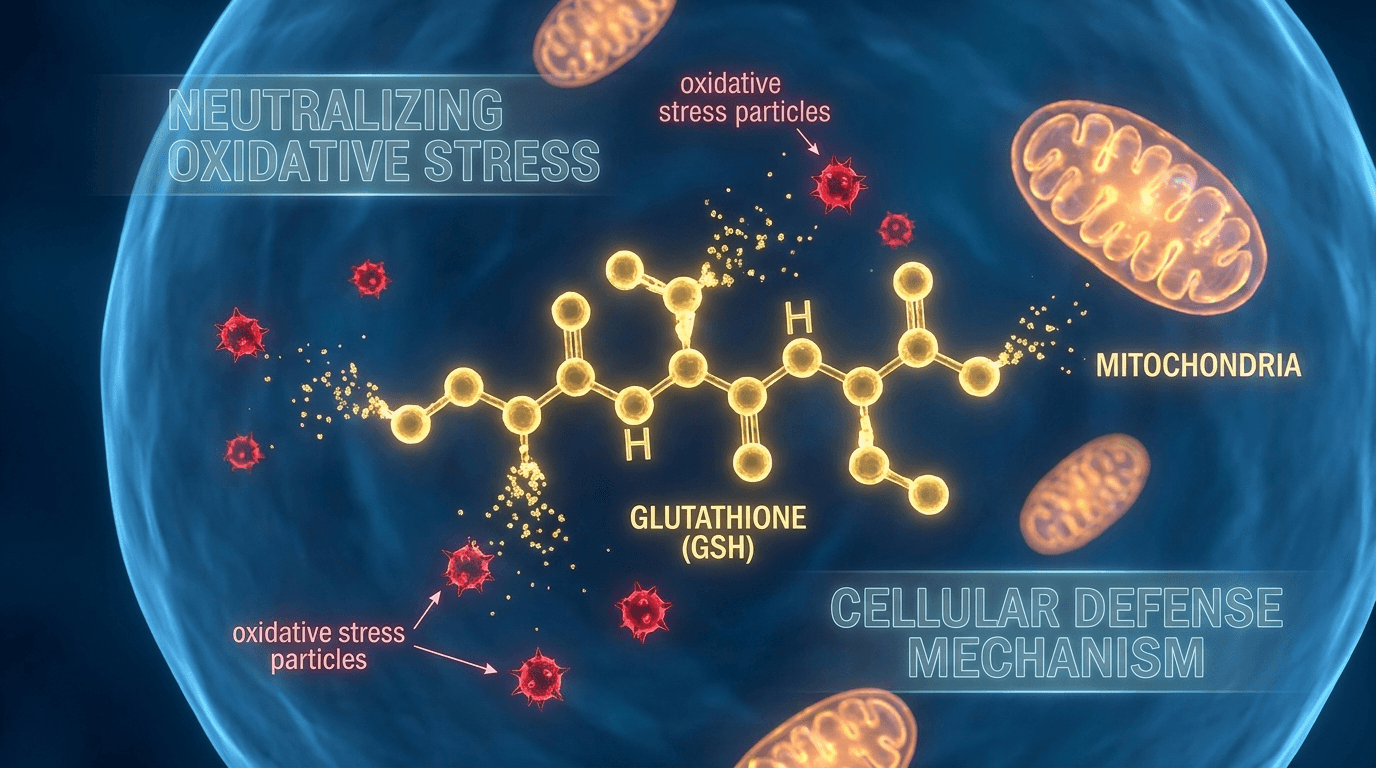
Glutathione is a tripeptide — three amino acids bound together by peptide bonds: glutamate (glutamic acid), cysteine, and glycine. Its full chemical name is gamma-L-glutamyl-L-cysteinyl-glycine. Synthesized primarily in the liver and distributed to every tissue in the body, it is the most abundant endogenous antioxidant in mammalian cells, reaching intracellular concentrations of 1–10 millimolar — orders of magnitude higher than most other protective molecules.
What makes glutathione uniquely powerful is its redox cycling. The molecule exists in two states:
- GSH (reduced glutathione) — the active, protective form that donates an electron to neutralize reactive oxygen species (ROS) and other free radicals.
- GSSG (oxidized glutathione) — the spent form, produced when GSH neutralizes a free radical.
An enzyme called glutathione reductase — powered by NADPH — regenerates GSSG back into active GSH, creating a continuous protective cycle. This recycling ability distinguishes glutathione from one-shot antioxidants like vitamin C or E. Glutathione also regenerates those antioxidants after they have been oxidized, functioning as the master coordinator of the entire cellular antioxidant network.
Beyond antioxidant activity, glutathione performs critical roles in Phase II liver detoxification, where glutathione S-transferase enzymes conjugate GSH to toxins, heavy metals, and carcinogens — marking them for excretion via bile or urine. It also regulates immune cell proliferation, modulates inflammatory signaling pathways, and serves as the essential substrate for glutathione peroxidase (GPx), the enzyme that specifically protects cellular and mitochondrial membranes from lipid peroxidation.
The thiol (-SH) group on cysteine is the biochemically active site — the electron donor that makes all of this possible. It is also the group most susceptible to damage, conjugation, and depletion when the body is under oxidative load.
The Glutathione Depletion Problem: Why Most Adults Over 40 Are Running Dangerously Low
Glutathione decline with age is well-documented across populations and tissue types. A landmark placebo-controlled trial published in Frontiers in Aging (Lizzo et al., 2022)[1] found that healthy older adults (ages 60–85) showed significantly elevated oxidative stress markers compared to young adults (ages 20–40) — including elevated oxidized glutathione (GSSG) and malondialdehyde — even when controlling for general health status. The GSH-to-GSSG ratio, the most reliable marker of cellular antioxidant capacity, deteriorates steadily across the decades regardless of lifestyle.
Age is only one driver. The following factors accelerate glutathione depletion at any age:
- Chronic alcohol consumption: Ethanol metabolism generates acetaldehyde and rapidly depletes hepatic GSH stores. Heavy drinkers can have liver glutathione levels 40–50% below normal — a key mechanism in alcohol-associated liver disease.
- Acetaminophen (Tylenol) overuse: APAP metabolism produces NAPQI, a toxic reactive metabolite that depletes cellular GSH through conjugation. This is the biochemical mechanism behind acetaminophen hepatotoxicity — and why N-acetylcysteine (a GSH precursor) is the antidote.
- Heavy metal exposure: Mercury, arsenic, cadmium, and lead bind directly to and deplete glutathione through conjugation, while simultaneously inhibiting the glutathione synthesis enzymes.
- Chronic psychological stress: Elevated cortisol drives ROS production, consuming GSH faster than cellular reductase can regenerate it, creating a self-reinforcing oxidative spiral.
- Nutritional gaps: Low intake of glycine, cysteine, glutamate, or selenium (required for GPx enzyme activity) limits the body's capacity to synthesize or recycle GSH.
- Type 2 diabetes: A 6-month RCT in 250 diabetic patients found significantly elevated oxidative DNA damage markers (8-OHdG) and reduced blood glutathione at baseline compared to non-diabetic controls.[2] The relationship between metabolic disease and GSH depletion appears bidirectional.
The clinical consequence of chronically low glutathione is not abstract: impaired immune surveillance, accelerated cellular aging, reduced detoxification capacity for environmental chemicals, and compounding vulnerability to the oxidative-stress-mediated diseases that define the chronic disease burden of modern aging — cardiovascular disease, neurodegeneration, metabolic syndrome, and cancer.
Estimated Relative Glutathione (GSH) Levels by Decade — Population Averages
Estimates derived from cross-sectional aging cohort studies and the Lizzo et al. 2022 trial. Individual values vary significantly based on diet, lifestyle, and genetics.
7 Clinically Supported Benefits of Glutathione (With 2026 Evidence Ratings)
Glutathione has one of the broadest evidence bases of any endogenous peptide. Unlike many research peptides where 90% of data comes from rodent models, glutathione has been the subject of hundreds of human clinical trials across diverse populations. Here are the seven best-supported benefits, ranked by the strength of current human evidence.
1. Master Antioxidant & Free Radical Defense — Evidence: Very Strong
The fundamental chemistry of glutathione's antioxidant role is among the most thoroughly validated in all of biochemistry. GSH donates its thiol hydrogen to neutralize hydroxyl radicals, superoxide anion, hydrogen peroxide, peroxynitrite, and lipid peroxides. Glutathione peroxidase (GPx) uses GSH specifically to reduce lipid hydroperoxides in cell membranes — a process critical for preventing ferroptosis, a form of oxidative cell death increasingly implicated in neurodegeneration, heart failure, and cancer. No supplementary antioxidant approaches this level of systemic integration or cellular ubiquity.
2. Liver Detoxification & Hepatoprotection — Evidence: Strong (Multiple RCTs)
The liver concentrates the highest glutathione levels of any organ precisely because it performs Phase II detoxification around the clock. A double-blind RCT in cirrhosis patients (NCT02321579)[5] found that combined glutathione and vitamin B6 supplementation significantly reduced markers of oxidative stress versus controls after 12 weeks. The mechanism — GSH conjugation by glutathione S-transferases — is the same pathway that handles alcohol metabolites, industrial chemicals, polycyclic aromatic hydrocarbons, and prescription drug metabolites.
3. Immune System Amplification — Evidence: Strong
Glutathione is essential for T and B lymphocyte proliferation, natural killer (NK) cell cytotoxicity, and macrophage oxidative burst activity. A 60-subject, 18-week randomized controlled trial (NCT03725241)[4] in marathon runners specifically examined whether maintaining GSH levels during high-intensity training could preserve immune competence during the high-risk peri-competition period. Intense exercise without adequate antioxidant support triggers transient immunosuppression — and glutathione depletion in lymphocytes is a key mechanistic driver of that effect.
4. Skin Brightening, Hydration & Anti-Aging — Evidence: Moderate-to-Strong
A 2026 PRISMA-compliant systematic review of 194 studies on glutathione in skin aging and tissue regeneration (Stanescu et al.)[3] found that topical and oral formulations demonstrated "favorable effects on pigmentation, skin brightness, hydration, and oxidative stress markers." Mechanistically, glutathione inhibits tyrosinase — the rate-limiting enzyme in melanin synthesis — by binding to the copper ions in its active site. A 12-week double-blind RCT (Weschawalit et al., 2017)[8] confirmed reduced melanin index and improved UV spot count in 60 participants receiving oral glutathione versus placebo.
5. Blood Sugar Regulation in Aging & Metabolic Disease — Evidence: Moderate
The 6-month RCT by Kalamkar et al.[2] — 250 type 2 diabetic patients randomized to 500 mg oral GSH daily or standard care — found significant reductions in oxidative DNA damage (8-OHdG) within 3 months (Cohen's d = 1.07, p < 0.001). Elderly patients specifically showed significant HbA1c reduction (Cohen's d = 0.41, p < 0.05). This suggests the oxidative stress component of type 2 diabetes — a major driver of complications — responds meaningfully to glutathione repletion.
6. Athletic Performance & Exercise Recovery — Evidence: Moderate
Exercise-induced oxidative stress depletes GSH rapidly — elite athletes can see post-exercise drops of 30–50% during maximal efforts. While direct glutathione supplementation trials in athletes remain limited, the NAC (N-acetylcysteine) data is instructive: a systematic review[6] found NAC consistently improved exercise performance, antioxidant capacity, and glutathione homeostasis across controlled trials. Research-grade glutathione at higher doses is increasingly studied in this context.
7. Neurological Protection — Evidence: Emerging
Neurons are exceptionally vulnerable to oxidative stress due to their high metabolic demand and relatively limited antioxidant reserve. Depleted GSH in substantia nigra dopaminergic neurons is a consistent early finding in Parkinson's disease — observable before clinical motor symptoms manifest — and IV glutathione pilot trials have demonstrated temporary symptomatic improvement. Alzheimer's disease, ALS, and traumatic brain injury are similarly associated with reduced neuronal and glial glutathione. Neuroprotection is among the most active frontiers of 2026 glutathione research.
| Benefit | Evidence Level | Best Study Type Available | Key Reference |
|---|---|---|---|
| Free Radical Defense / Antioxidant | ★★★★★ Very Strong | Mechanistic + multiple RCTs | Core biochemistry + Lizzo et al. 2022 |
| Liver Detoxification | ★★★★☆ Strong | RCT (cirrhosis, n=validated) | Hagag et al. 2020; NCT02321579 |
| Immune System Function | ★★★★☆ Strong | RCT (marathon athletes, 60 subjects) | NCT03725241 |
| Skin Brightening / Anti-Aging | ★★★★☆ Moderate–Strong | RCT + Systematic Review (n=194) | Stanescu et al. 2026; Weschawalit 2017 |
| Blood Sugar / HbA1c | ★★★☆☆ Moderate | RCT (250 diabetic patients, 6 months) | Kalamkar et al. 2022 |
| Athletic Performance | ★★★☆☆ Moderate | Precursor (NAC) RCTs, systematic review | Mokhtari et al. 2017 review |
| Neurological Protection | ★★☆☆☆ Emerging | Pilot studies, observational data | Parkinson's IV GSH pilot literature |
Oral vs. Liposomal vs. IV vs. Injectable Glutathione: The Bioavailability Research Unpacked
The central practical controversy in glutathione research is straightforward: how do you actually get it into your cells? Glutathione's tripeptide structure makes it susceptible to degradation by brush-border peptidases in the gastrointestinal tract — the same enzymes that break down dietary peptides into individual amino acids for absorption. For decades, the conventional wisdom held that oral glutathione was essentially useless because it was fully hydrolyzed before reaching systemic circulation.
The picture has become considerably more nuanced since 2015:
Standard Oral Reduced Glutathione (GSH)
Earlier studies suggested negligible systemic uptake. A landmark crossover study (Schmitt et al., 2015)[7] comparing oral GSH, sublingual GSH, and N-acetylcysteine found that oral glutathione did measurably raise plasma cysteine and whole-blood GSH levels versus placebo — though less efficiently than NAC. Bioavailability estimates for standard oral reduced GSH range from roughly 15–30% at typical doses. Not zero — but significantly attenuated.
Liposomal Glutathione
Encapsulating GSH in phospholipid vesicles protects it from GI peptidase degradation and improves mucosal absorption. Multiple comparative studies show liposomal formulations raise blood GSH levels 2–3× more effectively than equivalent doses of standard oral GSH, with better retention times. For individuals who cannot or will not pursue IV delivery, liposomal glutathione represents the most bioavailable oral format currently available.
S-Acetyl Glutathione
This chemically modified form adds an acetyl group to the cysteine thiol, making the molecule stable in the acidic gastric environment and resistant to brush-border peptidases. Once absorbed into cells, esterases cleave the acetyl group, releasing active GSH intracellularly. S-acetyl glutathione consistently demonstrates superior oral bioavailability compared to reduced GSH in comparative studies, and it has the advantage of crossing cell membranes more readily due to its lipophilicity.
Intravenous (IV) Glutathione
IV administration bypasses GI degradation entirely, producing immediate high systemic concentrations. This is the gold standard in clinical practice — used in IV drip clinics, hospitals, and integrative medicine settings for liver support, Parkinson's protocols, heavy metal support, and post-chemotherapy oxidative recovery. A useful pharmacokinetic note: glutathione has a plasma half-life of approximately 2–10 minutes in blood because it is rapidly taken up by cells and tissues. This rapid clearance is not treatment failure — it reflects efficient cellular uptake and GSH store replenishment, which can remain elevated for hours to days after infusion.
Research-Grade Injectable Glutathione (1500mg)
For research purposes, high-concentration sterile glutathione at verified purity — such as the Glutathione 1500mg at 99.53% purity available from Peptide Tech — represents a research-context analog to clinical formulations. Third-party certificate of analysis (COA) verification is essential for any injectable research compound. Peptide Tech's product is verified via third-party HPLC analysis, with COA documentation included.

Glutathione and Athletic Performance: What the Research Actually Shows
Exercise is a productive paradox for antioxidant systems. Moderate physical activity upregulates endogenous antioxidant enzyme systems — including glutathione peroxidase, glutathione reductase, and catalase — as an adaptive response to training stress. Over time, this makes well-trained athletes more resilient to acute oxidative challenges than sedentary individuals.
But high-intensity, prolonged, or eccentric exercise generates reactive oxygen species (ROS) far faster than even an adapted glutathione system can neutralize. The result is acute GSH depletion, temporary immune suppression, and oxidative damage to muscle proteins, membranes, and mitochondrial DNA — the molecular underpinning of delayed-onset muscle soreness and overtraining syndrome.
Key findings from the sports performance and glutathione literature:
- Post-competition GSH depletion: Multiple studies confirm whole-blood and erythrocyte GSH drops significantly after marathon-length events, with full biochemical recovery taking 24–72 hours depending on athlete baseline status and nutritional support.
- The immune "open window" mechanism: The transient immunosuppression observed 3–72 hours after intense exercise — the period when upper respiratory infections spike among athletes — correlates directly with GSH depletion in lymphocytes and NK cells. Maintaining GSH may narrow this vulnerability window.
- NAC as a proxy for GSH research: Since direct high-dose glutathione supplementation studies in athletes are limited, NAC (N-acetylcysteine) data informs much of what we know. A comprehensive review[6] found NAC supplementation "significantly improved exercise performance, antioxidant capacity, and glutathione homeostasis" across multiple controlled trials in athletes.
- The timing paradox: Some exercise scientists argue that aggressively blocking all exercise-induced ROS with antioxidant supplementation may blunt the adaptive signaling (AMPK, Nrf2, MAPK pathways) that drives training adaptations. The emerging consensus favors supplementing during competition weeks, recovery phases, and high-volume training blocks — while allowing normal ROS-mediated adaptation signals during standard training phases.
Research Context: Glutathione at research-grade doses (such as the 1500 mg injectable format) is classified as a research compound and is not FDA-approved as a drug for the conditions discussed. This article is for educational and informational purposes only. Consult a qualified healthcare provider before beginning any supplementation or research protocol. All references to injectable or IV glutathione administration refer to research and supervised clinical contexts only.
Synergistic Peptide Stacks: Glutathione + GHK-Cu, BPC-157, and NAD+
Glutathione's role as the central antioxidant hub makes it a scientifically coherent anchor for several multi-peptide research protocols. The following combinations are grounded in complementary mechanisms rather than marketing stacks:
Glutathione + GHK-Cu: The Skin Rejuvenation Protocol
GHK-Cu (copper peptide, available from Peptide Tech at 99.60% purity) is among the best-studied peptides for skin and connective tissue regeneration, promoting collagen I and III synthesis, upregulating endogenous antioxidant enzymes including superoxide dismutase (SOD), and activating genes associated with tissue repair and anti-inflammatory signaling. Pairing GHK-Cu with glutathione creates a two-layer antioxidant strategy: GHK-Cu upregulates enzymatic antioxidant defenses while GSH provides direct free radical neutralization, tyrosinase inhibition for skin brightening, and glutathione peroxidase substrate for membrane protection. This combination addresses both enzymatic and non-enzymatic dimensions of cutaneous oxidative stress — a mechanistically sound approach for skin anti-aging research.
Glutathione + BPC-157: Gut Health and Systemic Tissue Repair
BPC-157 (Body Protection Compound 157) is widely studied for its role in protecting mucosal integrity, reducing intestinal inflammation, and promoting angiogenesis and tissue repair across organ systems. Oxidative stress is a major driver of intestinal mucosal damage — and glutathione depletion in intestinal epithelial cells is consistently observed in conditions such as IBD, NSAID-induced gastropathy, and leaky gut syndrome. Adding glutathione to a BPC-157 research protocol provides antioxidant support at the mucosal level while BPC-157 drives structural repair through growth factor modulation and nitric oxide pathway activation. For researchers studying gut barrier function, this combination addresses both the inflammatory and oxidative dimensions of intestinal permeability in parallel.
Glutathione + NAD+: The Mitochondrial Optimization Stack
NAD+ and glutathione operate on adjacent mitochondrial biology. NAD+ drives ATP synthesis via the electron transport chain, activates sirtuin-mediated DNA repair and longevity signaling, and provides NADPH — the reducing equivalent that powers glutathione reductase to regenerate GSH from GSSG. Glutathione, in turn, protects mitochondrial DNA, lipid membranes, and the respiratory chain complexes themselves from the oxidative byproducts of ATP production. These molecules are mechanistically coupled: NAD+ depletion impairs NADPH generation, which impairs GSH recycling, which allows oxidative damage to accumulate. Peptide Tech offers both NAD+ and Glutathione 1500mg with third-party verified purity for research contexts.
Sourcing Research-Grade Glutathione in 2026
Peptide Tech
COA VerifiedGlutathione 1500mg — Research Grade
See site for current pricing
Certificate of Analysis included with every order. 99.53% purity exceeds the 99%+ research-grade benchmark. Peptide Tech also offers GHK-Cu (99.60%), NAD+, BPC-157, and MOTS-c for stack research — all with COA documentation and bacteriostatic water available separately.
Glutathione Dosing: What Research Protocols Have Used
Effective doses of glutathione vary dramatically by delivery method, indication, and research context. The following table summarizes doses used in major published studies and research protocols — not as personal dosing recommendations, but as a reference for understanding what the clinical literature has actually tested and what outcomes were observed at each dose range.
| Delivery Form | Typical Research Dose | Duration Used | Key Clinical Observation |
|---|---|---|---|
| Oral Reduced GSH | 250–1,000 mg/day | 4–12 weeks | Modest measurable blood GSH increase; 15–30% estimated bioavailability |
| S-Acetyl Glutathione | 100–600 mg/day | 4–8 weeks | Superior oral bioavailability vs. reduced form; crosses cell membranes more readily |
| Liposomal Glutathione | 500–1,000 mg/day | 4–12 weeks | 2–3× better blood-level increase vs. standard oral at equivalent doses |
| IV Glutathione (Clinical) | 600–1,200 mg per infusion | 1–3× weekly; protocol varies | Immediate systemic elevation; plasma half-life ~2–10 min; tissue GSH replenished for hours to days |
| N-Acetylcysteine (Precursor) | 600–1,800 mg/day | 4–8 weeks | Excellent oral bioavailability; raises GSH via cysteine provision; standard APAP OD antidote dose 70 mg/kg |
| Research-Grade Injectable 1500mg | Research protocol dependent | Research context only | 99.53% purity (Peptide Tech COA-verified); used under appropriate research supervision |
Frequently Asked Questions About Glutathione
Is glutathione actually a peptide?
Yes — technically, glutathione is a tripeptide: three amino acids (glutamate, cysteine, glycine) joined by peptide bonds. It is the simplest category of peptide by chain length. While it is more often discussed as a supplement than as a 'research peptide,' it shares the fundamental biochemical architecture of all peptides and operates through enzymatic mechanisms and redox chemistry characteristic of bioactive peptide biology.
Can you raise glutathione levels through diet alone?
Partially. Sulfur-rich foods — garlic, onions, cruciferous vegetables (broccoli, Brussels sprouts, kale), and whey protein — provide cysteine and glycine, the rate-limiting precursors for glutathione synthesis. Alpha-lipoic acid supports GSH recycling; selenium is required as a cofactor for glutathione peroxidase. For individuals with significantly depleted GSH due to age, chronic illness, metabolic disease, or heavy toxin exposure, dietary optimization alone may be insufficient to meaningfully restore intracellular levels — which is precisely where supplemental and research-grade forms have been studied.
Why does IV glutathione seem to clear from the blood so quickly?
Glutathione has a plasma half-life of approximately 2–10 minutes because cells and tissues actively and rapidly absorb it. The 'disappearance' from plasma is not a sign the infusion failed — it reflects efficient cellular uptake and replenishment of intracellular GSH stores, which can remain elevated for hours to days after a single IV dose. Blood plasma is just the transit medium; intracellular GSH concentration is the clinically meaningful metric.
Does glutathione supplementation interact with medications?
Glutathione's involvement in Phase II liver detoxification means it can theoretically influence the metabolism of drugs processed through glutathione S-transferase conjugation pathways — including some chemotherapy agents. IV glutathione has been studied alongside platinum-based chemotherapy to reduce nephrotoxicity without compromising anti-tumor efficacy, but this requires careful oncological management. High-dose GSH supplementation of any kind should be discussed with a physician if you are on prescription medications, particularly immunosuppressants or chemotherapy.
What is the difference between glutathione and N-acetylcysteine (NAC)?
NAC is a glutathione precursor: it provides cysteine — the rate-limiting amino acid in GSH synthesis — but does not directly supply glutathione. Cells must synthesize GSH from the cysteine NAC provides. NAC has excellent oral bioavailability, decades of clinical safety data, and is FDA-approved as the antidote for acetaminophen overdose at 70 mg/kg dosing. Direct glutathione supplementation (liposomal or IV) bypasses the synthesis step and can raise intracellular GSH faster, making it valuable in acute or research contexts where rapid repletion is the goal. Both approaches have merit depending on the research question.
Sources & References
- 1.Lizzo G, Godet A, Lavandier F, Pinckaers PJM, Connell NJ, Mathers JC, Schomaker A, Brull A, Saikali Y, Ajeganova S, et al.. "A Randomized Controlled Clinical Trial in Healthy Older Adults to Determine Efficacy of Glycine and N-Acetylcysteine Supplementation on Glutathione Redox Status and Oxidative Damage." — Frontiers in Aging, 2022. DOI: 10.3389/fragi.2022.852569.View source
- 2.Kalamkar S, Acharya J, Tupe R, et al.. "Randomized Clinical Trial of Long-Term Glutathione Supplementation Offers Protection from Oxidative Damage and Improves HbA1c in Elderly Type 2 Diabetic Patients." — Antioxidants (Basel), 2022. DOI: 10.3390/antiox11051026.View source
- 3.Stanescu C, Chiscop I, Boev M, Stanescu GD, Matei MN.. "Glutathione in Skin Aging and Tissue Regeneration: A Systematic Review of Molecular Mechanisms, Redox Modulation, and Biomedical Implications." — Molecules, 2026. DOI: 10.3390/molecules31060981.View source
- 4.University of Florida — Sport and Exercise Science Research Unit.. "Effects of Glutathione on Immunity in Individuals Training for a Marathon (NCT03725241)." — ClinicalTrials.gov, 2018.View source
- 5.Hagag AA, Hassan SM, Elshimy AI, et al.. "Impact of Glutathione and Vitamin B-6 in Cirrhosis Patients: A Randomized Controlled Trial and Follow-Up Study (NCT02321579)." — Endocrine, Metabolic & Immune Disorders Drug Targets, 2020. DOI: 10.2174/1871530319666190723143407.View source
- 6.Mokhtari V, Afsharian P, Shahhoseini M, Kalantar SM, Moini A.. "A Review on Various Uses of N-Acetyl Cysteine." — Cell Journal (Yakhteh), 2017. DOI: 10.22074/cellj.2016.4872.View source
- 7.Schmitt B, Vicenzi M, Garrel C, Denis FM.. "Effects of N-Acetylcysteine, Oral Glutathione (GSH) and a Novel Sublingual Form of GSH on Oxidative Stress Markers: A Comparative Cross-Over Study." — Redox Biology, 2015. DOI: 10.1016/j.redox.2015.09.016.View source
- 8.Weschawalit S, Thongthip S, Phutrakool P, Asawanonda P.. "Glutathione and Its Antiaging and Antimelanogenic Effects." — Clinical, Cosmetic and Investigational Dermatology, 2017. DOI: 10.2147/CCID.S128339.View source