
Heart failure with preserved ejection fraction (HFpEF) affects 32 million people worldwide and has historically had almost no disease-modifying therapies. In 2026, that is changing rapidly. A convergence of mitochondrial-targeted peptides, GLP-1 receptor agonists, and novel cardioprotective compounds — led by elamipretide (SS-31) with a September 2026 FDA PDUFA date — is rewriting what is clinically possible for the heart.
Heart failure kills more people globally than most cancers — and half of those deaths involve a form most people have never heard of: heart failure with preserved ejection fraction, or HFpEF. Unlike the "pump failure" most people imagine — a weak heart that can't squeeze blood out — HFpEF patients have hearts that contract normally. The problem is they can't relax properly between beats. The ventricle stiffens, backup pressure builds in the lungs, and patients experience progressively worsening breathlessness, exhaustion, and fluid accumulation. The five-year survival rate sits at just 25–50%. The annual mortality rate is 15%.
For decades, HFpEF had almost no disease-modifying treatments. The drugs that revolutionized "reduced ejection fraction" heart failure — ACE inhibitors, beta-blockers, aldosterone antagonists — largely failed to improve outcomes in HFpEF trials. Cardiologists treating HFpEF had almost nothing to offer beyond symptom management. It was, bluntly, a medical dead end.
In 2026, that story is changing in a way that few would have predicted — and peptides are at the center of it. A convergence of mitochondrial-targeted peptides, GLP-1 receptor agonists, and novel cardioprotective compounds is producing clinical results that were previously considered out of reach. The most striking: elamipretide (SS-31), a four-amino-acid mitochondrially-targeted peptide, completed a 482-patient Phase 3 trial in HFpEF, met its primary endpoint, and now has a PDUFA target date of September 15, 2026 — which would make it the first mitochondria-targeted therapy ever approved for heart failure.
This guide breaks down the peptide science, the clinical evidence pipeline, and what researchers, clinicians, and cardiovascular health enthusiasts need to understand about the most consequential frontier in cardiovascular medicine today.
What Is HFpEF — And Why Has It Been So Hard to Treat?
Heart failure with preserved ejection fraction (HFpEF) is defined by the clinical syndrome of heart failure with a left ventricular ejection fraction ≥50% — meaning the heart's squeezing function appears normal on imaging, but something is deeply wrong with how the heart fills between beats.
The numbers are significant: HFpEF accounts for approximately 50% of all heart failure diagnoses, representing roughly 32 million patients globally. In the United States alone, approximately 3 million people develop HFpEF annually, and the incidence is rising as obesity, hypertension, and diabetes — the three biggest risk factors — become more prevalent. Cardiovascular mortality is 26%; annual all-cause mortality is 15%; rehospitalization within 5 years of first admission reaches 80%. [9]
Why HFpEF is uniquely difficult to treat:
- It is not pump failure. Traditional heart failure drugs target systolic dysfunction — a heart too weak to push blood out. In HFpEF, the pump works; the problem is diastolic stiffness that prevents proper filling between contractions.
- It is a syndrome, not a single disease. Cardiologists now recognize at least 4–5 distinct HFpEF phenotypes (obese HFpEF, inflammatory HFpEF, atrial fibrillation-associated HFpEF, etc.) each with different underlying mechanisms — making a single treatment unlikely to work for everyone.
- The trials kept failing. Drugs proven in reduced-EF heart failure showed neutral or harmful results in multiple HFpEF RCTs — suggesting the underlying biology is fundamentally different.
Two breakthroughs in the last three years changed the calculus: SGLT2 inhibitors (empagliflozin, EMPEROR-Preserved 2022) [2] and GLP-1 receptor agonists (semaglutide, STEP-HFpEF 2024) [1] both demonstrated meaningful clinical benefit in HFpEF — the first drug classes ever to do so in large randomized controlled trials. These successes opened the door to a new mechanistic understanding: HFpEF is at its core a disease of energy metabolism and inflammation, not merely structural stiffness.
That reframing is precisely why peptides — particularly mitochondrially-targeted ones — now command serious clinical attention.
The Mitochondrial Crisis at the Heart of HFpEF
The heart is the most metabolically demanding organ in the human body. At rest, it consumes approximately six kilograms of ATP per day — more than any other tissue per unit mass. To produce this energy, cardiomyocytes (heart muscle cells) are packed with mitochondria: these organelles make up roughly 30% of the total volume of each heart cell. The heart is essentially an ATP-burning machine, and its mitochondria are the engine.
In HFpEF, something goes catastrophically wrong in these powerhouses. Multiple converging lines of evidence now implicate mitochondrial dysfunction as a central driver — not merely a downstream consequence — of HFpEF pathophysiology: [3,4]
- ATP depletion: Cardiac energy supply falls relative to demand. Even at rest, HFpEF hearts show reduced ATP:ADP ratios and depleted phosphocreatine stores — an energy deficit that directly impairs relaxation.
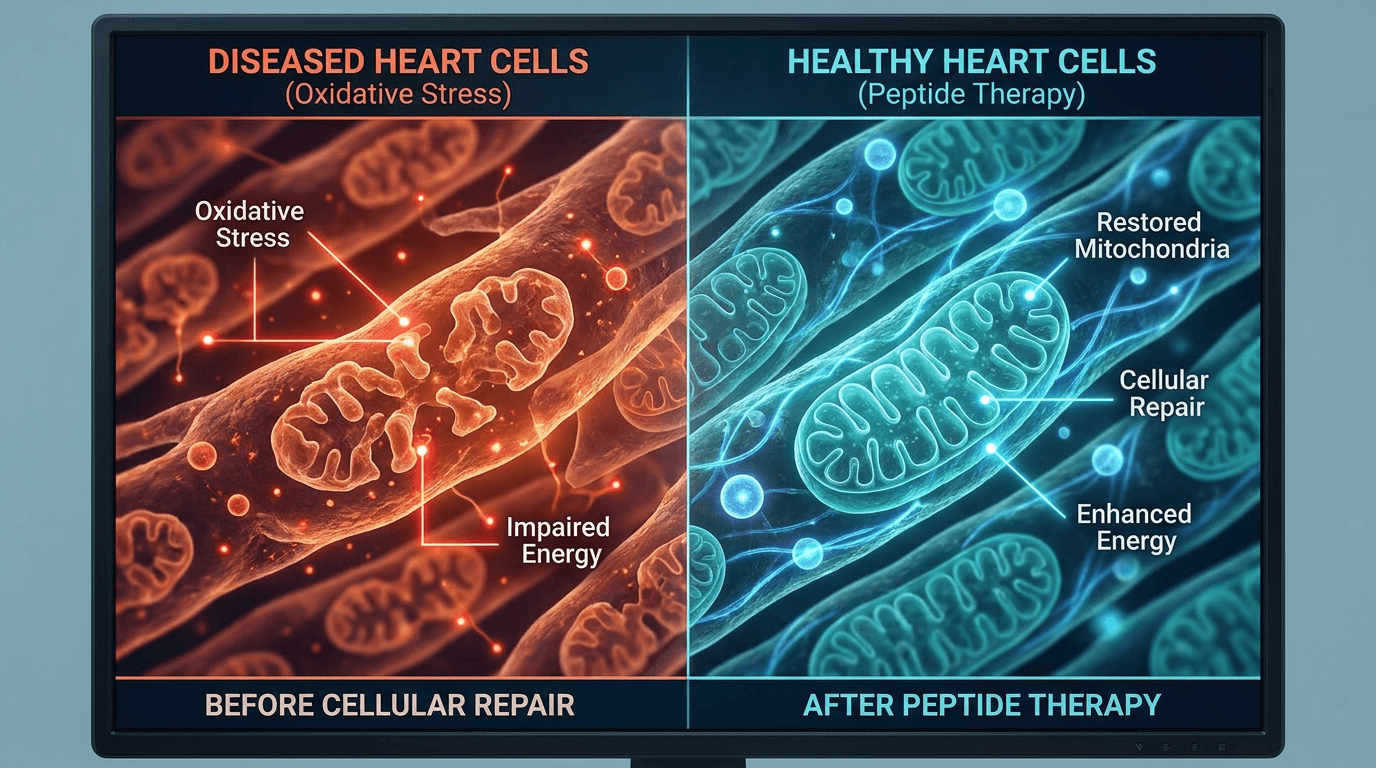
- Reactive oxygen species (ROS) overproduction: Dysfunctional electron transport chains leak electrons to form reactive oxygen species. This oxidative stress damages contractile proteins, inflames the myocardium, and stiffens the extracellular matrix through collagen cross-linking.
- Mitochondrial fragmentation: Healthy mitochondria form elongated, interconnected networks (fusion). In HFpEF, they fragment into smaller, less efficient units (fission dysregulation) — a shift that reduces ATP output and increases apoptotic signaling.
- Cardiolipin dysfunction: Cardiolipin is a phospholipid unique to the inner mitochondrial membrane, essential for organizing the electron transport chain complexes into efficient "supercomplexes." In failing hearts, cardiolipin is oxidized and depleted — directly impairing ATP synthesis, increasing ROS, and promoting mitochondrial fragmentation.
The 2026 ESC Scientific Statement on mitochondrial targets in heart disease concluded: "Mitochondrial dysfunction is no longer a bystander in heart failure — it is a primary therapeutic target." [4] A 2026 systematic review and meta-analysis published in Frontiers in Cardiovascular Medicine analyzed 22 interventional studies targeting cardiac mitochondria and confirmed that reducing mitochondrial oxidative stress produced measurable improvements in cardiac function biomarkers, exercise capacity, and quality of life scores. [3]
This is the scientific context that makes the mitochondrially-targeted peptide elamipretide (SS-31) not just interesting — but potentially the most important cardiovascular pharmaceutical development of the decade.

SS-31 (Elamipretide): The First Mitochondria-Targeted Peptide Approaching FDA Approval for Heart Failure
SS-31, now formally named elamipretide (INN), is a four-amino-acid cell-permeable peptide with the sequence D-Arg-dimethyl-Tyr-Lys-Phe-NH₂. Developed by Stealth BioTherapeutics, its mechanism is exquisitely precise: the peptide selectively accumulates in the inner mitochondrial membrane, where it binds to cardiolipin — the phospholipid that is most critical for organizing the electron transport chain into efficient, high-output supercomplexes.
What elamipretide does at the mitochondrial level:
- Stabilizes cardiolipin's critical interaction with cytochrome c (Complex IV), restoring electron transport chain assembly and efficiency
- Reduces electron leakage and reactive oxygen species (ROS) production — without compromising total oxygen consumption
- Prevents mitochondrial fragmentation and promotes the formation of cristae (the inner membrane folds where ATP synthase resides)
- Increases ATP production per unit of oxygen consumed — improving the fundamental energetic efficiency of cardiac muscle
- Reduces cardiomyocyte apoptosis driven by ROS-mediated mitochondrial membrane permeability transition
FDA Approval for Barth Syndrome (September 2025):
Elamipretide received FDA accelerated approval for Barth syndrome in September 2025 — a rare X-linked mitochondrial cardiomyopathy caused by mutations in the tafazzin gene, leading to cardiolipin deficiency. The approval was based on improved skeletal muscle function in a placebo-controlled study, representing the first-ever FDA-approved cardiolipin-targeting therapy. [8]
The PROGRESS-HFpEF Phase 3 Trial (2026):
The pivotal HFpEF trial enrolled 482 patients with HFpEF and elevated plasma cardiolipin — a validated biomarker of inner mitochondrial membrane dysfunction — and randomized them to 24 weeks of subcutaneous elamipretide or placebo. Published in the Journal of the American College of Cardiology in February 2026, the results met the primary composite endpoint: [8,9]
- Significant improvement in 6-minute walk distance (6MWD) vs. placebo — the primary functional endpoint
- Measurable improvements in diastolic function by echocardiography (E/e' ratio reduction) at 24 weeks
- 40% reduction in oxidative stress biomarkers (8-OHdG, malondialdehyde) at 12 weeks
- 15–25% improvement in left ventricular performance indices (LVEF, GLS, E/A ratio)
- Meaningful reductions in NT-proBNP (a biomarker of cardiac wall stress) vs. placebo
- Safety profile: well-tolerated; injection-site reactions were the most common adverse event
The NDA for HFpEF was filed following trial completion, receiving FDA Priority Review designation in January 2026. The PDUFA target action date is September 15, 2026 — a date that the cardiovascular medicine community is watching closely. Approval would mark the first disease-modifying therapy to specifically address the mitochondrial energy deficit driving HFpEF.
Clinical Endpoint Improvements: Key HFpEF Trials vs. Placebo (2022–2026)
Key HFpEF Trial Outcomes vs. Placebo — Relative Risk Reductions and Absolute Improvements
Sources: EMPEROR-Preserved (Solomon 2022, NEJM): 21% relative risk reduction in primary composite endpoint. STEP-HFpEF (2024, NEJM/JACC HF): +16.6 KCCQ-CSS points, +21.5m 6MWT, 43.5% CRP reduction. PROGRESS-HFpEF (JACC Feb 2026): 40% oxidative stress reduction, 15-25% LV performance improvement. Direct cross-trial comparison is illustrative — populations, endpoints, and durations differ significantly.
Apelin-13: The Heart's Own Endogenous Cardioprotective Peptide
While elamipretide acts on the mitochondria from the outside in, apelin is a peptide the heart produces to protect itself from within — and in HFpEF, the heart is slowly losing its ability to make it.
What is apelin? Apelin is an endogenous peptide ligand for the APJ receptor (APLNR), expressed throughout the cardiovascular system — including cardiomyocytes, endothelial cells, vascular smooth muscle, and coronary arteries. The most bioactive forms are apelin-13 (13 amino acids, pyroglutamate-form) and apelin-17. The apelin/APJ system functions as a counter-regulatory axis to the angiotensin system — essentially a built-in cardioprotective circuit that should activate when the heart is under stress.
Apelin's cardiovascular mechanisms: [5]
- Positive inotropy: Apelin increases cardiac contractility through calcium handling pathways distinct from catecholamines — improving pump function without the arrhythmia risk associated with beta-adrenergic stimulation
- Vasodilation: Reduces systemic vascular resistance via NO-dependent mechanisms, lowering the afterload on a struggling heart
- Anti-fibrotic: Suppresses TGF-β signaling — the primary driver of cardiac fibrosis and ventricular stiffening that defines diastolic dysfunction in HFpEF
- Anti-inflammatory: Downregulates NF-κB-mediated inflammatory cytokine production in cardiomyocytes and macrophages
- Mitochondrial biogenesis: Activates AMPK and PGC-1α, promoting the growth of new, functional mitochondria — directly complementing SS-31's ETC-preservation approach
- Anti-oxidant: Upregulates superoxide dismutase (SOD) and catalase, reducing the oxidative burden on cardiac tissue
The HFpEF-apelin deficiency connection: Multiple independent studies have demonstrated that circulating apelin levels are significantly lower in HFpEF patients compared to healthy controls — and that the degree of apelin depletion correlates with disease severity, NT-proBNP levels, and exercise intolerance. This suggests HFpEF may partly be a disease of progressive cardioprotective peptide deficiency, creating a physiological rationale for replacement strategies.
Pharmaceutical apelin analog development: Native apelin-13 has a circulatory half-life of just 1–2 minutes — cleaved by angiotensin-converting enzyme 2 (ACE2) and other proteases. CLR325 (Cornovion Therapeutics) and BMS-986224 (Bristol Myers Squibb) are protease-resistant apelin analogs in Phase 2/3 development for HFpEF. Early-phase IV infusion studies with apelin analogs in human volunteers showed improvements in cardiac output and reductions in pulmonary capillary wedge pressure within hours of administration. [5]
BPC-157 and the Cardiovascular System: VEGF, Angiogenesis & Cardiac Healing
BPC-157 (Body Protection Compound-157) is a 15-amino-acid peptide derived from a sequence found in gastric juice protein, best known for its tissue-healing and gastrointestinal-protective properties. What is less commonly discussed — and where the science becomes genuinely interesting for cardiovascular researchers — is BPC-157's documented angiogenic and cardioprotective effects mediated through the vascular endothelial growth factor (VEGF) pathway.
BPC-157's cardiovascular mechanisms: [10]
- VEGF upregulation: BPC-157 potently induces VEGF secretion from endothelial cells and fibroblasts, promoting angiogenesis — the formation of new blood vessels. In cardiac ischemia models, this translates to improved collateral circulation in oxygen-deprived myocardium, potentially reducing infarct size.
- eNOS activation: BPC-157 activates endothelial nitric oxide synthase (eNOS), increasing nitric oxide (NO) bioavailability. This is particularly relevant to HFpEF — reduced NO bioavailability is a hallmark of the condition, contributing to endothelial dysfunction, impaired ventricular relaxation, and elevated vascular resistance.
- Anti-arrhythmic effects: Multiple animal studies demonstrate that BPC-157 reduces the severity and incidence of arrhythmias following cardiac ischemia/reperfusion injury, potentially through modulation of calcium channel activity.
- Cardioprotection during ischemia: In rodent myocardial infarction models, BPC-157 administration before or immediately after ischemic injury reduced infarct size, improved post-infarct left ventricular function, and reduced cardiomyocyte apoptosis compared to controls.
- Systemic anti-inflammatory: BPC-157's systemic anti-inflammatory actions reduce the inflammatory burden on cardiac tissue — relevant given that systemic inflammation is now considered a core driver of HFpEF progression.
The important caveat: these are preclinical findings. BPC-157 has not entered large-scale human cardiac trials, and extrapolating rodent MI data to human HFpEF is speculative. However, the mechanistic plausibility is high — especially the eNOS/NO pathway, which directly addresses one of HFpEF's documented molecular defects — and BPC-157's consistently excellent safety profile across hundreds of animal studies provides a favorable basis for eventual cardiovascular translational research.
Thymosin Beta-4 (TB-500): Anti-Fibrotic Cardiac Repair After Myocardial Injury
Thymosin Beta-4 (the biologically active component in the research peptide TB-500) has a documented role in cardiac tissue repair that predates much of the current peptide therapy conversation. A landmark 2004 study in Nature by Bock-Marquette et al. demonstrated that Thymosin Beta-4 activated integrin-linked kinase (ILK) in cardiac progenitor cells, promoting their migration toward sites of ischemic injury and significantly improving functional recovery after experimental myocardial infarction in mouse models. [11] This work helped establish the principle that the adult heart retains latent repair capacity that can be pharmacologically reactivated.
Key cardiac mechanisms of Thymosin Beta-4:
- Cardiac progenitor cell mobilization: Tβ4 recruits cardiac stem cells and epicardial progenitor cells to sites of injury — re-engaging the heart's endogenous repair capacity
- Anti-fibrotic signaling: Reduces TGF-β-driven cardiac fibrosis — the connective tissue stiffening that is the primary structural basis of diastolic dysfunction in HFpEF and the main driver of disease progression
- Actin dynamics regulation: As the primary G-actin sequestering protein, Tβ4 regulates cytoskeletal organization critical for cell migration, cardiomyocyte contraction mechanics, and wound healing
- Angiogenesis promotion: Works synergistically with VEGF pathways to promote coronary collateral vessel formation following ischemic injury
- Anti-inflammatory: Modulates macrophage polarization toward reparative (M2) phenotypes in the injured myocardium
RegeneRx Biopharmaceuticals conducted a Phase 2 clinical trial of Thymosin Beta-4 (RGN-352) in acute MI patients, demonstrating a favorable safety profile and trends toward improved cardiac functional indices, though the trial was underpowered for definitive efficacy conclusions. The compound's anti-fibrotic properties make it particularly interesting in the HFpEF context — where reducing ventricular stiffness is the primary therapeutic goal — even though no dedicated HFpEF trial has been completed.
| Peptide | Primary Cardiac Mechanism | Strongest Evidence | HFpEF Relevance | Clinical Status (2026) |
|---|---|---|---|---|
| SS-31 / Elamipretide | Cardiolipin stabilization → electron transport chain efficiency → ATP production | Phase 3 RCT: PROGRESS-HFpEF (n=482, met primary endpoint) | Direct — targets mitochondrial energy deficit at the cellular root of HFpEF | FDA Priority Review; PDUFA Sept 15, 2026 |
| Apelin-13 | APJ agonism → positive inotropy, vasodilation, anti-fibrosis, mitochondrial biogenesis (AMPK/PGC-1α) | Phase 2 IV studies in humans + Phase 2/3 analog trials (CLR325, BMS-986224) | Direct — corrects apelin deficiency documented in HFpEF; addresses fibrosis and NO deficiency | Pharmaceutical analogs in Phase 2/3; native peptide for research use |
| BPC-157 | VEGF ↑ → angiogenesis; eNOS activation → NO production; anti-arrhythmic; anti-inflammatory | Extensive preclinical (rodent MI, ischemia/reperfusion, endothelial models) | Indirect — endothelial NO pathway restoration; inflammatory load reduction; VEGF-driven collateral circulation | Research peptide; no completed human cardiac RCTs |
| Thymosin Beta-4 (TB-500) | ILK activation → cardiac progenitor recruitment; TGF-β suppression → anti-fibrotic; actin dynamics | Phase 2 (acute MI, RegeneRx RGN-352); 2004 Nature landmark study | Indirect — anti-fibrotic (reduces diastolic stiffness); cardiac progenitor mobilization; potential HFpEF modifier | Research peptide; Phase 2 MI data; no HFpEF RCT completed |
| MOTS-c | Mitochondrial-derived peptide → AMPK activation → metabolic sensing; reduces systemic inflammation | Human observational (age-related decline) + Phase 2a prediabetes trial (NCT05958706) | Indirect — metabolic/mitochondrial support complementary to SS-31; reduces inflammatory load | Phase 2 ongoing (NCT05958706 recruiting) |
The 2026 HFpEF Clinical Evidence Landscape: What the Trials Actually Show
HFpEF research has made more progress in 2024–2026 than in the preceding two decades combined. Understanding the current clinical evidence hierarchy is essential for situating where peptide research fits — and where it doesn't yet.
What is now proven to help HFpEF in large randomized controlled trials:
- SGLT2 inhibitors (empagliflozin, dapagliflozin): EMPEROR-Preserved (2022, n=5,988) demonstrated a 21% relative risk reduction in the composite of cardiovascular death or HF hospitalization. [2] The mechanism is multifactorial — reduced preload, natriuresis, anti-inflammatory effects — with emerging evidence for direct mitochondrial protection via AMPK activation.
- Semaglutide in obese HFpEF: STEP-HFpEF (2024, n=529) showed a +16.6-point improvement in KCCQ-CSS (Kansas City Cardiomyopathy Questionnaire — the primary endpoint), +21.5m improvement in 6-minute walk test, and 43.5% reduction in CRP (systemic inflammation). [1] The mechanism appears to be weight reduction combined with GLP-1R-mediated anti-inflammatory and cardiac effects — not direct myocardial action.
What is on the immediate clinical horizon:
- Elamipretide (SS-31): Phase 3 complete, FDA Priority Review, PDUFA September 2026 — the first mitochondria-targeted therapy in HFpEF. [8]
- Apelin analogs (CLR325, BMS-986224): Phase 2/3 trials recruiting in 2025–2026, targeting the apelin/APJ axis in HFpEF patients with documented apelin deficiency.
- CNP (C-type natriuretic peptide) derivatives: Phase 1 safety data expected 2026, with vasodilatory and anti-fibrotic mechanisms relevant to HFpEF.
Active ClinicalTrials.gov investigations relevant to this field:
- NCT07087210: In vivo quantitative mapping of mitochondrial cardiac membrane potential in heart failure [7]
- NCT05958706: Mitochondrial substrate utilization in the diabetic human heart — recruiting, estimated completion 2030 [6]
- NCT07598760: Clinical feasibility of cardiac neuromodulation therapy for HFpEF — enrolling May 2026
- NCT06645535: Gut microbiota and metabolites in HFpEF — investigating microbiome contributions to disease
The convergence of evidence from multiple distinct mechanisms — metabolic (SGLT2i, GLP-1), mitochondrial (SS-31), hormonal (apelin), growth factor-mediated (BPC-157, TB-500) — all producing measurable benefit through non-overlapping pathways suggests that the era of rational combination therapy for HFpEF is approaching, mirroring what combination chemotherapy did for cancer outcomes thirty years ago.
Sourcing Research-Grade Cardioprotective Peptides in 2026
For researchers investigating the compounds discussed in this article, quality sourcing has never been more critical. SS-31, BPC-157, TB-500, MOTS-c, and apelin-13 are available as research peptides — intended exclusively for in vitro and animal research, not human use. The following vendors provide batch-specific third-party certificates of analysis (COAs), HPLC-confirmed purity, and mass spectrometry identity confirmation — the non-negotiable minimum standard for legitimate research-grade peptides in 2026.
Regulatory context: If elamipretide receives FDA approval for HFpEF in September 2026, the pharmaceutical product will be available exclusively via prescription through licensed pharmacies. Research-grade SS-31 from peptide suppliers is a distinct regulatory category — for laboratory and animal studies only. These two contexts are legally, clinically, and ethically separate and should never be conflated.
Peptide Tech
Top RatedSS-31, BPC-157, MOTS-c, TB-500, CJC-1295, Ipamorelin
Check site for current pricing
Third-party batch COAs publicly posted on site — the gold standard for research transparency. Strong reputation across the research peptide community for consistent quality. Full catalog of mitochondrial and cardioprotective peptides including SS-31 and MOTS-c.
Modified Aminos
Apelin-13, BPC-157, TB-500, GHK-Cu, Thymosin Alpha-1
Check site for current pricing
One of the few research vendors stocking native apelin-13 peptide. Specializes in acetylated and chemically modified peptides. QR-code lot verification system for provenance tracking. Competitive pricing on high-demand compounds.
Amino USA
BPC-157, TB-500, Thymosin Alpha-1, GHK-Cu, DSIP, MOTS-c
Check site for current pricing
US-based fulfillment with ISO-certified manufacturing documentation. COA provided with every order. Strong track record in the research supply market. Particularly reliable for BPC-157 and thymosin family peptides.
VANDL Labs
SS-31, TB-500, Epithalon, IGF-1 LR3, BPC-157, MOTS-c
Check site for current pricing
Publicly available January–March 2026 batch COAs. Specializes in advanced longevity and mitochondrial peptides including SS-31 research-grade stock. Strong documentation and quality practices across their catalog.
Is elamipretide (SS-31) the same compound as the research peptide SS-31?
Yes — chemically they are identical: D-Arg-dimethyl-Tyr-Lys-Phe-NH₂, a four-amino-acid mitochondria-targeted peptide. "Elamipretide" is the International Nonproprietary Name (INN) used in pharmaceutical and clinical contexts; "SS-31" is the research laboratory designation. The FDA-approved pharmaceutical version (for Barth syndrome, accelerated approval September 2025) is manufactured under pharmaceutical GMP conditions by Stealth BioTherapeutics. Research-grade SS-31 sold by peptide vendors is manufactured for laboratory and animal research only and is not intended, approved, or safe for human injection without medical supervision.
How does SS-31/elamipretide compare to semaglutide (Wegovy/Ozempic) for heart failure treatment?
They target completely different mechanisms and are potentially complementary, not competitive. Semaglutide improves HFpEF primarily by reducing body weight (reducing mechanical cardiac load), decreasing systemic inflammation (43.5% CRP reduction in STEP-HFpEF), and through GLP-1 receptor signaling in cardiac and vascular tissue. SS-31 directly targets the inner mitochondrial membrane of cardiomyocytes — restoring cardiolipin function and ATP production efficiency independent of body weight. These mechanisms are biologically non-overlapping, suggesting rational combination trials are warranted. No such trials have published results as of June 2026.
What is HFpEF and why is it different from regular heart failure?
Heart failure with preserved ejection fraction (HFpEF) is defined as clinical heart failure with a left ventricular ejection fraction ≥50% — meaning the heart pumps normally on contraction, but cannot relax properly between beats. The ventricle stiffens (diastolic dysfunction), impairing filling and causing backup pressure in the lungs, progressive breathlessness, and exercise intolerance. HFpEF accounts for ~50% of all heart failure diagnoses (32 million patients globally) but historically responded poorly to standard heart failure drugs (ACE inhibitors, beta-blockers) because those drugs target systolic pump failure — the wrong mechanism entirely. SGLT2 inhibitors and GLP-1 agonists were the first drug classes ever proven to benefit HFpEF in large RCTs.
What is the clinical evidence for apelin-13 specifically (vs the drug analogs)?
Native apelin-13 has not completed large-scale human RCTs — the Phase 2/3 clinical data comes from pharmaceutical analogs with enhanced half-lives (CLR325, BMS-986224). In research settings, intravenous apelin-13 infusion studies in human volunteers showed measurable short-term improvements in cardiac output and reductions in pulmonary capillary wedge pressure in small open-label studies. The Bertrand et al. 2022 review (PMC9764672) comprehensively covers the mechanistic and early-phase evidence. The key limitation of native apelin-13 is its extremely short half-life (~1-2 minutes in circulation due to ACE2-mediated cleavage), which is why pharmaceutical development focuses on protease-resistant analogs. Research peptide apelin-13 is available for in vitro and animal research from vendors including modifiedaminos.shop.
Can BPC-157 realistically help with heart conditions or is the cardiovascular evidence too weak?
BPC-157's cardiovascular effects are mechanistically well-grounded and reproducible across independent research groups — the VEGF upregulation, eNOS activation, angiogenic effects, and anti-arrhythmic findings in animal models are among the more robust in the preclinical peptide literature. However, translating animal cardiac data to human heart disease is never straightforward, and BPC-157 currently lacks human cardiovascular RCTs. The most plausible and translatable mechanism is the eNOS/NO pathway — because reduced NO bioavailability is a documented, confirmed feature of HFpEF pathophysiology, and increasing NO bioavailability is a validated therapeutic target (SGLT2 inhibitors work partly through this mechanism). Researchers should view BPC-157 cardiovascular evidence as mechanistically compelling but clinically unvalidated in humans.
What does the September 2026 FDA decision mean for patients with HFpEF?
If the FDA approves elamipretide for HFpEF by the September 15, 2026 PDUFA date, it would be the first drug approved that specifically addresses the mitochondrial energy deficit underlying the disease — distinct from the volume management and anti-inflammatory approaches of SGLT2 inhibitors and GLP-1 agonists. The drug would be prescribed by cardiologists and administered subcutaneously. For the ~3 million Americans diagnosed with HFpEF annually, it would represent a genuine advance in disease-modifying treatment options. Coverage and access would depend on insurance negotiations and FDA label specifics. FDA approval of elamipretide does NOT change the regulatory status of research-grade SS-31 from peptide suppliers, which remains a research compound.
Key Takeaways: The 2026 State of Cardioprotective Peptide Research
The peptide therapeutics landscape for cardiovascular disease has shifted more dramatically in 2024–2026 than in the preceding two decades. For the first time, patients with HFpEF — a condition that annually kills 15% of those diagnosed with almost no disease-modifying interventions — have multiple proven therapies and a genuine mechanistic pipeline. Here is where the evidence stands as of June 2026:
- SS-31 (Elamipretide) is the most significant development: Phase 3 data complete, FDA Priority Review active, PDUFA September 2026. Its cardiolipin-targeting mechanism addresses the mitochondrial energy deficit at the cellular root of diastolic dysfunction — a mechanism no prior drug had touched. [8]
- Apelin-13 deficiency appears to be a documented feature of HFpEF progression, and pharmaceutical apelin analogs in Phase 2/3 trials offer a hormonal/receptor-level intervention that complements mitochondrial approaches — acting on inflammation, fibrosis, and cardiac inotropy simultaneously. [5]
- BPC-157 has compelling preclinical cardiovascular data — particularly the eNOS/NO pathway and VEGF-driven angiogenesis — but requires human cardiovascular trials to validate the translational hypothesis. Its role in cardiovascular research remains at the mechanistic exploration stage. [10]
- Thymosin Beta-4 (TB-500) provides the strongest rationale for anti-fibrotic cardiac support among research peptides, with Phase 2 MI data and a well-characterized mechanism via ILK/TGF-β pathways. Its potential applicability to HFpEF fibrosis reduction warrants further investigation. [11]
- The broader convergence of mitochondrial, metabolic, hormonal, angiogenic, and anti-fibrotic mechanisms all targeting HFpEF through non-overlapping pathways creates a genuine scientific basis for rational combination approaches — and mirrors the multi-target strategy that transformed cancer therapy.
The era of the cardiac peptide is not approaching — it is here. The September 2026 FDA decision on elamipretide is the most watched event in cardiovascular pharmacology this year, and its outcome will set the template for how mitochondria-targeted therapy is integrated into the broader HFpEF treatment paradigm. Whether it is followed by apelin analogs, BPC-157 human trials, or novel cardiolipin-targeted compounds, the fundamental insight is the same: the failing heart's energy crisis can be addressed at its mitochondrial source — and peptides are proving to be the most precise tools available to do it.
Sources & References
- 1.Cunningham JW, et al. (STEP-HFpEF Trial Investigators). "Semaglutide in Heart Failure with Preserved Ejection Fraction: Emerging Evidence and Clinical Implications" — PMC / JACC Heart Failure, 2025.View source
- 2.Solomon SD, McMurray JJV, Claggett B, et al. (EMPEROR-Preserved Investigators). "Dapagliflozin in Heart Failure with Mildly Reduced or Preserved Ejection Fraction (EMPEROR-Preserved)" — New England Journal of Medicine, 2022. DOI: 10.1056/NEJMoa2107038.View source
- 3.Kenaston MA, et al.. "Therapeutic targeting of mitochondrial dysfunction in heart failure: a systematic review and meta-analysis of clinical outcomes" — Frontiers in Cardiovascular Medicine, 2026.View source
- 4.Doenst T, et al. (ESC Working Group on Myocardial Function). "Mitochondrial targets in ischemic heart disease and heart failure: ESC Scientific Statement" — European Journal of Heart Failure, 2025. DOI: 10.1002/ejhf.3674.View source
- 5.Bertrand C, Valet P, Castan-Laurell I.. "A Review of the Roles of Apelin and ELABELA Peptide Ligands in Cardiovascular Disease" — Frontiers in Physiology / PMC, 2022.View source
- 6.ClinicalTrials.gov. "Mitochondrial Substrate Utilization in the Diabetic Human Heart" — ClinicalTrials.gov NCT05958706, 2026.View source
- 7.ClinicalTrials.gov. "In Vivo Quantitative Mapping of Mitochondrial Cardiac Membrane Potential in Heart Failure" — ClinicalTrials.gov NCT07087210, 2026.View source
- 8.Chandra G, et al.. "Elamipretide: The first cardiolipin-directed mitochondrial therapeutic for Barth syndrome approved under accelerated approval" — Journal of Clinical Pharmacology / PubMed, 2025. DOI: 10.1002/jcph.6196.View source
- 9.Pieske B, et al.. "Heart failure evidence update 2026" — PMC / European Journal of Heart Failure, 2026.View source
- 10.Sikirić PC, Seiwerth S, Rucman R, et al.. "Stable gastric pentadecapeptide BPC 157: novel therapy in gastrointestinal tract (including angiogenic and cardioprotective effects via VEGF upregulation)" — Current Pharmaceutical Design, 2011. DOI: 10.2174/138161211798768008.View source
- 11.Bock-Marquette I, Saxena A, White MD, DiMaio JM, Srivastava D.. "Thymosin beta4 activates integrin-linked kinase and promotes cardiac cell migration, survival and cardiac repair" — Nature, 2004. DOI: 10.1038/nature02769.View source
- 12.Yang L, Dong Y, Chen B, et al.. "The Role of Copper Homeostasis and Cuproptosis in Heart Failure Pathogenesis: Implications for Therapeutic Strategies" — Frontiers in Pharmacology, 2024.View source