Selank is a synthetic heptapeptide approved in Russia for generalized anxiety disorder, with a unique pharmacological profile: anxiolytic effects comparable to benzodiazepines in Russian RCTs, but without sedation, cognitive impairment, or tolerance/dependence. The 2026 guide covers the mechanism, the Zozulya 2014 clinical trial, intranasal vs subcutaneous delivery, and its complementary relationship with Semax.
Selank is a synthetic heptapeptide developed at the Russian Academy of Sciences in Moscow that holds an unusual position in psychopharmacology: it is approved as a prescription nasal spray in Russia for generalized anxiety disorder (GAD) and neurasthenia, with a clinical evidence base built over more than two decades of Russian research. It produces anxiolytic effects in clinical trials with a profile that is mechanistically distinct from benzodiazepines — no sedation, no cognitive impairment, no tolerance or dependence in published literature — while also producing what may be a genuine cognitive enhancement effect rather than merely cognitive disinhibition. For Western researchers and clinicians increasingly cautious about long-term benzodiazepine use, Selank represents a legitimate alternative hypothesis worth understanding on its own terms.
The 2026 picture for Selank in Western research contexts has been shaped by the February 2026 FDA reclassification, which moved several research peptides including Selank from restricted Category 2 status back to Category 1 compounding eligibility. This has improved access for researchers in the United States without changing Selank's fundamental status as a research compound outside Russia. This guide examines the structural basis for Selank's stability, its multi-pathway mechanism of action, the key Russian clinical trial data, and its complementary relationship with Semax — the other prominent Russian peptide in the nootropic research space.
What Is Selank? Origin and Structure
Selank was developed at the Institute of Molecular Genetics, Russian Academy of Sciences, as part of a program investigating endogenous immunopeptides and their neurological derivatives. The structural starting point was tuftsin, a naturally occurring tetrapeptide (Thr-Lys-Pro-Arg) cleaved from the heavy chain of immunoglobulin G (IgG) in the spleen. Tuftsin is endogenous and known to have both immunostimulatory and weak CNS effects — it acts on opioid receptors and has mild anxiolytic properties in animal models.
Selank was created by extending tuftsin with a Gly-Pro dipeptide at the C-terminus, producing a heptapeptide: Thr-Lys-Pro-Arg-Pro-Gly-Pro. This extension serves two purposes:
- Enhanced enzymatic stability: The Gly-Pro extension makes the C-terminus significantly more resistant to carboxypeptidase degradation, extending the functional half-life of the compound after administration
- Enhanced CNS activity: The extended structure appears to improve binding interactions at CNS targets that the parent tuftsin molecule interacts with only weakly
Selank is registered in Russia as a pharmaceutical nasal spray (0.15% solution) approved by the Russian Ministry of Health for the treatment of generalized anxiety disorder and neurasthenia (a diagnosis encompassing fatigue, cognitive difficulties, and anxiety symptoms that is more widely used in Russian psychiatric classification than in DSM-5 contexts). It is not a novel research compound being evaluated for the first time — it has decades of Russian clinical use, pharmacokinetic characterization, and safety data that form a real, if geographically concentrated, evidence base.
Selank Mechanism: Beyond Simple GABA Modulation
The pharmacological profile of Selank is unusual among anxiolytics in that it appears to work through multiple partially independent pathways rather than through a single dominant receptor mechanism. This multi-pathway architecture may explain several of its distinctive clinical features — particularly the combination of anxiolysis without sedation and possible cognitive enhancement rather than cognitive impairment. [2]
The primary mechanisms characterized in published research include:
- GABAergic allosteric modulation: Selank enhances the sensitivity of GABA-A receptors to GABA without directly binding to the benzodiazepine site. This is analogous to how neurosteroids like allopregnanolone modulate GABA-A activity — producing anxiolysis through increased chloride conductance — but through a distinct binding site that may produce a more selective effect on the anxiety-relevant GABA-A receptor subpopulations. The absence of direct benzodiazepine-site binding is likely why Selank does not produce the full spectrum of benzodiazepine effects, including sedation, amnesia, and physical dependence. [2]
- Enkephalinase inhibition: Selank reduces the activity of enkephalinase (neprilysin/neutral endopeptidase), the enzyme responsible for degrading endogenous enkephalins. Enkephalins are endogenous opioid peptides that modulate pain and emotional tone; allowing them to persist longer in synaptic clefts produces anxiolytic effects through a pathway entirely independent of GABA. This opioid-adjacent mechanism contributes a component of emotional modulation that complements the GABAergic effect.
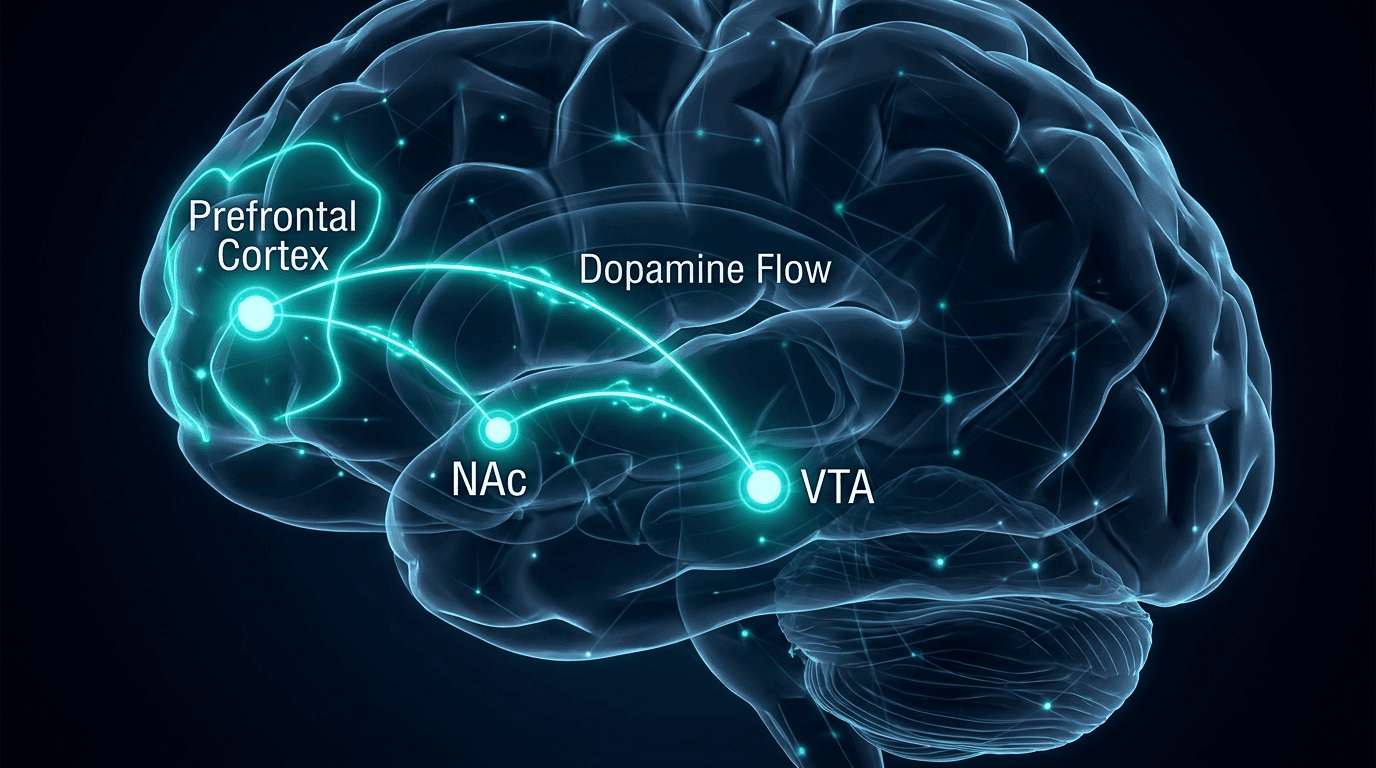
- BDNF upregulation: Selank has been shown in animal studies to increase expression of brain-derived neurotrophic factor (BDNF) in multiple brain regions including the hippocampus and prefrontal cortex. BDNF is critical for neuroplasticity, learning, memory consolidation, and stress resilience. BDNF upregulation is one of the proposed mechanisms by which Selank may produce cognitive enhancement rather than merely sedation — it supports the cellular machinery for learning and memory while simultaneously reducing anxiety that would otherwise interfere with cognition.
- Serotonergic modulation: Animal studies have documented increased serotonin (5-HT) utilization in multiple brain regions following Selank administration, contributing to its emotional regulatory effects through yet another independent pathway.
The consequence of this multi-pathway architecture is a compound that produces anxiolysis through at least four partially independent mechanisms simultaneously — producing a broader and potentially more balanced effect than single-target compounds while reducing the likelihood that any one pathway's modulation drives sedation or cognitive impairment as an unwanted side effect.

The Russian Clinical Evidence
The primary human clinical trial for Selank is the Zozulya et al. 2014 study published in Zhurnal Nevrologii i Psikhiatrii (Journal of Neurology and Psychiatry). [1] This was a randomized controlled trial in patients with generalized anxiety disorder and neurasthenia, comparing Selank nasal spray to an active control (phenibut, a GABAergic anxiolytic commonly used in Russian psychiatric practice). Outcomes were measured using the Hamilton Anxiety Rating Scale (HAM-A), one of the most widely used validated anxiety assessment instruments in clinical research.
Key findings from Zozulya 2014:
- HAM-A score reduction: approximately 48% from baseline in the Selank group — a clinically meaningful improvement in anxiety severity
- No sedation reported in the Selank group, in contrast to phenibut and benzodiazepine controls, where sedation is a well-documented effect at therapeutic doses
- No cognitive impairment — cognitive performance on neuropsychological testing was preserved or improved in the Selank group, contrasting with typical benzodiazepine-associated cognitive deficits
- Improvements in attention, memory, and working capacity under stress — the nootropic dimension of the effect
A complementary finding comes from Uchakina et al. 2008 [4], which documented immunomodulatory effects of Selank in anxiety-asthenic patients: improvements in immune markers (T-cell and NK-cell function) alongside anxiolytic benefit — consistent with the tuftsin-derived immunological heritage of the compound's structure.
Critical caveat: all published Selank clinical trials are Russian studies, conducted under Russian regulatory standards, with relatively small sample sizes by Western RCT conventions. Russian psychiatric trials use somewhat different methodological norms than FDA or EMA Phase 3 trials — particularly regarding blinding rigor, sample size calculation, and outcome reporting. These limitations don't invalidate the findings but they do mean the evidence base should be interpreted as preliminary from a Western regulatory perspective. No large, multicenter, double-blind, placebo-controlled RCTs meeting FDA Phase 3 standards have been published for Selank in anxiety.
Cognitive Enhancement: The Dual Anxiety + Focus Benefit
The feature of Selank's profile that most distinguishes it from conventional anxiolytics is its potential cognitive enhancement effect — not merely the absence of cognitive impairment (which distinguishes it from benzodiazepines), but apparent positive effects on working memory, learning rate, and focused cognition under stress conditions.
The mechanistic basis for this is plausible and internally consistent. Benzodiazepines impair cognition because they broadly enhance GABA-A inhibitory tone across the cortex — including in prefrontal circuits essential for working memory and executive function, and in hippocampal circuits essential for memory consolidation. Sedation and amnesia are not incidental side effects; they are predictable consequences of widespread cortical GABA-A enhancement.
Selank's GABAergic modulation appears to be more selective — targeting anxiety-relevant circuits (amygdala, bed nucleus of the stria terminalis, septo-hippocampal circuits) with less spillover into prefrontal and hippocampal circuits that support cognition. The BDNF upregulation that Selank produces in the hippocampus is directly relevant: BDNF supports long-term potentiation (LTP), the synaptic mechanism underlying learning and memory formation. An anxiolytic that simultaneously upregulates hippocampal BDNF would be expected to improve memory performance rather than impairing it — the opposite of benzodiazepines. [2,1]
The practical implication: Selank may be particularly useful in research on performance under stress — situations where anxiety is cognitively disruptive but sedation would be counterproductive. This is a quite different use case from benzodiazepines, which are generally unsuitable for contexts requiring cognitive performance.
Anxiety Reduction: Comparative Research Evidence
Anxiety Reduction in Peptide and Pharmacological Research: Comparative Evidence
Selank and benzodiazepine data from Zozulya 2014 Russian clinical trial (HAM-A scale). BPC-157, DSIP, and Semax data represent preclinical animal model estimates. Cross-compound comparisons are limited by differing methodologies and populations.
Intranasal vs Subcutaneous: Delivery and Pharmacokinetics
The Bagriy et al. 2011 study in Pharmaceutical Chemistry Journal [5] characterized Selank's pharmacokinetics for both intranasal and subcutaneous delivery routes — the two primary administration methods used in research and clinical contexts.
Intranasal administration (the Russian-approved clinical route) delivers Selank via absorption through the nasal mucosa, which provides direct access to the olfactory epithelium and a potential direct pathway to the central nervous system via the olfactory nerve, bypassing the blood-brain barrier. Systemic absorption via the nasal vasculature also occurs. The intranasal route achieves meaningful plasma levels with rapid onset — typically minutes to approximately one hour to peak effect — making it practical for situational or acute anxiety management. The Russian-approved product is a 0.15% nasal spray solution.
Subcutaneous injection provides more predictable and complete plasma Selank levels than intranasal, with slower onset (30–60 minutes) but more sustained and consistent pharmacokinetics. Research-use vials reconstituted in bacteriostatic water are the standard format for subcutaneous research administration. This route is preferred in research contexts where consistent dosing and plasma level reproducibility are important.
The half-life of Selank in circulation is relatively short — estimated at approximately 4–6 minutes in plasma due to enzymatic degradation, though the functional duration of anxiolytic effect appears to substantially outlast the plasma half-life (4–6 hours of clinical effect in Russian study participants), suggesting either tissue accumulation or downstream signaling effects that persist after clearance. The Gly-Pro extension on the C-terminus specifically extends half-life compared to parent tuftsin, but Selank remains a relatively rapidly cleared peptide.
| Property | Selank | Benzodiazepines | SSRIs | Semax |
|---|---|---|---|---|
| Primary Mechanism | GABAergic allosteric modulation + BDNF upregulation | GABA-A positive allosteric modulation | Serotonin reuptake inhibition | BDNF/ACTH analogue signaling |
| Onset of Action | Minutes to hours (intranasal) | 30–60 min (acute) | 2–6 weeks | Hours (intranasal) |
| Tolerance/Dependence Risk | None reported in clinical literature | Significant — class concern | Low | None reported |
| Sedation | Minimal/absent | Significant (dose-dependent) | Minimal | None (may enhance alertness) |
| Cognitive Enhancement | Reported improved memory/focus under stress | Cognitive impairment at therapeutic doses | Neutral to slight impairment | Prominent; primary research focus |
| Regulatory Status | Approved in Russia; research-use elsewhere | Schedule IV (US) | Prescription (US) | Research-use only (West) |
| Evidence Level | Russian RCTs; limited Western validation | Extensive global RCTs | Extensive global RCTs | Animal studies; Russian clinical data |
Selank and Semax: Complementary Russian Peptides
In the landscape of Russian neuropeptide research, Selank and Semax are often discussed together because they are mechanistically complementary rather than redundant. Both were developed at Russian academic institutions, both have Russian clinical approval or advanced research status, and both are studied in Western research contexts as nootropics — but they operate through quite different mechanisms and produce different primary effects.
Selank's dominant clinical characteristic is anxiolytic — it reduces anxiety, stress reactivity, and the cognitive disruption that anxiety produces. Its net effect on arousal is calming. Semax (ACTH 4-10 analogue: Met-Glu-His-Phe-Pro-Gly-Pro), by contrast, is primarily studied for cognitive stimulation, BDNF upregulation in prefrontal circuits, and enhanced alertness — its net effect on arousal is activating. Semax does not have significant anxiolytic properties in the published literature; Selank does not have significant stimulant properties.
The complementarity is intuitive: a researcher interested in stress resilience combined with cognitive performance optimization might investigate Selank for the anxiety/stress component and Semax for the cognitive activation component — two peptides working on related but non-overlapping aspects of the cognitive-emotional system. Whether combining them produces additive, synergistic, or neutral effects is an open research question with no controlled trial data available as of 2026.
Vendor Options for Selank Research
Selank is available from research peptide vendors in injectable vial format for subcutaneous research use. Quality requirements include HPLC purity verification, mass spectrometry identity confirmation (the heptapeptide sequence verification is important given the structural similarity to related compounds), and endotoxin testing for any injectable grade product. The following vendors currently meet these standards:
VANDL Labs
Best for Longevity StackSelank Peptide
$24.99
Broad longevity catalog. Free BAC water on peptide orders over $200. Free shipping over $250. Third-party COAs on all products.
Peptide Technologies
Gold Standard COAsSemax (complementary nootropic peptide)
Check site for current pricing
HPLC-verified with third-party ISO 17025-accredited COA on every batch. Batch-specific QR code links to full HPLC, mass spec, endotoxin, and sterility data.
Frequently Asked Questions
What makes Selank different from benzodiazepines?
Selank produces anxiolysis through a different mechanism than benzodiazepines — GABAergic allosteric modulation without direct binding to the benzodiazepine site, combined with enkephalinase inhibition, BDNF upregulation, and serotonergic modulation. This multi-pathway approach produces anxiolytic effects in Russian RCTs comparable to benzodiazepine active controls (approximately 48% HAM-A reduction in Zozulya 2014), but without the sedation, cognitive impairment, or tolerance/dependence that characterize benzodiazepine use. Benzodiazepines are Schedule IV controlled substances in the US due to their dependence liability; no dependence or withdrawal has been reported in Selank clinical literature. Cognitively, Selank appears to preserve or enhance performance rather than impair it — the opposite of benzodiazepines at therapeutic doses.
Is Selank approved anywhere?
Yes. Selank is registered and approved as a prescription nasal spray pharmaceutical in Russia, indicated for generalized anxiety disorder and neurasthenia. It is manufactured under Russian pharmaceutical standards and marketed under the brand name Selank by Lekko Pharmaceuticals. Outside Russia, Selank does not have regulatory approval from the FDA, EMA, or other Western regulatory bodies. In the United States, it is available as a research compound following the February 2026 reclassification that moved it to Category 1 compounding eligibility.
What does the clinical evidence for Selank actually show?
The primary human clinical trial is Zozulya et al. 2014 — a Russian randomized controlled trial in GAD and neurasthenia patients comparing Selank nasal spray to active control (phenibut). Results showed approximately 48% reduction in Hamilton Anxiety Rating Scale (HAM-A) scores, no sedation, and preserved or improved cognitive performance. A complementary human study (Uchakina et al. 2008) documented immunomodulatory improvements alongside anxiolytic benefit. The caveats are important: these are Russian clinical trials with smaller sample sizes than Western Phase 3 standards, conducted under Russian regulatory frameworks. No FDA or EMA Phase 3 trials for Selank have been published.
How is Selank administered?
In its Russian-approved clinical form, Selank is administered as an intranasal spray (0.15% solution). Intranasal delivery achieves meaningful systemic absorption via nasal mucosa and potentially direct CNS access via the olfactory pathway, with rapid onset suitable for situational anxiety management. In research contexts outside Russia, subcutaneous injection (using reconstituted research-grade vials) provides more consistent and predictable plasma levels with somewhat slower onset (30–60 minutes to effect) but more reproducible pharmacokinetics — preferred when consistency of dosing is important for research protocols. Bagriy et al. 2011 characterized both routes pharmacokinetically.
Can Selank be combined with Semax?
Selank and Semax have a complementary pharmacological profile — Selank is primarily anxiolytic/calming while Semax is primarily cognitive-stimulating/activating — making them potentially useful in combination for research addressing both stress resilience and cognitive performance. Many researchers in the nootropic research space investigate both compounds, often using Selank for anxiety/stress components and Semax for cognitive activation. There are no published controlled trials evaluating the Selank + Semax combination. The complementary rather than redundant mechanisms are the theoretical basis for the research interest.
Does Selank cause dependence or withdrawal?
No tolerance development or physical dependence has been reported in Russian clinical literature across published trials and the decades of clinical use in Russia. No withdrawal syndrome following Selank discontinuation has been documented in published research. This is in direct contrast to benzodiazepines, where physical dependence develops within weeks of regular use and withdrawal can be medically serious. The mechanistic basis for this difference is likely the absence of direct benzodiazepine-site binding — Selank modulates GABA-A receptor sensitivity through a different site that does not appear to trigger the compensatory receptor downregulation that underlies benzodiazepine tolerance and dependence.
Selank in 2026: A Legitimate Anxiolytic Research Tool
Selank occupies a defensible and interesting position in the 2026 research peptide landscape. It is not a hype-cycle compound — it has genuine Russian regulatory approval, decades of clinical use, a mechanistically coherent multi-pathway pharmacology, and RCT data showing meaningful anxiolytic efficacy without sedation or dependence. The evidence base is real; it is simply geographically concentrated in Russian clinical research and has not yet been subjected to large Western Phase 3 validation. That gap is the primary limitation.
What makes Selank particularly interesting for researchers is the combination it offers: anxiolysis without cognitive impairment is a rare pharmacological profile. Most compounds that effectively reduce anxiety do so by broadly suppressing CNS excitability — producing a calm that also blunts cognition, motivation, and alertness. Selank's combination of anxiolytic effect with preserved or enhanced cognitive performance, underpinned by BDNF upregulation rather than broad cortical suppression, represents a qualitatively different approach that the preclinical and Russian clinical data support with reasonable consistency.
The 2026 regulatory environment, with Selank's inclusion in the reclassified research peptide category, has made it more accessible for US-based researchers than at any point in the past several years. The critical next step for the compound's translation to Western clinical acceptance would be adequately powered, multicenter, double-blind RCTs against placebo and active benzodiazepine controls using validated Western outcome measures. Until that data exists, Selank remains in the category of: well-characterized mechanism, promising Russian RCT data, insufficient Western validation for clinical recommendation.
For related research on cognitive peptides, see our guide on Semax and our GLP-1 peptides in addiction research guide covering neuromodulatory peptide research more broadly.
Sources & References
- 1.Zozulya AA, Neznamov GG, Siuniakov TS, et al.. "Efficacy and possible mechanisms of action of a new peptide anxiolytic selank in the therapy of generalized anxiety disorders and neurasthenia" — Zhurnal Nevrologii i Psikhiatrii, 2014.View source
- 2.Semenova TP, Kozlovskaya MM, Zuikov AV, Gudasheva TA, Konstantinopolsky MA. "Pharmacological properties of Selank" — Experimental and Clinical Pharmacology, 2009.View source
- 3.Kolik LG, Nadorova AV, Konstantinopolsky MA. "Efficacy of Peptide Anxiolytic Selank During Modeling of Anxiety and Alcohol Dependence in Experiments" — Bulletin of Experimental Biology and Medicine, 2014.View source
- 4.Uchakina ON, Uchakin PN, Mabry TR, et al.. "Immunomodulatory effects of selank in patients with anxiety-asthenic disorders" — Zhurnal Nevrologii i Psikhiatrii, 2008.View source
- 5.Bagriy MM, Pavlyuk IM, Chumak AG, et al.. "Pharmacokinetics of Selank administered intranasally and subcutaneously" — Pharmaceutical Chemistry Journal, 2011.View source