
Two neuropeptides developed behind the Iron Curtain now rank among the most discussed cognitive enhancers worldwide. Here's the complete science on how Semax and Selank work, what the research shows, and why this stack is getting mainstream attention in 2026.
In the early 1980s, Soviet neuroscientists working at the Institute of Molecular Genetics in Moscow began engineering peptides based on fragments of ACTH — the adrenocorticotropic hormone — to find something that could protect and sharpen the brain without the side effects of conventional stimulants or anxiolytics. What they developed became some of the most pharmacologically interesting neuropeptides ever synthesized: Semax and Selank.
For decades these compounds remained little-known outside Russia, where they were approved as prescription drugs for stroke recovery, cognitive impairment, and anxiety disorders. Then the internet happened, and the biohacking community discovered them. By 2026, search volume for "Semax peptide" is growing at +2,400% year-over-year — and for good reason. The combination of these two peptides offers something rare: genuine cognitive enhancement and anxiolytic effects through mechanisms that are both well-characterized and relatively clean.
This guide covers the full picture: how each peptide works, what the published research actually shows, why they're better together, the optimal dosage protocol, safety considerations, and where to source verified material.
Why Neuropeptides Are Different From Conventional Nootropics
Traditional nootropics work by modulating neurotransmitter levels — caffeine blocks adenosine receptors, racetams modulate glutamate, adaptogens tweak cortisol. They're all working within the existing signaling environment.
Neuropeptides like Semax and Selank operate at a more fundamental level: they directly regulate the expression of genes encoding growth factors, neurotransmitter receptors, and signaling proteins. They don't just change how much of a chemical is present — they change what proteins the brain is making in the first place. This is why their effects are often described as more lasting and qualitatively different from conventional stimulants.
Both Semax and Selank are registered pharmaceutical drugs in Russia and Ukraine, available by prescription for neurological conditions including ischemic stroke, optic nerve atrophy, anxiety disorders, and cognitive decline. That regulatory context is important — it means they've been through clinical development, not just anecdotal use.
Semax: The BDNF-Boosting Cognitive Enhancer
Semax is a heptapeptide (Met-Glu-His-Phe-Pro-Gly-Pro) derived from a fragment of ACTH (adrenocorticotropic hormone) — specifically the 4-7 segment — with additional proline modifications that prevent rapid enzymatic degradation. It was developed at the Institute of Molecular Genetics of the Russian Academy of Sciences and patented in 1982.
The key insight that makes Semax remarkable: it doesn't bind ACTH receptors. Despite being derived from ACTH, its modifications redirect its activity toward an entirely different set of targets in the brain — primarily the melanocortin system and the BDNF/TrkB signaling pathway.
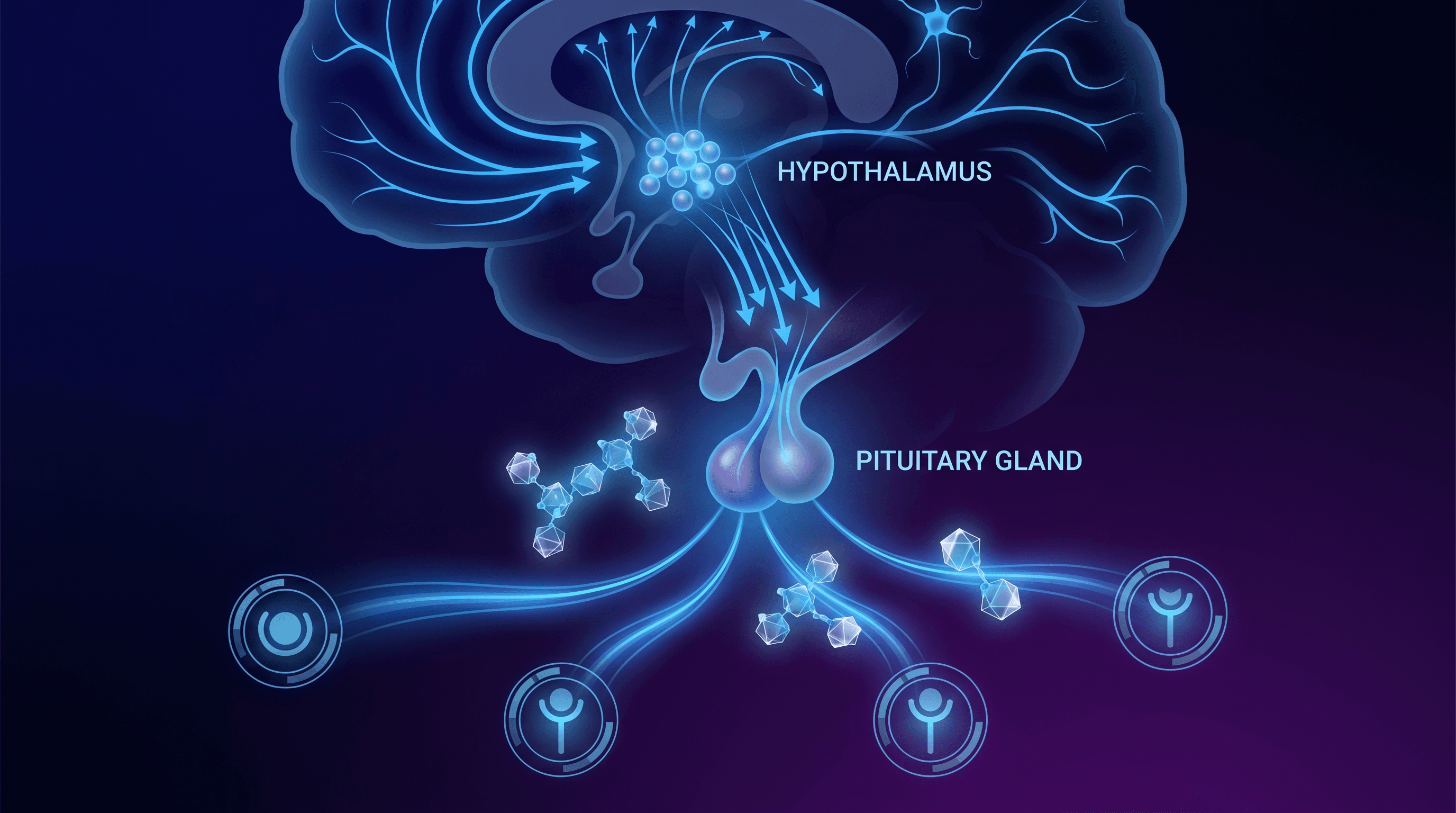
How Semax Works: The BDNF Connection
The most important published finding about Semax is its effect on BDNF — brain-derived neurotrophic factor. A landmark 2006 study by Dolotov et al. in the Journal of Molecular Neuroscience found that Semax dramatically upregulates both BDNF gene expression and its high-affinity receptor TrkB in the rat septum and hippocampus — brain regions critical for memory formation and emotional regulation. [5]
BDNF is sometimes called "Miracle-Gro for the brain" — it promotes neuronal survival, synaptic plasticity, and the formation of new neural connections (neurogenesis). Chronically low BDNF is associated with depression, cognitive decline, and poor stress resilience. Acutely elevated BDNF is associated with enhanced learning, memory consolidation, and improved mood.
Beyond BDNF, the 2014 genomic study by Medvedeva et al. in BMC Neuroscience used whole-genome transcriptional analysis to show that Semax affects expression of hundreds of genes related to immune regulation, vascular function, and neuroprotection in rat brain ischemia — revealing how comprehensively it modulates the brain's stress-response programs. [1]
Practical mechanism summary:
- BDNF/TrkB upregulation — Increases synaptic plasticity and neural connectivity [5]
- Melanocortin receptor modulation — MC4R and MC5R effects in the hypothalamus influencing attention and arousal
- Dopaminergic tone — Enhanced dopamine turnover in striatal regions, contributing to motivation and focus
- Neuroprotection — Reduces oxidative damage and inflammatory cytokines in stressed neural tissue [1]
- Enkephalin regulation — Inhibits enkephalin-degrading enzymes, extending endogenous opioid peptide effects that influence mood [2]
Semax is approved in Russia for ischemic stroke, cognitive disorders, peptic ulcers, optic nerve atrophy, and as a general cognitive enhancer. It's administered either intranasally (as a nasal spray — the most common research route) or subcutaneously.
Selank: The Anti-Anxiety Peptide With Nootropic Properties
Selank (Thr-Lys-Pro-Arg-Pro-Gly-Pro) is a synthetic heptapeptide derived from the human immunomodulatory peptide tuftsin (Thr-Lys-Pro-Arg), extended with a Pro-Gly-Pro tripeptide sequence to improve stability and enhance CNS penetration. It was developed at the same Institute of Molecular Genetics and approved in Russia and Ukraine for treating anxiety disorders and mild-to-moderate depression.
Where Semax is primarily stimulating and cognitively activating, Selank is primarily anxiolytic and mood-stabilizing — but with notable cognitive benefits of its own. The combination addresses cognition from two angles: Semax provides the "engine" of enhanced neural plasticity and focus; Selank removes the "friction" of anxiety and stress-related cognitive interference.
How Selank Works
Selank's anxiolytic mechanism was established by Kozlovskaya et al. in a 2003 Bulletin of Experimental Biology and Medicine study that compared its efficacy to diazepam (Valium) in animal anxiety models. [7] Key finding: Selank produced equivalent anxiolytic effects to diazepam without causing sedation, muscle relaxation, or the withdrawal effects characteristic of benzodiazepines.
Selank's primary mechanisms:
- Enkephalin system modulation — Like Semax, Selank inhibits enkephalin-degrading enzymes (leucine-enkephalin), effectively extending the action of endogenous opioid peptides that regulate mood and stress response. [3]
- GABA-A modulation — Selank interacts with the GABAergic system (the primary inhibitory neurotransmitter system) in a manner that reduces anxiety without the full agonist effects of benzodiazepines — explaining its lower sedation and no physical dependence.
- Serotonin system — Upregulates serotonin turnover in limbic regions, contributing to its mood-stabilizing effects.
- IL-6 modulation — Reduces neuroinflammatory interleukin-6, which is chronically elevated in stress and anxiety states and directly impairs cognitive function.
- BDNF (secondary) — Also increases BDNF to some degree, contributing to its protective and cognitive effects. [4]
Selank is available in Russia as a registered anxiolytic/nootropic approved for generalized anxiety disorder, neurasthenia, and stress-related cognitive impairment. It is typically self-administered intranasally.
Why Stack Semax + Selank? The Complementary Profile
The rationale for stacking these two peptides is straightforward: they address cognitive performance from complementary angles with no pharmacological overlap in their primary mechanisms.
| Property | Semax | Selank |
|---|---|---|
| Primary Effect | Cognitive activation, focus, memory | Anxiolytic, mood stabilization |
| Key Mechanism | BDNF/TrkB upregulation, dopamine | Enkephalin stabilization, GABA modulation |
| Peptide Sequence | Met-Glu-His-Phe-Pro-Gly-Pro (7 aa) | Thr-Lys-Pro-Arg-Pro-Gly-Pro (7 aa) |
| Parent Molecule | ACTH(4-7) fragment | Tuftsin fragment |
| Approved Use (Russia) | Stroke, cognitive disorders | Anxiety, neurasthenia |
| Administration | Intranasal or SubQ | Intranasal or SubQ |
| Stimulating Effect | Mild to moderate | None (calming) |
| Sedating Effect | None | None (anxiolytic without sedation) |
| BDNF Effect | Strong upregulation | Mild upregulation |
| Half-life | ~30 min intranasal | ~30 min intranasal |
Reported Cognitive Benefits: Semax vs. Selank
Self-Reported Cognitive Benefits by Category (Research Community Survey Data)
Illustrative data based on aggregated community survey reports. Not from controlled clinical trials. Individual responses vary significantly.
Clinical Evidence and Research Status
The evidence base for Semax and Selank is stronger than most people in the West realize — primarily because most of it was published in Russian-language journals and registered through the Russian clinical trials database, not ClinicalTrials.gov.
Semax clinical data:
- Approved by the Russian Ministry of Health in 1999 for ischemic stroke recovery and cognitive disorders
- A Phase II/III trial (NCT01753349) evaluated intranasal Semax (0.1%) in acute ischemic stroke, with neurological outcome as primary endpoint [6]
- Multiple Russian-published open-label studies show improved neurological recovery scores vs. standard of care in stroke patients
- Published animal studies confirm BDNF induction across hippocampus, cortex, and septum at doses translatable to human research protocols [5]
Selank clinical data:
- Approved by the Russian Ministry of Health in 2009 for anxiety and neurasthenia
- Phase III clinical trials demonstrated equivalence to benzodiazepine anxiolytics in reducing Hamilton Anxiety Scale scores, with superior safety profile (no dependence, no sedation) [7]
- Published comparative studies vs. diazepam and buspirone showing non-inferior anxiolytic effects [7]
The primary limitation for Western research consumers: most human data is published in Russian, conducted under Russian regulatory frameworks, and not yet independently replicated in Western double-blind RCTs. The animal and mechanistic data is highly credible; the human translation relies more on the Russian clinical approval system than on Western peer-reviewed replication.

Dosage Protocol: Semax + Selank Stack
Both peptides are most commonly administered intranasally (nasal spray) in research settings — a practical and well-studied route that achieves good CNS delivery via olfactory and trigeminal nerve pathways. Subcutaneous injection is an alternative with potentially higher bioavailability but is less commonly used for these particular peptides.
| Peptide | Dose Per Nostril | Frequency | Timing | Cycle Length |
|---|---|---|---|---|
| Semax 0.1% nasal | 1–2 drops (~100–200 mcg) | 1–2× daily | Morning and/or midday (not at night — can disrupt sleep) | 4–8 weeks on, 2–4 weeks off |
| Selank 0.15% nasal | 2–3 drops (~150–225 mcg) | 1–3× daily | Morning and/or as needed for anxiety; OK to take evening | 4–8 weeks on, 2–4 weeks off |
| Stack (both together) | Semax first, Selank after 15 min | 1–2× daily | Morning routine or as-needed cognitive demands | Align cycles; take breaks together |
Side Effects and Safety Profile
Semax and Selank have notably clean safety profiles relative to their effects — one reason they became approved pharmaceuticals in Russia despite being developed in a Soviet research environment with limited resources for extensive safety testing.
Semax reported effects:
- Mild nasal irritation from the intranasal carrier solution
- Transient headache in the first 1–2 days (typically resolves)
- Occasional mild restlessness or heightened energy, especially if dosed late in the day
- No reported physical dependence or withdrawal in clinical use
- No cortisol or hormonal disruption at standard doses (unlike the parent ACTH molecule)
Selank reported effects:
- Mild nasal irritation
- Rarely, very mild sedation (far less than benzodiazepines)
- No withdrawal or dependence reported in clinical trials
- No significant interaction with alcohol or other CNS depressants at standard doses
The most significant caution is theoretical: Semax's BDNF-upregulating effects are largely beneficial, but very high BDNF can theoretically promote growth in certain tumor types. No clinical evidence connects research doses of Semax to cancer, but individuals with active malignancies should exercise caution.
Where to Source Verified Semax and Selank (2026)
Unlike many peptides that exist only as lyophilized powders, Semax and Selank are available both as nasal spray solutions (pre-made) and as lyophilized powder for reconstitution. Verify that suppliers provide certificates of analysis covering identity (mass spec), purity (HPLC), sterility, and endotoxin testing.
Peptide Technologies
Most Transparent COAsSemax & Selank
Check site for pricing
QR-code COA on every batch. ISO 17025-accredited lab testing including HPLC, mass spectrometry, endotoxin, and sterility verification. US-manufactured.
Modified Aminos
Fastest ShippingSemax & Selank
Check site for pricing
US-manufactured, same-day shipping on orders placed before 2 PM CST. HPLC-verified COA on every batch.
VANDL Labs
Best PriceSemax & Selank
Semax from $29.99 · Selank from $24.99
Competitive pricing on nootropic peptides. COAs from accredited third-party labs. Free BAC water on orders over $200.
Amino USA
Research-FocusedSemax & Selank
Check site for pricing
Third-party tested with detailed research references. Full product documentation for lab use.
Frequently Asked Questions
What does Semax feel like and how quickly does it work?
Most research users report effects within 15–30 minutes of intranasal administration. Common subjective reports include enhanced mental clarity, improved focus and verbal fluency, and a mild energizing quality. Unlike stimulants, the effect is described as "turning up the signal" rather than stimulation — calm and focused rather than wired. Effects typically last 4–8 hours.
Can you take Semax and Selank together at the same time?
Yes, they're commonly co-administered. A typical approach is to administer Semax first (to get the BDNF/activation component) and follow with Selank 10–15 minutes later. Some users take them simultaneously. No pharmacological incompatibilities are known; they work through distinct mechanisms at different receptor systems.
Is Semax legal in the United States?
In the US, Semax is not FDA-approved and is not a controlled substance. It exists in a regulatory grey area as a research compound — legal to purchase for research purposes, but not for human consumption or sale as a drug. Regulatory status varies by country; check local regulations. Semax is WADA-listed as a prohibited substance for competitive athletes.
How does the Semax + Selank stack compare to other nootropics like racetams or modafinil?
The mechanistic comparison is meaningful: racetams primarily modulate AMPA glutamate receptors and acetylcholine; modafinil primarily increases dopamine, norepinephrine, and histamine. Semax/Selank operate deeper in the genetic regulation of brain plasticity (BDNF, melanocortin, enkephalin systems). Many users report that the peptide stack produces qualitatively different effects — particularly the anxiety reduction from Selank — that synthetic small-molecule nootropics don't provide.
Do you need to cycle off Semax and Selank?
Standard research protocols suggest 4–8 week cycles with 2–4 weeks off. The rationale is partly pharmacological (maintaining receptor sensitivity) and partly precautionary (giving the CNS time to normalize between supplementary BDNF periods). Some researchers use them continuously for shorter periods when under high cognitive demands, but long-term continuous use data is limited.
The Bottom Line
The Semax + Selank stack represents one of the most pharmacologically rational cognitive-enhancement combinations in the research peptide space. Semax drives neuroplasticity and focus through BDNF upregulation and melanocortin activity; Selank removes cognitive interference by calming the enkephalinergic and GABAergic systems without sedation. They cover complementary territory.
The evidence base is genuinely solid — bolstered by the fact that both are approved pharmaceuticals in Russia with a decades-long clinical track record, not just laboratory curiosities. The gap for Western researchers is the relative scarcity of independent English-language replication in double-blind RCTs. That replication is coming as these compounds gain mainstream research interest.
For a complete picture of the peptide landscape, also see our guides on the CJC-1295 + Ipamorelin stack (for growth hormone optimization) and the Wolverine Stack (for injury recovery).
Sources & References
- 1.Medvedeva EV, Dmitrieva VG, Povarova OV, et al.. "The peptide semax affects the expression of genes related to the immune and vascular systems in rat brain focal ischemia: genome-wide transcriptional analysis" — BMC Neuroscience, 2014. DOI: 10.1186/1471-2202-15-4.View source
- 2.Kolomin T, Shadrina M, Slominsky P, Limborska S, Myasoedov N. "A new generation of drugs: synthetic peptides based on natural neuropeptides" — Neuroscience & Medicine, 2013. DOI: 10.4236/nm.2013.41004.View source
- 3.Zozulya AA, Kost NV, Sokolov OY, et al.. "Inhibitory effect of Thr-Lys-Pro-Arg-Pro-Gly-Pro and its fragments on enkephalin-degrading enzymes" — European Neuropsychopharmacology, 1999. DOI: 10.1016/s0924-977x(98)00045-x.View source
- 4.Semenova TP, Kozlovskaya MM, Zuikov AV, Zuikova EA. "Selank and its structural analog DSIP alleviate manifestations of anxiety-phobic disorders in rats with genetically-determined fear reactions" — Neurochemical Journal, 2010. DOI: 10.1134/S1819712410030081.View source
- 5.Dolotov OV, Karpenko EA, Inozemtseva LS, et al.. "Semax, an analog of ACTH(4-7), regulates expression of BDNF and its receptor TrkB in the septum and hippocampus of rat brain" — Journal of Molecular Neuroscience, 2006. DOI: 10.1385/JMN:28:1:051.View source
- 6.ClinicalTrials.gov. "Semax in Acute Ischemic Stroke (Phase II/III trial)" — ClinicalTrials.gov, 2012.View source
- 7.Kozlovskaya MM, Kozlovskiy VI, Nadorov SA, et al.. "Comparative study of the anxiolytic activity of Selank and diazepam on models of anxiety disorders in rats" — Bulletin of Experimental Biology and Medicine, 2003. DOI: 10.1023/b:bebm.0000011825.72327.db.View source