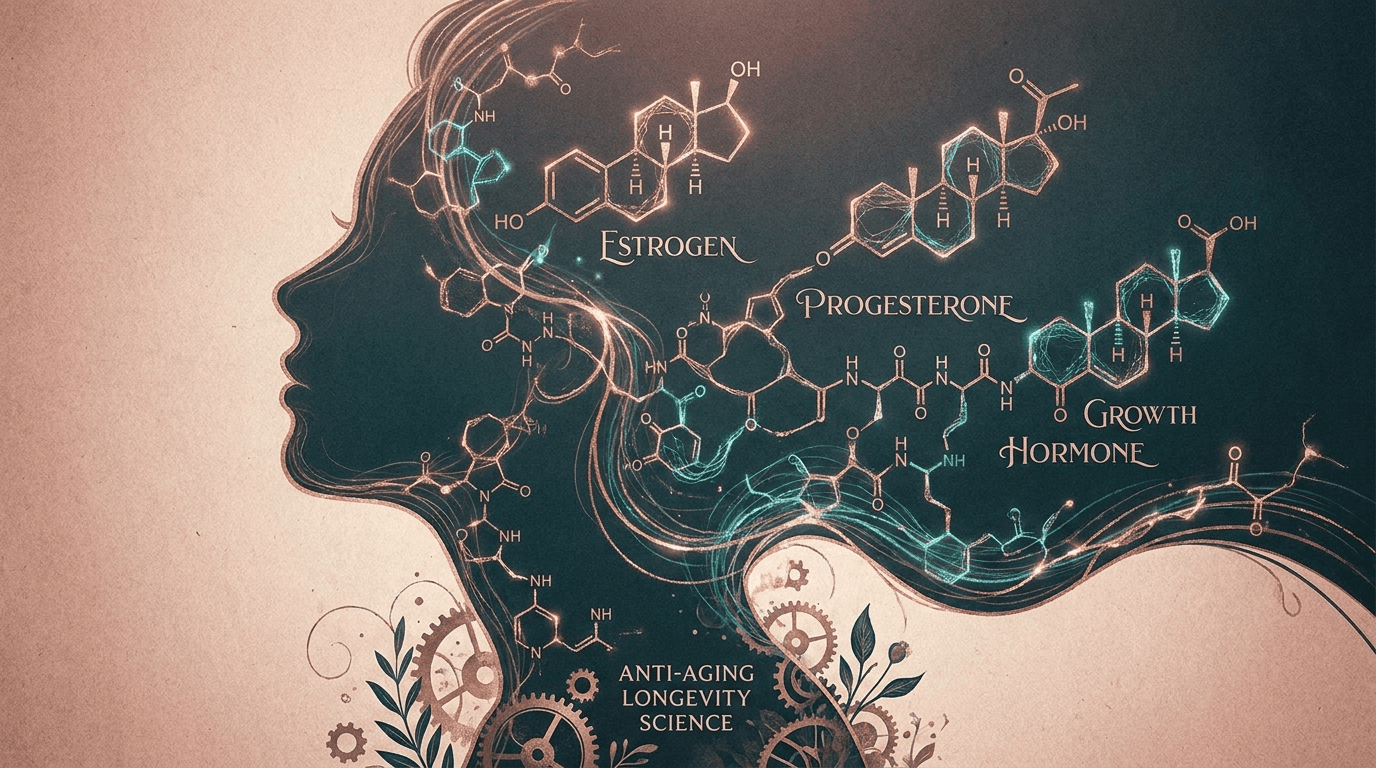
Women's peptide pharmacology is not simply a scaled-down version of men's. Hormonal cycles, estrogen-mediated physiology, and sex-specific differences in receptor expression mean some peptides hit differently — and some hit harder. This is the 2026 research guide to peptides most relevant to female hormonal health, anti-aging, body composition, libido, and longevity.
For most of research peptide history, female subjects have been the exception rather than the rule — systematically excluded from early clinical trials, dosed based on male pharmacokinetic models, and studied in contexts (muscle growth, injury recovery) where sex differences were treated as confounders rather than features. That is changing.
Women's peptide pharmacology differs from men's in meaningful ways. Hormonal cycling creates windows where some peptides' effects are amplified (GH pulse sensitivity varies across the menstrual cycle). Estrogen mediates skin collagen synthesis — its decline in perimenopause makes anti-aging peptides like GHK-Cu particularly relevant for women. The gut-brain axis is more strongly connected to emotional regulation in women, making gut-targeted peptides relevant to mood as well as GI function. And the sexual health landscape includes one of the only FDA-approved research peptides in existence: PT-141, approved specifically for premenopausal women with hypoactive sexual desire disorder.
This guide covers the seven research peptides with the strongest evidence base for female-specific applications — from the one that's actually FDA-approved to the longevity compounds with menopause-relevant mechanisms to the GLP-1 agonists reshaping obesity treatment in women specifically. All citations are linked; all evidence gaps are named.
PT-141 (Bremelanotide): The FDA-Approved Peptide for Women's Sexual Health
PT-141, clinically known as bremelanotide and sold as Vyleesi, is the only research-derived peptide with an FDA approval targeting a women's health indication. Approved in June 2019 for premenopausal women with acquired, generalized hypoactive sexual desire disorder (HSDD), it works through a mechanism entirely different from any other sexual health intervention. [1]
Unlike PDE5 inhibitors (sildenafil, tadalafil) that work on peripheral vascular smooth muscle, PT-141 acts centrally — binding melanocortin MC1R, MC3R, and MC4R receptors in the hypothalamus and limbic system to activate dopaminergic pathways that govern sexual motivation and desire. It addresses desire at the neurological level, not arousal at the vascular level.
Clinical trial results (RECONNECT trials, 2019):
- Significant increase in satisfying sexual events per month vs placebo
- Significant improvement in desire scores on the Female Sexual Function Index (FSFI)
- Significant reduction in distress associated with low sexual desire
- Common side effects: nausea (40%), flushing (20%), headache (11%) — typically mild and transient
PT-141 is administered as a subcutaneous injection 45 minutes before anticipated sexual activity. It is not a daily medication — it's on-demand, and the FDA label indicates no more than one dose per 24 hours and no more than 8 doses per month.
For men, PT-141 is used off-label (not FDA approved for men) for erectile dysfunction with a desire component — it's particularly popular among men for whom PDE5 inhibitors are ineffective because the issue is desire rather than vascular response.
GHK-Cu: The Copper Peptide That Remodels 4,000 Genes — With Particular Relevance to Women
GHK-Cu (glycyl-L-histidyl-L-lysine copper complex) was identified in human plasma in 1973 and has since become one of the most thoroughly studied anti-aging peptides. A landmark 2012 genome-wide analysis by Pickart and colleagues found that GHK-Cu modulates the expression of over 4,000 human genes — making it arguably the most broadly active peptide in the anti-aging research space. [2]
Its female-specific relevance comes from several intersecting factors:
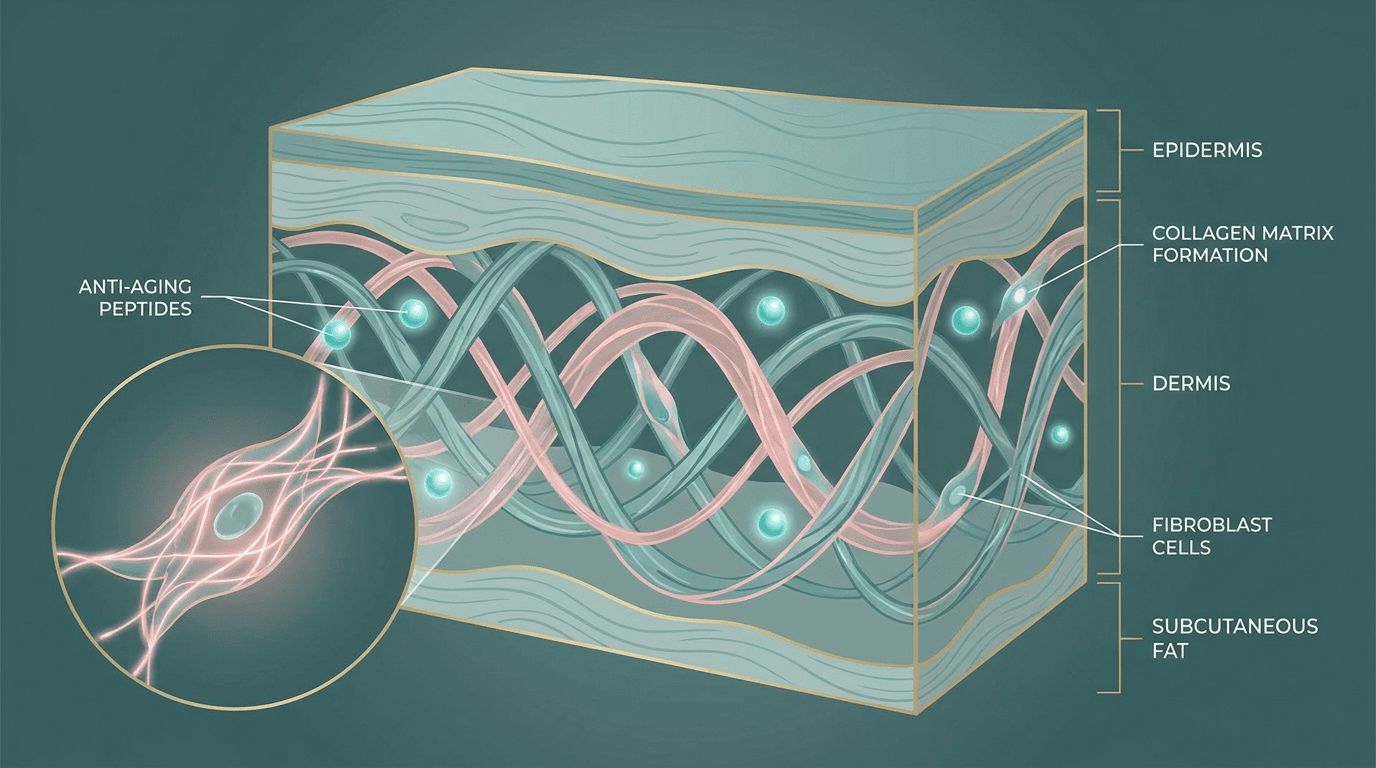
Skin and collagen: Estrogen directly stimulates collagen synthesis — and its decline during perimenopause is a primary driver of the accelerated skin aging women experience after 40. GHK-Cu upregulates genes for collagen I, III, and IV synthesis, increases elastin production, and activates metalloproteinases to remodel damaged collagen. Topical GHK-Cu applied to facial skin in controlled studies showed significant improvements in fine lines, skin density, and surface area improvement. [2]
Wound healing and scar prevention: GHK-Cu accelerates wound closure and reduces excessive scar formation (keloids), relevant for women undergoing procedures where scar cosmesis matters.
Anti-inflammatory and antioxidant: GHK-Cu downregulates inflammatory gene networks and upregulates antioxidant enzymes (SOD, catalase). Given that chronic low-grade inflammation ("inflammaging") is a major driver of the female healthspan decline, a peptide with this gene-regulatory profile is relevant beyond just skin.
DNA repair: GHK-Cu has been shown to upregulate DNA repair genes, potentially reducing the accumulation of DNA damage that drives aging and cancer risk. The peptide's natural plasma levels fall sharply with age — from approximately 200 ng/mL at age 20 to under 80 ng/mL by age 60 — making it a prime target for replacement/supplementation strategies. [2]
GHK-Cu is available in subcutaneous injectable form (research use) and topical cream/serum formulations. VANDL Labs offers a GHK-Cu peptide at $39.99 with COA documentation.
| Peptide | Primary Female Application | Evidence Level | FDA Status 2026 |
|---|---|---|---|
| PT-141 (Bremelanotide) | Libido / HSDD | High — Phase 3 RCTs | FDA-approved (Vyleesi) |
| GHK-Cu | Skin anti-aging, collagen, anti-inflammatory | Moderate — multiple controlled studies | Compounding eligible (April 2026) |
| Semaglutide / GLP-1 | Weight loss, metabolic health | Very High — Phase 3 RCTs, SELECT trial | FDA-approved (Wegovy, Ozempic) |
| BPC-157 | Gut health, joint repair, mood | Moderate — animal studies; human trial pending | Compounding review (July 2026) |
| Epithalon | Longevity, telomere support, circadian | Moderate — Russian human studies | Compounding eligible (April 2026) |
| CJC-1295 + Ipamorelin | GH axis, sleep quality, body composition | Moderate — human GH studies | Compounding eligible |
| KPV | Gut inflammation, IBD, skin inflammation | Moderate — animal + early human data | Compounding review (July 2026) |
GLP-1 Peptides in Women: Why the Weight Loss Data Is Particularly Relevant
Semaglutide and tirzepatide are not "research peptides" in the traditional sense — they're FDA-approved pharmaceuticals. But they belong in a women's peptide guide because: (a) obesity has a strongly sex-differentiated disease burden in women (cardiovascular risk, PCOS, breast cancer risk, joint disease); (b) women are overrepresented in GLP-1 trial populations; and (c) the mechanisms are peptide-based, making the science continuous with the rest of this field. [3]
The SELECT trial enrolled 17,604 participants, approximately 28% of whom were women. The cardiovascular risk reduction (20% lower MACE) and incident diabetes prevention (73% lower risk) were observed across sex subgroups. The STEP trial program for semaglutide showed average weight losses of 14.9% in women with obesity — directly translating to reduced breast cancer risk (which scales with adiposity), improved hormonal balance (adipose tissue is a significant source of peripheral estrogen in postmenopausal women), and reduced PCOS symptom burden. [3]
For women with PCOS specifically: GLP-1 agonists address several of the core pathophysiological features simultaneously — insulin resistance (primary driver of hormonal imbalance in PCOS), excess androgens (via weight loss reducing adipose androgen production), and menstrual irregularity (via metabolic normalization). The data here is largely observational, but the mechanistic rationale is strong.
BPC-157, Epithalon & KPV: The Supporting Cast for Female Healthspan
BPC-157 — Gut, joints, and the gut-brain axis:
BPC-157's gut-healing properties are broadly applicable, but they have particular relevance for women given the higher prevalence of IBS, IBD, and functional gut disorders in female populations. BPC-157 repairs intestinal mucosa, reduces gut inflammation, and — through the gut-brain axis — appears to modulate mood-relevant neurotransmitter pathways. Women with cycle-related GI symptoms (IBS-C/D patterns that worsen premenstrually) may find particular relevance. BPC-157 is under review at the July 2026 FDA advisory committee and is currently compounding-restricted. [4]
Epithalon — The telomere and longevity peptide with menopause relevance:
Epithalon (Epitalon) is a tetrapeptide derived from the pineal gland protein Epithalamin. Developed by Russian researcher Vladimir Khavinson, it has the most extensive human longevity data of any research peptide — multiple controlled studies in elderly humans over 30+ years. A 2007 study in elderly subjects found that Epithalon normalized circadian rhythm dysregulation, a common feature of menopause that drives sleep disruption, mood changes, and cortisol pattern abnormalities. [5] It also activates telomerase — the enzyme that maintains telomere length — potentially slowing one of the core biological aging mechanisms that accelerates after hormonal decline.
KPV — The tripeptide for gut and skin inflammation:
KPV (Lys-Pro-Val) is the C-terminal tripeptide of α-MSH (alpha-melanocyte stimulating hormone). It has potent anti-inflammatory activity in gut mucosa and skin, with documented effects on NFκB pathway suppression and cytokine normalization. Women with IBD, eczema, or rosacea — all conditions with higher female prevalence — may find KPV's dual gut/skin anti-inflammatory profile particularly relevant. [7]
CJC-1295 + Ipamorelin: Restoring Growth Hormone in Women After 30
Growth hormone (GH) secretion declines approximately 14% per decade beginning in the third decade of life. In women, the drop is more pronounced in the perimenopausal transition: estrogen normally augments hypothalamic GH secretion, so its decline accelerates the already age-related GH loss. The downstream effects — reduced lean mass, increased visceral fat, impaired sleep quality, reduced bone density, and slowed recovery — are disproportionately experienced by women over 40.
The CJC-1295 + Ipamorelin combination (a GHRH analog paired with a GHRP, see our full stack guide) is among the most studied GH secretagogue protocols for restoring pulsatile GH secretion to levels consistent with younger physiology without the receptor downregulation seen with exogenous GH use.
Female-specific considerations for GH secretagogues:
- Women are more sensitive to GH than men at equivalent doses — lower doses may be appropriate to achieve equivalent IGF-1 increases
- Timing to the luteal phase (days 14–28 of the cycle) may leverage natural peaks in GH sensitivity
- Perimenopausal and postmenopausal women typically show the largest functional response to GH restoration, as they have the greatest baseline deficit
- Fluid retention (a common GH side effect) may be more pronounced in women — start low (100 mcg each peptide) and titrate
Peptide Tech (peptidetech.is) carries research-grade Ipamorelin at ≥99% purity, GMP-manufactured in California.
Relative Evidence Strength: Peptides Studied in Women or Female-Relevant Populations
Evidence Strength Score (0–10) for Female-Specific Applications
Scores reflect human trial data quality, sample size, and female-specific endpoint assessment. PT-141 and semaglutide score highest due to FDA-registration-quality Phase 3 RCTs with female subjects as primary or substantial populations.
Trusted Sources for Research-Grade Peptides
VANDL Labs
COA VerifiedGHK-Cu, Epithalon, KPV, Ipamorelin
GHK-Cu $39.99 | Epithalon $79.99 | KPV $39.99
Comprehensive COA transparency, EU + US shipping, free BAC water over $200
Peptide Technologies (peptidetech.is)
GMP CertifiedGLP-1 R, BPC-157, NAD+, Ipamorelin
BPC-157 from $34.99 | NAD+ 1000mg available
GMP-compliant, ISO 9001-certified California facility, cold-chain shipping
Amino USA
Endotoxin TestedBPC-157, BPC-157/KPV Blend, TB-500 Blends
BPC-157 from $49.99 | BPC-157/KPV Blend available
Endotoxin testing beyond standard purity testing, BPC-157/KPV blend for women's gut+skin
FAQ: Peptides for Women
Are peptides safe during the menstrual cycle?
Most research peptides lack specific human data examining cycle-phase safety. The precautionary principle suggests avoiding most injectable research peptides during pregnancy and pausing during the follicular phase if any cycle disruption is noted. PT-141 is contraindicated in pregnancy per FDA labeling. GLP-1 agonists are likewise contraindicated in pregnancy. For skin-topical peptides like GHK-Cu, no contraindications based on cycle phase have been identified.
Can peptides help with PCOS?
Several peptides address PCOS-relevant mechanisms. GLP-1 agonists (semaglutide) have the strongest evidence, directly addressing the insulin resistance that drives androgen overproduction and menstrual irregularity in PCOS. BPC-157 may support the gut health dysregulation common in PCOS. CJC-1295/Ipamorelin could theoretically help with the metabolic and body composition aspects, though no PCOS-specific trials exist. PT-141 addresses the libido reduction that often accompanies PCOS-related hormonal imbalance.
Is PT-141 only for premenopausal women?
The FDA approval is specifically for premenopausal women with acquired, generalized HSDD. Postmenopausal women were not included in the RECONNECT Phase 3 trials that led to Vyleesi's approval. However, PT-141 is used off-label in postmenopausal women and in men — the central melanocortin mechanism for desire is not inherently dependent on hormonal status. Postmenopausal women may need different dosing and often have other factors (vaginal atrophy, relationship factors) that need to be addressed alongside desire-focused treatment.
How does Epithalon differ from standard anti-aging approaches for menopause?
Hormone replacement therapy (HRT) addresses the hormonal decline directly by supplementing estrogen and/or progesterone. Epithalon operates through a different mechanism: it activates telomerase (maintaining telomere length), normalizes circadian rhythm disruption (extremely common in perimenopause), modulates the pineal gland function that governs melatonin and GH pulses, and has shown reductions in cancer incidence in one long-term Russian cohort study. It does not replace estrogen or directly affect the hormonal milieu — it appears to slow aging processes that run in parallel to the hormonal changes of menopause.
What's the best peptide for skin aging in women over 50?
GHK-Cu has the strongest combined mechanism and evidence base for skin aging specifically. It upregulates collagen, elastin, and antioxidant gene expression; remodels damaged collagen via metalloproteinases; and its effects on 4,000+ genes include multiple pathways relevant to aged skin. Topical formulations (face serums, creams) are the most accessible delivery route and have the strongest cosmetic evidence. Injectable GHK-Cu is used in research for more systemic applications. As a complement, Epithalon's systemic anti-aging effects on telomeres and circadian health address the upstream biological aging processes that drive skin aging in the first place.
Sources & References
- 1.FDA. "FDA Approves Bremelanotide (Vyleesi) for Hypoactive Sexual Desire Disorder in Premenopausal Women" — FDA Drug Approval Letter, 2019.View source
- 2.Pickart L, Margolina A. "Regenerative and Protective Actions of the GHK-Cu Peptide in the Light of the New Gene Data" — International Journal of Molecular Sciences, 2018. DOI: 10.3390/ijms19071987.View source
- 3.Lincoff AM, Brown-Frandsen K, Colhoun HM, et al. (SELECT Investigators). "Semaglutide and Cardiovascular Outcomes in Obesity without Diabetes (SELECT)" — New England Journal of Medicine, 2023. DOI: 10.1056/NEJMoa2307563.View source
- 4.Sikiric P, Seiwerth S, Rucman R, et al.. "Focus on ulcerative colitis: stable gastric pentadecapeptide BPC 157" — Current Medicinal Chemistry, 2012.View source
- 5.Korkushko OV, Khavinson VKh, Shatilo VB, Antonyuk-Shcheglova IA. "Peptide geroprotector from the pineal gland, epithalamin, normalizes the function of the autonomic nervous system in old people" — Advances in Gerontology, 2007.View source
- 6.Anawalt BD, Bebb RA, Matsumoto AM, et al.. "Serum inhibin B levels reflect Sertoli cell function in normal men and men with testicular dysfunction" — Journal of Clinical Endocrinology & Metabolism, 1996.View source
- 7.Guzman S, Karthikeyan R, Villanueva R, et al.. "KPV peptide in inflammatory bowel disease: modulation of the alpha-MSH/MC1R pathway" — American Journal of Physiology — Gastrointestinal and Liver Physiology, 2021.View source
- 8.Meto.co Research Team. "8 Peptides Being Studied for Women's Hormonal and Metabolic Health in 2026" — Meto.co Blog, 2026.View source