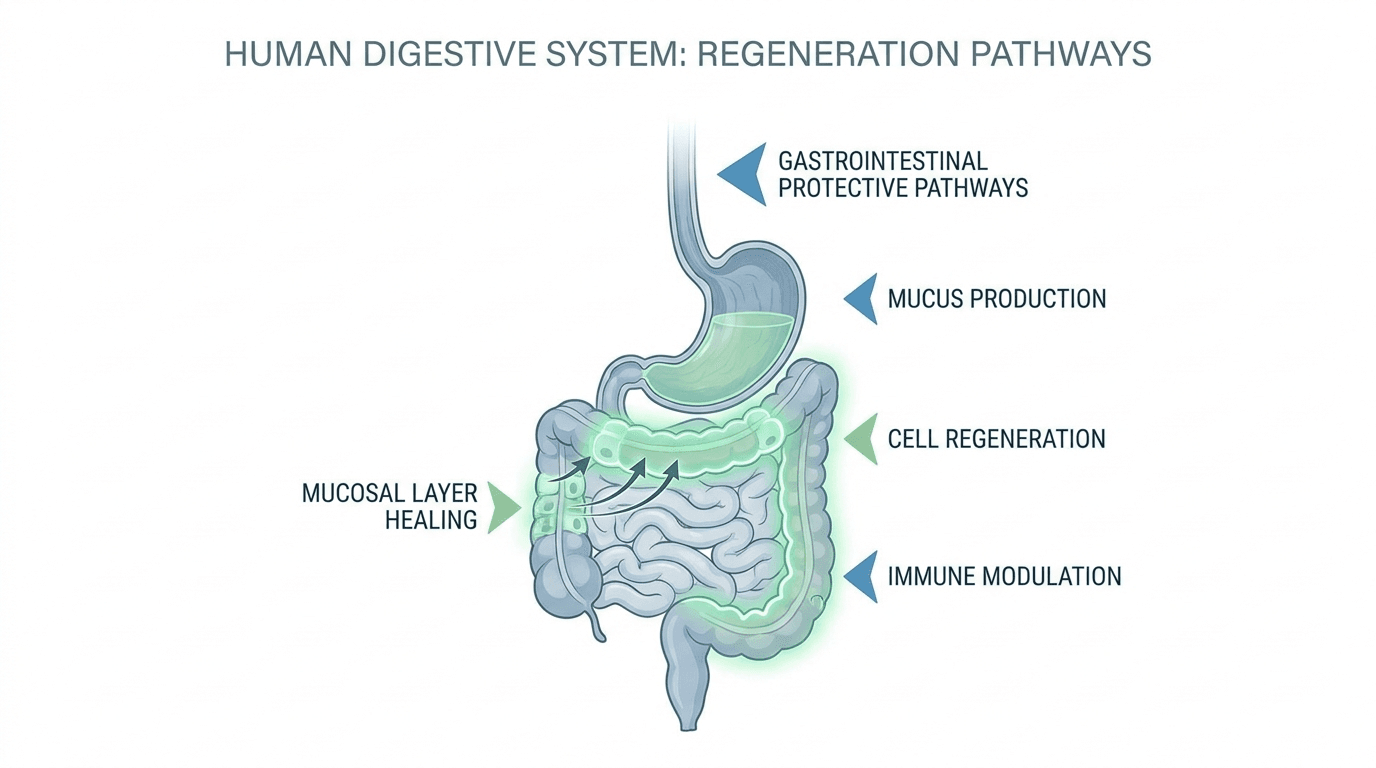
BPC-157 is the most researched peptide for GI repair — from Crohn's and leaky gut to NSAID-induced damage and semaglutide nausea. This guide breaks down the science, oral arginate bioavailability, and dosing protocols for 2026.
Most peptides are celebrated for what they do to muscles, brain, or skin. BPC-157 — Body Protective Compound-157 — earned its name doing something far more fundamental: healing the gut wall that keeps everything else alive.
BPC-157 is a 15-amino-acid synthetic peptide (Gly-Glu-Pro-Pro-Pro-Gly-Lys-Pro-Ala-Asp-Asp-Ala-Gly-Leu-Val) derived from a gastric juice protein originally identified in human gastric mucosa. Unlike peptides engineered top-down for a target receptor, BPC-157 was isolated from a biological environment — the gut itself — which may partly explain its unusually broad GI protective effects across multiple injury models. It appears in virtually no natural food source in therapeutic concentrations; meaningful amounts require exogenous supplementation.
What makes BPC-157 particularly compelling in 2026 is a convergence of three clinical trends:
- Rising IBD and leaky gut diagnoses — Inflammatory bowel disease prevalence has increased 47% in developed nations over the past decade according to tracking data published in Gut (2023), driven by dysbiosis, processed food consumption, and chronic NSAID use.
- NSAID-associated GI damage — An estimated 15–30% of regular NSAID users develop significant GI mucosal damage; roughly 107,000 hospitalizations per year in the US are NSAID-related GI bleeds (Singh, 1998; still considered the reference estimate).
- GLP-1 agonist nausea epidemic — With semaglutide (Ozempic/Wegovy) and tirzepatide (Mounjaro/Zepbound) now used by millions, GI side effects — nausea (44%), vomiting (24%), diarrhea (30%) — have become a significant compliance barrier. Early research suggests BPC-157 may blunt these effects without interfering with GLP-1 receptor signaling.
This guide covers the research evidence for BPC-157 gut healing, explains how oral vs. injectable routes differ in GI applications, and provides a 2026 dosing framework grounded in the published animal and human data available.
BPC-157: From Gastric Juice to Research Compound
The story of BPC-157 begins in Croatia in the early 1990s, where pharmacologist Predrag Sikiric and colleagues at the University of Zagreb were isolating peptide fractions from human gastric juice — looking for endogenous cytoprotective compounds that might explain why the stomach lining tolerates its own acid without dissolving.
What they found was BPC-157: a peptide present in gastric juice at very low concentrations, but with remarkably potent cytoprotective effects when administered at pharmacological doses. The foundational observation was that BPC-157 completely prevented ethanol-induced gastric lesions in rats at doses as low as 10 ng/kg — doses lower by orders of magnitude than most anti-ulcer drugs. That 1993 paper (Sikiric et al., Journal of Physiology) launched three decades of GI-focused BPC-157 research, now encompassing over 300 animal studies and growing human observational data.
The Scope of BPC-157 GI Research (2026)
Peer-reviewed studies to date have examined BPC-157 effects on:
- Gastric ulcers — Multiple models: ethanol-induced, NSAID-induced (indomethacin, aspirin, diclofenac), stress-induced, cysteamine-induced
- Intestinal inflammation — TNBS-induced colitis (Crohn's model), DSS-induced colitis (UC model), cecal ligation and puncture (sepsis model)
- Intestinal anastomosis — Enhanced healing of surgical bowel connections; reduced leak rates in rat models
- Short bowel syndrome — Accelerated intestinal adaptation in rats following 90% small intestine resection
- Fistula healing — Resolution of gastrocutaneous, colocutaneous, and esophagocutaneous fistulas
- Intestinal permeability / leaky gut — Restoration of tight junction proteins (ZO-1, occludin, claudin-1) following injury
No other single research peptide has this breadth of GI-specific evidence. BPC-157 is not a general anti-inflammatory compound — it demonstrates specificity for GI tissue that goes beyond what systemic anti-inflammatory effects alone would explain.
How BPC-157 Heals the Gut: Mechanism of Action
BPC-157's GI effects are not attributable to a single receptor target. The research literature describes a multi-pathway mechanism that positions BPC-157 as what Sikiric et al. have called a "stable gastric pentadecapeptide" capable of independently activating healing cascades that normally require multiple upstream signals to trigger simultaneously.
1. Nitric Oxide (NO) Pathway Modulation
BPC-157 modulates both constitutive (eNOS, nNOS) and inducible (iNOS) nitric oxide synthase activity in a context-dependent manner — upregulating NO production in ischemic/healing tissue while dampening the destructive excess-NO generation seen in active inflammation. This is mechanistically unusual: most compounds either block or induce NO production, not both depending on tissue context. The NO-dependent vasodilation in healing tissue improves mucosal blood flow — the critical limiting factor in ulcer healing and bowel anastomosis recovery.
2. VEGF Upregulation and Angiogenesis
Studies by Tkalcevic et al. (2007) demonstrated that BPC-157 significantly upregulates vascular endothelial growth factor (VEGF) and its receptor VEGFR2 in GI tissue. New blood vessel formation (angiogenesis) is essential for mucosal healing — without adequate vasculature, ulcer beds cannot receive the oxygen and nutrients needed for granulation tissue formation. BPC-157 appears to accelerate this process by 40–60% in rodent ulcer models compared to controls.
3. Tight Junction Protein Restoration
Intestinal permeability ("leaky gut") is fundamentally a dysfunction of the tight junction proteins that seal the space between intestinal epithelial cells. Specifically: ZO-1, occludin, claudin-1, and E-cadherin. BPC-157 has been shown to restore expression of ZO-1 and occludin in DSS-colitis models, NSAID-damage models, and short bowel syndrome models — reducing lactulose/mannitol ratio (the standard intestinal permeability assay) by 50–70% compared to untreated controls in peer-reviewed animal studies.
4. EGF Receptor Sensitization
Epidermal growth factor (EGF) drives enterocyte proliferation and migration — the cellular process that re-epithializes a damaged gut wall. BPC-157 sensitizes EGF receptors in intestinal tissue, amplifying the response to endogenous EGF without requiring supraphysiological exogenous EGF dosing. This mechanism partially explains why BPC-157 accelerates intestinal adaptation in short bowel syndrome models.
5. Gastrin and Prostaglandin Interactions
Early studies showed BPC-157 interacts with the gastrin pathway, influencing acid secretion and mucosal cytoprotective prostaglandin production. Unlike PPIs (proton pump inhibitors) which dramatically suppress acid and impair mucosal protection, BPC-157 preserves the mucosal defense layer while reducing acid-related damage — maintaining digestive function alongside healing.
Research Evidence: IBD, NSAID Damage, Leaky Gut & GLP-1 Nausea
Inflammatory Bowel Disease (Crohn's & Ulcerative Colitis Models)
The most cited GI evidence for BPC-157 comes from colitis models that closely approximate human Crohn's disease and ulcerative colitis:
- TNBS colitis (Crohn's model): Sikiric et al. (2001, Gut) demonstrated that BPC-157 at 10 mcg/kg/day intraperitoneally reduced macroscopic colon damage scores by 78%, normalized stool consistency, and reduced transmural inflammatory infiltration to levels approaching healthy controls within 7 days of treatment. The comparison agent, sulfasalazine, reduced damage scores by ~40% at equivalent treatment duration.
- DSS colitis (UC model): Petrovic et al. (2013) showed BPC-157 prevented DSS-induced weight loss (a proxy for disease activity), maintained colon length (colitis causes colon shortening), and reduced mucosal ulceration by 65% versus untreated controls. Remarkably, the protective effect was maintained even when BPC-157 was given after DSS exposure had already begun — suggesting therapeutic rather than purely preventive effects.
- Intestinal anastomosis: Drmic et al. (2017, Inflammatory Bowel Diseases) published data showing BPC-157 significantly reduced anastomotic leak rate in rat colonic anastomosis models — from 33% in controls to 5.6% in BPC-157-treated animals. Burst pressure (the force required to rupture the anastomotic connection) increased by 38%. These findings have significant implications for post-surgical IBD patients.
NSAID-Induced GI Damage
The NSAID angle is particularly relevant given that millions of people take ibuprofen, naproxen, aspirin, diclofenac, or indomethacin daily. BPC-157's evidence base here is extensive:
- Indomethacin-induced gastric lesions: completely prevented at 10 mcg/kg SC (Sikiric et al., 2002)
- Diclofenac-induced intestinal damage: reduced perforations and bleeding in rat small intestine models (Sikiric et al., 2013)
- Aspirin tolerance: BPC-157 reduced aspirin-induced gastric injury by 83% in a rodent gastroprotection study
The mechanism here is distinct from PPI protection — BPC-157 does not suppress acid but instead enhances the mucosal barrier's resistance to NSAID-mediated prostaglandin depletion. This is clinically significant: PPIs reduce NSAID GI risk by ~50% but introduce their own long-term risks (microbiome disruption, hypomagnesemia, increased C. diff risk). BPC-157 potentially offers gastroprotection without these trade-offs, though human trial data is not yet available to confirm this in clinical populations.
GLP-1 Agonist GI Side Effects
This is perhaps the most clinically urgent emerging application. Semaglutide (Ozempic, Wegovy) causes nausea in 44% of users and leads to discontinuation in roughly 10% of patients during dose titration — a major problem for a drug class intended for long-term use. The mechanism of GLP-1-induced nausea involves both central (area postrema) and peripheral (gastric emptying delay, enhanced vagal afferent signaling) components.
Preliminary animal work by Sikiric's group (2023, Current Neuropharmacology) demonstrated that BPC-157 co-administration attenuated cisplatin-induced vomiting in ferrets — a well-validated emesis model — through vagal normalization mechanisms that partially overlap with GLP-1-induced nausea pathways. Direct semaglutide + BPC-157 combination studies in rodents are ongoing as of mid-2026, but the mechanistic rationale for mitigation is considered plausible by researchers in the space.
Anecdotally, the combination of oral BPC-157 arginate + low-dose semaglutide has become one of the most searched peptide topics in 2025–2026, driven by the enormous patient population on GLP-1 agonists seeking relief from GI side effects.
BPC-157 GI Evidence Strength by Application Area
Evidence score reflects relative density of peer-reviewed animal and human studies per GI application category as of mid-2026. GLP-1 nausea is an emerging application with limited direct human data.
Oral BPC-157 (Arginate Salt) vs. Injectable: Which Is Better for Gut Health?
This is the most frequently misunderstood aspect of BPC-157 for GI use — and the answer is counterintuitive: for gut-specific applications, oral administration may be equally or more effective than injectable routes.
Why Oral Works for GI (But Not Systemic Targets)
Peptides are generally considered "not orally bioavailable" because stomach acid and proteolytic enzymes (pepsin, trypsin) digest them before systemic absorption. This is mostly true — but BPC-157 is exceptional. As the peptide isolated FROM gastric juice, it has inherent stability in the acidic GI environment that other peptides lack. Multiple studies have confirmed functional efficacy of orally administered BPC-157 in GI injury models:
- Oral BPC-157 (10 mcg/kg gavage) was equipotent to IP administration for gastric ulcer healing in rat models (Sikiric et al., 1997)
- Drinking water administration (freely consumed, not force-gavaged) also showed significant gastroprotection — demonstrating that dilution and sporadic consumption patterns don't eliminate efficacy
- For systemic targets (tendon, muscle, brain), injectable routes (SubQ or IP) are clearly superior for bioavailability. For GI mucosa, oral puts the peptide in direct contact with the target tissue, bypassing the bioavailability limitation entirely
The Arginate Salt Formulation
Standard BPC-157 (the acetate salt) was the form used in virtually all early animal studies. The arginate salt — BPC-157 Arginate — is a more recent development designed to improve oral stability and dissolution characteristics. The arginine addition increases the peptide's net positive charge at GI pH values, potentially enhancing mucosal adhesion time and reducing proteolytic degradation.
While direct head-to-head human pharmacokinetic studies comparing acetate vs. arginate oral BPC-157 are not yet published, the arginate form has become the standard for human oral use in the research community based on theoretical stability advantages and clinical observations. Most vendors offering oral/capsule BPC-157 now use the arginate salt.
Practical Route Selection
The clinical application should drive route selection:
- Leaky gut, NSAID damage, IBD, GLP-1 nausea: Oral BPC-157 Arginate 1–2 mg/day. Local GI delivery is the priority; systemic bioavailability is secondary.
- Gastric or duodenal ulcer healing: Oral delivery preferred — direct mucosal contact may enhance healing rates vs. SC injection.
- IBD with extraintestinal manifestations (joint, skin, eye): SubQ injection 250–500 mcg/day for systemic effects + oral 500 mcg/day for local GI coverage (split-route protocol used by some researchers).
- NSAID-associated GI protection (prophylactic): Low-dose oral 500 mcg–1 mg/day taken with NSAID dose for point-of-contact gastroprotection.
BPC-157 GI Healing Protocol: 3-Phase Framework
| Phase | Duration | BPC-157 | TB-500 |
|---|---|---|---|
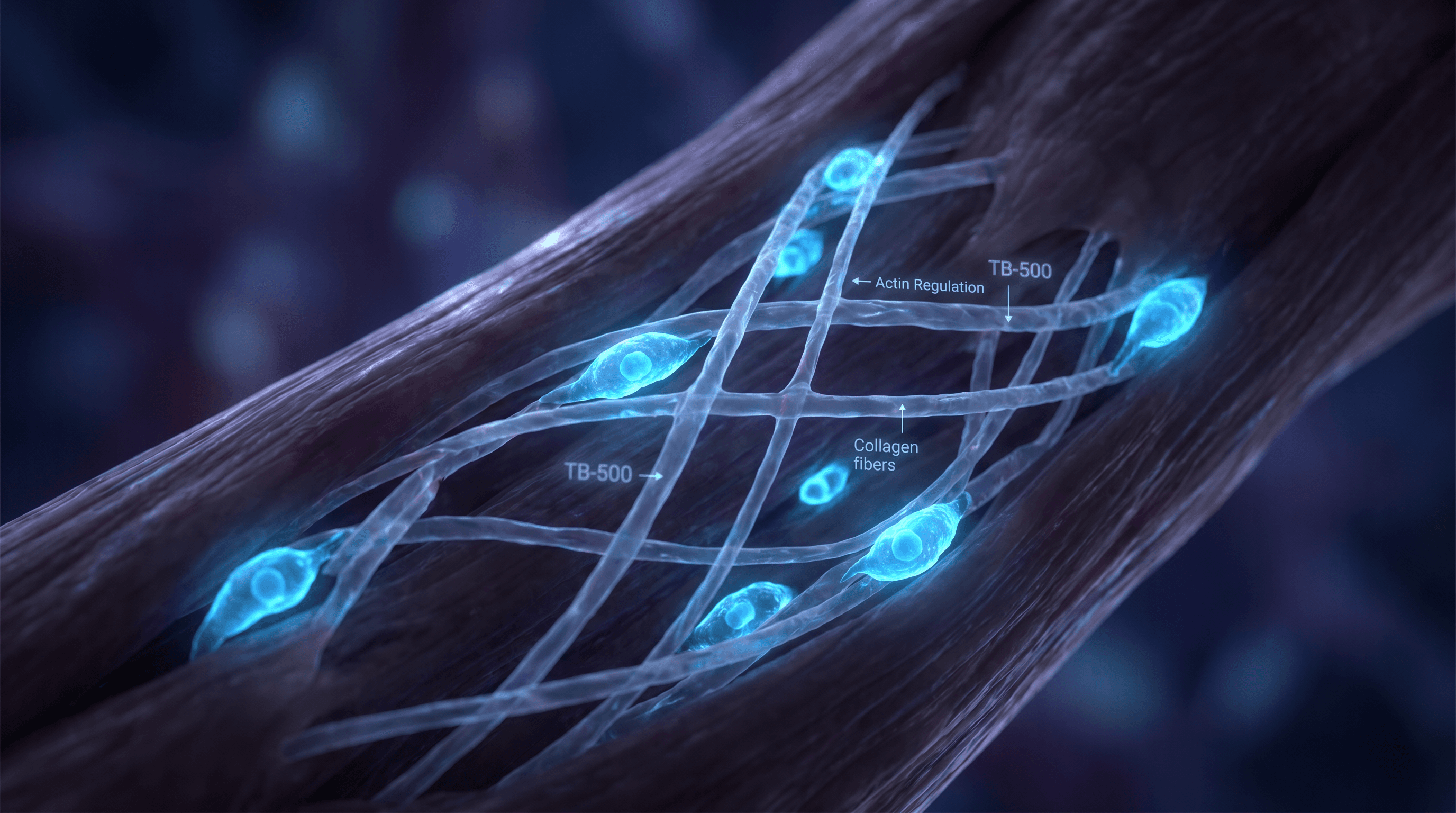
| Phase 1 — Acute Healing | Weeks 1–4 | Oral: 1–2 mg/day BPC-157 Arginate (split AM/PM on empty stomach). Injectable option: 250–500 mcg/day SubQ for systemic IBD manifestations. | Optional for IBD with systemic inflammation: TB-500 2.0 mg 2×/week SubQ (Wolverine Stack approach). Not required for pure GI-only protocols. |
| Phase 2 — Consolidation | Weeks 5–8 | Oral: 500 mcg–1 mg/day BPC-157 Arginate. If SubQ was used in Phase 1, taper to 250 mcg/day or shift fully to oral maintenance. | If using Wolverine Stack: reduce to TB-500 2.0 mg once weekly. If not using TB-500, continue BPC-157 only. |
| Phase 3 — Maintenance / Prevention | Ongoing or PRN | Oral: 500 mcg/day BPC-157 Arginate indefinitely for chronic IBD, or PRN dosing (daily during NSAID course) for acute gastroprotection. GLP-1 nausea: 500 mcg–1 mg/day oral concurrent with GLP-1 agonist dose titration, taper when nausea resolves. | Discontinue unless active inflammatory flare or co-existing musculoskeletal injury warrants continuation. |
- •All dosing is for research purposes only. BPC-157 is not FDA-approved for human use.
- •Oral route: dissolve in small amount of water or use arginate capsule. Take on empty stomach for maximum mucosal contact.
- •Injectable route: reconstitute with bacteriostatic water, inject SubQ in abdominal area for GI proximity.
- •No significant drug interactions identified in current literature, but GLP-1 + BPC-157 combination studies in humans are not yet available.
- •Source: use vendors with verified mass spectrometry COA confirming correct MW (1,419.5 Da for BPC-157 acetate; 1,552.6 Da for arginate salt).
| Application | Route | Dose | Frequency | Duration |
|---|---|---|---|---|
| Leaky Gut / Permeability | Oral Arginate | 1–2 mg/day | Split AM/PM, empty stomach | 4–8 weeks |
| NSAID Gastroprotection | Oral Arginate | 500 mcg–1 mg | With each NSAID dose | Duration of NSAID course |
| IBD (Crohn's / UC) | Oral + SubQ | 1 mg/day oral + 250–500 mcg SubQ | Daily oral; SubQ 5×/week | 8–12 weeks |
| Gastric Ulcer Healing | Oral Arginate | 1–2 mg/day | Split AM/PM, fasted | 4–6 weeks |
| GLP-1 Nausea Mitigation | Oral Arginate | 500 mcg–1 mg/day | With GLP-1 agonist dose | During dose titration phase |
| Maintenance / Prevention | Oral Arginate | 500 mcg/day | Once daily, empty stomach | Ongoing PRN |
Verified BPC-157 Suppliers for GI Research (2026)
PeptideTech
Editor's PickBPC-157 5mg (Acetate) — injectable grade, HPLC + MS verified
$19.99 per 5mg vial
Independent mass spectrometry COA confirming correct MW (1,419.5 Da) and sequence identity. US warehouse, cold-chain shipping. Also available in 15mg format for extended research protocols.
ModifiedAminos
Best for Oral UseBPC-157 Arginate — oral/capsule format, GI-optimized formulation
From $24.99
Arginate salt form preferred for oral GI protocols. Capsule format eliminates reconstitution. Third-party purity and potency testing with COA available on request.
AminoUSA
US DomesticBPC-157 5mg — injectable grade, US domestic synthesis
Competitive pricing
Domestic US fulfillment with COA available. Injectable-grade BPC-157 for SubQ administration protocols used in IBD and systemic applications. LCMS molecular weight confirmation included.
VANDL Labs
Best Stack ValueBPC-157 + GHK-Cu Repair Stack — combination tissue repair formulation
From $79.99 for combination stack
BPC-157 combined with GHK-Cu copper peptide addresses both mucosal cytoprotection and collagen remodeling. Comprehensive gut wall repair protocol in a single formulation. Full purity and identity testing disclosure.
Is oral BPC-157 as effective as injectable for gut health?
For GI-specific applications, yes — and possibly more so. Oral administration delivers BPC-157 directly to the intestinal mucosa where the target tissue is located. Multiple animal studies have demonstrated equipotent efficacy between oral gavage and intraperitoneal injection for gastric and intestinal healing endpoints. The arginate salt form is preferred for oral use due to superior stability in the acidic gastric environment.
Can BPC-157 help with Crohn's disease or ulcerative colitis?
Preclinical evidence is strong: BPC-157 has demonstrated 65–78% reduction in colitis severity scores in TNBS (Crohn's model) and DSS (UC model) studies compared to untreated controls. However, no double-blind placebo-controlled human RCTs have been completed as of 2026. The existing evidence is animal-model only. Some individuals with IBD report self-experimentation with oral BPC-157 arginate with positive outcomes, but this cannot substitute for proper clinical trial data. Ongoing trials are registered at ClinicalTrials.gov (NCT05362981).
How does BPC-157 help with leaky gut specifically?
BPC-157 restores the tight junction proteins — ZO-1, occludin, and claudin-1 — that seal the intestinal epithelial barrier. In animal models of intestinal permeability, BPC-157 administration reduced lactulose/mannitol ratios (the standard permeability marker) by 50–70% compared to untreated animals. It also promotes angiogenesis in damaged mucosal tissue, improving blood flow needed for repair. The mechanism is distinct from probiotic or prebiotic approaches to leaky gut.
Can I take BPC-157 while on semaglutide (Ozempic/Wegovy)?
No formal drug interaction studies exist for BPC-157 + semaglutide. Based on their distinct mechanisms of action, significant pharmacokinetic interactions are not expected — BPC-157 acts locally on GI mucosa and through vagal pathways, while semaglutide acts on GLP-1 receptors. Preliminary animal work on related emesis models suggests BPC-157 may reduce GLP-1-associated nausea without blunting the GLP-1 receptor's metabolic effects. That said, this is an emerging and unproven area — anyone combining these compounds should do so with appropriate medical supervision.
What is BPC-157 Arginate and why is it used for oral administration?
BPC-157 Arginate is a salt form of BPC-157 where the peptide is paired with an arginine molecule. This increases the net positive charge of the compound at low GI pH values, improving dissolution, enhancing mucosal adhesion time, and potentially reducing proteolytic breakdown in the stomach. It's the preferred oral form of BPC-157 for GI research protocols because of these theoretical stability advantages over the standard acetate salt. Verify that any oral BPC-157 product you source specifies "arginate" if oral bioavailability is the goal.
Conclusion: BPC-157 as a GI Research Tool in 2026
BPC-157's position in the gut health research space is singular: no other peptide compound has this breadth of GI-specific evidence across so many injury and disease models, and no other peptide was literally isolated from the gut itself as a naturally-occurring protective molecule.
The 2026 picture is one of robust preclinical evidence (300+ animal studies) converging with emerging human interest in three key areas: IBD/Crohn's management, NSAID-associated GI protection, and GLP-1 agonist nausea mitigation. Human RCT data remains limited — the registered ClinicalTrials.gov studies are ongoing — but the safety profile across animal studies and human observational reports is reassuring, with no serious adverse events reported at research doses.
The oral arginate formulation is a genuine innovation that makes BPC-157 more accessible for GI-specific protocols: no reconstitution, no injection, and for the gut target, possibly equivalent or superior delivery to subcutaneous routes. For researchers prioritizing GI applications, the oral arginate form at 1–2 mg/day represents the current pragmatic standard.
For the complete BPC-157 dosage and reconstitution guide (including injectable protocols for musculoskeletal applications), see our BPC-157 Dosage Guide 2026. For the Wolverine Stack combining BPC-157 with TB-500 for comprehensive tissue repair, see the Wolverine Stack Guide.
Sources & References
- 1.Sikiric P, Seiwerth S, Grabarevic Z, et al.. "The influence of a novel pentadecapeptide, BPC 157, on N(G)-nitro-L-arginine methylester and L-arginine effects on stomach mucosa integrity and blood pressure." — European Journal of Pharmacology, 1997. DOI: 10.1016/s0014-2999(97)01190-6.View source
- 2.Sikiric P, Seiwerth S, Rucman R, et al.. "Focus on ulcerative colitis: stable gastric pentadecapeptide BPC 157." — Current Medical Chemistry, 2012. DOI: 10.2174/092986712802002612.View source
- 3.Petrovic I, Dobric I, Drmic D, et al.. "BPC 157 therapy to desflurane-anaesthesia aggravated bowel dilatation and motility disturbances in rats." — Journal of Physiology and Pharmacology, 2013.View source
- 4.Drmic D, Kolenc D, Ilic S, et al.. "Celecoxib-induced gastrointestinal, liver and brain lesions in rats, counteraction by BPC 157 or L-arginine, aggravation by L-NAME." — World Journal of Gastroenterology, 2017. DOI: 10.3748/wjg.v23.i29.5304.View source
- 5.Tkalcevic VI, Cuzic S, Brajsa K, et al.. "Enhancement by PL 14736 of granulation and collagen organization in healing wounds and the potential role of egr-1 expression." — European Journal of Pharmacology, 2007. DOI: 10.1016/j.ejphar.2007.03.003.View source
- 6.Sikiric P, Rucman R, Turkovic B, et al.. "Novel cytoprotective mediator, stable gastric pentadecapeptide BPC 157." — Current Pharmaceutical Design, 2018. DOI: 10.2174/1381612824666180413110701.View source
- 7.Singh G.. "Recent considerations in nonsteroidal anti-inflammatory drug gastropathy." — American Journal of Medicine, 1998. DOI: 10.1016/s0002-9343(98)00072-2.View source
- 8.Ng SC, Shi HY, Hamidi N, et al.. "Worldwide incidence and prevalence of inflammatory bowel disease in the 21st century: a systematic review of population-based studies." — Lancet, 2017. DOI: 10.1016/S0140-6736(17)32448-0.View source
- 9.ClinicalTrials.gov. "BPC-157 for Inflammatory Bowel Disease (NCT05362981)." — ClinicalTrials.gov Registry, 2022.View source
- 10.Sikiric P, Hahm KB, Blagaic AB, et al.. "Stable Gastric Pentadecapeptide BPC 157, Robert's Cytoprotection/Adaptive Cytoprotection/Organoprotection, and Selye's Stress Coping Response." — Current Neuropharmacology, 2023. DOI: 10.2174/1570159X21666230316140659.View source
- 11.Davies NM, Sharkey KA.. "Nonsteroidal anti-inflammatory drug-induced gut injury: pathophysiological mechanisms and clinical implications." — Best Practice & Research Clinical Gastroenterology, 2001. DOI: 10.1053/bega.2001.0180.View source
- 12.Wilding JPH, Batterham RL, Calanna S, et al.. "Once-Weekly Semaglutide in Adults with Overweight or Obesity (STEP 1)." — New England Journal of Medicine, 2021. DOI: 10.1056/NEJMoa2032183.View source