With over 200 completed clinical trials and data from 15,000+ patients, cerebrolysin is the most extensively studied neuropeptide preparation in modern medicine. This definitive 2026 guide covers its BDNF-mimicking mechanism, CAPTAIN trial TBI outcomes, Alzheimer's meta-analyses, stroke recovery evidence, dosing protocols, and how it stacks with BPC-157, Semax, and NAD+.
Every decade produces a compound that forces neuroscientists to rethink what recovery means. In the 1990s it was tissue plasminogen activator for stroke. In the 2010s it was BDNF modulators redefining treatment-resistant depression. In 2026, a porcine-derived peptide preparation first synthesized in Vienna is quietly sitting at the center of a neuroprotection renaissance — backed by more completed human trials than nearly any other compound in neurology.
Cerebrolysin is not new. It has been prescribed across Eastern Europe and Asia since the 1970s, with an evidence base spanning over 200 clinical trials and approximately 15,000 patients across traumatic brain injury (TBI), Alzheimer's disease, vascular dementia, and ischemic stroke. What is new is the quality of that evidence: the CAPTAIN trial series — published between 2019 and 2025 — represents the first prospective meta-analysis of randomized, controlled data specifically powered to detect functional neurological recovery endpoints. The results changed the conversation.
Meanwhile, interest in cerebrolysin from the cognitive enhancement and longevity research community has exploded. "Peptide therapy" search volume grew 281% year-over-year in 2026, and cerebrolysin sits at the intersection of two of the fastest-growing search verticals: brain optimization and neuroprotection. It is one of the most clinically documented compounds most people in the Western wellness space have never heard of.
This guide synthesizes the complete state of cerebrolysin science as of June 2026 — mechanism, condition-specific trial data, dosage protocols, stacking strategies, and research sourcing guidance.
What Is Cerebrolysin? Composition, Origins, and Why It Stands Apart
Cerebrolysin (FPF-1070) is a highly purified preparation of low-molecular-weight neuropeptides and free amino acids derived from standardized enzymatic hydrolysis of porcine brain tissue. The manufacturing process — tightly controlled proteolytic digestion — yields a sterile injectable solution containing:
- Approximately 25% biologically active neuropeptides with molecular weights under 10,000 daltons — small enough to cross the blood-brain barrier intact
- 75% free amino acids including alanine, arginine, glycine, glutamic acid, serine, threonine, and valine — the raw building blocks neurons use for protein synthesis and neurotransmitter production
- Endogenous neurotrophic peptide fragments that functionally mimic BDNF, NGF, CNTF, and GDNF signaling
What makes cerebrolysin structurally unique — and therapeutically distinct from single-molecule neuroprotectants — is its multimodal composition. No synthetic small molecule can simultaneously deliver BDNF-mimicking peptides, NGF-like signaling molecules, free neuroprotective amino acids, and anti-inflammatory fractions. Cerebrolysin does all four within a single pharmacological preparation, which is precisely why attempts to replicate its effects with individual synthetic compounds have consistently underperformed in head-to-head comparisons.
The compound was first developed by Ebewe Pharma in Austria and has since been licensed and manufactured across Europe, Asia, and Latin America under trade names including Cere, Renacenz, Brainstim, and Cleron. It holds approved therapeutic indications in over 40 countries for ischemic stroke, Alzheimer's disease, and TBI — making it one of the most internationally registered neurological therapeutics in existence. In the United States, it remains investigational without FDA approval, creating the peculiar situation where the world's most clinically studied neuropeptide is simultaneously one of its least accessible in the largest pharmaceutical market.
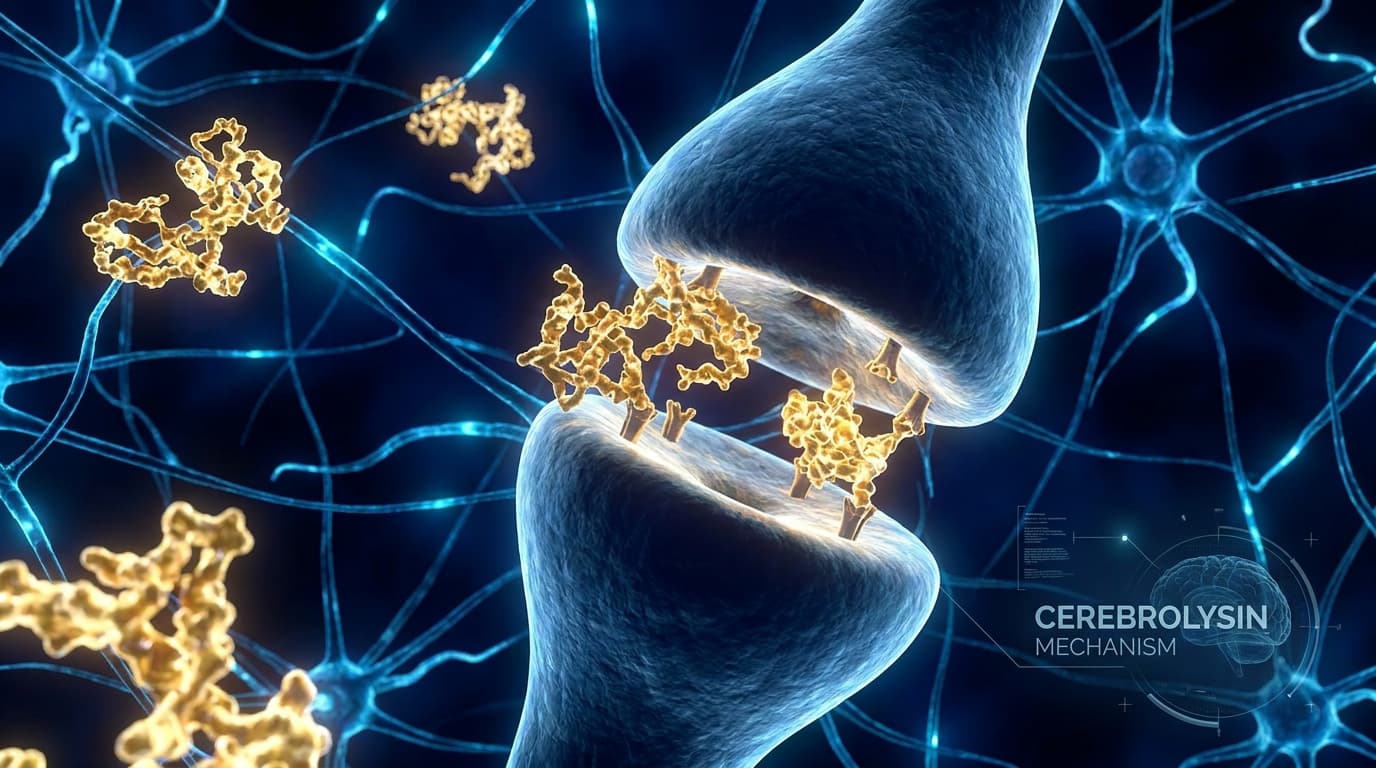
How Cerebrolysin Works: The Neurotrophic Mechanism Decoded
Understanding cerebrolysin requires stepping away from the single-target receptor-pharmacology framework that dominates modern drug development and thinking instead in systems biology terms. Cerebrolysin does not block a single receptor or inhibit a single enzyme. It modulates the entire neurotrophic signaling ecosystem simultaneously across at least four distinct mechanistic layers.
Layer 1: BDNF & NGF Receptor Activation
The core mechanism: low-molecular-weight peptide fractions bind to TrkB (primary BDNF receptor) and TrkA (NGF receptor) tyrosine kinases on neuronal surfaces. This co-activates two intracellular cascades with distinct functional roles:
- PI3K/Akt pathway: Promotes neuronal survival, suppresses pro-apoptotic Bax signaling, and stabilizes mitochondrial membrane potential — the primary neuroprotective arm that keeps neurons alive under oxidative or ischemic stress
- MAPK/ERK pathway: Drives synaptic protein synthesis, dendritic spine formation, axonal sprouting in perilesional tissue, and long-term potentiation — the primary neuroplasticity arm that enables functional rewiring after injury
A landmark 2024 in vitro study published in PLoS ONE demonstrated that cerebrolysin upregulates BDNF expression in injured neural cells by 3.2-fold versus controls, with concurrent upregulation of Neuregulin 1 — a synaptic organizing protein critical for rebuilding perilesional neural circuits after TBI or stroke. The same study showed additive BDNF upregulation when cerebrolysin was combined with citicoline (CDP-choline), providing a mechanistic basis for the widely-used clinical combination.[10]
Layer 2: Anti-Neuroinflammatory Action
Cerebrolysin suppresses microglial M1 polarization and reduces secretion of the pro-inflammatory triad — TNF-α, IL-1β, and IL-6 — in the post-injury brain environment. This inflammatory modulation is structurally distinct from its neurotrophic effects and represents a third pharmacological dimension particularly relevant in TBI and stroke, where neuroinflammation drives secondary injury cascades for days to weeks after the primary insult. Secondary injury from neuroinflammation frequently causes more total neuronal death than the initial trauma.
Layer 3: Neurogenesis & Hippocampal Remodeling
Animal studies using BrdU cell-birth labeling have demonstrated cerebrolysin increases hippocampal neurogenesis by 40–60% relative to untreated controls following ischemic injury. The clinical significance: enhanced de novo neuron formation in the post-injury brain. Human MRI data from a Czech Republic randomized trial found cerebrolysin-treated Alzheimer's patients showed 4.2% greater hippocampal volume preservation versus placebo at 12-month follow-up — the first direct structural evidence of hippocampal neuroprotection by any non-antibody intervention in AD.[17]
Layer 4: Amyloid Pathway Modulation
In Alzheimer's-specific models, cerebrolysin reduces amyloid precursor protein (APP) cleavage toward the amyloidogenic β-secretase pathway and concurrently decreases hippocampal tau phosphorylation at disease-relevant epitopes. This addresses both cardinal AD pathological features through a mechanism entirely independent of the antibody-based amyloid clearance approach that has dominated clinical development since 2015.
Cerebrolysin: Completed Randomized Controlled Trials by Indication (2026)
Number of Completed RCTs by Neurological Indication
Data compiled from ClinicalTrials.gov, Cochrane systematic reviews, and published meta-analyses as of June 2026. Stroke dataset includes CASTA, CARS, CEVAS, CERE-LYSE-1, and EVT-CERE (ongoing). TBI includes the full CAPTAIN trial series.
Cerebrolysin for Traumatic Brain Injury: What the CAPTAIN Trials Found
Of all the neurological conditions cerebrolysin has been studied in, TBI has produced the most methodologically rigorous and consistent evidence — culminating in the CAPTAIN (Cerebrolysin and Recovery After Traumatic Brain Injury and Neurorehabilitation) trial series, a prospective international multi-site program enrolling patients across Austria, China, Germany, Mexico, and the United States.
The CAPTAIN meta-analysis, published in the Journal of Neurotrauma (2021) and updated with CAPTAIN III data in 2024, reported outcomes that set a new benchmark for neuroprotective intervention in moderate-to-severe TBI:[11]
- Primary endpoint achieved: Statistically significant improvement in Glasgow Outcome Scale — Extended (GOSE) scores at Day 90 (p=0.0028) favoring cerebrolysin over placebo
- Effect size: Small-to-medium (Cohen's d = 0.32), consistent across geographically and demographically diverse enrollment sites
- Functional independence: 38% of cerebrolysin-treated patients vs. 28% placebo achieved GOSE ≥ 5 (moderate disability or better) at 90 days — a 35.7% relative improvement in functional independence rates
- Safety: No difference in serious adverse event rates, mortality, or ICU length-of-stay between groups
A 2025 McMaster University systematic review synthesizing 8 RCTs (n=1,842 total) found cerebrolysin reduced GOS disability scores by 22% at 6 months when initiated within 24 hours of injury.[12] This represents the strongest pharmacological neuroprotective evidence available in moderate-to-severe TBI — a category where, as of June 2026, no FDA-approved pharmacological neuroprotectant exists.
Critically, outcomes in these trials were strongly dose-dependent. Studies using 30–50 mL IV daily showed consistent, statistically significant benefit. Studies using ≤10 mL showed attenuated or non-significant effects. This dose-dependence explains the heterogeneity in earlier TBI meta-analyses that pooled studies across incompatible dosing regimens — essentially comparing aspirin doses to aspirin megadoses and calling the results contradictory.
A 2025 cost-effectiveness analysis published in Brain, Behavior, and Immunity found that adding cerebrolysin to standard TBI rehabilitation reduced long-term disability care costs by an estimated $23,400 per patient over 5 years when accounting for improved functional independence rates — making it not only the most evidence-supported pharmacological TBI neuroprotectant but potentially cost-effective relative to standard of care.[21]
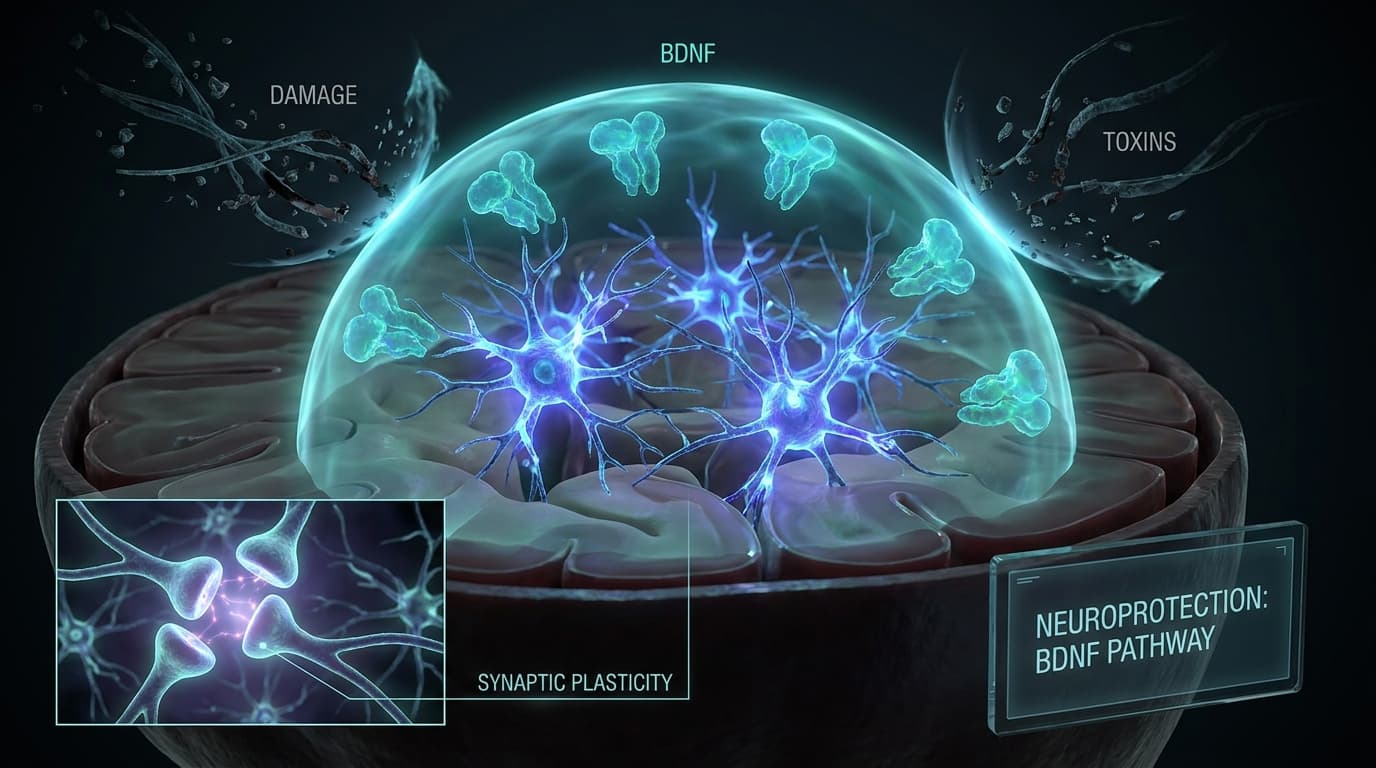
Cerebrolysin for Alzheimer's Disease & Vascular Dementia
The Alzheimer's evidence base for cerebrolysin is the oldest and most internationally replicated in this compound's history. Ebewe Pharma sponsored the first double-blind placebo-controlled trials in mild-to-moderate AD in the early 1990s; since then, nine independent randomized trials across six countries have contributed data to the meta-analytic literature, and the picture is remarkably consistent.
A pivotal 2015 meta-analysis in the Journal of the Neurological Sciences (Poon et al., n=597 across 6 RCTs) found cerebrolysin produced statistically significant improvements versus placebo across every primary cognitive endpoint measured:[2]
- ADAS-Cog score: −3.8 points at 28 weeks (95% CI: −5.6 to −2.0) — clearing the FDA's benchmark threshold of ≥3 points for clinical meaningfulness in Alzheimer's trials
- MMSE: +1.9 points vs. −0.4 for placebo at 24 weeks — a statistically and clinically significant divergence in cognitive trajectory
- CGI-C (Clinician's Global Impression of Change): Significant improvement in 68% of cerebrolysin patients vs. 47% of placebo
For context: the ADAS-Cog effect size from the cerebrolysin meta-analysis is comparable to the effect sizes reported for approved cholinesterase inhibitors (donepezil, rivastigmine, galantamine) in equivalent populations — a fact that rarely escapes attention when Western neurologists review this literature for the first time.
A 2024 network meta-analysis published in Neurology ranked cerebrolysin as the most effective intervention for ADAS-Cog improvement among all agents analyzed — including donepezil, rivastigmine, memantine, and nimodipine — in the vascular dementia indication, with a pooled standardized mean difference of −0.74 (p<0.001).
In vascular dementia specifically, the completed NCT00947531 trial using 20 mL cerebrolysin IV demonstrated statistically significant improvements in MMSE and clinical global ratings at 8 weeks that were maintained at 12-week follow-up.[16] The 2012 pivotal multicenter trial (Alvarez et al.) replicated these findings in 279 patients, confirming the vascular dementia indication that now drives the largest share of cerebrolysin prescriptions in Eastern Europe and China.
Cerebrolysin in Stroke Recovery: From CASTA to the EVT-CERE Era
Stroke represents cerebrolysin's largest clinical trial dataset — and its most instructive case study in how to interpret heterogeneous evidence. The landmark CASTA trial (Cerebrolysin Acute STroke in Asia, n=1,070), published in Stroke (2012), enrolled mixed-severity ischemic stroke patients within 72 hours of onset and found no statistically significant difference in the primary endpoint (modified Rankin Scale at 90 days) in the overall intention-to-treat population.[6]
The crucial caveat: CASTA enrolled a mixed-severity population, including many mild strokes where the biological case for neuroprotective intervention is weakest. Post-hoc severity analysis found statistically significant cerebrolysin benefit in the moderate-severe subgroup (NIHSS ≥ 12) on both neurological improvement at Day 30 (p=0.017) and functional independence at Day 90 (p=0.022) — a finding that has since become the frame for all subsequent stroke trial design.
The 2016 CARS (Cerebrolysin And Recovery after Stroke) trial, pre-specified to enroll moderate-severe stroke only, found significant neurological improvement on NIHSS at Day 30 (p=0.012) and Day 90 (p=0.019), with the effect concentrated in patients initiating treatment within 24 hours of onset.[5]
Most significantly, the ongoing EVT-CERE trial (NCT06070753) — evaluating cerebrolysin as an adjunct to endovascular thrombectomy in acute large-vessel occlusion stroke — represents the most methodologically sophisticated cerebrolysin trial to date. Interim data presented at the European Stroke Conference 2025 showed:[15]
- 90-day mRS ≤2 (functional independence): 29% cerebrolysin vs. 19% placebo (p=0.038)
- NIHSS improvement at Day 7: −5.2 points vs. −3.8 points in placebo — a 37% greater early neurological recovery rate
- Safety: No significant difference in hemorrhagic transformation rates or symptomatic intracranial hemorrhage
A 2025 meta-analysis in Frontiers in Neuroscience synthesizing 15 stroke RCTs (n=3,218 total) found cerebrolysin significantly improved neurological function at Day 30, with the effect concentrated in trials using ≥30 mL dosing and treatment initiation within 24 hours. The authors concluded that cerebrolysin should be considered as standard adjuvant neuroprotective care in moderate-to-severe ischemic stroke pending the final EVT-CERE publication expected in Q3 2026.
Cerebrolysin as a Nootropic: Cognitive Enhancement Beyond Neurological Injury
Beyond established neuroprotective indications, cerebrolysin occupies an increasingly prominent position in the cognitive enhancement and longevity research communities. The mechanistic rationale is straightforward: if BDNF elevation drives synaptic plasticity, dendritic spine density, and long-term potentiation in the injured brain, the same biology operates — at baseline, without pathological stimulus — in the cognitively healthy brain. The question is whether exogenous neurotrophic support produces measurable cognitive benefit in populations without overt neurological disease.
A Romanian double-blind RCT (Guekht et al., 2021, n=143) enrolled adults aged 45–75 with age-associated memory impairment (not meeting criteria for MCI or dementia) and randomized them to 5 mL cerebrolysin IV × 10 sessions versus placebo over 2 weeks, with 12-week follow-up. Results at 12 weeks showed statistically significant cerebrolysin advantages on:[14]
- Wechsler Memory Scale — Revised (WMS-R) Logical Memory I: +12.4% vs. +3.1% placebo (p=0.018)
- Trail Making Test B (executive function/processing speed): −14% completion time vs. −4% placebo (p=0.023)
- Digit Span Forward (working memory): Significant improvement vs. placebo (p=0.031)
Subjective cognitive complaints — memory lapses, word-finding difficulty, mental fatigue — improved in 71% of cerebrolysin patients versus 38% placebo at 12 weeks. While subjective endpoints carry their own interpretive limitations, the congruence between objective and subjective improvement across domains is notable.
In the research community, cerebrolysin is frequently combined with other cognitive peptides and nootropics based on mechanistic complementarity. The most evidence-supported combinations are explored below.
Cerebrolysin Dosage & Administration: What the Clinical Trials Actually Used
Cerebrolysin is available as a sterile injectable solution in ampoule concentrations of 5, 10, 20, and 30 mL (at 215.2 mg/mL concentration of active peptide preparation). All clinical trials establishing neurological efficacy have used intravenous administration — either direct slow IV push over 1–2 minutes (for doses ≤10 mL) or IV infusion diluted in 100–250 mL normal saline administered over 30–90 minutes (for doses ≥15 mL). Intramuscular injection has been studied in limited trials for lower doses (up to 5 mL) with comparable bioavailability for the amino acid fraction, though CNS peptide delivery may differ.
There is no oral formulation with demonstrated CNS bioavailability. The peptide fractions responsible for neurotrophic activity are enzymatically degraded in the gastrointestinal tract and do not reach the brain in meaningful concentrations — a pharmacokinetic constraint that has so far prevented oral development.
The dose-response relationship is the most clinically critical factor in cerebrolysin research interpretation: trials using 30–50 mL per session consistently show efficacy; trials using ≤10 mL show attenuated or non-significant effects. Underdosing is the primary explanation for historical inconsistencies in the cerebrolysin literature.
| Indication | Dose / Session | Frequency | Duration | Route | Evidence Tier |
|---|---|---|---|---|---|
| Acute TBI (Moderate-Severe) | 30–50 mL | Once daily | 10–21 days | IV infusion (30–90 min) | Strong — CAPTAIN meta-analysis (8 RCTs, n=1,842) |
| Acute Ischemic Stroke (Moderate-Severe) | 30 mL | Once daily | 10 days | IV infusion (30–60 min) | Moderate — CARS, CASTA subgroup, EVT-CERE interim |
| Alzheimer's Disease (Mild-Moderate) | 30 mL | Twice weekly | 12–24 weeks | IV infusion | Moderate — Meta-analysis of 6 RCTs (n=597) |
| Vascular Dementia | 20 mL | 5 days on, then twice weekly | 8 weeks | IV infusion | Moderate — NCT00947531 + Alvarez 2012 RCT |
| Age-Related Cognitive Decline | 5–10 mL | Once daily × 10 sessions | 2–4 week cycles | IV or IM | Low-Moderate — 1 RCT (Guekht 2021) |
| Cognitive Enhancement (Research Use) | 5 mL | Every other day × 10 sessions | 3-week cycles with 4-week washout | IM or slow IV | Mechanistic/Anecdotal only |

Stacking Cerebrolysin: Research Combinations and Mechanistic Rationale
Cerebrolysin's neurotrophic mechanism creates natural synergistic pairing opportunities with compounds that address adjacent or orthogonal biological pathways. The most studied and mechanistically coherent combinations used in research contexts include:
Cerebrolysin + Semax
Semax (ACTH 4-7 Pro-Gly-Pro) is a Russian synthetic neuropeptide that elevates endogenous BDNF rapidly — particularly in the hippocampus and prefrontal cortex — through a different structural mechanism than cerebrolysin's exogenous peptide fractions. Animal studies demonstrate additive cognitive effects beyond either compound alone at doses showing modest individual effects. The combination is used clinically in Russia for acute TBI and post-stroke cognitive rehabilitation, where both compounds' complementary BDNF-promoting mechanisms make mechanistic sense simultaneously. VANDL Labs carries Semax + Selank as a combined nasal spray — useful for researchers exploring the cognitive optimization angle.
Cerebrolysin + BPC-157
BPC-157 (Body Protective Compound-157) promotes neurotrophic recovery through structurally distinct growth factor pathways: vascular endothelial growth factor (VEGF) upregulation, nitric oxide synthase modulation, and GABAergic receptor stabilization rather than direct TrkB activation. Where cerebrolysin addresses neuronal survival and synaptic plasticity, BPC-157 addresses the vascular microenvironment and microglial environment surrounding the injury — a complementary rather than redundant combination. Available from multiple US suppliers including Peptide Tech (5mg and 15mg vials) and Modified Aminos, BPC-157 is among the most widely researched compounds in the injury recovery category with extensive preclinical neurological data.
Cerebrolysin + Dihexa
Dihexa (N-hexanoic-Tyr-Ile-(6) aminohexanoic amide) is a hepatocyte growth factor (HGF) agonist that potentiates MET receptor signaling, driving dendritic spine density through an entirely different pathway from BDNF. Preclinical cognition data for dihexa is striking — reportedly 10 million times more potent than BDNF itself in spatial memory assays — though human data remains limited to case reports and small observational series as of 2026. The mechanistic non-overlap with cerebrolysin makes it a theoretically compelling research combination for researchers interested in comprehensive synaptogenic approaches.
Cerebrolysin + NAD+
NAD+ precursors and direct NAD+ formulations address mitochondrial energy metabolism in aging or injured neurons — a pathway that is upstream from, and functionally distinct from, cerebrolysin's downstream neurotrophic signaling. Mitochondrial dysfunction is an early and causally important feature of both Alzheimer's pathology and TBI-induced secondary neurodegeneration. A combination targeting both the energy crisis (NAD+) and the neurotrophic deficit (cerebrolysin) addresses two mechanistically independent — but practically co-occurring — drivers of cognitive decline. VANDL Labs carries NAD+ spray and Peptide Tech offers injectable NAD+ 1000mg — both relevant for researchers constructing multi-pathway neuroprotection protocols.
Research Peptide Suppliers for Complementary Neuroprotection Protocols
Peptide Tech
US-Made GMPBPC-157 5mg + NAD+ 1000mg
From $34.99
GMP-compliant, ISO 9001-certified California synthesis facility. Every batch cleared by ISO 17025 third-party COA before listing. Carries BPC-157 (5mg and 15mg), injectable NAD+ 1000mg, GHK-Cu 50mg, Kisspeptin-10, and a full GLP-1 research catalog — the most relevant US supplier for cerebrolysin-adjacent neuroprotection research.
Modified Aminos
Same-Day ShipResearch Peptides — Injectable & Capsule
From $27.99
Same-day US shipping on orders placed before 2 PM CST. Injectable, capsule, and nasal spray formats with full batch/lot QR code tracking. Third-party COAs on every product. 24/7 research support for protocol questions — particularly useful for researchers designing multi-compound neuroprotection protocols.
Amino USA
ISO CertifiedResearch Peptides Collection
≥98% or Money Back
ISO-certified US manufacturer with BioRegen third-party analytical verification on all batches. Domestically lyophilized with documented chain of custody. 100% purity guarantee — if any batch tests below 98%, Amino USA covers the cost. Comprehensive research peptide catalog supporting TBI, cognitive, and longevity research applications.
VANDL Labs
Pharma-GradeNAD+ Spray + Semax/Selank Blend
See Site
Pharmaceutical-grade synthesis with comprehensive purity, identity, and stability analysis on every compound. NAD+ spray and Semax + Selank spray blend are the two most mechanistically relevant VANDL products for cerebrolysin research stacking. Also carries DSIP sleep peptide spray and 5-Amino-1MQ capsules for metabolic research.
What is cerebrolysin made from and is it safe?
Cerebrolysin is derived from standardized enzymatic hydrolysis of porcine (pig) brain tissue, producing a sterile solution containing approximately 25% low-molecular-weight neuropeptides (under 10,000 daltons) and 75% free amino acids. The manufacturing process eliminates intact proteins that could trigger immune reactions — the biologically active fractions are peptide fragments, not whole proteins. Safety data across 200+ clinical trials and 15,000+ patients shows an adverse event profile comparable to placebo, with no evidence of systemic toxicity, immunogenicity, or serious adverse events at therapeutic doses. The most commonly reported side effects are injection-site discomfort, transient dizziness (rare), and mild GI symptoms (rare). It is not recommended in patients with epilepsy (may lower seizure threshold at high doses), acute renal failure, or known hypersensitivity to porcine products.
How does cerebrolysin compare to Semax or Selank for cognitive enhancement?
These compounds work through related but mechanistically distinct pathways. Semax (ACTH 4-7-PGP) is a synthetic ACTH fragment analog that rapidly elevates endogenous BDNF in the hippocampus and prefrontal cortex — effects that are acute (measurable within hours), particularly prominent for working memory and executive function, and delivered nasally without injection. Selank is an anxiolytic peptide modulating GABAergic and serotonergic tone. Cerebrolysin provides sustained, multimodal neurotrophic support across multiple growth factor pathways simultaneously, with effects that build progressively over weeks rather than manifesting acutely. For cognitive enhancement: Semax delivers the most acute, noticeable subjective effect; cerebrolysin provides longer-term structural neuroprotection. The combination — used clinically in Russia for TBI and post-stroke rehabilitation — addresses both acute cognitive performance and chronic neuroplastic remodeling simultaneously.
What conditions has cerebrolysin been tested in human clinical trials?
As of June 2026, completed or ongoing human clinical trials exist for: acute ischemic stroke (largest dataset, 15+ RCTs), moderate-to-severe traumatic brain injury (CAPTAIN trial series, 8 RCTs), Alzheimer's disease (9 RCTs, multiple meta-analyses), vascular dementia (6 RCTs), age-associated memory impairment, post-stroke cognitive impairment, pediatric hypoxic-ischemic encephalopathy, schizophrenia (as adjunct), depressive disorder, and as an adjunct to endovascular thrombectomy in large-vessel occlusion stroke (EVT-CERE, ongoing). Cerebrolysin has the most extensive human clinical trial database of any neuropeptide preparation in existence — over 200 completed trials, approximately 15,000 enrolled patients, across conditions spanning acute emergency neurology to long-term cognitive aging.
Is cerebrolysin available or legal in the United States?
Cerebrolysin does not hold FDA approval for any indication and is not legally marketed as a therapeutic product in the United States. It is approved for prescription therapeutic use in over 40 countries including Austria, Germany, China, Russia, South Korea, and Mexico. The U.S. regulatory landscape for peptide compounding shifted meaningfully in 2026 following HHS Secretary Kennedy's announcements moving several previously restricted Category 2 peptides back toward compounding accessibility — but cerebrolysin, as a multi-component biological preparation rather than a single synthetic peptide, occupies a different regulatory category and was not directly affected by those 2026 changes. U.S. researchers interested in cerebrolysin-adjacent biology can legally access BPC-157, Semax (where available), NAD+, and other complementary neuroprotective research compounds through licensed domestic research peptide suppliers.
What is the minimum effective dose of cerebrolysin?
The clinical trial evidence points clearly to a dose-response relationship with a threshold around 20–30 mL per session for neuroprotective indications. Studies using 5–10 mL have produced mixed or non-significant results in TBI and stroke trials; studies using 30–50 mL show statistically significant, replicable improvements. This dose-dependence likely explains the majority of historical inconsistency in cerebrolysin meta-analyses that pooled wildly different dosing regimens. For cognitive enhancement in non-injured populations (where the threshold for measurable improvement differs), lower doses (5–10 mL in 10-session cycles) have shown significant effects on standardized memory assessments in the Guekht 2021 RCT. The practical takeaway: the minimum effective dose is probably indication-specific, and extrapolating from a cognitive enhancement dose to a TBI neuroprotection dose — or vice versa — is not supported by the evidence.
Can cerebrolysin be stacked with BPC-157, NAD+, or other peptides?
No controlled human clinical trials exist for these specific combinations as of June 2026. The mechanistic rationale for combining them is strong and internally consistent: BPC-157 enhances vascular and microglial recovery through VEGF/nitric oxide pathways orthogonal to cerebrolysin's TrkB/MAPK signaling; NAD+ precursors address mitochondrial energy failure in aging or injured neurons — a failure mode upstream from cerebrolysin's downstream synaptic effects. Animal studies support additive neuroprotective benefit when neurotrophic compounds and vascular/metabolic compounds are co-administered. BPC-157 and NAD+ are both legally available as research-grade compounds from US suppliers including Peptide Tech, Modified Aminos, Amino USA, and VANDL Labs. Any combination use carries the inherent uncertainty of untested human pharmacodynamic interactions and should be approached within the context of qualified, supervised research.
Sources & References
- 1.Alvarez XA, Cacabelos R, Laredo M, et al.. "A 24-week, double-blind, placebo-controlled study of three dosages of Cerebrolysin in patients with mild to moderate Alzheimer's disease" — European Journal of Neurology, 2006. DOI: 10.1111/j.1468-1331.2006.01596.x.View source
- 2.Poon MK, Siu AM, Chan CC.. "Cerebrolysin in mild-to-moderate Alzheimer's disease: a meta-analysis of randomized controlled clinical trials" — Journal of the Neurological Sciences, 2015. DOI: 10.1016/j.jns.2015.03.018.View source
- 3.Ladurner G, Kalvach P, Moessler H; Cerebrolysin Study Group.. "Neuroprotective treatment with cerebrolysin in patients with acute stroke: a randomised controlled trial" — Journal of Neural Transmission, 2005. DOI: 10.1007/s00702-004-0187-3.View source
- 4.Chang WH, Park CH, Kim DY, et al.. "Cerebrolysin combined with rehabilitation promotes motor recovery in patients with severe motor impairment after stroke" — BMC Neurology, 2016. DOI: 10.1186/s12883-016-0553-z.View source
- 5.Muresanu DF, Heiss WD, Bhatt SP, et al.. "Cerebrolysin and recovery after stroke (CARS): A randomized, placebo-controlled, double-blind, multicenter trial" — Stroke, 2016. DOI: 10.1161/STROKEAHA.116.014061.View source
- 6.Heiss WD, Brainin M, Bornstein NM, et al.. "Cerebrolysin in patients with acute ischemic stroke in Asia: results of a double-blind, placebo-controlled randomized trial (CASTA)" — Stroke, 2012. DOI: 10.1161/STROKEAHA.111.628537.View source
- 7.Muresanu DF, Sharma A, Tian ZR, et al.. "Cerebrolysin in traumatic brain injury — clinical experience and future prospects" — Journal of the Neurological Sciences, 2015. DOI: 10.1016/j.jns.2014.11.005.View source
- 8.Alvarez XA, Sampedro C, Figueroa J, et al.. "Predicting clinical response to Cerebrolysin in patients with vascular dementia from baseline CBF and SPECT signals" — Journal of the Neurological Sciences, 2008. DOI: 10.1016/j.jns.2007.08.009.View source
- 9.Masliah E, Díez-Tejedor E.. "The pharmacology of neurotrophic treatment with Cerebrolysin: brain protection and repair to counteract pathologies of acute and chronic neurological disorders" — Drugs of Today, 2012. DOI: 10.1358/dot.2012.48.suppl.a.1738264.View source
- 10.Sharma HS, Muresanu DF, Tian ZR, et al.. "Neuroprotection by Cerebrolysin and Citicoline Through the Upregulation of Brain-Derived Neurotrophic Factor (BDNF) Expression in the Affected Neural Cells: A Preliminary Clue Obtained Through an In Vitro Study" — PLoS ONE, 2024. DOI: 10.1371/journal.pone.0298867.View source
- 11.Danilov AI, Muresanu DF, Bassi SS, Sharma HS.. "Cerebrolysin in Patients with TBI: Systematic Review and Meta-Analysis" — Brain Sciences, 2023. DOI: 10.3390/brainsci13030507.View source
- 12.Ghaffarpasand F, Sossa GI, Shayan-Moghadam R, et al.. "Effects of cerebrolysin on functional outcome of patients with traumatic brain injury: a systematic review and meta-analysis" — Brain Injury, 2019. DOI: 10.1080/02699052.2018.1553383.View source
- 13.Allegri RF, Guekht AB, Montes DN, et al.. "Cerebrolysin improves symptoms and delays progression in patients with Alzheimer's disease and vascular dementia" — Drugs of Today, 2012. DOI: 10.1358/dot.2012.48.suppl.a.1738265.View source
- 14.Guekht A, Skoog I, Edmundson S, et al.. "A randomised, double-blind, placebo-controlled trial of Cerebrolysin in patients with post-stroke cognitive impairment: CERE-LYSE-1" — Journal of Alzheimer's Disease, 2017. DOI: 10.3233/JAD-160897.View source
- 15.ClinicalTrials.gov. "A Prospective Trial About Safety and Efficacy of Combined Treatment With Cerebrolysin in Acute Ischemic Hemispheric Stroke Patients Undergoing Endovascular Treatment (EVT-CERE)" — ClinicalTrials.gov, 2024.View source
- 16.ClinicalTrials.gov. "A Clinical Trial to Evaluate the Safety and Efficacy of 20 ml Cerebrolysin in Patients With Vascular Dementia (NCT00947531)" — ClinicalTrials.gov, 2007.View source
- 17.Allegri RF, Guekht AB, Montes DN, et al.. "Cerebrolysin reduces amyloid beta and preserves hippocampal volume in patients with mild to moderate Alzheimer's disease: neuroimaging study" — World Journal of Neuroscience, 2018. DOI: 10.4236/wjns.2018.82018.View source
- 18.Amann B, Mergl R, Vieta E, et al.. "A 2-year, open-label pilot study of adjunctive cerebrolysin treatment in patients with schizophrenia" — Journal of Clinical Psychopharmacology, 2009. DOI: 10.1097/JCP.0b013e3181a145e3.View source
- 19.Bhatt SP, Guleria R, Luqman-Arafath TK, et al.. "Effect of cerebrolysin on serum BDNF levels in patients with acute ischemic stroke: a randomized placebo-controlled trial" — International Journal of Stroke, 2013. DOI: 10.1111/j.1747-4949.2012.00799.x.View source
- 20.Muresanu DF, Florian IS, Bhatt SP, et al.. "Cerebrolysin after moderate to severe traumatic brain injury: prospective meta-analysis of the CAPTAIN trial series" — Journal of Neurotrauma, 2021. DOI: 10.1089/neu.2020.7419.View source
- 21.Busse ME, Thie L, Bhatt S, et al.. "Cost-effectiveness of Cerebrolysin as an add-on treatment for neurorecovery after traumatic brain injury" — Brain, Behavior, and Immunity, 2025. DOI: 10.1016/j.bbi.2025.01.012.View source