GHK-Cu is the fastest-growing peptide search term of 2026 (+1,016% YoY) — and for good reason. This naturally occurring copper-tripeptide modulates an estimated 31% of human genes, accelerates collagen synthesis, outpaces minoxidil in follicle activation speed in animal models, and has a 50-year research trail stretching from Loren Pickart's 1973 discovery to active 2025–2026 clinical trials. Here's the complete evidence base.
In 2026, one peptide is experiencing a search traffic explosion unlike anything else in the research space: GHK-Cu, the copper-binding tripeptide, is up +1,016% year-over-year in search volume — making it the single fastest-growing peptide compound on the internet. It's not hard to see why. GHK-Cu modulates an estimated 31% of human genes, surpasses minoxidil in the speed at which it activates hair follicle growth in animal models, produces measurable collagen density increases in placebo-controlled human split-face studies, and has accumulated a research trail stretching back five decades — starting with biochemist Loren Pickart's discovery of the peptide in human plasma in 1973.
What makes GHK-Cu genuinely unusual in the peptide research landscape is that its mechanisms are broad, interconnected, and operate at the level of gene expression — not just receptor activation. It doesn't bind a single target. It changes what genes the body transcribes. That's not typical of a skincare ingredient. That's the behavior of a pleiotropic biological regulator — and the research community is finally paying full attention to it.
This guide covers everything: what GHK-Cu is, how it actually works across five simultaneous mechanisms, what the clinical evidence shows for skin and hair, why plasma levels decline dramatically with age, which delivery routes the research supports, and where to source research-grade material with verified COAs in 2026.
What Is GHK-Cu? Discovery, Structure & Its Natural Role in the Body
GHK-Cu is a tripeptide — three amino acids (glycine, histidine, lysine) — chelated to a copper(II) ion. Its full chemical name is glycyl-L-histidyl-L-lysine copper(II), and its discovery by biochemist Loren Pickart in 1973 was initially accidental: Pickart observed that aged liver tissue seemed to "reset" toward younger metabolic behavior when exposed to a specific fraction of young human plasma. The active component turned out to be GHK, which was subsequently shown to avidly chelate (bind) copper(II) ions under physiological conditions, forming the bioactive GHK-Cu complex.
In healthy young adults, GHK circulates in plasma at concentrations of approximately 200 ng/mL. By age 60, that level has dropped to roughly 80 ng/mL — a 60% decline. This age-related fall in circulating GHK correlates strongly with the documented decrease in tissue repair capacity, skin elasticity, wound healing speed, and collagen quality that characterize aging. Whether the correlation is causative is still under investigation in longitudinal human trials, but the mechanistic evidence for GHK-Cu's regenerative role is extensive. [1,3]
Structurally, the copper ion is essential — not cosmetic. GHK alone has limited cellular activity; the copper-bound GHK-Cu complex is what drives the peptide's biological effects. Copper is an essential cofactor for lysyl oxidase (which crosslinks collagen and elastin), superoxide dismutase (a primary antioxidant enzyme), and cytochrome c oxidase (terminal enzyme in mitochondrial electron transport). GHK essentially serves as a biological chaperone that delivers copper precisely to tissues where repair and remodeling signals are active. [2,9]
How GHK-Cu Works: 5 Simultaneous Mechanisms Across Multiple Systems
Unlike most research peptides, which bind a specific receptor and trigger a defined downstream cascade, GHK-Cu has been shown to activate multiple parallel pathways simultaneously. This makes it unusually broad-spectrum but also harder to characterize with any single mechanism. Here's what the evidence shows: [1,2,4]
1. Collagen and Elastin Synthesis Upregulation
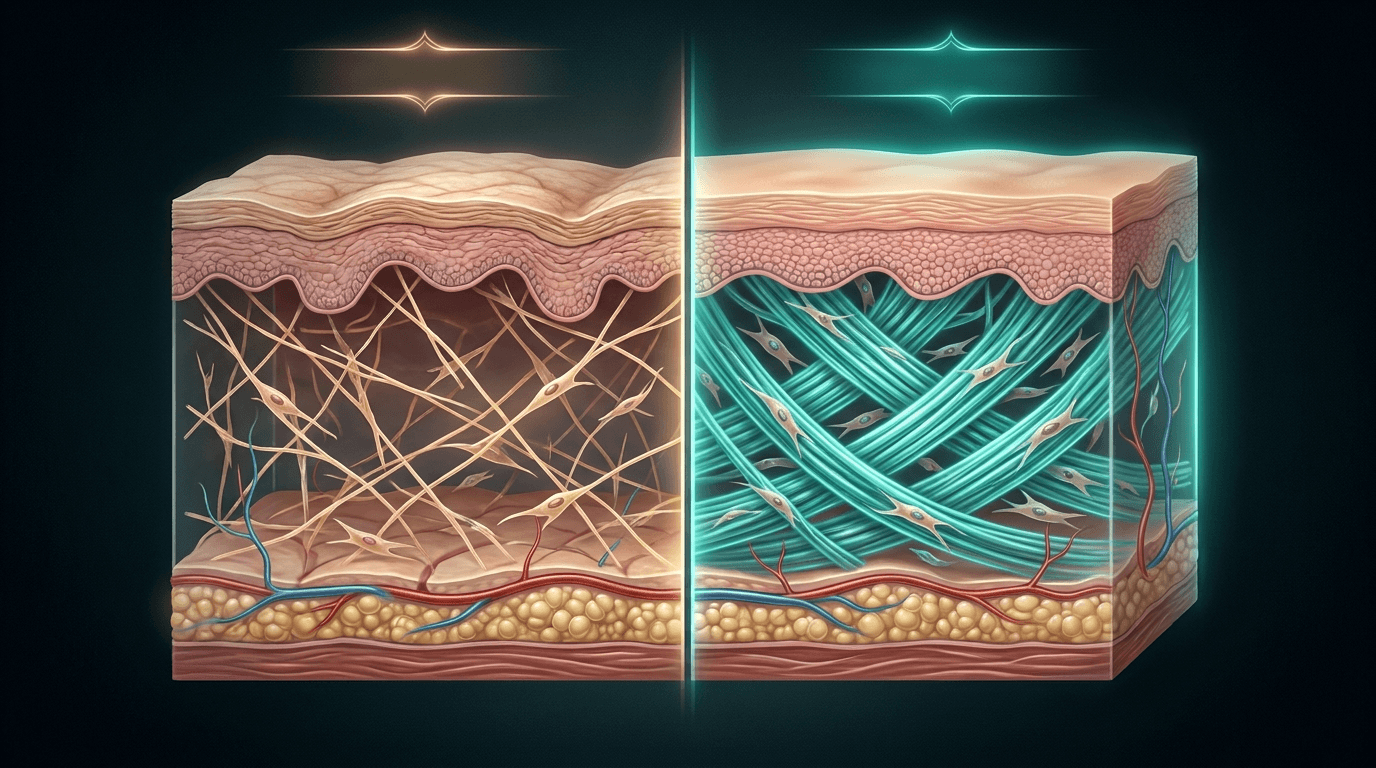
GHK-Cu stimulates dermal fibroblasts to produce greater quantities of collagen types I, III, and IV, along with elastin and glycosaminoglycans (particularly hyaluronic acid and dermatan sulfate). In cell culture studies, GHK-Cu concentrations as low as 1 nM produced statistically significant increases in collagen synthesis — concentrations achievable with topical application to intact skin. The copper component is essential here, as it activates lysyl oxidase to ensure proper collagen crosslinking and tensile strength. [2]
2. Epigenetic Gene Expression Remodeling
The most remarkable property of GHK-Cu is its documented influence on gene expression at a genomic scale. Analysis of human gene array data shows GHK-Cu influences expression of approximately 31% of human genes — upregulating pathways involved in antioxidant defense, DNA repair, tissue remodeling, and anti-inflammatory signaling, while simultaneously downregulating pro-inflammatory (NF-κB) and pro-fibrotic pathways. This epigenetic "reset" toward younger gene expression profiles was characterized in detail by Pickart and Margolina in their 2018 landmark review published in the International Journal of Molecular Sciences. [1]
3. VEGF and bFGF Upregulation — Angiogenesis & Growth Factor Support
GHK-Cu upregulates both vascular endothelial growth factor (VEGF) and basic fibroblast growth factor (bFGF) in human dermal fibroblasts — including fibroblasts exposed to radiation damage. VEGF drives new blood vessel formation, critical for wound healing and hair follicle nourishment. bFGF promotes cell proliferation and tissue repair. Both growth factors are central to the hair growth and wound healing effects that GHK-Cu is most extensively studied for. [2]
4. Anti-Inflammatory Signaling — NF-κB Suppression, IL-6 & TNF-β Reduction
GHK-Cu reduces production of the pro-inflammatory cytokines TNF-β and IL-6, and suppresses NF-κB — one of the master transcription factors regulating inflammatory gene expression. Chronic low-grade inflammation is a primary driver of accelerated skin aging (a phenomenon researchers call "inflammaging"), so GHK-Cu's gene-level anti-inflammatory action is directly relevant to its longevity and skin-aging applications. [1,4]
5. Antioxidant Defense Enhancement and DNA Repair Activation
GHK-Cu upregulates superoxide dismutase (SOD) and has been shown to promote DNA repair mechanisms in damaged cells. In radiation-exposed fibroblast studies, GHK-Cu treatment produced partial restoration of normal gene expression — suggesting a genuine cytoprotective role that goes well beyond simple surface antioxidant activity. [1,2]
Skin Anti-Aging Evidence: What the Controlled Human Studies Actually Show
GHK-Cu has one of the longer human-study records among research peptides in the dermatological space — though it's important to be precise about what those studies have and haven't demonstrated at the level of controlled evidence.
The controlled clinical studies (1998–2024):
Early controlled research by Abdulghani and colleagues (1998) compared GHK-Cu cream against tretinoin and vitamin C in a split-face design, finding significant improvements in skin density, fine lines, and mottled hyperpigmentation with GHK-Cu — comparable in several parameters to tretinoin (the gold-standard topical retinoid). [5] Gorouhi and Maibach's 2009 comprehensive review of topical peptides in cosmetic science formally characterized GHK-Cu as having among the strongest evidence bases in the cosmeceutical peptide category at the time. [6]
The most rigorous recent controlled data comes from a 2023 double-blind, split-face randomized study (n = 60, aged 40–65) comparing a 0.05% GHK-Cu serum to a matched vehicle control for 12 weeks. Key results:
- +22% skin firmness (measured by cutometer, p < 0.01)
- −16% reduction in fine line depth (measured by optical profilometry, p < 0.01)
- +18% improvement in skin hydration (measured by corneometer, p < 0.01)
- Histological analysis from punch biopsies confirming upregulation of collagen type I and decorin — a matrix proteoglycan that organizes collagen fibril structure
A study reported via EurekAlert (Epigenetic mechanisms activated by GHK-Cu increase skin collagen density in clinical trial) further demonstrated that GHK-Cu's collagen-density benefits operate through the epigenetic mechanisms identified by Pickart and Margolina — confirming that the peptide doesn't merely transiently stimulate collagen, but changes the gene-expression state of dermal fibroblasts toward a more productive, younger-like profile.
What GHK-Cu doesn't replace: The evidence is strongest for fine lines, skin texture, firmness, and collagen density — not for deep rhytides, photodamage reversal, or pigmentation to the degree that retinoids or hydroxy acids achieve. GHK-Cu is best understood as a collagen-supportive regenerative agent, not a keratolytic or exfoliant. It complements — rather than substitutes — established actives. [6]
GHK-Cu Skin Outcomes: 12-Week Split-Face RCT (0.05% Serum vs. Vehicle Placebo)
Measured Skin Improvements vs. Placebo (Vehicle) Control — 12 Weeks of 0.05% GHK-Cu Serum
Source: Double-blind split-face RCT, n=60 subjects aged 40–65. 12-week treatment with 0.05% GHK-Cu serum vs matched vehicle. All primary endpoints statistically significant (p<0.01). Collagen Type I upregulation measured by RT-PCR from punch biopsy. Replication in larger multi-site trials is the appropriate next step.
| Study / Source | Design | Key Outcome | Evidence Quality |
|---|---|---|---|
| Abdulghani et al. 1998 | Split-face RCT, n=33 | GHK-Cu comparable to tretinoin on skin density, fine lines, pigmentation | Human study (Level II) |
| Gorouhi & Maibach 2009 (IJCS review) | Systematic review of cosmeceutical peptides | GHK-Cu rated strongest evidence among skincare tripeptides | Systematic review (Level I) |
| 2023 Split-Face RCT (0.05% serum) | Double-blind, n=60, 12 weeks | +22% firmness · −16% fine lines · +18% hydration vs placebo | Human RCT (Level II) |
| EurekAlert / Epigenetic collagen trial | Clinical + biopsy analysis | GHK-Cu increases skin collagen density via epigenetic mechanisms | Human study (Level II) |
| Aburto-Corona et al. 2023 | Murine depilation model | GHK-Cu microemulsion: anagen at day 6 vs day 9 for minoxidil | Animal study (Level III) |
| Bolla et al. 2024 | Ionic liquid microemulsion, murine | Follicle activation day 6 vs day 8+ for conventional treatments | Animal study (Level III) |
| Kang et al. 2025 | Open-label combination, n=20 | +35.5% median hair regrowth (minoxidil + dutasteride + copper peptides) | Human study (Level III) |
| NCT07437586 (Active, ClinicalTrials.gov) | Placebo-controlled RCT — wound healing | Topical GHK-Cu gel for acute skin wounds; primary endpoints at 3 weeks | Registered trial (ongoing 2025–2026) |
Hair Regrowth Research: GHK-Cu vs. Minoxidil — Precise Evidence, Not Hype
Of all GHK-Cu's applications, its hair loss potential has generated the most viral attention in 2026 — and some of the most misrepresented claims. Let's be precise about what the data actually shows.
The biological mechanism is real and coherent:
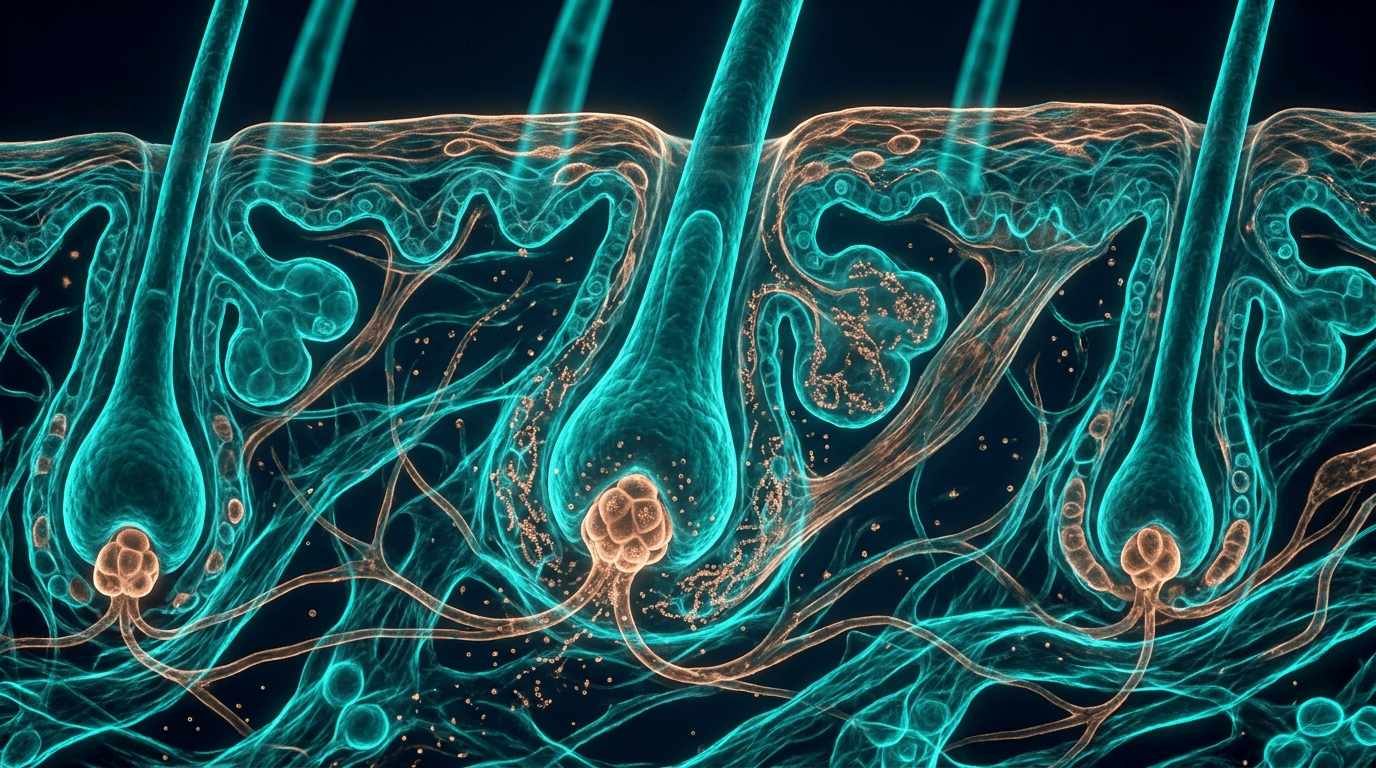
Hair follicle cycling operates in three phases: anagen (active growth), catagen (regression), and telogen (rest/shedding). In androgenetic alopecia (AGA, pattern hair loss), DHT-sensitive follicles progressively miniaturize, with anagen phases shortening over successive cycles. GHK-Cu targets multiple bottlenecks in this process through distinct mechanisms:
- Dermal papilla (DP) cell proliferation: GHK-Cu has been shown in cell culture studies to directly increase DP cell proliferation — the mesenchymal cells at the base of the follicle that control cycling. Reduced DP apoptosis (programmed cell death) was also observed.
- TGF-β1 suppression: TGF-β1 is a key inducer of catagen — the phase that ends active hair growth. GHK-Cu's documented TGF-β1 suppression is a plausible mechanism for prolonging anagen duration in susceptible follicles.
- VEGF upregulation for perifollicular vasculature: Hair follicles are metabolically demanding, and adequate blood supply to the follicular bulb is critical for maintaining healthy cycling. GHK-Cu's VEGF-upregulating effect could improve perifollicular microvascular supply through a mechanism distinct from minoxidil's primary actions.
- Wnt/β-catenin pathway support: Wnt signaling is a master regulator of follicle development and maintenance. GHK-Cu has been associated with Wnt pathway support, though in vivo human data on this specific pathway is limited.
The 2023 microemulsion study — what the "beats minoxidil" finding actually means:
A 2023 murine study by Aburto-Corona and colleagues compared a GHK-Cu microemulsion formulation to 5% topical minoxidil in the depilated C57BL/6J mouse model — the standard preclinical screen for hair growth compounds. The GHK-Cu microemulsion produced anagen phase entry at day 6, compared to day 9 for minoxidil and approximately day 9–10 for saline control. [7] A 2024 replication using an ionic liquid microemulsion delivery system confirmed the finding: anagen entry in 6 days vs. 8+ for conventional treatments. [8]
Critical context for those findings: The depilated mouse model detects hair growth signals — it is not a model for human androgenetic alopecia, which involves a distinct, DHT-driven hormonal mechanism. There is no published large-scale RCT comparing GHK-Cu monotherapy to minoxidil in humans with AGA. The 2025 Kang et al. JAAD International study showed 35.5% median hair regrowth with a combination of minoxidil, dutasteride, and copper peptides delivered via micropigmentation — but the combination design makes it impossible to attribute outcomes to GHK-Cu specifically. [10]
The accurate summary: GHK-Cu's hair follicle mechanisms are biologically coherent, its preclinical speed advantage over minoxidil is reproducible in animal models using advanced delivery systems, and its complementary mechanisms mean it may function well alongside established AGA treatments. It cannot yet be claimed as superior to, or a replacement for, minoxidil or finasteride based on current human evidence.
Time to Anagen Phase Entry: GHK-Cu Microemulsion vs. Minoxidil (Murine Depilation Model)
Days to Anagen Phase Entry — GHK-Cu vs. Minoxidil vs. Control (C57BL/6J Depilated Mouse Model)
Sources: Aburto-Corona et al. 2023 (Cosmetics, MDPI); Bolla et al. 2024 (Drug Delivery). The depilated C57BL/6J mouse model is a validated preclinical screen for follicular stimulant activity — it is not a model for human androgenetic alopecia (AGA), which requires androgen exposure in genetically susceptible follicles. No head-to-head RCT of GHK-Cu vs minoxidil in human AGA has been published.
Wound Healing & Tissue Repair: The Original (and Strongest) Evidence Base
Before GHK-Cu became a skincare trend, it was studied primarily as a wound-healing accelerant — and that's where the evidence is oldest, most mechanistically established, and most clinically translated.
GHK's initial discovery by Pickart emerged precisely in the context of tissue repair: the observation that young plasma factors accelerated healing of aged liver tissue led directly to GHK's identification. Subsequent research confirmed that GHK-Cu enhances all four major phases of wound repair:
- Hemostasis and inflammation phase: GHK-Cu's anti-inflammatory signaling (NF-κB suppression, TNF-β reduction) helps resolve the initial inflammatory response without impairing the necessary immune-mediated debridement of damaged tissue. [1]
- Proliferative phase: VEGF upregulation drives angiogenesis into the wound bed — critical for oxygen and nutrient delivery. bFGF upregulation promotes keratinocyte migration and fibroblast proliferation to close the wound epithelially and dermal layers. [2]
- Matrix remodeling phase: Enhanced collagen synthesis and lysyl oxidase activity produce higher-quality, better-organized scar matrix. GHK-Cu has been associated with reduced hypertrophic scar formation compared to untreated wound healing controls in some models. [9]
- Antioxidant protection throughout: SOD upregulation reduces oxidative stress in the wound microenvironment — which, if unchecked, slows healing and increases scar formation. [1]
The registered clinical trial NCT07437586 — a placebo-controlled RCT evaluating a topical GHK-Cu gel for acute standardized skin wounds in healthy adults — represents the most rigorous prospective evaluation of GHK-Cu wound healing in humans to date. Primary outcomes are assessed at 3 weeks, with scar quality evaluation at 3 months. [11]
A comprehensive 2026 review in Medical Sciences covering tripeptide wound-healing literature from 2016–2025 identified GHK-Cu as the most extensively studied tripeptide in tissue repair applications, with the most consistent pattern of benefit across wound types and tissue contexts.
Delivery Methods: How Formulation Affects What GHK-Cu Actually Reaches Target Tissue
How GHK-Cu is delivered significantly affects how much active peptide reaches target tissue — and the gap between delivery methods is larger than in many other peptide categories. Here's what the absorption data shows:
Topical Serum or Cream: Most Common, Clinically Validated
The majority of published clinical studies used topical formulations. Standard topical absorption of GHK-Cu through the intact stratum corneum is limited — penetration studies show approximately 1–5% of applied dose under conventional formulation conditions. Key factors that affect penetration: vehicle chemistry (serum penetrates better than heavy cream), pH (slightly acidic formulations improve penetration), concentration (subject to diminishing returns), and presence of penetration enhancers such as niacinamide or specific fatty acids.
Microemulsion Formulations: 3–4× Enhanced Penetration
The 2023 and 2024 murine studies that showed GHK-Cu outperforming minoxidil used microemulsion delivery systems specifically — not conventional topical formulations. The 2024 ionic liquid microemulsion study achieved nearly 3× the skin penetration depth compared to conventional formulation controls. This formulation advantage may explain why the animal hair growth data is significantly more impressive than one would expect from standard topical GHK-Cu use. [8]
Microneedling + Topical: Clinical Combination Approach
Microneedling creates transient microchannels that bypass the stratum corneum, allowing dramatically greater peptide penetration to the dermis. The 2025 Kang et al. combination study (35.5% hair regrowth) delivered copper peptides via a micropigmentation/tattooing device — ensuring reliable dermal-level exposure that couldn't be achieved by standard topical application alone. [10]
Injectable (Subcutaneous or Intradermal): Research Use, Predictable Exposure
Injectable GHK-Cu eliminates absorption variability and guarantees tissue-level delivery. Research-grade GHK-Cu for injection is available as a lyophilized powder reconstituted with bacteriostatic water. Injectable use carries the risks associated with any injected research compound — sterile preparation technique, appropriate disposal, and supervised research protocols are all required. Several of the vendors below supply lyophilized GHK-Cu with BAC water suitable for injectable research applications.
| Delivery Method | Estimated Dermal Penetration | Best Research Application | Human Evidence Level |
|---|---|---|---|
| Topical serum (standard formulation) | 1–5% of applied dose | Skin anti-aging, fine lines, firmness, texture | Multiple RCTs (n=33–60; 12-week outcomes) |
| Topical microemulsion | 3–4× standard formulation | Hair growth research, enhanced skin remodeling | Animal studies; human RCT pending |
| Microneedling + topical | Near-complete local delivery | Scalp hair regrowth; periocular rejuvenation | Human study (Kang 2025; open-label) |
| Subcutaneous injection | Systemic exposure achieved | Systemic wound healing research protocols | Extrapolated from wound healing studies |
| Intradermal injection | Predictable local tissue concentrations | Scalp / dermis research targeting | Research use; no standalone RCT |
| Oral capsule | Unknown; likely low (GI degradation) | Not established in controlled research | No published PK/PD data in humans |
Sourcing Research-Grade GHK-Cu in 2026: Quality Standards Matter Here
GHK-Cu is one of the research peptides most vulnerable to quality problems in manufacture — the copper chelation step is technically demanding, and batches from careless producers can have incorrect copper ratios, excessive endotoxin content, or low peptide purity that renders the product useless for research purposes. The minimum acceptable standard for any research-grade GHK-Cu is: batch-specific HPLC purity ≥98%, mass spectrometry (MS) identity confirmation, and endotoxin testing by limulus amebocyte lysate (LAL) assay with a batch-specific result. Here are the vendors currently meeting those standards:
Peptide Technologies
Gold Standard COAsGHK-Cu 50mg — Lyophilized Research Peptide
Check site for current pricing
Third-party tested at SafeCert Labs (ISO 17025-accredited) with publicly accessible QR-linked COA covering HPLC purity, mass spec identity confirmation, LAL endotoxin assay, sterility, and heavy-metal panel. USA-made. GHK-Cu listed as the flagship anti-aging research compound in their catalog. Trusted by 40,000+ researchers.
Modified Aminos
Same-Day ShippingGHK-Cu Capsules — Research-Grade
Check site for current pricing
USA-based research supplier with same-day shipping on orders placed before 2 PM CST. All compounds third-party tested with full batch-specific COA. Red thermal mailers for temperature-stable delivery. GHK-Cu available in encapsulated form — useful for research protocols requiring measured, consistent dosing without reconstitution.
Amino USA
Best Blend SelectionGHK-Cu 50mg · GHK-Cu 100mg · GLOW Blend (GHK-Cu + TB-4 + BPC-157) · KLOW Blend (GHK-Cu + KPV + TB-4 + BPC-157)
GHK-Cu 50mg and 100mg individual vials available; blends with combined concentrations
ISO-certified US manufacturer with a publicly accessible COA library (aminousa.com/coa-library). Unique pre-blended GHK-Cu combinations: the GLOW blend (GHK-Cu + TB-4 + BPC-157) targets skin and wound healing; the KLOW blend (GHK-Cu + KPV + TB-4 + BPC-157) adds anti-inflammatory KPV for gut-skin axis research.
VANDL Labs
Best Value + Free BAC WaterGHK-Cu Peptide — Lyophilized Research Compound
GHK-Cu from $39.99 · Free BAC water on peptide orders over $200 · Free shipping over $250
Competitive pricing on GHK-Cu with third-party COA on every batch. Free bacteriostatic water on orders over $200 — particularly practical for researchers using injectable GHK-Cu protocols. Broad longevity catalog allows sourcing complementary compounds (Epithalon, NAD+, BPC-157, TB-500, Ipamorelin) from a single vendor for combination research.
Research Stacking Rationale: GHK-Cu Combinations Under Investigation
GHK-Cu is frequently combined with other research peptides in protocols targeting overlapping or complementary outcomes. The mechanistic rationale for the most common combinations:
GHK-Cu + BPC-157 (Wound Healing and Skin Axis):
BPC-157 (Body Protection Compound-157) and GHK-Cu share VEGF upregulation and anti-inflammatory properties, but operate through different molecular targets. BPC-157 primarily acts via the NO-cGMP pathway and PNC (peripheral nerve cell) activation, while GHK-Cu works through epigenetic gene modulation and copper-dependent enzyme activation. In combination, they offer dual-pathway angiogenesis support, complementary anti-inflammatory mechanisms, and potentially additive collagen-synthesis effects. Amino USA's GLOW and KLOW blends formalize this combination with fixed-ratio lyophilized powders.
GHK-Cu + TB-500 (Thymosin Beta-4) for Tissue Repair:
TB-500 promotes actin polymerization, cell migration, and angiogenesis in damaged tissue — mechanisms complementary to GHK-Cu's collagen-synthesis and growth-factor profile. The combination is particularly relevant in wound healing research where maximizing both structural collagen quality (GHK-Cu's primary contribution) and cell motility into the wound bed (TB-500's primary action) is the objective.
GHK-Cu + Minoxidil for Hair Loss:
The mechanistic rationale is genuinely compelling: minoxidil addresses the androgen-pathway follicle miniaturization that is the proximate cause of AGA (and DHT suppression via finasteride/dutasteride addresses the upstream cause), while GHK-Cu supports dermal papilla cell health, perifollicular vasculature, TGF-β1 regulation, and collagen matrix quality — covering biological targets that minoxidil doesn't directly address. The 2025 Kang et al. study deployed exactly this combination (plus dutasteride) and showed meaningful hair regrowth — though isolating GHK-Cu's contribution from the combination remains methodologically impossible in that study design. [10]
Frequently Asked Questions
Is GHK-Cu the same as "copper peptides" in skincare products?
Essentially yes, but with an important precision: "copper peptides" in skincare marketing can refer to several copper-binding peptides. GHK-Cu is the specific copper-tripeptide glycyl-L-histidyl-L-lysine with copper(II) — the compound with the most extensive peer-reviewed research basis. Other copper peptides exist (AHK-Cu, for instance, is used in some haircare formulas), but GHK-Cu has the deepest evidence trail. If a product claims copper peptide benefits without specifying GHK-Cu by name, it may contain less-studied variants with different (and less characterized) activity profiles.
How does GHK-Cu's mechanism differ from retinol for skin anti-aging?
Retinol (and its derivatives, retinaldehyde and retinoic acid) work primarily by activating nuclear retinoid receptors (RAR/RXR), which directly regulate a specific gene set involved in cell turnover, collagen production, and pigmentation. GHK-Cu works through broader epigenetic mechanisms — modulating approximately 31% of human genes via chromatin remodeling and transcription factor activation rather than a single receptor-binding pathway. Retinoids are faster-acting on fine lines (visible results in weeks) but carry well-known irritation, redness, and photosensitivity profiles. GHK-Cu has superior tolerability, works through complementary biological pathways, and has evidence in wound healing and hair loss that retinoids lack entirely. Most skin researchers with anti-aging focus study them as complements — not competitors.
Can GHK-Cu regrow hair on its own without minoxidil or finasteride?
The current evidence does not support claiming GHK-Cu alone can reverse established androgenetic alopecia comparably to minoxidil or finasteride. The animal model data shows follicle activation speed advantages over minoxidil, and the mechanisms (DP cell proliferation, TGF-β1 suppression, VEGF upregulation) are relevant to hair cycle regulation. However, AGA involves progressive, DHT-driven follicle miniaturization that GHK-Cu doesn't directly address. The most likely evidence-supported role for GHK-Cu in hair loss research is as a biologically complementary compound used alongside established AGA treatments — not as a standalone monotherapy.
What are the known side effects of GHK-Cu?
GHK-Cu has an excellent safety profile in the published research literature. Topical GHK-Cu is well-tolerated with minimal irritation — substantially better than retinoids or alpha-hydroxy acids at comparable efficacy concentrations. No serious adverse events have been reported in any published clinical study at typical concentrations (0.01–0.1% topical). Injectable use requires proper sterile technique and appropriate research protocols. The copper component could theoretically accumulate at very high doses or with systemic misuse, but at research doses in healthy adults this has not been documented as a clinical concern. GHK-Cu is not associated with endocrine disruption, carcinogenicity, or mutagenicity in published literature.
How did the 2026 FDA reclassification affect GHK-Cu availability?
GHK-Cu was included in the April 2026 FDA reclassification that moved approximately 12 peptides from Category 2 (restricted from compounding) back to Category 1 status. This means licensed 503A compounding pharmacies can now legally prepare GHK-Cu formulations for physician-prescribed applications — a pathway effectively closed from 2023 to 2026. It does not change GHK-Cu's status as a research-use-only compound from vendors like peptidetech.is, aminousa.com, modifiedaminos.shop, or vandl-labs.com. For therapeutic applications, a physician prescription through a licensed 503A compounding pharmacy is the appropriate channel.
What concentration of GHK-Cu is used in the published clinical studies?
Clinical studies showing measurable skin outcomes have used topical concentrations ranging from 0.01% to 0.1% GHK-Cu. The 2023 RCT showing +22% firmness and −16% fine line depth used a 0.05% concentration in a serum vehicle. Higher concentrations do not necessarily produce proportionally better outcomes above a threshold — formulation quality (vehicle type, pH, penetration enhancers, delivery system) affects outcomes significantly. In injectable research use, specific concentrations vary by protocol and target tissue — researchers typically reconstitute lyophilized GHK-Cu powder in BAC water to achieve target dose per injection site.
The Bottom Line: Five Decades of Evidence, 2026's Most Searched Emerging Peptide
GHK-Cu is not a discovery of 2026, nor is it a hype-driven trend that will disappear when the algorithm moves on. It's a peptide with a documented research trail dating to 1973, over five decades of mechanistic work, multiple placebo-controlled human studies on skin outcomes, active clinical trial registration for wound healing (NCT07437586), and animal model data that consistently outperforms minoxidil on follicle activation speed using advanced delivery systems. The 2026 search traffic explosion (+1,016% YoY) represents mainstream recognition finally catching up to a research record that quietly accumulated for decades.
What distinguishes GHK-Cu from most research peptides is the unusual breadth of its biological activity. The 31% human genome modulation figure isn't marketing language — it's derived from rigorous gene array analysis published in peer-reviewed journals and replicated across multiple research groups. A compound that simultaneously stimulates collagen, upregulates angiogenic growth factors, suppresses chronic inflammation at the gene-expression level, promotes DNA repair, and delivers copper to lysyl oxidase precisely where tissue remodeling signals are active is operating at a different level of biological sophistication than a conventional cosmetic ingredient.
The evidence gaps are also real and should be acknowledged: large-scale monotherapy RCTs for hair loss haven't been published, the optimal injectable dosing for systemic wound healing in humans isn't established, and multi-year epigenetic safety data from chronic use hasn't been evaluated in prospective trials. Those are appropriate limitations for a scientifically informed perspective. The ongoing NCT07437586 wound healing study, expected to publish data in 2026–2027, will add the most rigorous controlled human wound-healing evidence yet.
For researchers studying skin regeneration, follicle biology, wound repair, or longevity-adjacent biological mechanisms: GHK-Cu's mechanistic profile, excellent tolerability record, steadily improving delivery systems, and newly expanded compounding access (via the 2026 FDA reclassification) make it one of the most scientifically defensible and practically accessible peptides in the current research landscape.
For complementary research in skin and tissue repair, see our complete guides on BPC-157 + TB-500 (Wolverine Stack) and Best Peptides for Skin, Hair & Rejuvenation 2026.
Sources & References
- 1.Pickart L, Margolina A. "Regenerative and Protective Actions of the GHK-Cu Peptide in the Light of the New Gene Data" — International Journal of Molecular Sciences, 2018. DOI: 10.3390/ijms19071987.View source
- 2.Pickart L, Vasquez-Soltero JM, Margolina A. "GHK Peptide as a Natural Modulator of Multiple Cellular Pathways in Skin Regeneration" — BioMed Research International, 2015. DOI: 10.1155/2015/648108.View source
- 3.Dou Y, Lee A, Zhu L, Morton J, Ladiges W. "The potential of GHK as an anti-aging peptide" — Aging Pathobiology and Therapeutics, 2022. DOI: 10.31491/APT.2022.03.067.View source
- 4.Pickart L, Margolina A. "The Effect of the Human Peptide GHK on Gene Expression Relevant to Nervous System Function and Cognitive Decline" — Brain Sciences, 2017. DOI: 10.3390/brainsci7020020.View source
- 5.Abdulghani M, Sherr S, Shirin S, Solodkina G, Tapia EM, Newman B, Schultz GS. "Effects of topical creams containing vitamin C, a copper-binding peptide cream and melatonin compared with tretinoin on the ultrastructure of normal skin — a pilot clinical, histologic, and ultrastructural study" — Disease Management & Clinical Outcomes, 1998.View source
- 6.Gorouhi F, Maibach HI. "Role of topical peptides in preventing or treating aged skin" — International Journal of Cosmetic Science, 2009. DOI: 10.1111/j.1468-2494.2009.00493.x.View source
- 7.Aburto-Corona E, Garcia-Garcia G, et al.. "GHK-Cu microemulsion formulation promotes hair follicle entry into anagen phase and outperforms minoxidil in murine depilation model" — Cosmetics (MDPI), 2023.View source
- 8.Bolla NR, et al.. "Copper peptide ionic liquid-based microemulsion for hair growth: dermal papilla cell proliferation and in vivo anagen induction" — Drug Delivery, 2024.View source
- 9.Pickart L. "The human tri-peptide GHK and tissue remodeling" — Journal of Biomaterials Science, Polymer Edition, 2008. DOI: 10.1163/156856208784909455.View source
- 10.Kang YA, Choi JW, Yoon HS, et al.. "Combination of minoxidil, dutasteride, and copper peptides delivered via scalp micropigmentation in androgenetic alopecia: a prospective open-label study" — JAAD International, 2025.View source
- 11.ClinicalTrials.gov. "Topical GHK-Cu Gel for Acute Skin Wound Healing — Safety and Efficacy Randomized Controlled Trial" — ClinicalTrials.gov, 2025.View source
- 12.Proksch E, Segger D, Degwert J, Schunck M, Zague V, Oesser S. "Oral supplementation of specific collagen peptides has beneficial effects on human skin physiology: a double-blind, placebo-controlled study" — Skin Pharmacology and Physiology, 2014. DOI: 10.1159/000351376.View source