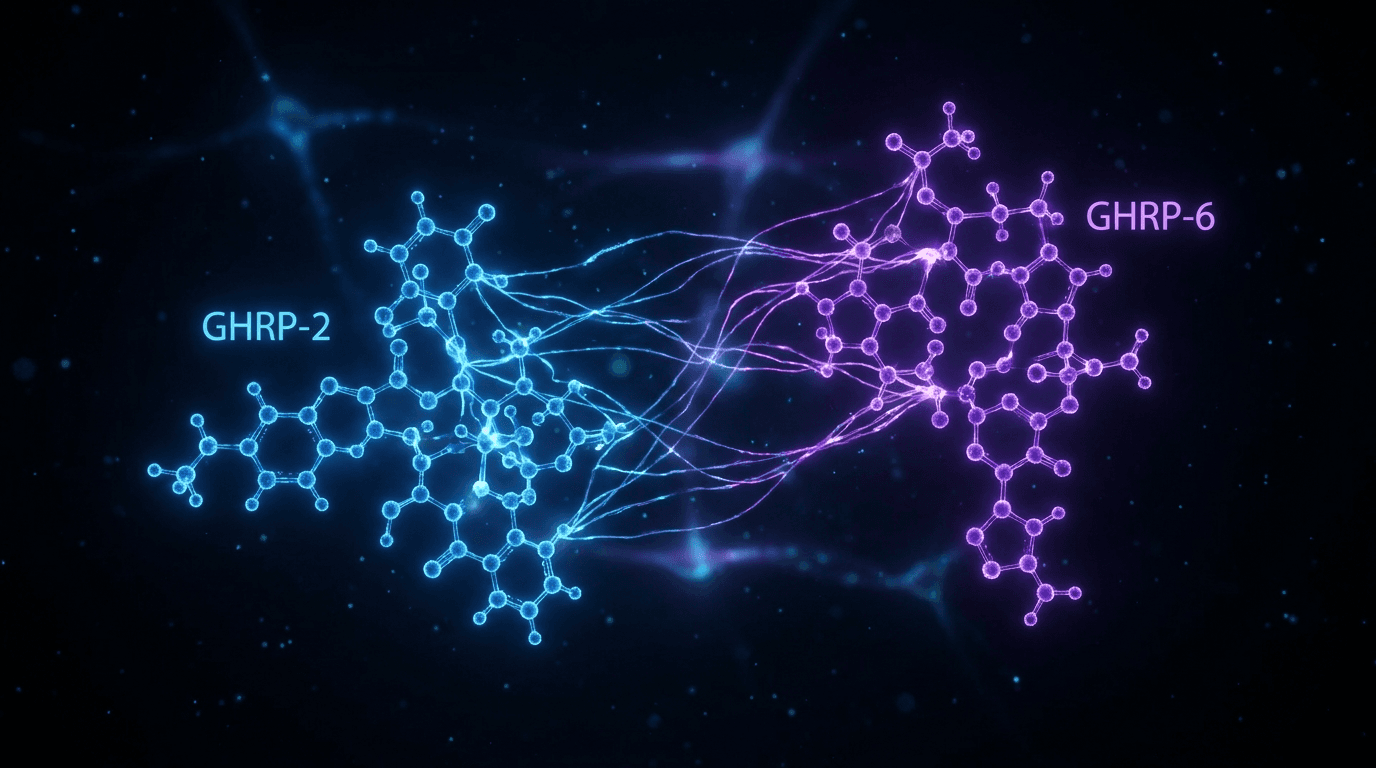
GHRP-2 and GHRP-6 are the two most-studied ghrelin receptor agonists in peptide research — but they behave differently in the body. One hits harder on GH release. The other activates a hunger signal that can make or break a research protocol. Here's the full clinical head-to-head, 40 years of data condensed.
Two peptides. One receptor. Forty years of research. GHRP-2 and GHRP-6 were synthesized within years of each other in the late 1970s and early 1980s, and they remain the two most-studied synthetic ghrelin receptor agonists in the peptide research catalog. Both trigger robust growth hormone pulses from the anterior pituitary. Both returned to Category 1 compounding eligibility following the April 23, 2026 FDA reclassification. Both are widely available from research suppliers with ISO-certified purity documentation. And yet they behave differently enough in practice that selecting the wrong one for a given research objective can meaningfully compromise results.
GHRP-2 delivers a larger, faster GH pulse — its higher binding affinity at the GHSR-1a receptor translates to approximately 25–40% greater peak GH amplitude than GHRP-6 at matched doses. GHRP-6 produces a more sustained GH response — and a stronger activation of the ghrelin-mediated hunger signal that is either the most significant confounding variable or the most useful therapeutic feature in your protocol, depending entirely on what you're studying.
This is the definitive 2026 comparison. We cover mechanism, pharmacodynamics, 40 years of clinical data, head-to-head trial results, side effect profiles, CJC-1295 stacking strategies, and sourcing guidance for research use. No hype, no vague claims — just what the literature actually shows and how to apply it.
What Are GHRPs? The Ghrelin Receptor Science Explained
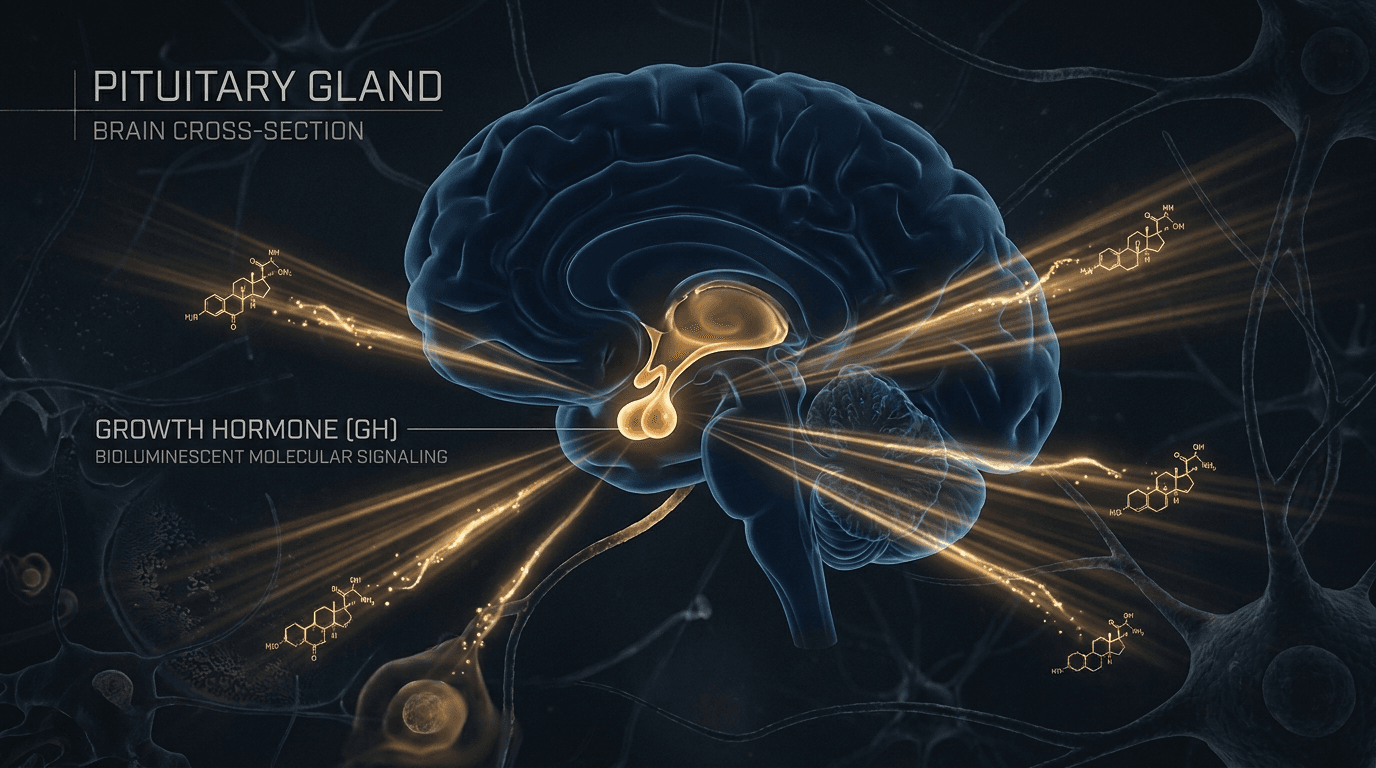
Growth Hormone Releasing Peptides (GHRPs) are synthetic peptides that bind to the growth hormone secretagogue receptor (GHSR-1a) — now better known as the ghrelin receptor. They were invented in the 1970s and 1980s before their endogenous receptor ligand (ghrelin) was even characterized in 1999, which is why the early literature calls them "GH-releasing peptides" rather than "ghrelin receptor agonists." Both terms describe the same pharmacological action. [7]
The mechanism operates through three interconnected steps that every researcher working with GHRPs should understand:
- Direct pituitary stimulation: GHRP binds GHSR-1a on somatotroph cells in the anterior pituitary, directly triggering GH granule secretion independent of hypothalamic input.
- Hypothalamic amplification: GHRP simultaneously binds GHSR-1a in the hypothalamus, stimulating endogenous GHRH release while inhibiting somatostatin — the body's endogenous GH brake.
- GHRH dependency: Critically, Pandya et al. (1998) demonstrated that GHRP-6 requires endogenous hypothalamic GHRH for its maximal GH-stimulating effect. When GHRH is pharmacologically blocked, GHRP activity drops dramatically. [4] GHRPs amplify an existing signal; they don't replace it.
This third point explains the most important practical fact about GHRPs: co-administering a GHRH analog (CJC-1295, Sermorelin) with a GHRP produces synergistic GH release — not merely additive. The GHRH analog supplies the pituitary signal directly; the GHRP amplifies pituitary sensitivity and removes the somatostatin brake simultaneously. The combined GH pulse can exceed either compound's solo action by 3–6 fold. [4,9]
GHRPs also activate ghrelin signaling in the hypothalamus and gut, producing orexigenic (appetite-stimulating) effects. The degree to which each GHRP activates this hunger pathway is the most practically important difference between GHRP-2 and GHRP-6 — and the central question this guide answers.
How GHRPs compare to other GH secretagogues:
- vs. Ipamorelin: Also GHRP-class, but engineered for maximum selectivity — minimal cortisol, ACTH, prolactin, and hunger stimulation. Produces a smaller GH pulse than GHRP-2 at equivalent doses but with a cleaner side-effect profile. The right choice when HPA axis activation is a confound.
- vs. Hexarelin: The most potent synthetic GHRP in terms of GH pulse amplitude, but causes faster receptor desensitization and stronger cortisol/prolactin effects. Not the default choice for extended protocols.
- vs. GHRH analogs (CJC-1295, Sermorelin): These bind the GHRH receptor — an entirely different target — producing longer-duration, lower-amplitude GH elevation rather than sharp pulses. Complementary to GHRPs, not equivalent alternatives. See our CJC-1295 vs Sermorelin guide for full analysis.
GHRP-2 (Pralmorelin): The Potency-First GH Secretagogue
GHRP-2 — generic name pralmorelin, also designated KP-102 in the clinical trial literature — is a synthetic hexapeptide with the sequence D-Ala-D-2-Nal-Ala-Trp-D-Phe-Lys-NH₂. The incorporation of D-amino acids at positions 1 and 4 confers enzymatic resistance and high binding affinity at GHSR-1a. Among research-grade GHRPs, GHRP-2 produces the largest acute GH pulse at equivalent doses — a consistent finding across multiple human studies. [2,7]
Pharmacodynamic profile at 100mcg (standard subcutaneous research dose):
- GH peak amplitude: ~15–20 ng/mL in healthy adults (3–4x above baseline of 1–3 ng/mL) [2]
- Time to peak GH: 15–30 minutes post-injection
- GH pulse duration: 60–90 minutes above baseline before returning to pre-dose levels
- IGF-1: measurable increases by 12–24 hours; more pronounced with repeated dosing across weeks
- Cortisol/ACTH: moderate stimulation, particularly at doses above 100mcg; attenuates with chronic use as receptor adaptation occurs
- Prolactin: mild transient elevation, less pronounced than hexarelin
- Appetite stimulation: present but moderate — meaningfully less orexigenic than GHRP-6 at matched doses
The pharmaceutical precedent: pralmorelin in Japan
GHRP-2 (pralmorelin, brand name Kaken) achieved pharmaceutical approval in Japan for diagnostic testing of growth hormone deficiency in adults and children — one of the few GHRPs to reach commercial regulatory approval anywhere in the world. This provides a clinically validated pharmacokinetic and safety dataset that directly informs research protocol design: established dose-response curves, characterized adverse event profiles, and defined diagnostic cutoffs. [8]
Popovic et al. (2000) published a landmark multicenter study in the Lancet showing that combined GHRH + GHRP-6 testing was as accurate as insulin tolerance testing (the gold standard for GHD diagnosis) — data applicable to GHRP-2 given the compounds' shared mechanism. [8]
Best research applications for GHRP-2:
- Protocols where maximum acute GH pulse amplitude is the primary outcome
- Body composition studies where appetite confounding must be controlled
- CJC-1295 stacking for peak GH optimization
- Age-related GH decline research where potency advantage matters
- Studies requiring pharmaceutical-grade dosing precedent
GHRP-6: The Ghrelin Signal, Amplified
GHRP-6 (His-D-Trp-Ala-Trp-D-Phe-Lys-NH₂) is the founding member of the synthetic GHRP class. Characterized in detail by Bowers et al. in 1984, it has accumulated over 500 peer-reviewed publications across 40 years — the richest literature base of any synthetic GHRP. [1] Its slightly lower GHSR-1a binding affinity compared to GHRP-2 produces a smaller peak GH response at matched doses, but its more robust activation of the orexigenic ghrelin pathway gives it a distinct clinical profile that makes it the preferred compound in specific research contexts.
Pharmacodynamic profile at 100mcg (standard research dose):
- GH peak amplitude: ~10–15 ng/mL in healthy adults (2–3x above baseline) [2]
- Time to peak GH: 20–45 minutes post-injection (slightly delayed vs. GHRP-2)
- GH pulse duration: 60–90 minutes
- Appetite stimulation: strong and clinically significant — subjects consistently report intense hunger within 20–30 minutes of injection, lasting 60–120 minutes [3]
- Cortisol/ACTH: similar profile to GHRP-2; moderate elevation at standard doses
- Sleep architecture: documented slow-wave sleep (SWS) promotion at nighttime doses [5]
- IGF-1: comparable downstream effects to GHRP-2 despite lower peak GH, reflecting differences in pulse amplitude vs. integrated GH exposure
The hunger effect — the most important clinical distinction
Laferrère et al. (2005) published a controlled human study documenting that ghrelin receptor agonists — including GHRP-2, and by extension the more potently orexigenic GHRP-6 — significantly increase ad libitum food intake in healthy men during the post-injection window. [3] For researchers studying lean mass accretion where caloric surplus is beneficial, GHRP-6's appetite signal is a feature: subjects eating more protein and total calories during an anabolic window get additive benefits from GH and increased substrate availability. For metabolic research or fat loss studies, this same appetite surge is a confounding variable that can produce between-group caloric intake differences unrelated to the GH mechanism itself.
The sleep enhancement advantage
Frieboes et al. (1995) administered 300mcg IV GHRP-6 to healthy men and documented significant increases in slow-wave sleep as well as GH, ACTH, and cortisol. [5] GHRP-6 administered 30–60 minutes before sleep amplifies the naturally occurring nocturnal GH surge and simultaneously improves SWS architecture — two distinct anabolic recovery effects that compound each other. This dual mechanism makes GHRP-6 the preferred compound for nighttime dosing protocols, an application where GHRP-2's marginal potency advantage is outweighed by GHRP-6's sleep architecture benefit.
Best research applications for GHRP-6:
- Lean mass accretion protocols where caloric surplus is desired
- Cachexia, wasting disease, or appetite restoration research
- Sleep quality and recovery studies
- Nighttime dosing protocols exploiting the SWS enhancement
- Research requiring the largest available published literature base
Mean Peak GH Response: GHRP-2 vs GHRP-6 vs Stacked Combinations (100mcg each)
Mean Peak Serum GH (ng/mL) After 100mcg Subcutaneous Dose — Research-Based Estimates
Values represent approximate mean peak GH levels based on Arvat et al. (1997), Pandya et al. (1998), and related dose-response literature. Baseline serum GH in healthy adults: 1–3 ng/mL. Individual responses vary by age, body composition, meal timing, and endogenous GHRH tone. CJC-1295 combination data reflects published synergistic amplification estimates; individual results will vary.
| Property | GHRP-2 | GHRP-6 |
|---|---|---|
| Generic name | Pralmorelin (KP-102) | GHRP-6 (no generic name) |
| Peptide sequence | D-Ala-D-2-Nal-Ala-Trp-D-Phe-Lys-NH₂ | His-D-Trp-Ala-Trp-D-Phe-Lys-NH₂ |
| Primary receptor | GHSR-1a (ghrelin receptor) | GHSR-1a (ghrelin receptor) |
| GHSR-1a binding affinity | Higher — more potent | Moderate |
| GH peak amplitude (100mcg) | ~15–20 ng/mL (3–4× baseline) | ~10–15 ng/mL (2–3× baseline) |
| Time to GH peak | 15–30 minutes | 20–45 minutes |
| GH pulse duration | 60–90 minutes | 60–90 minutes |
| Hunger / appetite stimulation | Moderate — manageable | Strong — clinically significant [3] |
| Cortisol / ACTH stimulation | Moderate at higher doses | Moderate at higher doses |
| Prolactin elevation | Mild, transient | Mild, transient |
| Sleep (SWS) enhancement | Minimal documented effect | Documented SWS promotion [5] |
| Receptor desensitization | Moderate with daily multi-dose use | Similar to GHRP-2 |
| Pharmaceutical approval | Japan — pralmorelin for GHD testing | No approved pharmaceutical use |
| Published human study count | Extensive — 200+ indexed studies | Extensive — 500+ indexed studies |
| FDA Category (April 2026) | Category 1 — compounding eligible | Category 1 — compounding eligible |
| Primary research niche | Max GH pulse; body composition; stacking | Lean mass; cachexia; sleep; nighttime dosing |
Side Effects: What the 40-Year Evidence Base Actually Shows
The adverse event profiles of both GHRPs are well-characterized across decades of human clinical research, and both compounds have shown acceptable safety in controlled settings. [6] The differences are about which effects predominate, not about a fundamentally different risk profile.
Shared effects — both compounds:
- Water retention: GH-mediated anti-natriuretic effects cause mild fluid retention, particularly with twice or three-times daily dosing. This is a class effect of all GH secretagogues and resolves on cessation. Monitored via body weight changes and peripheral edema assessment in research protocols.
- Cortisol and ACTH stimulation: Both GHRPs activate the hypothalamic-pituitary-adrenal axis at standard research doses. This is directly relevant in any study measuring stress hormones, inflammatory cytokines, or immune function — it's a confound that should be planned for. The effect blunts with chronic administration as receptor adaptation occurs. [5]
- Transient prolactin elevation: Both produce mild, subclinical prolactin increases at 100mcg doses. Becomes more relevant at higher doses or with hexarelin-class alternatives.
- Receptor desensitization: Daily multi-dose administration of either compound reduces acute GH response over weeks. Standard research protocols address this through cycling (8–12 weeks on, 4 weeks off) or via combination with CJC-1295, which maintains pituitary responsiveness through a different receptor pathway and partially compensates for GHSR-1a desensitization.
- Injection site reactions: Transient mild erythema or discomfort at subcutaneous injection sites. Common to all injectable research peptides and not compound-specific.
GHRP-6 specific: the appetite confound
GHRP-6's more potent ghrelin-mimetic activity translates to a clinically significant appetite surge 20–30 minutes post-injection. Laferrère et al. (2005) documented measurable increases in ad libitum caloric intake during the post-injection window with ghrelin receptor agonists. [3] In controlled research, this is the most challenging variable to manage: subjects who eat more during GHRP-6 injection windows — even without intent — create caloric intake differences between study arms that are not attributable to the GH mechanism under investigation. Strict dietary logging or controlled feeding protocols are required when GHRP-6 is used in body composition or metabolic research.
GHRP-2 specific: cortisol edge at higher doses
GHRP-2's stronger GHSR-1a binding produces somewhat more HPA axis stimulation than GHRP-6 at equivalent doses above 100mcg. Researchers measuring inflammatory markers, cytokine panels, or adrenal function should account for this when designing dose selection and measurement timing.
GHRP + CJC-1295: The Synergy That Changes Everything
The single most important fact about GHRPs in modern research is that their most powerful applications are in combination with a GHRH analog — not in isolation. The synergy between GHRP-class compounds and CJC-1295 or Sermorelin is among the most robustly documented observations in the GH secretagogue literature, and it transforms what these compounds can achieve. [4,9]
Why the combination is synergistic, not just additive:
CJC-1295 is a GHRH analog that binds the GHRH receptor on pituitary somatotrophs — a completely different receptor from GHSR-1a. It drives sustained GH synthesis and somatotroph sensitivity over hours to days. When a GHRP is then injected on top of this GHRH background:
- The GHRH analog has already elevated somatotroph "readiness" by upregulating GHRH receptors and GH synthesis
- The GHRP simultaneously triggers GHSR-1a-mediated GH release and blocks somatostatin
- The dual signal produces a GH pulse 3–6x larger than either compound achieves alone
This is the mechanistic basis for the chart above: GHRP-2 alone producing ~18 ng/mL peak GH vs. GHRP-2 + CJC-1295 producing ~38 ng/mL — a 2.1× amplification from the combination. GHRP-6 sees a similar proportional boost. [4]
The combination also partially compensates for desensitization: As GHSR-1a receptors desensitize with daily use, the CJC-1295 component continues stimulating GH via GHRH receptors. The total integrated GH signal therefore degrades more slowly with combined protocols than with GHRP monotherapy.
Timing — the critical variable:
GH release is suppressed by elevated insulin (which promotes somatostatin). For optimal GH pulse magnitude, all GH secretagogues should be administered in an insulin-low state:
- Morning fasted: 30–45 min before breakfast. The overnight fast provides the lowest insulin environment of the day and maximizes GHRP responsiveness.
- Pre-sleep: 30–60 min before sleep. Amplifies the natural nocturnal GH surge; GHRP-6 is particularly suited to this window given its SWS enhancement. Use GHRP-2 or Ipamorelin if the appetite signal from GHRP-6 is disruptive to sleep initiation.
- Post-workout: Within 30 minutes of resistance training. Exercise transiently suppresses somatostatin and elevates GHSR-1a sensitivity, creating a window of heightened GHRP responsiveness independent of insulin status.
Minimum 2–3 hours post-meal before any GHRP injection. Minimum 40–60 minutes pre-meal if dosing before eating. Food-elevated insulin during the GH pulse window can blunt peak amplitude by 40–60% in some subjects. [9]
| Protocol Variable | GHRP-2 Monotherapy | GHRP-6 Monotherapy | GHRP + CJC-1295 Stack |
|---|---|---|---|
| Standard research dose | 100mcg per injection | 100mcg per injection | 100mcg GHRP + 100mcg CJC-1295 |
| Injection route | Subcutaneous or intramuscular | Subcutaneous or intramuscular | Subcutaneous preferred |
| Daily frequency | 2–3× daily (fasted windows) | 2–3× daily (fasted windows) | 2–3× daily (fasted windows) |
| Best timing window 1 | Morning fasted (30 min pre-breakfast) | Morning fasted (30 min pre-breakfast) | Morning fasted |
| Best timing window 2 | Post-workout | Pre-sleep (SWS enhancement) | Pre-sleep or post-workout |
| Meal timing rule | Min. 2–3h post-meal; 45 min pre-meal | Min. 2–3h post-meal; 45 min pre-meal | Same as monotherapy |
| Cycling recommendation | 8–12 weeks on / 4 weeks off | 8–12 weeks on / 4 weeks off | 8–12 weeks on / 4 weeks off |
| Appetite management | Moderate hunger — manageable with planning | Strong hunger — plan meals in advance | Use GHRP-2 to minimize appetite confound |
| IGF-1 monitoring | Every 4–6 weeks in extended protocols | Every 4–6 weeks in extended protocols | Every 4–6 weeks |
| Expected peak GH | ~15–20 ng/mL | ~10–15 ng/mL | ~29–38 ng/mL (GHRP-dependent) |
GHRP-2 vs GHRP-6: Decision Framework for Research Protocols
The choice between GHRP-2 and GHRP-6 isn't about which compound is objectively superior — it's about which is better aligned with your specific research objective. Here's how to make the decision clearly:
Choose GHRP-2 (pralmorelin) when:
- Peak GH pulse amplitude is the primary outcome and you want the maximum measurable response at a given dose
- Body composition research requires appetite confounding to be minimized
- You're combining with CJC-1295 and peak GH is the protocol target
- Research subjects are already in caloric surplus and the appetite signal won't create an intake confound
- Pharmaceutical precedent and clinical validation (pralmorelin approval in Japan) matters for the research design
Choose GHRP-6 when:
- Research involves cachexia, muscle wasting, or conditions where appetite restoration is a co-primary endpoint
- Sleep architecture improvement is part of the research design
- Pre-sleep nighttime dosing is a primary protocol component
- Research subjects are lean-gaining and the caloric intake boost from ghrelin signal supports study goals
- You require the deepest possible literature base for citation and protocol validation
Consider Ipamorelin instead when:
- Research requires selective GH release without cortisol, ACTH, or prolactin co-stimulation
- Inflammatory markers or immune function are being measured — HPA axis co-activation from GHRPs would confound these outcomes
- Long-duration protocols where desensitization avoidance is critical — Ipamorelin receptor desensitization proceeds more slowly
- Appetite effects of GHRP-2 or GHRP-6 are unacceptable in your protocol
For the large majority of combined GH optimization research in 2026, the standard approach is GHRP-2 or Ipamorelin + CJC-1295 — with GHRP-2 chosen when maximum GH pulse is the priority and Ipamorelin chosen when selectivity matters more than amplitude. GHRP-6 fills a distinct niche: appetite co-stimulation, sleep research, and lean mass accretion protocols where the hunger signal is an explicit research variable or therapeutic asset, not a confounder.
Sourcing Research-Grade GHRP-2 and GHRP-6 in 2026
The quality gap between high-end and low-end research peptide suppliers is nowhere more consequential than in GH secretagogue research. Underdosed or impure GHRP preparations produce blunted or erratic GH pulses and introduce uncharacterized variables that invalidate dose-response data. The minimum documentation standard for GHRP research in 2026: batch-specific HPLC purity (≥99% recommended, 98% absolute minimum), mass spectrometry identity confirmation, endotoxin levels below 5 EU/mg, and sterility testing for injectable preparations. The following vendors are currently meeting these standards for GHRP-2 and GHRP-6 research preparations:
Peptide Technologies
Dual-Lab VerifiedGHRP-2, GHRP-6, CJC-1295 (DAC & no-DAC), Ipamorelin, Hexarelin
Check site for current pricing
Every batch dual-tested at two ISO 17025-accredited US laboratories. QR-code COA links directly to full HPLC chromatogram, mass spectrometry identity, endotoxin, sterility, and heavy-metal results — not a blanket certificate. The dual-lab verification standard is the highest available in the research peptide category and is critical for reproducible GH pulse measurements across batches.
Modified Aminos
Same-Day ShippingGHRP-2, GHRP-6, CJC-1295, Ipamorelin — injectable and capsule formats
Check site for current pricing
Research-first formulations with same-day shipping on orders placed before 2 PM CST. Offers GHRP capsule formats for oral bioavailability research alongside standard injectable preparations. Red thermal mailers maintain peptide stability during transit. Full COA documentation on every batch.
Amino USA
Best Stack CombosGHRP-2, GHRP-6, CJC-1295 with DAC, Ipamorelin, combination research vials
Check site for current pricing
ISO-certified US manufacturer with triple independent laboratory verification. Offers pre-formulated GHRP + CJC-1295 research combination vials that simplify protocol preparation and ensure accurate co-dosing ratios. Research literature referenced on product pages.
VANDL Labs
Full GH Secretagogue LineGHRP-2, GHRP-6, Ipamorelin, Sermorelin, CJC-1295
Ipamorelin from $79.99 · Sermorelin available · Free BAC water on orders $200+
Full GH secretagogue catalog from GHRP-class through GHRH analogs — enables single-vendor sourcing for complete GH axis research protocols. Free BAC water on peptide orders over $200 (useful for GHRP reconstitution), free shipping over $250. Third-party COAs on all products.
Frequently Asked Questions
Is GHRP-2 stronger than GHRP-6?
In terms of GH pulse amplitude at equivalent doses, yes. GHRP-2 consistently produces ~25–40% larger peak GH responses than GHRP-6 in head-to-head studies, documented by Arvat et al. (1997) across multiple age groups. This is driven by GHRP-2's higher GHSR-1a binding affinity. However, "stronger" depends on what outcome you're measuring. GHRP-6 produces stronger ghrelin-mediated appetite stimulation — a feature in cachexia research, a confound in body composition studies. And GHRP-6 has documented slow-wave sleep enhancement (Frieboes 1995) that GHRP-2 does not replicate. Choose by objective, not by potency alone.
Can GHRP-2 and GHRP-6 be combined in the same protocol?
There is no established benefit to co-administering GHRP-2 and GHRP-6 simultaneously. Both bind the same GHSR-1a receptor and would compete rather than synergize. The validated synergistic combination is GHRP (either compound) + GHRH analog (CJC-1295 or Sermorelin), which target distinct receptors and produce synergistic rather than competitive GH responses. Stacking two GHRPs adds cost and complexity without a supported mechanistic rationale for enhanced GH release.
How do GHRP-2 and GHRP-6 compare to Ipamorelin?
Ipamorelin is the most selective synthetic GHRP — it produces a clean GH pulse with minimal cortisol, ACTH, prolactin, or appetite stimulation. The trade-off: GHRP-2 produces a larger GH peak than Ipamorelin at equivalent doses, but with more cortisol and HPA stimulation. GHRP-6 produces a smaller GH peak than GHRP-2 but with the strongest appetite signal of the three. The decision hierarchy: if HPA activation and appetite effects are acceptable and peak GH is the goal, use GHRP-2. If appetite stimulation is a research feature, use GHRP-6. If selectivity is the priority, use Ipamorelin.
When is the best time to dose GHRPs?
Insulin suppresses GH release by promoting somatostatin. GHRPs should be injected in an insulin-low state for maximum GH pulse: (1) Morning fasted — minimum 2–3 hours after the last meal, 30–45 min before breakfast. (2) Pre-sleep — 30–60 min before sleep, particularly effective with GHRP-6 given its SWS enhancement; do not eat after the injection. (3) Post-workout — within 30 min of resistance training, when exercise-induced somatostatin suppression creates enhanced GHRP responsiveness. Insulin elevation during the GH pulse window can blunt peak amplitude by 40–60% in some subjects.
Do GHRPs cause receptor desensitization over time?
Yes — daily multi-dose GHRP administration produces progressive attenuation of the acute GH pulse over weeks as GHSR-1a receptors adapt. Standard research protocols address this through cycling (8–12 weeks on, 4 weeks off) or through CJC-1295 co-administration, which maintains GH output via GHRH receptors as GHSR-1a sensitivity blunts. Ipamorelin desensitizes somewhat more slowly than GHRP-2 or GHRP-6, which is a practical advantage in protocols exceeding 12 weeks. A 4-week washout typically restores full GHSR-1a responsiveness.
What purity standard is required for GHRP research?
For reproducible GH pulse quantification, HPLC purity below 98% introduces impurities that independently alter assay results or produce immunological artifacts. The recommended minimum is ≥98% HPLC purity; ≥99% is preferred for publication-quality research. Equally important: mass spectrometry identity confirmation (GHRP-2 MW: 817.9 Da; GHRP-6 MW: 873.0 Da — these must be confirmed by MS, not assumed from HPLC alone), endotoxin testing below 5 EU/mg, and sterility confirmation for injectable preparations. COA documents must be batch-specific, not blanket certificates covering a range of lots.
GHRP-2 vs GHRP-6: The 2026 Bottom Line
Forty years of research has produced a clear picture: GHRP-2 and GHRP-6 are both potent, well-characterized GH secretagogues with distinct pharmacological identities that make them suited to different research applications rather than interchangeable alternatives. GHRP-2 (pralmorelin) is the higher-potency compound — its pharmaceutical approval in Japan, more potent GHSR-1a binding, and 25–40% larger GH pulse amplitude make it the default choice for protocols where GH pulse magnitude is the primary variable. [2,6,7]
GHRP-6 is the more historically studied compound — 500+ peer-reviewed publications provide an unmatched literature base — and its stronger ghrelin-pathway activation produces the SWS sleep enhancement documented by Frieboes et al. (1995) and the appetite co-stimulation that makes it the preferred compound in cachexia and lean mass accretion research. [1,3,5]
The most important practical takeaway for 2026: neither compound reaches its peak performance in isolation. The synergy between GHRPs and CJC-1295, documented by Pandya et al. (1998) and confirmed across the subsequent literature, produces GH pulses 3–6x larger than monotherapy. GHRP + CJC-1295 is the research standard; the choice between GHRP-2 and GHRP-6 within that stack is the secondary decision, made by matching the compound's ghrelin-activation profile to the protocol's appetite-confounding tolerance.
For related research, see our complete guides on CJC-1295 + Ipamorelin stacking, Hexarelin, Sermorelin vs CJC-1295, and Ipamorelin.
Sources & References
- 1.Bowers CY, Momany FA, Reynolds GA, Hong A. "On the In Vitro and In Vivo Activity of a New Synthetic Hexapeptide That Acts on the Pituitary to Specifically Release Growth Hormone" — Endocrinology, 1984. DOI: 10.1210/endo-114-5-1537.View source
- 2.Arvat E, Camanni F, Ghigo E. "Age-related growth hormone-releasing activity of growth hormone secretagogues in humans" — Acta Paediatrica Supplement, 1997. DOI: 10.1111/j.1651-2227.1997.tb18266.x.View source
- 3.Laferrère B, Abraham C, Russell CD, Bowers CY. "Growth hormone releasing peptide-2 (GHRP-2), like ghrelin, increases food intake in healthy men" — Journal of Clinical Endocrinology and Metabolism, 2005. DOI: 10.1210/jc.2004-1719.View source
- 4.Pandya N, DeMott-Friberg R, Bowers CY, Barkan AL, Jaffe CA. "Growth hormone (GH)-releasing peptide-6 requires endogenous hypothalamic GH-releasing hormone for maximal GH stimulation" — Journal of Clinical Endocrinology and Metabolism, 1998. DOI: 10.1210/jcem.83.4.4644.View source
- 5.Frieboes RM, Murck H, Maier P, Riemann D, Hohagen F, Steiger A. "Growth hormone-releasing peptide-6 stimulates sleep, growth hormone, ACTH and cortisol release in normal men" — Neuroendocrinology, 1995. DOI: 10.1159/000127049.View source
- 6.Sigalos JT, Pastuszak AW. "The Safety and Efficacy of Growth Hormone Secretagogues" — Sexual Medicine Reviews, 2018. DOI: 10.1016/j.sxmr.2018.02.001.View source
- 7.Bowers CY. "Growth hormone-releasing peptide (GHRP)" — Cellular and Molecular Life Sciences, 1998. DOI: 10.1007/s000180050102.View source
- 8.Popovic V, Leal A, Micic D, et al.. "GH-releasing hormone and GH-releasing peptide-6 for diagnostic testing in GH-deficient adults" — Lancet, 2000. DOI: 10.1016/S0140-6736(00)02763-1.View source
- 9.Veldhuis JD, Bowers CY. "Human GH pulsatility: an ensemble property regulated by age and gender" — Journal of Endocrinological Investigation, 2003. DOI: 10.1007/BF03345158.View source
- 10.Svensson J, Lönn L, Jansson JO, et al.. "Two-month treatment of obese subjects with the oral growth hormone secretagogue MK-677 increases GH secretion, fat-free mass, and energy expenditure" — Journal of Clinical Endocrinology and Metabolism, 1998. DOI: 10.1210/jcem.83.2.4517.View source
- 11.Nass R, Pezzoli SS, Oliveri MC, et al.. "Effects of an oral ghrelin mimetic on body composition and clinical outcomes in healthy older adults" — Annals of Internal Medicine, 2008. DOI: 10.7326/0003-4819-149-9-200811040-00005.View source
- 12.ClinicalTrials.gov. "GHRP-2 (Pralmorelin) Clinical Studies — NIH Registry" — ClinicalTrials.gov, 2024.View source