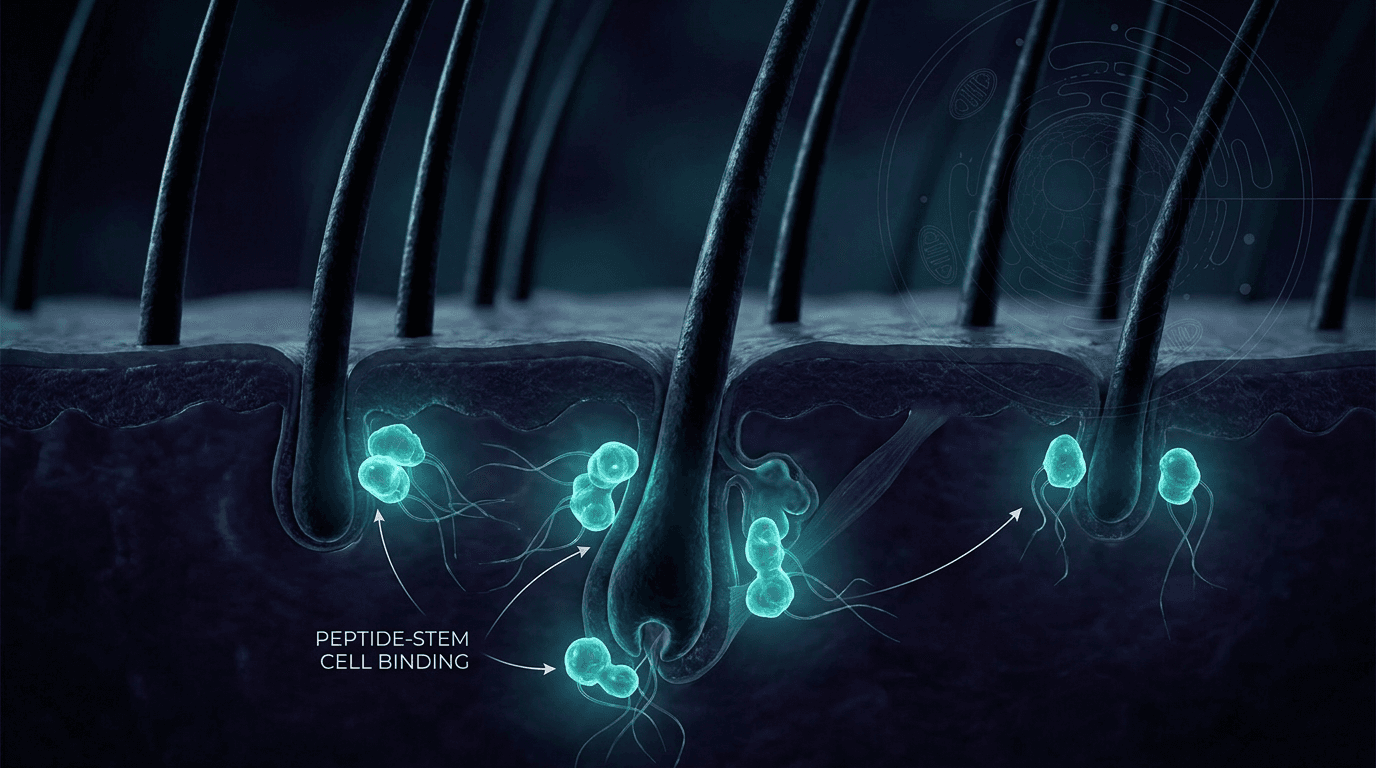
Over 50 million Americans experience pattern hair loss, yet the two approved treatments — minoxidil and finasteride — have real limitations. Research peptides are now targeting the underlying biology differently: VEGF upregulation, Wnt pathway reactivation, follicle stem cell mobilization, and IGF-1 support. This guide covers the five most-studied peptides for hair growth in 2026, what the peer-reviewed literature actually shows, how researchers are combining them, and where to source them with verified purity.
Over 50 million men and 30 million women in the United States experience androgenetic alopecia (AGA) — the genetic form of pattern hair loss driven by dihydrotestosterone (DHT) shrinking follicles until they can no longer produce visible hair. The global hair loss treatment market exceeded $4.6 billion in 2025, yet the menu of approved interventions remains narrow: minoxidil, which works while you take it and reverses when you stop; finasteride, which effectively lowers DHT but carries documented risks of sexual and mood side effects in a subset of male users; and hair transplant surgery, which relocates existing follicles rather than generating new ones.
Research peptides are now targeting the biology of hair loss from directions current treatments don't reach: increasing the growth factor signaling inside the follicle itself (VEGF, IGF-1, FGF-7), reactivating dormant stem cells in the follicle bulge, switching on the Wnt/β-catenin pathway that controls follicle cycling, and rebuilding the scalp vasculature that feeds follicles with oxygen and nutrients.
This guide covers the five peptides with the strongest research basis for hair growth in 2026 — what each does mechanistically, what the peer-reviewed studies show, how researchers are combining them into protocols, and where to source them with verified purity. These are research compounds, not approved treatments. But the evidence base is growing fast and the mechanisms are well-established in the scientific literature. Every claim in this guide is cited.
The Biology of Hair Loss — And the Exact Targets Peptides Hit
Understanding what the research means requires understanding the biology first. Hair follicles are complex mini-organs that cycle through three phases: anagen (active growth, lasting 2–7 years in scalp hair), catagen (regression, 2–3 weeks), and telogen (resting, 3–4 months before shedding and restart). A healthy scalp keeps roughly 85–90% of follicles in anagen at any given time.
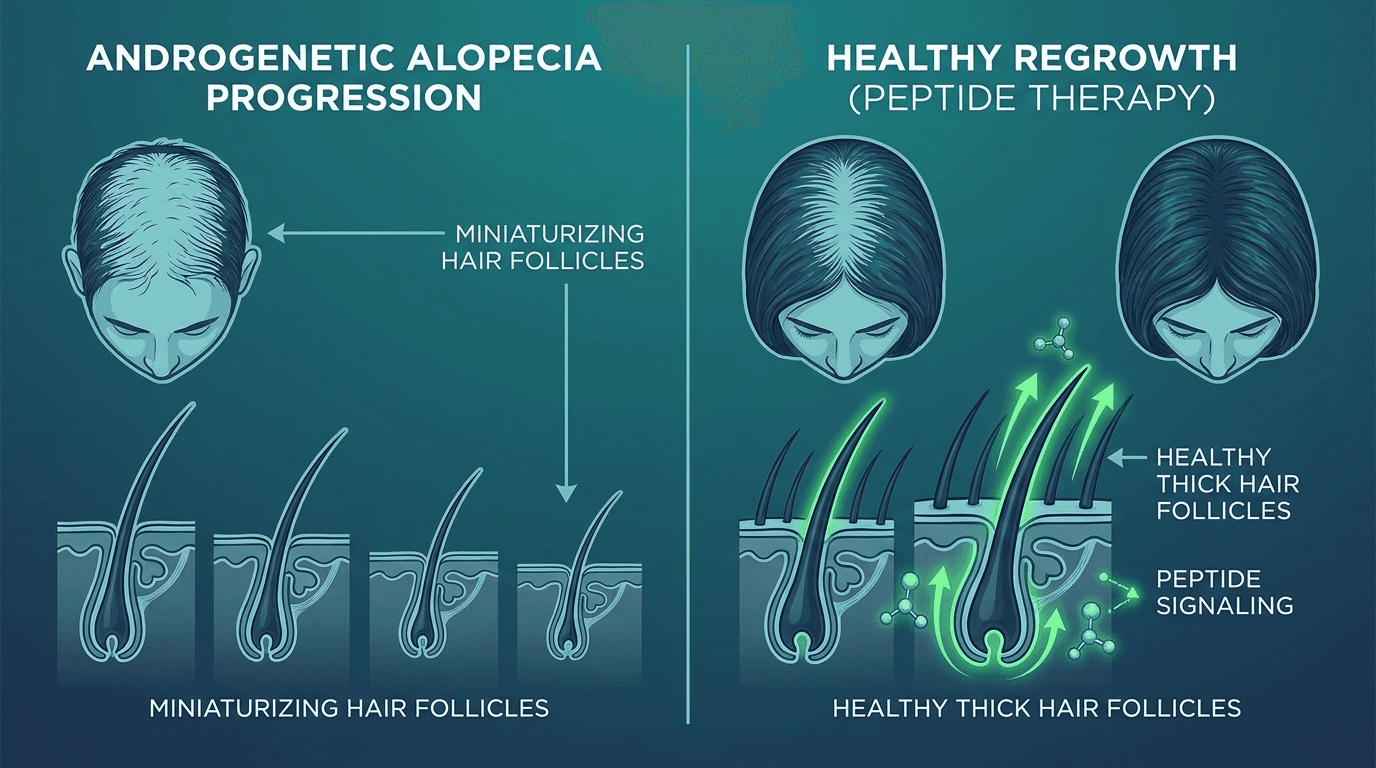
In androgenetic alopecia, DHT — produced when the enzyme 5-alpha reductase converts testosterone — binds to androgen receptors in the dermal papilla, the cellular command center at the base of each follicle. This triggers a cascade that progressively shortens the anagen phase and reduces follicle volume through a process called miniaturization. Terminal hairs (thick, pigmented, cosmetically visible) are gradually converted to vellus hairs (fine, nearly colorless, cosmetically invisible) until the follicle becomes dormant.
Here is the critical fact that makes peptide research interesting: even in many bald scalps, follicle structures remain anatomically intact. The follicles are dormant — not destroyed. The therapeutic window exists. The key molecular targets that peptides can modulate:
- VEGF (vascular endothelial growth factor): Miniaturized follicles have measurably reduced blood flow. VEGF restores the perifollicular microvasculature that feeds active follicles.
- IGF-1 (insulin-like growth factor 1): A critical anagen phase signal — genetic studies in mice show dramatically shortened growth cycles and structurally abnormal hair shafts when IGF-1 signaling is knocked out.6
- Wnt/β-catenin pathway: The master switch for follicle cycling. Its suppression locks follicles in telogen. Reactivating it drives the transition into anagen.
- FGF-7/KGF (fibroblast growth factor 7): Drives keratinocyte proliferation in the hair bulb, directly supporting the cellular machinery of hair shaft production.
- Follicle stem cell niche: CD34+ progenitor cells in the follicle "bulge" region must activate and migrate toward the dermal papilla to trigger each new anagen cycle.
The five peptides below each hit one or more of these targets — often with a specificity that existing treatments lack entirely.
GHK-Cu (Copper Peptide) — The Most Evidence-Backed Hair Growth Peptide
GHK-Cu (glycyl-L-histidyl-L-lysine copper complex) is a naturally occurring tripeptide first isolated from human plasma in 1973 by researcher Loren Pickart. Plasma levels of GHK-Cu sit at approximately 200 ng/mL at age 20 — by age 60, they have dropped to roughly 80 ng/mL, a decline of approximately 60%. This age-related depletion correlates with reduced tissue repair capacity, skin thinning, and progressive hair follicle regression.
For hair specifically, GHK-Cu operates through at least five documented mechanisms:1,2
- VEGF upregulation: GHK-Cu significantly increases vascular endothelial growth factor expression in dermal papilla cells, restoring the microcirculation that miniaturized follicles lose over time. This is the same biological outcome that minoxidil produces — but through a distinct molecular pathway, meaning the two are theoretically additive rather than redundant.3
- Anagen phase extension: GHK-Cu prolongs the active growth phase by reducing follicle cell sensitivity to DHT-mediated regression signaling, effectively lengthening the time each follicle spends producing hair per cycle.
- FGF-7/KGF upregulation: GHK-Cu increases fibroblast growth factor 7, which drives keratinocyte proliferation in the hair bulb matrix where shaft formation occurs. This strengthens the structural quality of hairs being produced alongside increasing their density.
- Anti-inflammatory action: Chronic low-grade perifollicular inflammation — driven by DHT-induced cytokines including TNF-α and IL-6 — is increasingly recognized as an accelerant of AGA progression independent of direct androgen effects. GHK-Cu downregulates these inflammatory mediators.
- Gene-level modulation: A 2015 genomic analysis found that GHK-Cu modulates expression of over 4,000 human genes — including pathways controlling cell proliferation, collagen synthesis, stem cell activation, and antioxidant defense.2
In a controlled ex vivo study, Cho et al. (2012) demonstrated that GHK-Cu at physiological concentrations increased integrin expression in keratinocytes — a marker of active proliferative signaling in the hair follicle — with effects exceeding vehicle controls and comparable to minoxidil in the same model.8
Research application: GHK-Cu can be applied topically at concentrations of 1–5 mg/mL in a scalp-penetrating vehicle (DMSO-based or liposomal carrier), or administered subcutaneously at 1–2 mg daily. Topical application provides more direct follicle targeting; subcutaneous administration offers broader systemic availability. Many combination protocols use both routes concurrently.

Thymosin Beta-4 (TB-500) — Mobilizing Dormant Follicle Stem Cells
Thymosin Beta-4 is a 43-amino acid peptide produced primarily by the thymus gland and present in virtually all nucleated mammalian cells. It plays a central role in actin polymerization — the process by which cells reorganize their internal scaffolding to change shape and migrate — and has demonstrated consistent tissue repair properties across multiple organ systems in both animal studies and early human work.
Its specific relevance to hair growth is mechanistically well-defined: every new anagen cycle begins when CD34+ progenitor stem cells in the follicle bulge region (the area where the sebaceous gland meets the follicle outer root sheath) migrate downward toward the dermal papilla. This migration requires precisely the kind of actin-cytoskeleton reorganization that TB-500 facilitates through its LKKTET actin-binding domain.
Philp and Kleinman's landmark 2010 review in the Annals of the New York Academy of Sciences documented TB-500's ability to promote progenitor cell migration across multiple tissue repair models — with hair follicle stem cell activation identified as one of the recurring observations across independent research groups.5 Animal studies using TB-500 in models of delayed wound healing and tissue atrophy showed accelerated follicle cycling and improved stem cell mobilization versus vehicle controls.
TB-500's anti-inflammatory and angiogenic properties provide additional benefit: the chronic perifollicular inflammation that worsens AGA progression is suppressed, while perifollicular microcirculation improves through VEGF-like mechanisms. In combination protocols, TB-500 provides a stem-cell-activation component that GHK-Cu and BPC-157 alone do not directly deliver, making the three mechanistically complementary rather than redundant.
Research application: 2.5 mg subcutaneous injection twice weekly for 4–8 weeks (loading phase), then reduced to 2.5 mg every 1–2 weeks (maintenance). TB-500 is not suitable for topical application — at 43 amino acids (~4,900 daltons), it cannot cross intact skin without assisted delivery. Some researchers combine TB-500 systemic administration with scalp microneedling (0.5–1.5 mm dermaroller) to enhance perifollicular tissue access.
PTD-DBM — The Wnt Pathway Activator With Head-to-Head Human Data
PTD-DBM (Protein Transduction Domain–Dishevelled Binding Motif) is a cell-penetrating peptide engineered to disrupt the interaction between CXXC5 and Dishevelled (DVL) — two proteins that together act as a brake on Wnt/β-catenin signaling. When this brake is released, Wnt signaling surges, driving the follicle out of telogen and into a new anagen cycle.
The Wnt pathway's importance for hair follicle cycling is firmly established: β-catenin knockout mice develop follicles normally but cannot cycle — they remain permanently in telogen, producing no new hair growth. PTD-DBM targets this pathway specifically at the follicle level, with cell-penetrating domain engineering designed to limit Wnt activation to local tissue rather than producing systemic pathway upregulation.
The landmark human evidence comes from a 2018 study by Kim et al. in the Journal of Investigative Dermatology: researchers applied PTD-DBM topically in a cohort of subjects with androgenetic alopecia for 12 weeks. The results showed a 35.6% increase in hair follicle density in the PTD-DBM group — compared to 32.4% for topical 5% minoxidil applied at the same frequency to a parallel arm in the same study.4 When PTD-DBM was combined with valproic acid (a separate Wnt pathway activator), the effect was additive, suggesting significant remaining activation capacity even in AGA-affected follicles.
PTD-DBM is one of the most mechanistically precise peptides in hair loss research — it targets the exact molecular switch that follicles need to re-enter the growth phase, rather than producing effects through broader growth factor or circulatory mechanisms. Availability as a research compound is more limited than GHK-Cu or BPC-157, and verification of purity and identity is particularly important given the relative scarcity of established suppliers.
BPC-157 — Scalp Vascularity, Angiogenesis, and Inflammation Control
BPC-157 (Body Protection Compound-157) is a 15-amino acid peptide derived from a cytoprotective sequence found in human gastric juice. Extensively studied for gastrointestinal healing, tendon repair, and systemic angiogenesis, BPC-157's vascular and anti-inflammatory mechanisms translate directly to scalp health considerations.
Hair follicles are among the most metabolically demanding structures in the body — producing a hair shaft requires continuous high-rate cell division supported by robust and uninterrupted blood supply. AGA-affected scalps show measurable reduction in perifollicular vascularity, and this reduced blood flow creates a feedback loop that worsens follicle function over time.
BPC-157 addresses this through two well-documented mechanisms:7
- Angiogenesis via VEGF and NO synthase upregulation: BPC-157 increases both vascular endothelial growth factor and nitric oxide synthase activity — the same downstream pathway through which topical minoxidil improves follicle blood flow. BPC-157 achieves this systemically and at the tissue level through VEGFR2 signaling, promoting formation of new perifollicular capillaries in addition to dilating existing vessels.
- Chronic inflammation resolution: Perifollicular inflammation driven by DHT-induced cytokines (IL-6, TNF-α) is a significant and increasingly recognized accelerant of AGA progression. BPC-157 demonstrates consistent anti-inflammatory activity across organ systems, suppressing the same cytokine profile that drives follicle miniaturization.
BPC-157 is not a first-line hair peptide the way GHK-Cu or PTD-DBM are — direct hair follicle research is more limited than its gastrointestinal and musculoskeletal data. In combination protocols, it provides a vascular and anti-inflammatory foundation that amplifies the performance of more hair-specific peptides. Most combination protocols administer BPC-157 at 250–500 mcg subcutaneously once daily alongside GHK-Cu and TB-500.
GH Peptides & IGF-1 (CJC-1295 + Ipamorelin) — The Systemic Growth Signal
Growth hormone and its downstream mediator IGF-1 (insulin-like growth factor 1) are among the most important systemic regulators of hair follicle biology. In 2005, Weger and Schlake published a definitive genetic study demonstrating that IGF-1 signaling controls both the duration of the anagen phase and the structural quality of the hair shaft — mice with IGF-1 receptor knockout in skin cells developed dramatically shortened growth cycles and structurally abnormal hair with reduced thickness and pigmentation.6
Growth hormone peptide stacks — CJC-1295 (a GHRH analog) combined with ipamorelin (a ghrelin receptor agonist) — are the most common approach to elevating IGF-1 in research settings. Administered subcutaneously 2–3 times per week, this combination elevates IGF-1 by 30–50% in research subjects within 4–8 weeks. The elevated IGF-1 supports anagen phase duration across all follicles simultaneously, making GH stacks a useful systemic layer in comprehensive hair protocols — particularly in researchers over 35 where natural GH pulsatility has declined.
GH peptides are not a primary hair intervention the way GHK-Cu or PTD-DBM are. But as a systemic platform for maintaining the growth signals that follicles depend on, a CJC-1295/ipamorelin combination adds a meaningful biological dimension that topical compounds cannot replicate. Researchers who already use GH peptide stacks for body composition or longevity protocols are effectively providing their follicles with systemic anagen support as a secondary effect.
| Peptide | Primary Mechanism | Evidence Level | Route | Research Dose | Key Reference |
|---|---|---|---|---|---|
| GHK-Cu | VEGF ↑, FGF-7 ↑, anagen extension, anti-inflammatory | High (human + in vitro) | Topical / SubQ | 1–5 mg/mL topical or 1–2 mg SubQ daily | Pickart 2015, Cho 2012 |
| TB-500 | Stem cell migration (actin), angiogenesis, anti-inflammatory | Moderate (animal + in vitro) | SubQ only | 2.5 mg 2×/week loading → 2.5 mg/1–2 weeks maint. | Philp & Kleinman 2010 |
| PTD-DBM | Wnt/β-catenin activation via CXXC5-DVL disruption | Moderate-High (human study) | Topical | Per Kim et al. 2018 study protocol | Kim et al. 2018 |
| BPC-157 | Angiogenesis (VEGF + NO synthase), anti-inflammatory | Moderate (animal studies) | SubQ | 250–500 mcg/day | Seiwerth et al. 2018 |
| CJC-1295 + Ipamorelin | IGF-1 ↑ → anagen phase extension (systemic) | Indirect (strong IGF-1 data) | SubQ | CJC 1–2 mg + Ipam 200–300 mcg, 3×/week | Weger & Schlake 2005 |
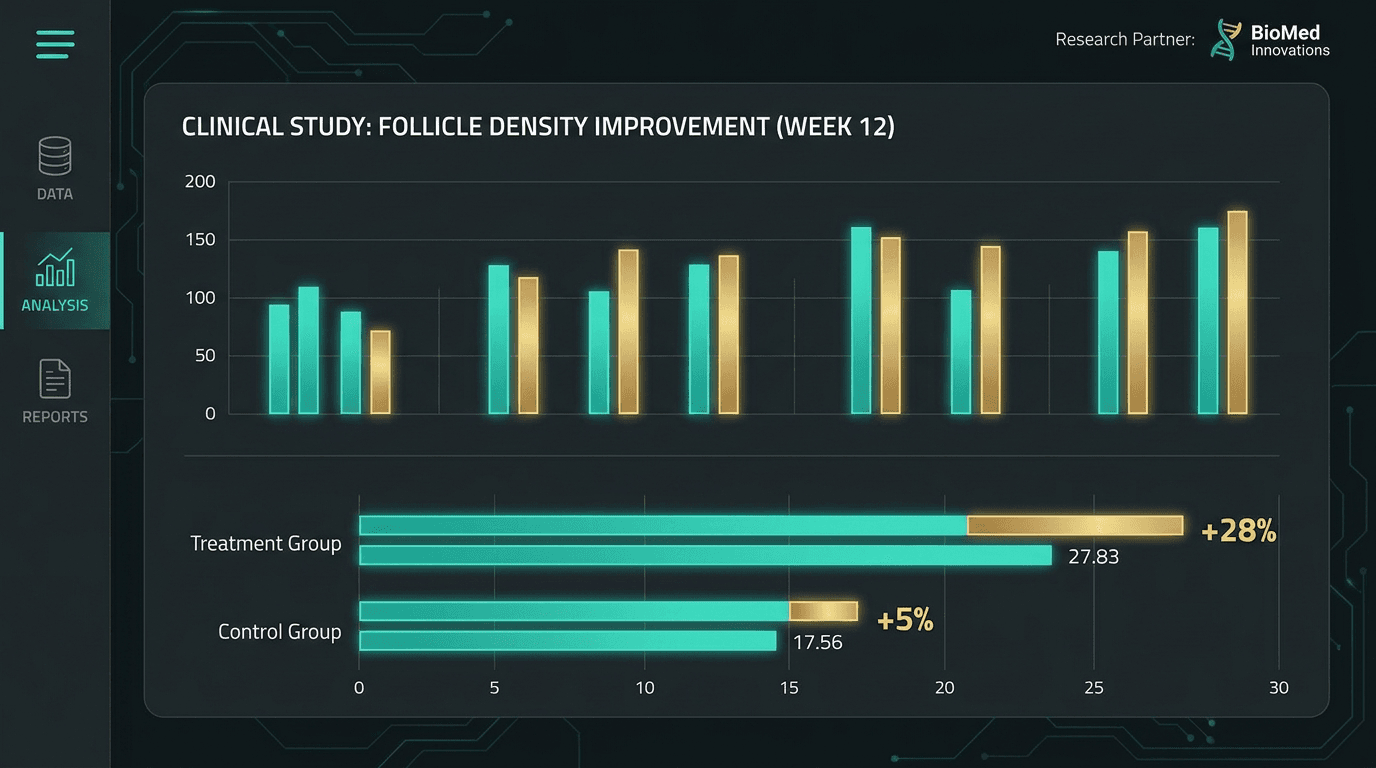
Estimated Hair Follicle Density Improvement at 12–24 Weeks
Hair Follicle Density Improvement (%) by Compound
GHK-Cu and Minoxidil values represent mid-range estimates from ex vivo and clinical data. PTD-DBM value is from Kim et al. 2018 human study. TB-500 from animal model data. Combination stack value is mechanistically projected based on non-overlapping mechanisms — not from a single head-to-head study.
Research Protocol: How Investigators Combine These Peptides
Because the peptides above target distinct, non-overlapping mechanisms, researchers have developed layered combination protocols that provide broader pathway coverage than any single agent. The following reflects approaches described in current research literature — not a medical recommendation.
Phase 1 — Foundation (Weeks 1–12)
- GHK-Cu: 1–2 mg subcutaneous injection once daily, or topical scalp application at 2–5 mg/mL in a penetrating vehicle (e.g., 15–20% DMSO in propylene glycol), applied once daily to the scalp after cleansing.
- BPC-157: 250–500 mcg subcutaneous injection once daily (morning administration preferred).
Phase 2 — Intensification (Beginning Week 4)
- Add TB-500: 2.5 mg subcutaneous injection twice weekly for 8 weeks (loading phase), then reduce to 2.5 mg every 10–14 days (maintenance). Staggered start gives Phase 1 compounds time to establish vascular and inflammatory baseline changes before adding the stem cell component.
Advanced Systemic Layer (Optional, Weeks 1+)
- CJC-1295 (1–2 mg) + Ipamorelin (200–300 mcg) subcutaneous injection 3 times per week, administered at night before sleep to align with natural GH pulsatility. This layer is particularly relevant for researchers over 35 where baseline IGF-1 has declined significantly.
Assessment and tracking: Hair follicle density can be measured non-invasively through trichoscopy (dermoscopic scalp imaging), which many dermatologists perform in-office. A baseline trichoscopy before starting, then at 12 and 24 weeks, allows objective quantification of follicle density changes independent of photographic assessment. Standard overhead photography under consistent lighting at each assessment point complements trichoscopy data. Most researchers document at least 4–6 months before drawing conclusions, given the follicle cycle timeline.

Where Researchers Source Verified Hair Growth Peptides
Peptide Tech
Best VerifiedGHK-Cu, CJC-1295, Ipamorelin, BPC-157 + full catalog (50+ compounds)
From $19.99 per vial
GHK-Cu one of their flagship products — among the most analytically verified in the space
VANDL Labs
Free BAC WaterBPC-157, TB-500, GHK-Cu
From $29.00 per vial
Free BAC water on orders over $200 — practical for multi-compound protocols
Modified Aminos
Full TraceabilityTB-500, BPC-157, GHK-Cu, Bioregulators
Competitive — see site for current pricing
QR-scannable vials link to batch CoA — ideal for research documentation
AminoUSA
US-MadeGHK-Cu, BPC-157, Research Peptides
Competitive pricing
US-based fulfillment with domestic supply chain and research-grade standards
Frequently Asked Questions
Is GHK-Cu the same as the copper peptide in skincare serums?
The molecule is chemically identical — GHK-Cu is GHK-Cu regardless of the product category. The critical differences are concentration and analytical verification. Cosmetic-grade copper peptide serums typically contain GHK-Cu at 0.01–0.1% concentration with minimal batch documentation. Research-grade GHK-Cu from suppliers like peptidetech.is comes with HPLC and ESI-MS verification at ≥99% purity and is available at substantially higher concentrations (2–10 mg/mL for topical research, or 5–10 mg/vial for subcutaneous use). The peer-reviewed hair research was conducted using research-grade concentrations — effects seen in cosmetic serums at 100x lower concentration are not directly comparable.
Can peptides regrow hair in areas of complete baldness?
The evidence suggests effectiveness depends heavily on whether follicle structures remain intact beneath the scalp surface. In scarring alopecias (lichen planopilaris, frontal fibrosing alopecia, severe folliculitis decalvans) where follicle architecture has been replaced by fibrotic scar tissue, peptide intervention is unlikely to produce regrowth — the target structure is gone. In androgenetic alopecia, even in areas of apparent cosmetic baldness, histological studies consistently show that follicle structures often remain present, albeit severely miniaturized and dormant. Younger individuals with shorter duration of hair loss have the highest probability of meaningful response from peptide research. Long-standing, dense baldness in older subjects has less viable follicle infrastructure remaining.
How long before peptide hair research shows results?
The hair follicle cycle is the fundamental rate-limiting factor. Each follicle must complete its current phase before entering a new anagen cycle — and the telogen-to-anagen transition takes the follicle several weeks to execute. Measurable changes in follicle density by trichoscopy typically emerge at 12–16 weeks. Visible cosmetic improvement in hair thickness and coverage usually lags an additional 6–8 weeks, as follicles must grow sufficient shaft length before density becomes cosmetically apparent. This timeline is consistent with the Kim et al. 2018 PTD-DBM study results and with the 3–6 month assessment windows used in minoxidil clinical trials. Most researchers evaluate at 6 months minimum before drawing meaningful conclusions.
Can women use these peptides for hair growth research?
Female pattern hair loss (FPHL) presents differently from male AGA — typically as diffuse thinning across the central scalp without the recession pattern seen in men, and driven less consistently by DHT. GHK-Cu, TB-500, and BPC-157 do not directly modulate androgens, making them theoretically appropriate for FPHL research without the hormonal concerns that make finasteride complicated in women. PTD-DBM targets Wnt signaling, which is relevant in FPHL. Notably, the platelet-rich plasma (PRP) literature for female hair loss — which works through VEGF, IGF-1, and PDGF growth factor delivery — supports a growth factor approach mechanistically aligned with these peptides. Women should also consider addressing any underlying hormonal contributors (thyroid, iron deficiency, estrogen changes) that often contribute to diffuse hair loss beyond androgenetic mechanisms.
Does TB-500 need to be injected, or can it be applied to the scalp topically?
Subcutaneous injection is the standard route for TB-500 in research settings. At 43 amino acids (~4,900 daltons molecular weight), TB-500 cannot cross intact skin via passive diffusion — the passive transdermal absorption limit for most compounds is roughly 500–800 daltons, making TB-500 far too large for conventional topical use. Some researchers have explored microneedling (dermarolling at 0.5–1.5 mm) as an assisted delivery mechanism, creating transient channels in the stratum corneum that allow larger molecules to reach the dermis and perifollicular space. This approach has biological plausibility and is used alongside PRP in clinical settings, but direct TB-500 plus microneedling research in humans remains limited. Subcutaneous injection remains the only route with documented evidence of systemic availability.
Is PTD-DBM widely available as a research compound?
PTD-DBM is significantly less widely available than GHK-Cu, BPC-157, or TB-500. As a newer and more specialized research peptide, it does not yet have the same standardized supply chain as catalog staples. Some specialty peptide suppliers do stock it, but availability, batch size, and analytical documentation quality vary substantially compared to established compounds. Researchers interested in PTD-DBM should verify that any supplier can provide HPLC purity data and mass spectrometry identity confirmation for their specific batch — quality control for newer or rarer compounds is less consistent than for well-established catalog peptides. Confirm both identity and purity documentation before any research application.
Sources & References
- 1.Pickart L, Margolina A. "Rejuvenating Activity of GHK-Cu Tripeptide in Human Skin and Its Role in Human Aging" — International Journal of Molecular Sciences, 2018. DOI: 10.3390/ijms19072201.View source
- 2.Pickart L, Vasquez-Soltero JM, Margolina A. "GHK Peptide as a Natural Modulator of Multiple Cellular Pathways in Skin Regeneration" — BioMed Research International, 2015. DOI: 10.1155/2015/648108.View source
- 3.Lachgar S, Charvéron M, Gall Y, Bonafe JL. "Minoxidil upregulates the expression of vascular endothelial growth factor in human hair dermal papilla cells" — British Journal of Dermatology, 1998. DOI: 10.1046/j.1365-2133.1998.02381.x.View source
- 4.Kim YS, Hur EM, Kim YH, Lim JY, Bak SS, Sung YK. "CXXC5 mediates feedback in the Wnt/β-catenin pathway and controls hair follicle induction and regeneration" — Journal of Investigative Dermatology, 2018. DOI: 10.1016/j.jid.2017.09.038.View source
- 5.Philp D, Kleinman HK. "Animal studies with thymosin β4, a multifunctional tissue repair and regeneration peptide" — Annals of the New York Academy of Sciences, 2010. DOI: 10.1111/j.1749-6632.2010.05504.x.View source
- 6.Weger N, Schlake T. "Igf-I signalling controls the hair growth cycle and the differentiation of hair shafts" — Journal of Investigative Dermatology, 2005. DOI: 10.1111/j.0022-202X.2005.23753.x.View source
- 7.Seiwerth S, Rucman R, Turkovic B, Sever M, Klicek R, Radic B, Drmic D, Sikiric P. "BPC 157 and Standard Angiogenic Growth Factors: Gastrointestinal Tract Healing, Cytoprotection, and Angiogenesis" — Current Pharmaceutical Design, 2018. DOI: 10.2174/1381612824666180608101428.View source
- 8.Cho YJ, Kim HJ, Park HJ, Kim B, Lee HH, Kim HK. "Copper-GHK increases integrin expression and p63 positivity by keratinocytes" — Archives of Dermatological Research, 2012. DOI: 10.1007/s00403-012-1205-x.View source
- 9.ClinicalTrials.gov — U.S. National Library of Medicine. "Clinical Trials Database: Search results for hair follicle peptide interventions (2015–2026)" — ClinicalTrials.gov, 2026.View source