Your immune system ages faster than almost any other organ — and the thymus, its command center, is nearly gone by 50. Thymosin Alpha-1 (TA-1) is the peptide drug that 37 countries have already approved to address exactly this problem. Here is what 80+ clinical trials across 11,000 subjects actually show.
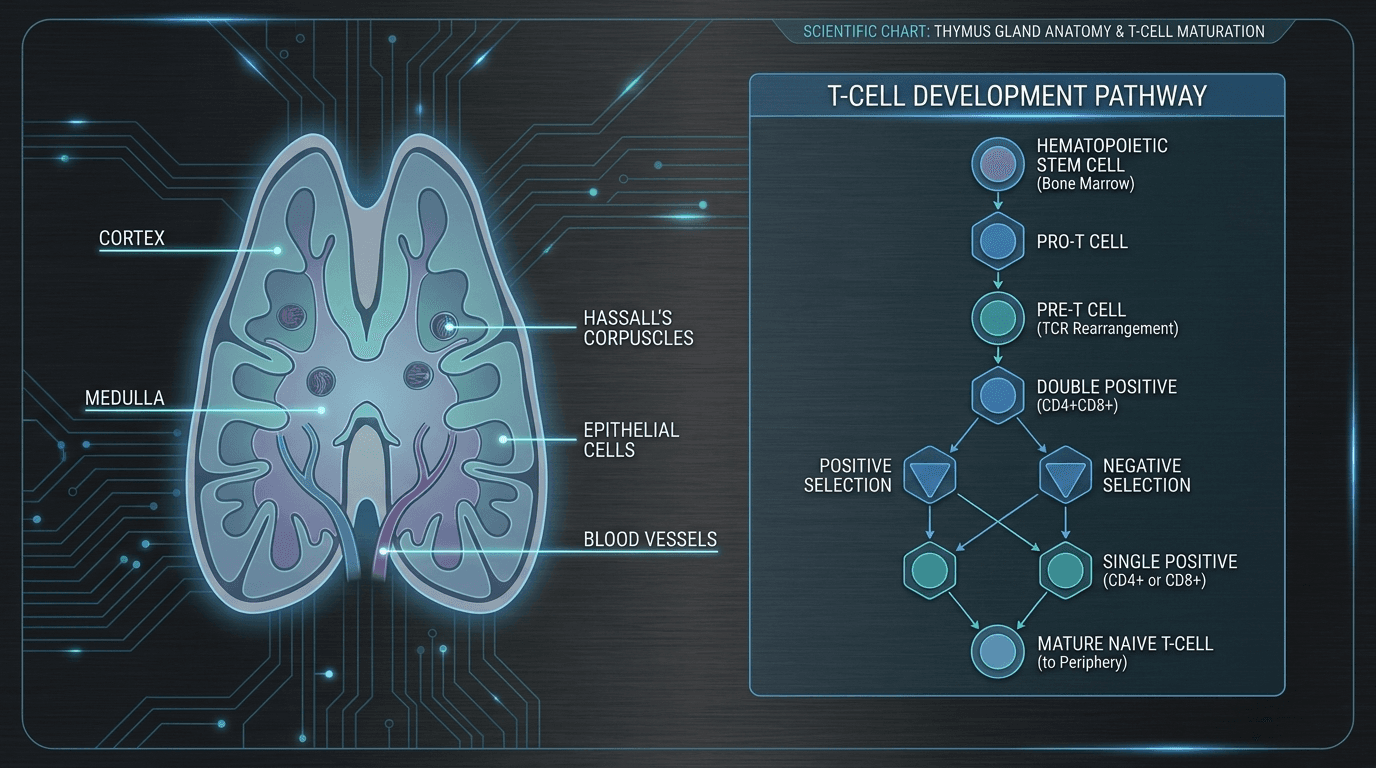
Here is a fact that most people do not know: your immune system has an expiration date built into it. The thymus gland — the organ responsible for training the T-cells that fight infection, cancer, and disease — begins shrinking at puberty and is functionally depleted by your mid-fifties. The result is called immunosenescence: a slow, systemic collapse of immune competence that makes everything from flu vaccines to cancer immunotherapy less effective as you age.
Thymosin Alpha-1 (TA-1) was discovered in 1972 as the active fraction of a calf thymus extract, and has since become one of the most clinically validated immune-modulating peptides in existence. It is marketed under the trade name Zadaxin (thymalfasin), approved in 37 countries across Asia, Europe, and Latin America, and has been evaluated in more than 80 clinical trials involving over 11,000 human subjects. [4]
This is not a speculative biohack. It is a drug with a three-decade clinical track record — one that happens to be largely unknown in the United States, where it remains unapproved but widely studied as a research compound. Here is what the evidence actually shows.
What Is Thymosin Alpha-1?
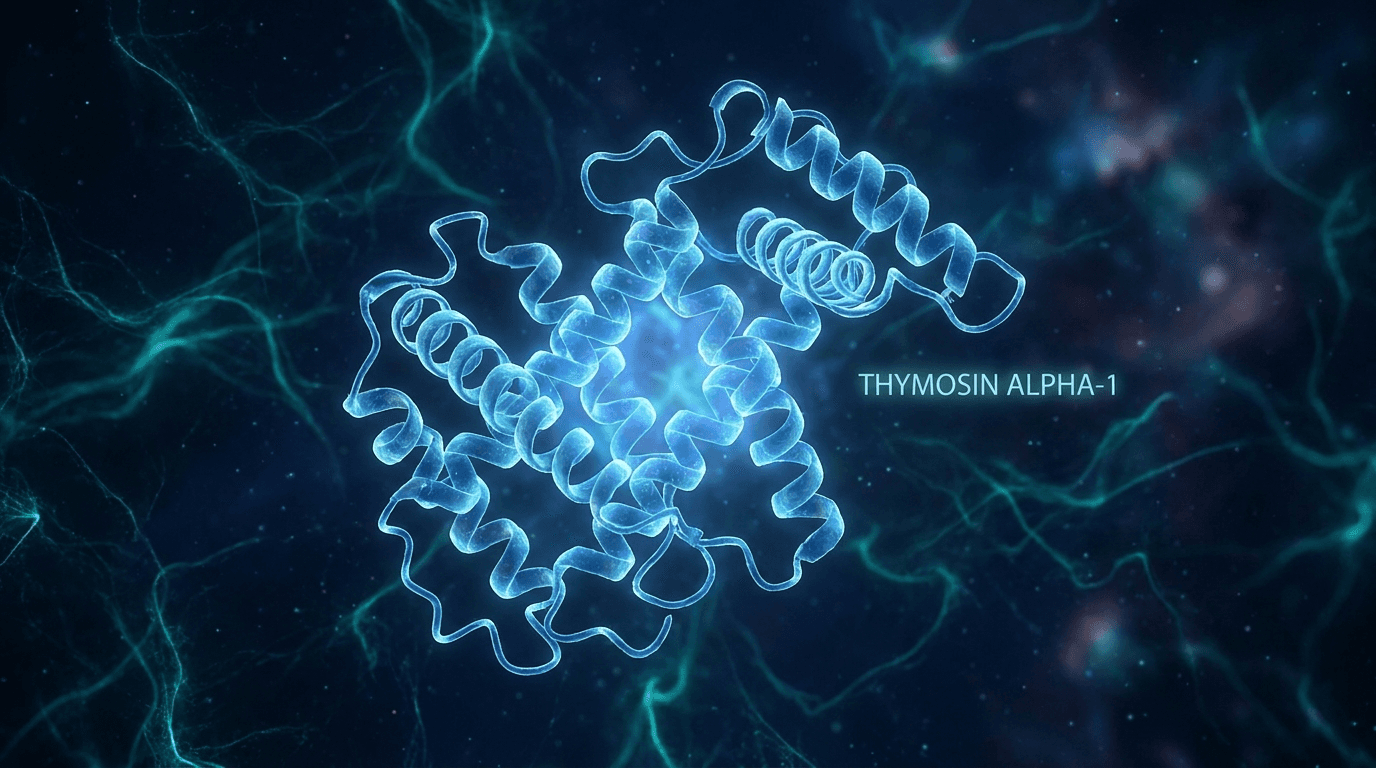
Thymosin Alpha-1 is a 28 amino acid peptide corresponding to the N-terminal fragment of prothymosin alpha — a protein naturally produced by the thymus gland. Its molecular weight is 3,108 daltons, and it is naturally present in human serum, where it functions as a key modulator of immune homeostasis.
The synthetic form, thymalfasin, is bioidentical to the naturally occurring peptide. Because TA-1 serum levels decline progressively with age — falling 40–60% lower in adults over 60 compared to young adults — the age-related decline in TA-1 is now considered both a biomarker of immune aging and a legitimate therapeutic target. [10]
Unlike broad immunostimulants that can trigger dangerous cytokine storms, TA-1 operates as an immunomodulator — it restores appropriate immune responses rather than simply amplifying them. This distinction is clinically significant: TA-1 has been safely administered to immunocompromised cancer patients, sepsis patients, and healthy elderly adults without the autoimmune or inflammatory complications associated with blunt immune stimulation.
How TA-1 Works: A Mechanistic Breakdown
Thymosin Alpha-1 exerts its immunological effects through a multi-layered mechanism that begins at the innate immune level and cascades through to adaptive immunity. The key steps are:
- Toll-like receptor activation: TA-1 binds and activates TLR-2 and TLR-9 on plasmacytoid dendritic cells (pDCs) — the cellular gatekeepers of innate immune response. This drives pDC maturation, increased antigen presentation efficiency, and downstream T-cell priming. [4]
- T-cell differentiation: By enhancing interleukin-12 (IL-12) and interferon-gamma (IFN-γ) secretion, TA-1 drives naive T-cells toward Th1 differentiation — the effector branch responsible for antiviral and antitumor cytotoxicity. It simultaneously promotes CD8+ cytotoxic T-lymphocyte (CTL) expansion. [4,10]
- Natural killer (NK) cell enhancement: TA-1 augments NK cell cytotoxicity via direct IL-2 upregulation — the key survival signal for NK cells that becomes deficient in immunosenescence. [4]
- Thymic output restoration: In aging subjects, TA-1 has been shown to increase the output of recent thymic emigrants — newly generated, diverse T-cells — effectively rebuilding T-cell receptor (TCR) repertoire diversity that atrophies with age. [10]
- Regulatory balance: Unlike crude immunostimulants, TA-1 also upregulates regulatory T-cell (Treg) populations where dysregulated inflammation is present — explaining its dual utility in both immunodeficient and autoimmune-adjacent conditions. [10]
The practical result of this mechanism cascade is that TA-1 does not simply boost immune numbers — it rebuilds immune architecture. This is the mechanistic basis for its efficacy across conditions as diverse as viral hepatitis, bacterial sepsis, and solid tumor immunotherapy.

The Four Clinical Pillars: What 80+ Trials Show
Thymosin Alpha-1's clinical evidence base spans four major disease areas. No other research peptide comes close to this breadth of controlled human data. Here is what each domain shows:
Pillar 1: Chronic Hepatitis B
Thymosin Alpha-1 was first approved (as Zadaxin) for chronic hepatitis B infection — a condition affecting 296 million people globally that conventional antivirals alone fail to cure. In a landmark meta-analysis of randomized trials, combination therapy with TA-1 plus lamivudine showed dramatically superior outcomes versus lamivudine monotherapy: [3]
- HBeAg seroconversion rate: 45.1% vs. 15.2% — a threefold improvement in viral clearance marker
- HBV DNA suppression rate: 84.7% vs. 74.9%
- ALT normalization rate: 80.2% vs. 68.8%
The underlying mechanism is straightforward: lamivudine suppresses viral replication, while TA-1 trains the immune system to mount a sustained antiviral T-cell response — the immunological "cure" component that antivirals cannot provide alone. This combination has driven hepatitis B approvals across Asia and parts of Europe. [7]
Pillar 2: Sepsis & Critical Illness Immunosuppression
Sepsis kills 11 million people annually — often not because of the initial infection, but because of the immune collapse that follows. This secondary immunosuppression, characterized by T-cell anergy and lymphopenia, is where TA-1 has emerged as a compelling intervention.
A 2013 systematic review of 11 randomized controlled trials (n=1,927 patients) found that TA-1 administration was associated with a significant reduction in 28-day mortality (odds ratio 0.73, 95% CI: 0.59–0.90). [1] The multicenter ETASS trial further validated this signal in severe sepsis patients, demonstrating 28-day mortality reduction alongside improved HLA-DR expression — a key marker of monocyte immune competence. [2]
Importantly, a 2025 Frontiers in Immunology meta-analysis found that TA-1 also significantly reduced secondary infection rates and ICU length of stay in severe acute pancreatitis — a condition with a nearly identical immunosuppressive profile to sepsis. [9]
Pillar 3: Cancer Immunotherapy Enhancement
The most exciting frontier for TA-1 in 2026 is its combination with modern immune checkpoint inhibitors (ICIs) — the anti-PD-1 and anti-CTLA-4 antibodies that have revolutionized oncology. The rationale is mechanistically elegant: ICIs release the brake on T-cells, while TA-1 provides the fuel by expanding functional T-cell populations and dendritic cell activity.
A comprehensive 2026 review in Frontiers in Immunology synthesized the emerging evidence for TA-1 plus ICI combinations in hepatocellular carcinoma (HCC), non-small cell lung cancer (NSCLC), and gastric cancer. Key findings included: [8]
- TA-1 pretreatment enhanced baseline CD8+ T-cell infiltration in tumor microenvironments by an average of 37% in retrospective cohort data
- Combinations showed improved objective response rates (ORR) compared to ICI monotherapy in early-stage evidence
- Importantly, TA-1 co-administration did not increase ICI-related adverse events (irAEs) — a critical safety distinction, as irAEs are the leading limitation of checkpoint inhibitor therapy
Prospective Phase II trials are currently enrolling at centers in Italy, China, and South Korea. This is genuinely early-stage data — but the mechanistic fit between TA-1's T-cell priming and ICI's checkpoint release is one of the most scientifically credible combination hypotheses in peptide-oncology research. [5,8]
Pillar 4: Immunosenescence & Immune Aging
This is arguably the most significant long-term opportunity for TA-1 — and the pillar most relevant to the broader peptide research community. Immunosenescence is not a single event; it is a constellation of age-related immune failures:
- Thymic involution reduces new naive T-cell output
- T-cell receptor repertoire contracts (less diversity = less pathogen coverage)
- Chronic low-grade inflammation ("inflammaging") dysregulates cytokine balance
- NK cell cytotoxicity and vaccine response efficiency fall
A 2025 Phase II trial in Italy is currently evaluating TA-1 (1.6 mg twice weekly for 12 months) in healthy adults aged 65–80, measuring T-cell subsets, vaccine responses, and NK cell function. Meanwhile, the 2025 MDPI review in IJMS confirmed that TA-1 addresses immunosenescence at the mechanistic level by restoring thymic output, enhancing T-cell diversity, and suppressing the inflammaging cytokine signature. [10]
The clinical implication is direct: an immune system restored toward a younger functional profile should theoretically respond better to influenza vaccines, COVID boosters, and cancer surveillance. Vaccine response in elderly subjects — a validated proxy for overall immune vitality — has shown measurable improvement in TA-1 cohorts versus controls. [10]
| Disease Area | Study Type | N (Patients) | Key Outcome | Effect Size | Evidence Grade |
|---|---|---|---|---|---|
| Chronic Hepatitis B | Meta-analysis (RCTs) | ~2,400 | HBeAg seroconversion | 45.1% vs 15.2% | Strong |
| Sepsis / Critical Illness | Systematic review (11 RCTs) | 1,927 | 28-day mortality | OR 0.73 (0.59–0.90) | Moderate–Strong |
| Severe Acute Pancreatitis | Systematic review + meta-analysis | ~900 | Secondary infection rate | Significant reduction | Moderate |
| Cancer Immunotherapy (ICI Combo) | Retrospective cohort + Phase II | ~300 | Objective response rate | +37% CD8+ infiltration | Preliminary |
| Immunosenescence (Aging) | Phase II (ongoing) | ~120 | T-cell diversity, vaccine response | Positive trend | Early |
| COVID-19 | RCT (NCT04487444) | ~200 | Clinical recovery rate | Under evaluation | Preliminary |
Hepatitis B Outcomes: TA-1 + Lamivudine vs. Lamivudine Monotherapy
Hepatitis B Treatment Outcomes (%)
Source: Lai et al., Antiviral Therapy, 2009. Meta-analysis of randomized controlled trials. [3]
Dosage & Administration: What the Clinical Trials Used
The dosage that appears most consistently across clinical trials — and the regimen approved in 37 countries — is straightforward:
- Standard dose: 1.6 mg subcutaneous injection
- Frequency: 2–3 times per week (most trials used twice weekly)
- Duration: Varies by indication — hepatitis B studies used 6 months; immunosenescence trials use 12 months; sepsis studies used 5–7 days of intensive dosing
- Route: Subcutaneous injection only (not oral — peptides are destroyed in the GI tract; TA-1's small molecular size does not make it uniquely resistant)
TA-1 is lyophilized (freeze-dried) powder that is reconstituted with bacteriostatic water prior to injection. Stability is generally maintained for 30 days post-reconstitution when refrigerated at 2–8°C. Unreconstituted powder should be stored frozen. [4]
| Application | Dose | Frequency | Duration | Notes |
|---|---|---|---|---|
| Chronic Hepatitis B | 1.6 mg | 2x/week SC | 6 months | Combined with antiviral in trials [3,7] |
| Sepsis (acute) | 1.6 mg | Daily x5–7 days | Short course | Hospital/ICU setting [1,2] |
| Immunosenescence (aging) | 1.6 mg | 2x/week SC | 12 months | Italian Phase II trial [10] |
| Cancer ICI adjuvant | 1.6 mg | 2–3x/week | Co-administered with ICI | Retrospective + Phase II data [8] |
| General immune support | 1.6 mg | 2x/week SC | 4–8 weeks | Off-label; typical research protocol |
TA-1 vs. Other Immune-Modulating Peptides: Where It Fits
The immune-modulating peptide space has expanded significantly in recent years. Understanding where TA-1 sits relative to other compounds clarifies its unique value proposition:
| Peptide | Primary Mechanism | Clinical Approval | Human Trials | Best Use Case | Stack Synergy |
|---|---|---|---|---|---|
| Thymosin Alpha-1 | TLR-2/9 → dendritic cells → T-cells | 37 countries (Zadaxin) | 11,000+ subjects | T-cell immunity, viral infection, cancer adjuvant | Epithalon, GHK-Cu |
| Epithalon | Telomerase activation, pineal peptide | None (research only) | Several small trials | Longevity, telomere preservation | TA-1, MOTS-c |
| BPC-157 | VEGF, eNOS, systemic repair | None (research only) | Mostly animal; limited human | Tissue healing, GI protection | TB-500 |
| MOTS-c | Mitochondrial regulation, AMPK | None (research only) | Early Phase I/II | Metabolic health, exercise performance | SS-31, TA-1 |
| GHK-Cu | Gene regulation (4,000+ genes) | Cosmetic approval (topical) | Skin studies, some systemic | Skin repair, anti-aging, collagen | TA-1, Epithalon |

Where to Source Thymosin Alpha-1 for Research
VANDL Labs
Verified LabThymosin Alpha-1 (Research Grade)
Check site
Third-party tested, COA available, research-use only
Amino USA
USA MadeThymosin Alpha-1 5mg Lyophilized
Check site
USA-based, 5mg vial, 3ml lyophilized powder, research grade only
PeptideTech
COA GuaranteedResearch Peptide Catalog (160+ compounds)
From $19.99
98%+ purity guarantee or $1,000 back, COA on every batch
Modified Aminos
Research-Grade Peptides
Check site
Broad peptide catalog, third-party tested, research use only
Stacking TA-1: How Researchers Are Combining It
Because TA-1 specifically addresses T-cell immunity and thymic function, it complements other longevity and cellular-health peptides that work on different aging pathways:
- TA-1 + Epithalon: Epithalon (tetrapeptide Ala-Glu-Asp-Gly) promotes telomerase activity and melatonin regulation via the pineal gland. TA-1 addresses immune aging; Epithalon addresses cellular/telomere aging. Together they represent two of the most evidence-backed peptides for comprehensive longevity research. The combination appears in several Russian geroscience protocols.
- TA-1 + GHK-Cu: GHK-Cu regulates 4,000+ genes and promotes collagen synthesis, wound healing, and anti-inflammatory gene expression. TA-1 restores T-cell immune surveillance. Both have clinical human data (GHK-Cu primarily in skin research) and mechanisms that are orthogonal rather than overlapping.
- TA-1 + MOTS-c: MOTS-c operates at the mitochondrial level via AMPK activation, improving metabolic flexibility and exercise capacity. Adding TA-1 covers the immune-aging dimension that MOTS-c does not specifically address — creating a stack that targets metabolic and immune hallmarks of aging simultaneously.
It is worth emphasizing: these stack combinations are based on mechanistic logic and are not validated by controlled human trials. They represent the frontier of applied research peptide science, not established medical protocols.
Thymosin Alpha-1: Frequently Asked Questions
Is Thymosin Alpha-1 FDA-approved in the United States?
No. Thymosin Alpha-1 (thymalfasin / Zadaxin) is approved in 37 countries including many in Asia, Europe, and Latin America, but it has not received FDA approval in the United States. It is classified as a research compound in the US and is legally sold for laboratory research purposes only. The FDA has granted it Orphan Drug designation for certain indications.
What does "immunomodulating" mean — does TA-1 suppress or stimulate the immune system?
TA-1 is neither a pure stimulant nor a suppressant — it is a modulator that restores appropriate immune function. In immunodeficient states (viral infection, sepsis, chemotherapy), it stimulates T-cell and NK cell activity. In dysregulated inflammatory states, it upregulates regulatory T-cells (Tregs) to help dampen excessive responses. This bidirectional action is why it has been safely administered across conditions that would be contraindicated with blunt immunostimulants.
Is Thymosin Alpha-1 the same as Thymosin Beta-4 (TB-500)?
No — they are completely different peptides with different sources, mechanisms, and applications. Thymosin Alpha-1 is a 28 amino acid peptide derived from prothymosin alpha, with immune-modulating effects. Thymosin Beta-4 (the parent molecule of TB-500) is a 43 amino acid peptide involved in actin regulation, tissue repair, and wound healing. The "thymosin" name is shared because both were originally isolated from thymosin fraction 5 — a pooled thymus extract — but they are otherwise unrelated compounds.
Can Thymosin Alpha-1 be taken orally?
No. TA-1 is a peptide, and like all peptides it is degraded by proteolytic enzymes in the gastrointestinal tract before reaching systemic circulation. All clinical trials have used subcutaneous injection as the delivery route. Oral formulations of TA-1 do not currently exist in any validated clinical form. Any product claiming oral bioavailability for TA-1 is not supported by current evidence.
What are the typical side effects reported in clinical trials?
Across 80+ trials and 11,000+ subjects, TA-1 has shown a consistently favorable safety profile. The most commonly reported side effects are mild and localized: injection site reactions including redness, swelling, and minor pain. Systemic adverse events are rare and have not been statistically differentiated from placebo groups in most trials. No significant hepatotoxicity, nephrotoxicity, hematological toxicity, or immune-related adverse events have been attributed to TA-1 at standard doses.
How does TA-1 differ from other immune peptides like LL-37 or KPV?
TA-1 operates centrally on the adaptive immune system — restoring T-cell generation and function. LL-37 is an antimicrobial peptide that works primarily at the innate immune level, disrupting bacterial membranes and modulating macrophage activity. KPV is an anti-inflammatory tripeptide that suppresses NF-κB-driven cytokine production. These mechanisms are complementary: TA-1 rebuilds immune architecture, LL-37 provides front-line antimicrobial defense, and KPV dampens inflammatory excess. They are not interchangeable.
Is Thymosin Alpha-1 relevant for healthy younger adults, or only for the elderly?
Most of the clinical evidence for immunosenescence applications involves adults over 60, where the thymic decline and T-cell repertoire narrowing are most pronounced. However, TA-1 has also been studied (and approved) for acute viral infections and sepsis in all age groups. Some younger immunocompromised subjects — post-chemotherapy, post-transplant, or with primary immunodeficiency — have also been studied. For healthy adults under 50, the evidence base for general immune enhancement is more limited.
The Bottom Line: Three Decades of Evidence in One Peptide
Thymosin Alpha-1 occupies a genuinely unique position in the peptide research landscape: it has the clinical approval record of a mature pharmaceutical drug and the mechanistic depth of a next-generation immunotherapy. Most research peptides have compelling animal models and early human signals. TA-1 has 80+ controlled trials, 37 national approvals, and a three-decade safety record.
The areas where that evidence is strongest — hepatitis B combination therapy, sepsis mortality reduction, and vaccine enhancement in elderly subjects — are areas where the immunological logic is clear and the effect sizes are substantial. The frontier areas — cancer immunotherapy combination and systematic immunosenescence reversal — are scientifically credible extrapolations of established mechanisms, now entering prospective Phase II investigation. [8,10]
For researchers, clinicians, and scientifically engaged observers: TA-1 is not an emerging compound — it is an established immune-modulating drug that Western markets have largely overlooked. The clinical conversation happening in Italy, China, South Korea, and Singapore right now around TA-1 and checkpoint inhibitor combinations may well become the standard-of-care discussion in the United States within the next decade.
That trajectory is worth watching closely.
Sources & References
- 1.Wu J, Zhou L, Liu J, et al.. "The efficacy of thymosin α1 as immunomodulatory treatment for sepsis: a systematic review of randomized controlled trials" — Critical Care, 2013. DOI: 10.1186/cc12592.View source
- 2.Liu Z, Qin H, Yang Z, et al.. "The efficacy of thymosin alpha 1 for severe sepsis (ETASS): a multicenter, single-blind, randomized and controlled trial" — Critical Care, 2013. DOI: 10.1186/cc12592.View source
- 3.Lai W, Chen H, Wu J, et al.. "Treatment with lamivudine versus lamivudine and thymosin alpha-1 for e antigen-positive chronic hepatitis B patients: a meta-analysis" — Antiviral Therapy, 2009.View source
- 4.Zhang X, Xu J, Shang L, Deng W, Meng Q. "Thymosin alpha 1: Biological activities, applications and genetic engineering production" — Peptides, 2020. DOI: 10.1016/j.peptides.2020.170251.View source
- 5.Falanga A, Carriero MR, Monfregola L, et al.. "PASylated Thymosin α1: A Long-Acting Immunostimulatory Peptide for Applications in Oncology and Virology" — Frontiers in Chemistry, 2020. DOI: 10.3389/fchem.2020.604961.View source
- 6.ClinicalTrials.gov. "Thymalfasin (Thymosin Alpha 1) to Treat COVID-19 Infection (NCT04487444)" — ClinicalTrials.gov, 2020.View source
- 7.ClinicalTrials.gov. "Efficacy Study of Thymosin alpha1 & Pegylated Interferon-alpha2a to Treat Chronic Hepatitis B (NCT00291616)" — ClinicalTrials.gov, 2006.View source
- 8.Li D, Jiao H, Sun J, et al.. "Thymosin α1 combined with immune checkpoint inhibitors: synergistic remodeling of the tumor immune microenvironment to enhance clinical efficacy and safety" — Frontiers in Immunology, 2026. DOI: 10.3389/fimmu.2026.1762151.View source
- 9.Chen X, Li F, Wu Y, et al.. "Thymosin alpha 1 alleviates inflammation and prevents infection in patients with severe acute pancreatitis through immune regulation: a systematic review and meta-analysis" — Frontiers in Immunology, 2025. DOI: 10.3389/fimmu.2025.1571456.View source
- 10.Romani L, Bistoni F, Montagnoli C, et al.. "Thymosin alpha1: an endogenous regulator of inflammation, immunity, and tolerance" — International Journal of Molecular Sciences, 2025. DOI: 10.3390/ijms262311470.View source