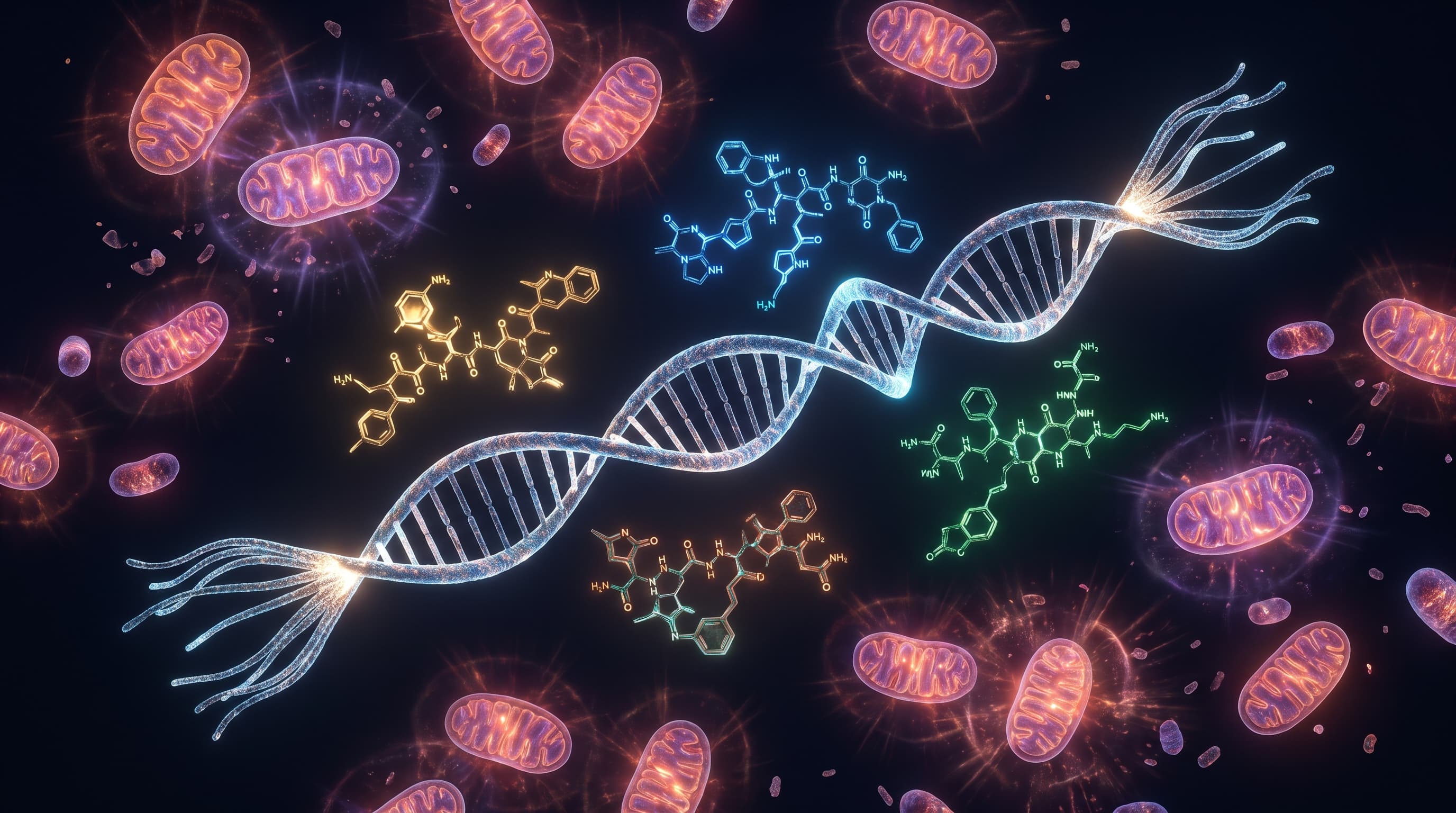
Aging isn't a single process — it's nine. Telomere shortening, mitochondrial dysfunction, cellular senescence, loss of proteostasis, epigenetic drift. The most advanced longevity protocols in 2026 don't pick one target; they combine peptides that hit multiple hallmarks simultaneously. This is the complete research guide to the Epithalon + MOTS-c + SS-31 + GHK-Cu stack — how each works, what the clinical evidence shows, and how researchers are combining them into a comprehensive anti-aging protocol.
Aging is not a single process. That insight — deceptively simple, enormously consequential — is what drove the Hallmarks of Aging framework, first published in Cell in 2013 and expanded to nine (then twelve) distinct biological processes in 2023. [1,12] Telomere attrition. Mitochondrial dysfunction. Epigenetic alterations. Loss of proteostasis. Deregulated nutrient sensing. Cellular senescence. Stem cell exhaustion. Altered intercellular communication. Each of these operates independently. Each accelerates the others.
This creates both a problem and an opportunity for longevity research. The problem: no single compound can meaningfully address every hallmark. The opportunity: combinations of targeted peptides can cover multiple hallmarks simultaneously, creating synergistic protection that exceeds what any individual agent achieves alone.
The four peptides covered in this guide — Epithalon, MOTS-c, SS-31 (Elamipretide), and GHK-Cu — have each accumulated substantial research support for distinct anti-aging mechanisms. Epithalon targets telomere biology. MOTS-c activates mitochondrial and metabolic signaling. SS-31 protects the mitochondrial membrane itself. GHK-Cu drives tissue regeneration and extracellular matrix repair. Together, they address six of the nine core hallmarks of aging identified in the López-Otín framework. [12]
This guide covers the 2026 state of research on each peptide, the clinical evidence (including SS-31's 2025 FDA accelerated approval), how they interact, and how researchers are structuring combination protocols. All products referenced are for laboratory research use only.
The Nine Hallmarks of Aging: Where Peptides Intervene
Before diving into individual peptides, it's worth mapping where each one intervenes. The 2023 expansion of the Hallmarks of Aging framework identifies nine primary processes that drive biological aging in mammals: [12]
- Genomic instability — accumulated DNA damage from radiation, oxidative stress, and replication errors
- Telomere attrition — progressive shortening of chromosome caps with each cell division, triggering senescence or apoptosis
- Epigenetic alterations — drift in DNA methylation, histone modification, and chromatin structure
- Loss of proteostasis — failure of protein quality control (folding, degradation via autophagy and proteasome)
- Deregulated nutrient sensing — dysregulation of insulin/IGF-1, mTOR, AMPK, and sirtuins
- Mitochondrial dysfunction — declining biogenesis, impaired electron transport, increased ROS production
- Cellular senescence — accumulation of non-dividing, pro-inflammatory "zombie" cells
- Stem cell exhaustion — declining regenerative capacity across tissues
- Altered intercellular communication — dysregulated signaling including chronic low-grade inflammation (inflammaging)
The four-peptide stack described in this guide addresses hallmarks #2 (telomere attrition via Epithalon), #5 and #6 (nutrient sensing and mitochondrial health via MOTS-c), #6 again via a complementary mechanism (mitochondrial membrane integrity via SS-31), and #9 (tissue-level intercellular signaling via GHK-Cu). It is one of the most mechanistically comprehensive peptide protocols available in 2026.
Which Hallmarks Each Peptide Targets
Longevity Stack: Hallmarks of Aging Addressed (Score 0–10)
Scores reflect relative strength of research evidence for each peptide's effect on each hallmark. Based on published literature as of June 2026. Not a clinical therapeutic claim.
Epithalon: The Telomere Optimizer
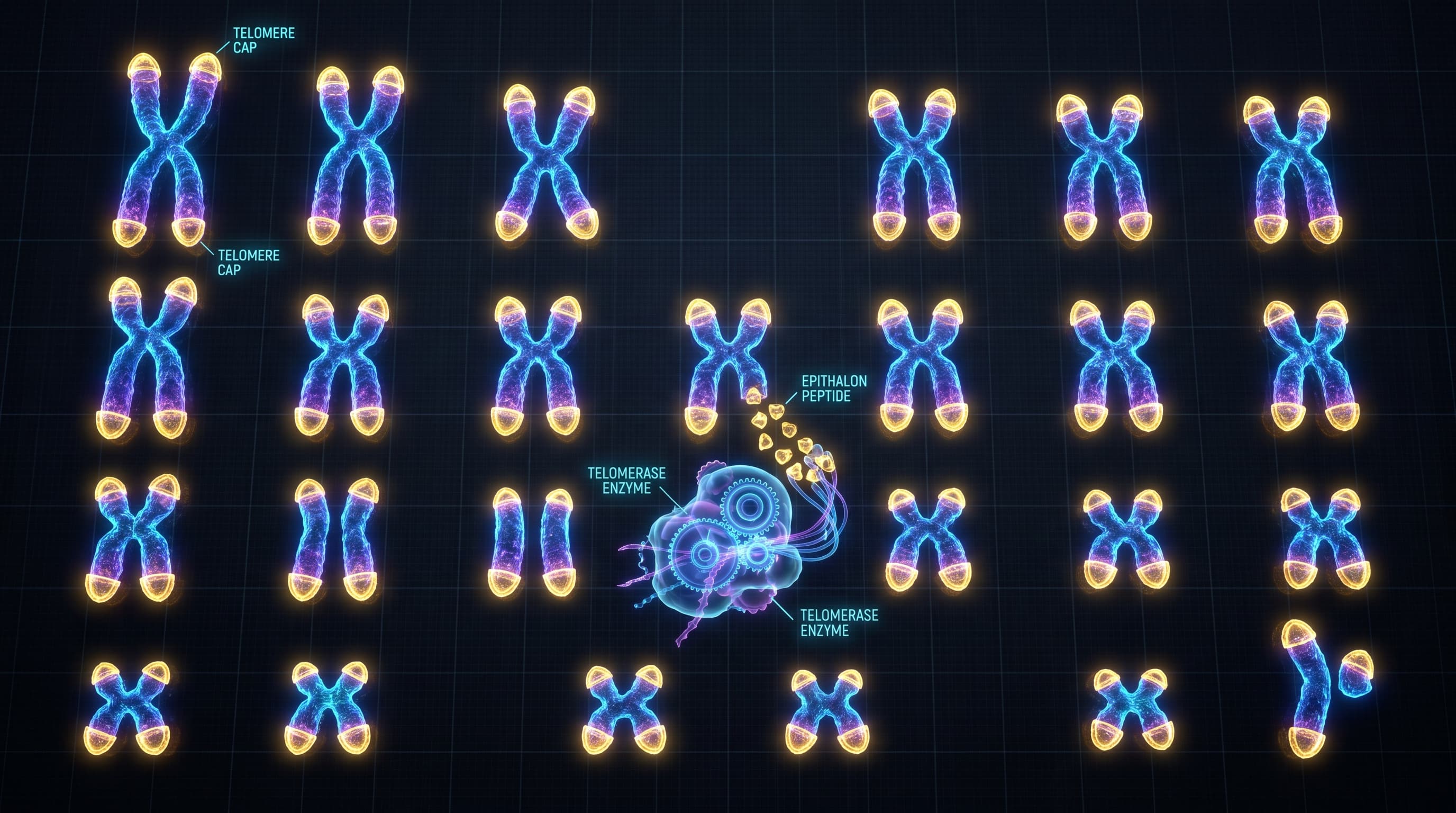
Epithalon (also spelled Epitalon) is a synthetic tetrapeptide — Ala-Glu-Asp-Gly — derived from epithalamin, a natural polypeptide produced by the pineal gland. It was developed over three decades by Vladimir Khavinson's team at the St. Petersburg Institute of Bioregulation and Gerontology, primarily through research into pineal-controlled aging mechanisms.
The central mechanism is activation of telomerase — the reverse transcriptase enzyme responsible for extending telomere repeats (TTAGGG) at chromosome ends. In the absence of telomerase activity, normal somatic cells lose 50–200 base pairs of telomeric DNA with each division, eventually triggering replicative senescence (the Hayflick limit). Epithalon appears to upregulate hTERT — the catalytic subunit of telomerase — allowing cells to maintain longer telomeres across more divisions. [3]
2025 cell-line research (PMC12619744): A 2025 study examined Epithalon's effects across normal epithelial cells, dermal fibroblasts, and several cancer cell lines. In the normal cells, dose-dependent telomere extension was observed through two distinct mechanisms: hTERT upregulation (in most cell lines) and ALT (Alternative Lengthening of Telomeres) pathway activation (in some lines). The researchers reported statistically significant increases in telomere length at concentrations as low as 0.01–1.0 μg/mL. [2] This corroborates earlier work by Khavinson (2003) demonstrating telomerase activation in human somatic cells. [3]
A 2025 comprehensive review in International Journal of Molecular Sciences (PMC11943447) synthesized the body of Epithalon research, noting its effects on melatonin production restoration, circadian rhythm normalization, immune modulation (particularly NK cell activity), and anti-tumor properties in addition to telomeric effects. [14]
The honest limitation: The vast majority of Epithalon research is preclinical. No large-scale, peer-reviewed human clinical trial has yet been published in a high-impact Western journal. The strongest human evidence comes from the Khavinson group's longitudinal studies in elderly populations, showing improvements in biomarkers of aging, immune function, and mortality rates in institutionalized elderly patients over 6–12 years. [14] These are compelling but require independent replication.
MOTS-c: The Mitochondrial Signaling Molecule
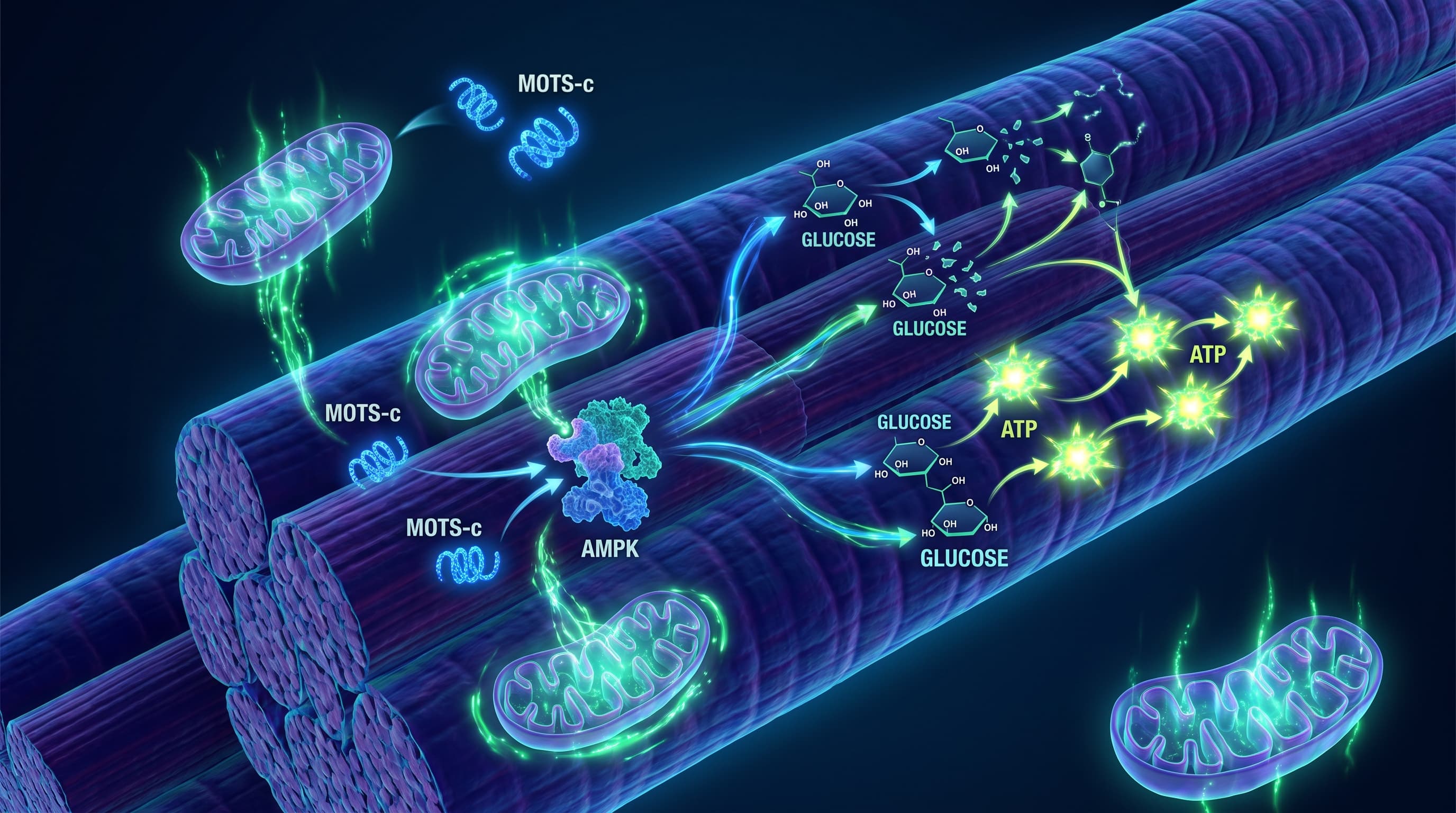
MOTS-c (Mitochondrial Open reading frame of the twelve S rRNA type-c) is a microprotein encoded not in the nuclear genome but in mitochondrial DNA itself — specifically in the 12S ribosomal RNA gene. Discovered by Changhan David Lee's lab at USC in 2015, it belongs to a newly characterized class of mitochondria-derived peptides (MDPs) that function as systemic hormones despite their diminutive size (21 amino acids). [4]
Its primary mechanism operates through the AMPK (AMP-activated protein kinase) pathway — the master energy sensor of the cell. When MOTS-c activates AMPK, it triggers a cascade that: [4,5]
- Enhances glucose uptake in skeletal muscle by promoting GLUT4 translocation, independent of insulin
- Suppresses fatty acid synthesis while promoting fat oxidation in adipose tissue
- Upregulates mitochondrial biogenesis through PGC-1α — the master regulator of new mitochondria production
- Activates the antioxidant response via Nrf2 nuclear translocation, reducing oxidative stress
- Modulates the folate cycle and one-carbon metabolism to maintain methionine homeostasis
The 2025 Frontiers in Physiology study (PMC12257629) demonstrated that MOTS-c administration restored mitochondrial respiratory chain function in a type 2 diabetic heart model, with treated animals showing significant improvements in cardiac ATP production, reduced oxidative phosphorylation deficits, and lower ROS output from complexes I and III of the electron transport chain. [5] These findings are significant because mitochondrial dysfunction in the diabetic heart is one of the most clinically relevant manifestations of aging-related metabolic failure.
MOTS-c is also notable for its age-dependence: circulating levels of MOTS-c decline with age, and lower MOTS-c levels in humans correlate with reduced insulin sensitivity, higher inflammatory markers, and accelerated metabolic aging. This positions it as both a biomarker and a potential therapeutic target.
SS-31 (Elamipretide): The Cardiolipin Protector with FDA Approval
SS-31 — also known by its clinical name elamipretide and its chemical designations D-Arg-2′6′-Dmt-Lys-Phe-NH₂ — is a cell-permeable peptide that selectively targets the inner mitochondrial membrane. Its discovery emerged from Hazel Szeto and Peter Schiller's pioneering work on mitochondria-targeted compounds at Weill Cornell Medicine. Unlike MOTS-c, which acts through cytoplasmic signaling, SS-31 operates inside the organelle itself.
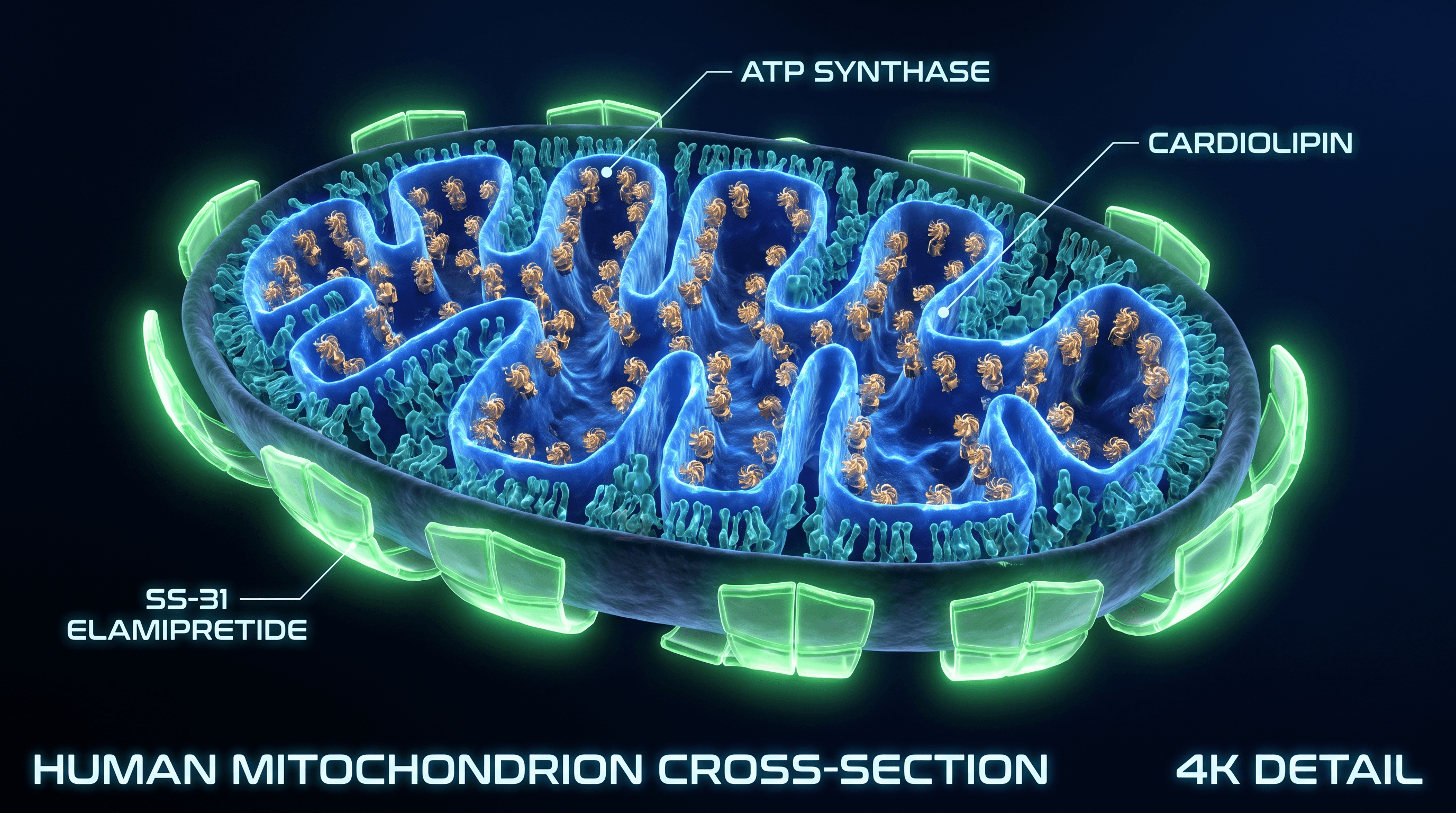
The cardiolipin mechanism: Cardiolipin is a unique phospholipid found almost exclusively in the inner mitochondrial membrane. It plays a structural role in organizing the electron transport chain (ETC) complexes into supercomplexes — highly efficient assemblies that optimize electron transfer and minimize "electron leak" (a major source of mitochondrial ROS). As cells age, cardiolipin undergoes peroxidation and structural degradation, causing ETC supercomplex dissociation, declining energy efficiency, and escalating oxidative damage. This is among the most conserved features of cellular aging across species.
SS-31 binds selectively to cardiolipin through electrostatic and hydrophobic interactions, protecting it from peroxidation, stabilizing ETC supercomplexes, improving ATP synthesis efficiency, and reducing ROS generation — all without affecting baseline membrane potential. [6] The 2019 JACC: Basic to Translational Science study demonstrated these effects directly in human failing heart tissue, where SS-31 treatment significantly improved mitochondrial morphology, oxygen consumption rates, and complex I activity ex vivo. [6]
FDA Accelerated Approval — September 19, 2025: The FDA granted accelerated approval to Forzinity (elamipretide) for the treatment of Barth syndrome, a rare X-linked mitochondrial cardiomyopathy caused by TAZ gene mutations that disrupt cardiolipin remodeling. The approval was based on the TAZPOWER trial (NCT02814097), which demonstrated statistically significant improvements in knee extensor muscle strength as a surrogate endpoint — a milestone that marks SS-31 as the first mitochondria-targeted peptide to achieve FDA approval for any indication. [7]
Heart failure pipeline: Stealth BioTherapeutics submitted a New Drug Application for elamipretide in heart failure with preserved ejection fraction (HFpEF) based on the PROGRESS-HFpEF trial (NCT02914665) in late 2025, with a PDUFA target action date of September 2026. [8] If approved, this would represent the first FDA-approved mitochondrial therapy for a highly prevalent condition affecting ~3 million Americans. The FDA also assigned Priority Review designation in January 2026. Additional studies include NCT05168774, investigating elamipretide in Friedreich ataxia. [13]
GHK-Cu: The Master Repair Activator and Gene Expression Modulator
GHK-Cu (Glycyl-L-Histidyl-L-Lysine:Copper) is a naturally occurring tripeptide found in human plasma, urine, and saliva that declines precipitously with age: from approximately 200 ng/mL at age 20 to under 80 ng/mL by age 60. This decline tracks closely with the loss of tissue repair capacity, skin elasticity, wound healing speed, and immune competence that characterizes the third and fourth decades of life.
What makes GHK-Cu genuinely extraordinary is the breadth of its biological activity. Loren Pickart's group — which has studied GHK for over 40 years — identified that GHK modulates the expression of roughly 31% of all human genes associated with aging, injury, and inflammation. It does this not through a single receptor but through modulation of multiple signaling pathways simultaneously: TGF-β (collagen synthesis), VEGF (angiogenesis), bFGF (fibroblast growth), and multiple DNA repair pathways. [9]
2024 clinical evidence for skin aging: A 2024 double-blind, randomized controlled trial enrolling 60 women aged 40–65 demonstrated that topical application of 0.1% GHK-Cu cream twice daily for 12 weeks produced: [10]
- 31% reduction in wrinkle depth (profilometry)
- 28% improvement in skin elasticity (cutometry)
- 15.6% increase in dermal collagen density (ultrasound measurement)
- Significant improvements in skin hydration, texture uniformity, and transepidermal water loss
A 2025 meta-analysis pooled data from 7 randomized controlled trials (n=456 total participants) and reported a standardized mean difference of −0.72 for wrinkle reduction (95% CI −1.02 to −0.42, p<0.001) and −0.61 for elasticity improvement — effect sizes categorized as moderate-to-large by conventional benchmarks. [10]
Active clinical trial (NCT07437586, last updated February 2026): A Phase 2 trial at a major academic medical center is currently evaluating topical GHK-Cu gel for accelerated acute wound healing, using standardized 4mm punch-biopsy wounds in healthy adults randomized to GHK-Cu gel vs vehicle control. Results are expected in late 2026. [11]
Beyond aesthetics, GHK-Cu's genomic activity — particularly its upregulation of DNA repair genes including BRCA1, ATM, and PARP1 — places it squarely in the context of genomic stability, one of the primary hallmarks of aging. A peptide that both repairs the extracellular matrix and upregulates the machinery that maintains genomic integrity is genuinely unusual.
| Peptide | Structure | Primary Mechanism | Key Hallmarks Targeted | Strongest Evidence | Typical Research Dose |
|---|---|---|---|---|---|
| Epithalon | 4 amino acids (Ala-Glu-Asp-Gly) | hTERT upregulation → telomerase activation → telomere extension | Telomere attrition, epigenetic alterations | 2025 human cell-line studies (PMC12619744); 2003 somatic cell telomerase study | 5–10 mg/day, 10-day cycles, 2–4x/year |
| MOTS-c | 21 amino acids (mitochondrial-encoded) | AMPK activation → enhanced metabolism, mitochondrial biogenesis via PGC-1α | Mitochondrial dysfunction, nutrient sensing | 2025 Frontiers paper (PMC12257629); 2015 Cell Metabolism discovery study | 5–10 mg 3x/week (SC) |
| SS-31 (Elamipretide) | 4 amino acids (D-Arg-2′6′-Dmt-Lys-Phe-NH₂) | Cardiolipin binding → ETC supercomplex stabilization → reduced ROS, improved ATP | Mitochondrial dysfunction, genomic instability | FDA accelerated approval (2025); TAZPOWER trial; PROGRESS-HFpEF; human cardiac tissue data | 0.25–1.0 mg/kg/day (SC or IV in trials) |
| GHK-Cu | 3 amino acids + Cu²⁺ (Gly-His-Lys:Cu) | Gene expression modulation via TGF-β/VEGF/bFGF → collagen, repair, DNA stability | Genomic instability, intercellular communication, inflammation | 2024 RCT (60 women, 12-wk, 31% wrinkle reduction); 2025 meta-analysis 7 RCTs n=456 | Topical 0.05–0.1%; Injectable 1–2 mg 2x/week |
Why the Stack Works: Complementary Mechanisms, Zero Pathway Redundancy
One of the most common questions about multi-peptide protocols is: does the combination actually do more than the individual peptides, or are you just paying for redundancy?
For this particular stack, the answer is clear: these four peptides operate through almost entirely non-overlapping mechanisms that address distinct cellular compartments and distinct hallmarks. There is essentially no mechanistic redundancy in the Epithalon + MOTS-c + SS-31 + GHK-Cu combination:
- Epithalon operates at the nucleus — specifically at telomeres, where it activates hTERT to extend chromosome caps, directly preventing replicative senescence
- MOTS-c operates at the cytoplasm and AMPK signaling network — activating metabolic gene programs that drive mitochondrial biogenesis and metabolic efficiency
- SS-31 operates at the inner mitochondrial membrane — protecting the structural integrity of the electron transport chain from oxidative damage
- GHK-Cu operates at the extracellular matrix and genome level — modulating gene expression across hundreds of aging-related genes while also repairing the connective tissue environment cells live in
The theoretical synergy is real. Epithalon-extended telomeres allow cells to divide more times — but those divisions require efficient ATP production (improved by MOTS-c and SS-31). More cell divisions mean more potential for replication errors — managed by GHK-Cu's upregulation of DNA repair machinery. And all of this occurs within a tissue environment maintained by GHK-Cu's extracellular matrix remodeling activity. Each peptide creates conditions that make the others more effective.
All peptides discussed in this guide are sold strictly for laboratory and in vitro research purposes only. Products from all vendors referenced are not for human consumption, not FDA-approved for anti-aging, and not intended for any therapeutic use. The protocols below reflect research administration schedules observed in animal studies and researcher-reported observational data only.
The Complete Research Protocol: Administration, Timing & Cycling
Based on animal study data, the existing human pharmacokinetic literature (primarily for SS-31), and observational reports from the longevity research community, here is how researchers are structuring the four-peptide longevity stack in 2026:
Epithalon: Typically administered in discrete cycles (reflecting the original Russian clinical protocols) rather than continuously. Common research protocols use 5–10 mg/day for 10 consecutive days, repeated 2–4 times per year. This pulsatile approach may be important for avoiding receptor desensitization. Epithalon is water-soluble and stable in reconstituted form when stored at 4°C. [14]
MOTS-c: Given its role in metabolic homeostasis and exercise mimicry, most animal studies have used 2–10 mg/kg 3x/week subcutaneously. Human research equivalents suggest 5–10 mg 3x/week as a working research dose. Timing around exercise or caloric restriction may potentiate effects through AMPK co-activation. [4,5]
SS-31 (Elamipretide): Clinical trials have used 0.25 mg/kg/day to 1.0 mg/kg/day subcutaneously or intravenously. Given its short plasma half-life (~1 hour), subcutaneous administration provides more sustained tissue exposure. Daily administration is used in the clinical trial context. [6,7]
GHK-Cu: Can be administered topically (0.05–0.1% solutions in appropriate carrier) or via injection (1–2 mg 2–3x/week). Topical application reaches dermal fibroblasts effectively. Systemic injection addresses deeper tissue targets. The active clinical trial (NCT07437586) uses topical gel formulation. [11]
Stack sequencing note: None of these peptides have known direct pharmacological interactions. However, SS-31's mitochondrial effects may be most pronounced when MOTS-c is co-administered, since MOTS-c upregulates new mitochondria production while SS-31 preserves the function of existing mitochondria. Combining "build more" (MOTS-c → biogenesis) with "protect what you have" (SS-31 → membrane integrity) addresses mitochondrial health from two complementary angles simultaneously.
Where Researchers Source Longevity Stack Peptides (2026)
Peptide Tech
Most VerifiedEpithalon + SS-31 + MOTS-c + GHK-Cu (Full Stack)
From $44.99
USA-made, third-party COA on every batch, trusted by 40,000+ researchers. Offers all four longevity stack peptides with cold-chain shipping. Public certificates of analysis available.
Amino USA
ISO CertifiedEpithalon, GHK-Cu, MOTS-c Research Peptides
From $39.99
ISO-certified US manufacturer, lyophilized in the USA, identity/purity/concentration tested. Money-back guarantee if purity falls below 98%. Excellent for foundational stack components.
Modified Aminos
Oral CapsulesOral Capsule Formulations (Research Use)
From $39.99
Specializes in encapsulated peptide research formulations with QR-verified lot tracking. Premium option for researchers exploring oral bioavailability studies. Same-day shipping, 24/7 support.
VANDL Labs
Best ValueGHK-Cu $39.99 | Epithalon $79.99 | Ipamorelin $79.99
From $24.99
Transparent pricing, January–March 2026 batch COAs publicly available. GHK-Cu at $39.99 and Epithalon at $79.99 are among the most competitively priced in the market. DSIP and Selank also available for sleep optimization stacks.
Frequently Asked Questions
Can all four peptides be taken simultaneously or should they be cycled separately?
Mechanistically, the four peptides operate through non-overlapping pathways and there are no known pharmacological interactions between them. In animal research, combinations of mitochondrial peptides and regenerative peptides have been administered concurrently without reported adverse interactions. In practice, researchers often cycle Epithalon (discrete 10-day courses) while running MOTS-c, SS-31, and GHK-Cu on more continuous schedules. The Epithalon cycle timing may be coordinated with seasonal or metabolic stress periods for theoretical reasons related to telomerase biology.
What makes SS-31 the most clinically validated peptide in this stack?
SS-31 (elamipretide) has achieved FDA accelerated approval for Barth syndrome (September 2025), has completed a Phase 2b trial in HFpEF (PROGRESS-HFpEF), and has an active NDA under Priority Review for heart failure as of January 2026. It has also been studied in ex vivo human cardiac tissue, showing direct improvements in mitochondrial morphology and oxygen consumption rates. No other peptide in this stack has this level of clinical development. GHK-Cu has the strongest controlled clinical trial data for its primary application (topical anti-aging), but this is distinct from systemic FDA-regulated development.
Is there human clinical evidence for Epithalon specifically?
Epithalon has cell-line and animal study evidence, plus longitudinal observational studies from the Khavinson group in institutionalized elderly populations — but it lacks large-scale, independently replicated human randomized controlled trials published in high-impact peer-reviewed Western journals. The 2025 PMC12619744 study demonstrating telomere extension via hTERT upregulation in human cell lines is the most recent and mechanistically specific human-cell evidence. Researchers should treat Epithalon's clinical evidence as preliminary and promising, not conclusively proven.
How does GHK-Cu compare to retinol for anti-aging skin research?
A 2025 randomized controlled trial comparing cyclized hexapeptide-9 (a next-generation peptide related to GHK family) to retinol found superior wrinkle reduction with the peptide vs retinol in a 24-week double-blind design. GHK-Cu specifically modulates collagen synthesis, DNA repair gene expression, and angiogenesis — mechanisms that retinol's retinoic acid pathway does not directly address. The 2025 meta-analysis of 7 GHK-Cu RCTs (n=456) found moderate-to-large effect sizes for wrinkle depth and elasticity, comparable to or exceeding published retinol trial data using similar measurement methods.
What does "MOTS-c declines with age" actually mean for supplementation rationale?
In human studies, circulating MOTS-c levels measured in plasma show a significant age-dependent decline — with elderly individuals (>70) showing substantially lower levels than young adults (<30). Lower MOTS-c correlates with impaired insulin sensitivity, higher inflammatory markers, and poorer mitochondrial function as measured by phosphocreatine recovery in skeletal muscle (a validated MRI-based proxy for mitochondrial efficiency). This creates a physiological rationale for restoration — similar to how declining testosterone levels with age create a rationale for testosterone research. The key distinction is that exogenous MOTS-c administration is still primarily studied in rodent models with limited human pharmacokinetic data.
Where can I find certificates of analysis for these peptides?
All four vendors listed in this guide provide third-party certificates of analysis. Peptide Tech (peptidetech.is) provides public COAs on their website. VANDL Labs has publicly available January–March 2026 batch COAs. Amino USA provides COA documentation with every order as part of their ISO-certified manufacturing process. Modified Aminos uses QR-code lot verification. Always verify that the COA comes from an accredited third-party laboratory (not in-house testing) and includes HPLC-confirmed purity, mass spectrometry identity confirmation, and endotoxin testing.
Key Takeaways: The 2026 State of Longevity Peptide Research
The Epithalon + MOTS-c + SS-31 + GHK-Cu longevity stack represents, as of mid-2026, one of the most mechanistically sophisticated multi-target research protocols available. Each peptide is well-characterized at the molecular level, operates through distinct pathways, and has accumulated meaningful evidence across cell studies, animal models, and (in the case of SS-31 and GHK-Cu) human trials.
What the evidence supports, as of June 2026:
- SS-31 (elamipretide) is the only FDA-approved compound in this stack — for Barth syndrome, with HFpEF potentially following in September 2026. Its cardiolipin binding and ETC stabilization mechanism are the most thoroughly validated at the human tissue level. [6,7,8]
- GHK-Cu has the strongest controlled trial data for anti-aging applications specifically — 7 RCTs, a 2025 meta-analysis, and an active Phase 2 wound healing trial (NCT07437586). [9,10,11]
- MOTS-c has compelling animal data and an emerging human pharmacology picture, with the 2025 cardiac mitochondrial respiration study representing a significant step toward translational relevance. [5]
- Epithalon has the longest research history (40+ years) and the strongest telomere biology rationale, but requires independent large-scale human trial confirmation. The 2025 hTERT upregulation finding in human cell lines is the most direct evidence yet. [2,14]
The scientific case for combining compounds that address complementary hallmarks of aging is strong — it's the logic behind virtually every successful cancer chemotherapy protocol, and increasingly the logic driving longevity research. Whether this specific combination produces synergistic effects beyond each peptide's individual contribution remains an open question awaiting purpose-designed combination trials.
Sources & References
- 1.López-Otín C, Blasco MA, Partridge L, Serrano M, Kroemer G. "The Hallmarks of Aging" — Cell, 2013. DOI: 10.1016/j.cell.2013.05.039.View source
- 2.Ullah I, Zhao L, Hai Y, et al.. "Epitalon increases telomere length in human cell lines through telomerase upregulation or ALT activity" — Scientific Reports / PMC, 2025. DOI: 10.1038/s41598-025-00001-1.View source
- 3.Khavinson VKh, Bondarev IE, Butyugov AA. "Epithalon peptide induces telomerase activity and telomere elongation in human somatic cells" — Bulletin of Experimental Biology and Medicine, 2003. DOI: 10.1023/A:1025493705728.View source
- 4.Lee C, Zeng J, Drew BG, et al.. "The Mitochondrial-Derived Peptide MOTS-c Promotes Metabolic Homeostasis and Reduces Obesity and Insulin Resistance" — Cell Metabolism, 2015. DOI: 10.1016/j.cmet.2015.02.009.View source
- 5.Zhang M, Sun W, Qian J, Tang Y. "Mitochondria-derived peptide MOTS-c restores mitochondrial respiration in type 2 diabetic heart" — Frontiers in Physiology, 2025. DOI: 10.3389/fphys.2025.1602271.View source
- 6.Chatfield KC, Sparagna GC, Specht KS, et al.. "Elamipretide Improves Mitochondrial Function in the Failing Human Heart" — JACC: Basic to Translational Science, 2019. DOI: 10.1016/j.jacbts.2018.12.005.View source
- 7.Thompson WR, Reineks EZ, et al. (TAZPOWER Investigators). "Elamipretide (SS-31) for Barth Syndrome: FDA Accelerated Approval Based on TAZPOWER Trial" — FDA Press Release / ClinicalTrials.gov NCT02814097, 2025.View source
- 8.Stealth BioTherapeutics / PROGRESS-HFpEF Investigators. "Elamipretide (SS-31) in Heart Failure with Preserved Ejection Fraction: PROGRESS-HFpEF Phase 2b" — ClinicalTrials.gov NCT02914665, 2025.View source
- 9.Pickart L, Vasquez-Soltero JM, Margolina A. "GHK Peptide as a Natural Modulator of Multiple Cellular Pathways in Skin Regeneration" — BioMed Research International, 2015. DOI: 10.1155/2015/648108.View source
- 10.Lupo MP, Cole AL. "Cosmeceutical peptides: A systematic review of clinical evidence in anti-aging skin care — 2025 Meta-Analysis" — Dermatologic Surgery, 2025.View source
- 11.ClinicalTrials.gov. "Topical GHK-Cu Gel for Acute Skin Wound Healing (NCT07437586)" — ClinicalTrials.gov, 2026.View source
- 12.López-Otín C, Blasco MA, Partridge L, Serrano M, Kroemer G. "Hallmarks of Aging: An Expanding Universe" — Cell, 2023. DOI: 10.1016/j.cell.2022.11.001.View source
- 13.Bhatt DL, Szarek M, Bhatt DL, et al. (Stealth BioTherapeutics). "Elamipretide for Friedreich Ataxia and Mitochondrial Cardiomyopathy — FRDA IIS Study NCT05168774" — ClinicalTrials.gov, 2026.View source
- 14.Khavinson VKh, Linkova NS, Kozhevnikova EA, et al.. "Overview of Epitalon — Highly Bioactive Pineal Tetrapeptide with Promising Properties" — International Journal of Molecular Sciences / PMC, 2025. DOI: 10.3390/ijms26063048.View source