
5-Amino-1MQ is a small molecule NNMT inhibitor that works by blocking the enzyme responsible for depleting both SAM and NAD+ inside fat cells — making adipocytes more metabolically active without touching appetite. The key 2018 mouse study showed 30% less fat gain with no change in food intake. Here's the full mechanistic picture and honest assessment of where the human data stands.
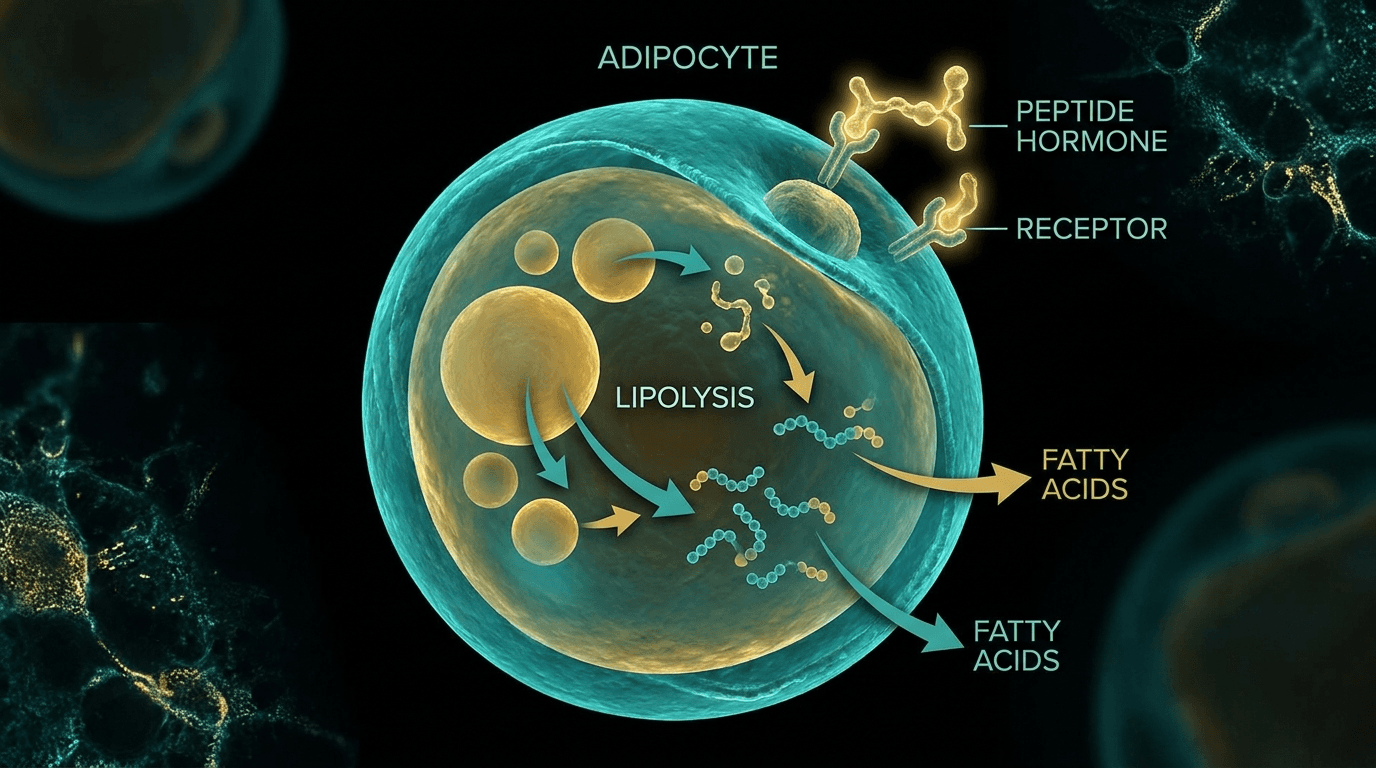
5-Amino-1MQ occupies an unusual niche in the research compound landscape: it is not a peptide, not a hormone, and not an appetite suppressant — yet it sits at the center of some of the most mechanistically interesting obesity research currently underway. It is a small molecule inhibitor of NNMT (nicotinamide N-methyltransferase), an enzyme found in adipose tissue that has emerged in the past decade as a key regulator of fat cell metabolism. When NNMT is overactive — as it is in obesity — fat cells become metabolically sluggish, storing more and burning less. 5-Amino-1MQ blocks this enzyme and, in animal studies, reverses that metabolic silencing: adipocytes increase their energy expenditure without any change in food intake. The fat cell itself becomes more active.
This mechanism is genuinely distinct from every major fat loss approach currently on the market or in clinical development. GLP-1 agonists suppress appetite centrally. Tesamorelin stimulates GH-driven lipolysis. Caloric restriction creates an energy deficit. 5-Amino-1MQ does none of these things — it targets the intracellular metabolic state of the adipocyte directly, attempting to "reboot" a fat cell that obesity has rendered less capable of energy expenditure. The preclinical evidence is compelling. The human clinical trial data does not exist yet. Understanding both facts is essential for any researcher approaching this compound.
What Is NNMT and Why Does It Matter in Obesity?
Nicotinamide N-methyltransferase (NNMT) is an enzyme that catalyzes the methylation of nicotinamide (a form of vitamin B3) using S-adenosylmethionine (SAM) as the methyl donor, producing N-methylnicotinamide and S-adenosylhomocysteine (SAH). Under normal physiological conditions, NNMT plays a role in nicotinamide metabolism and detoxification. In adipose tissue, liver, kidney, and brain, it operates at relatively low baseline activity.
The obesity connection was established by a series of studies showing that NNMT expression in white adipose tissue (WAT) is dramatically upregulated in obese states. A key 2017 Cell Metabolism commentary by Rhoads and Anderson [1] synthesized the emerging evidence: NNMT overexpression in obese adipose tissue creates a self-reinforcing metabolic impairment through two converging mechanisms:
- SAM depletion: Because SAM is the methyl donor for NNMT's reaction, high NNMT activity consumes SAM faster than it can be replenished. SAM is also the universal methyl donor for DNA methylation, histone methylation, and dozens of other methylation reactions critical for metabolic gene regulation. When SAM is depleted by NNMT, the epigenetic landscape of the fat cell shifts toward lower energy expenditure.
- NAD+ precursor diversion: The nicotinamide being consumed by NNMT is a key substrate for NAD+ biosynthesis (via the salvage pathway through NAMPT). When NNMT overactivity diverts nicotinamide away from NAD+ synthesis, intracellular NAD+ levels in adipocytes fall — and with them, SIRT1 activity declines.
Validated in human adipose tissue: Kannt et al. 2015 demonstrated that NNMT mRNA expression in human adipose tissue correlates significantly with obesity markers and plasma methylnicotinamide concentrations. [3] This is not just a mouse phenomenon — NNMT upregulation in obese human adipose tissue has been independently confirmed.
The SAM/NAD+ Connection: How NNMT Depletes Both
To understand why NNMT inhibition is mechanistically exciting, it helps to appreciate what SAM actually does inside a cell. S-adenosylmethionine is not merely a metabolic intermediate — it is the universal methyl donor that fuels:
- DNA methylation (epigenetic regulation of gene expression)
- Histone methylation (chromatin architecture and transcriptional control)
- Phosphatidylcholine synthesis (membrane integrity)
- Carnitine biosynthesis (fatty acid transport into mitochondria for oxidation)
- Creatine synthesis (energy buffering in muscle)
- Dozens of other methylation reactions in amino acid and nucleotide metabolism
When NNMT chronically overconsumes SAM in obese adipose tissue, the downstream consequence is a broad reduction in methylation capacity. The gene expression signature of the obese, NNMT-overexpressing adipocyte shifts: genes involved in fatty acid oxidation and thermogenesis are downregulated (via hypomethylation at regulatory regions); genes involved in fat storage are upregulated. The adipocyte becomes a better warehouse and a worse furnace. [4]
Simultaneously, the nicotinamide being consumed by NNMT is diverted from the NAD+ salvage pathway. The enzyme NAMPT (nicotinamide phosphoribosyltransferase) normally converts nicotinamide to NMN and then to NAD+ — but if NNMT gets to the nicotinamide first, this precursor is lost. The result is an adipocyte with low NAD+, reduced SIRT1 activity, impaired mitochondrial biogenesis, and further suppressed energy expenditure. [4] It is a dual metabolic hit that the Schmeisser 2013 study helped clarify: sirtuins in the context of longevity regulation are directly linked to nicotinamide methylation, and disrupting this axis has broad metabolic consequences.
Preclinical Evidence: Neelakantan 2018 and the Mouse Model Data
The most important published study for 5-Amino-1MQ specifically is Neelakantan et al. 2018, published in Biochemical Pharmacology. [2] This is the study that put NNMT inhibition on the research map as a potential fat loss intervention and demonstrated that 5-Amino-1MQ (and structurally related NNMT inhibitors) could produce meaningful anti-obesity effects in a high-fat-diet mouse model.
The experimental design: C57BL/6 mice were placed on a high-fat diet to induce obesity, then treated with selective, membrane-permeable NNMT inhibitors (including the compound class that 5-Amino-1MQ belongs to) versus vehicle control for several weeks. Key results:
- Approximately 30% less fat mass accumulation in the NNMT inhibitor group vs high-fat-diet controls — a dramatic effect size
- No significant change in food intake — the fat loss was not due to appetite suppression. The mice ate the same amount of food but stored less of it as fat
- Lean body mass was preserved — unlike many fat loss interventions, NNMT inhibition did not produce muscle wasting alongside fat reduction
- Energy expenditure increased in adipose tissue — consistent with the SAM/NAD+ mechanistic model: more methyl donor availability and more NAD+ → more SIRT1 activity → more mitochondrial biogenesis and fatty acid oxidation in fat cells
- The compounds were membrane-permeable — meaning they could actually enter fat cells to inhibit NNMT at its intracellular site of action
This last point is worth emphasizing: NNMT inhibition achieving meaningful fat mass reduction without changing appetite is mechanistically distinct from every other pharmacological approach to fat loss in current development. GLP-1 agonists, appetite suppressants, and thermogenics all work upstream of fat cells. 5-Amino-1MQ works at the level of the fat cell's own metabolic programming. This distinction is the core of why researchers find it compelling.
Why Researchers Find This Exciting: The Reprogramming Concept
The framing that has emerged in NNMT inhibition research is that of "metabolic reprogramming" — the idea that chronic obesity does not merely expand fat cells but qualitatively alters their function in ways that perpetuate further fat gain. The obese adipocyte is not just a larger version of a lean adipocyte; it is a functionally different cell with a different epigenome, different gene expression signature, and different metabolic phenotype. It burns less, stores more, and inflames more.
NNMT inhibition targets this altered state directly. By restoring SAM availability and NAD+ levels inside fat cells, the goal is to shift the adipocyte's transcriptional program back toward a more metabolically active state — essentially reversing the epigenetic and metabolic signatures that obesity has imposed. This is a fundamentally different conceptual approach from:
- Appetite suppression (GLP-1 agonists): Which reduces food intake but doesn't change what fat cells do with the energy they receive
- Thermogenic agents (ephedrine, beta-3 agonists): Which increase systemic metabolic rate through adrenergic signaling — a blunt, systemic intervention with cardiovascular effects
- Direct lipolysis peptides (HGH Fragment 176-191): Which stimulate fat cell triglyceride breakdown but don't address the underlying metabolic reprogramming
- GHRH analogues (Tesamorelin): Which target visceral fat specifically through GH receptor signaling, without addressing the intracellular metabolic state
The theoretical appeal of an adipocyte-level metabolic intervention is substantial: if fat cells themselves can be made more metabolically active, the effect could be additive with appetite-suppressing approaches rather than redundant. An adipocyte that burns more energy when it receives the same caloric load could compound the effects of caloric restriction rather than compete with it.
What We Don't Know: The Human Data Gap
The honest assessment of 5-Amino-1MQ's evidence base as of 2026 requires clear-eyed acknowledgment of what is missing: there are no published human clinical trials. None. Every anti-obesity effect documented for NNMT inhibition comes from in vitro cell culture studies and mouse models. The Neelakantan 2018 study, compelling as it is, was conducted in mice on a high-fat diet — a model that has poor predictive validity for human obesity pharmacology. (Many compounds that cure obesity in mice have failed to do so in humans.)
What human data does exist is limited to NNMT expression correlations:
- Kannt et al. 2015 confirmed that NNMT mRNA is upregulated in human adipose tissue in obesity and correlates with metabolic markers — establishing that the target is relevant in humans [3]
- NNMT activity in human plasma correlates with insulin resistance and adiposity in observational studies
These findings validate the target in humans — they do not validate that inhibiting it with 5-Amino-1MQ produces fat loss in humans. The translational gap between "NNMT is elevated in obese human fat tissue" and "blocking NNMT with 5-Amino-1MQ causes fat loss in humans" is precisely the gap that human clinical trials are designed to cross. No such trials have been published. Researchers approaching 5-Amino-1MQ should hold this clearly: the mechanism is interesting and the preclinical data is suggestive, but the compound remains entirely in the preclinical evidence category for anti-obesity effects in humans.
Fat Loss Mechanisms: Comparative Overview
Mechanisms of Fat Loss: Comparative Overview of Major Approaches
Scores represent researcher-assessed mechanistic evidence strength, not clinical efficacy equivalence. GLP-1 has the most robust human RCT evidence. NNMT inhibition (5-Amino-1MQ) has strong preclinical mechanistic support but no published human RCTs as of 2026. Tesamorelin has Phase 3 RCT evidence in visceral fat specifically.
Oral Bioavailability: A Key Practical Advantage
One notable characteristic of 5-Amino-1MQ that distinguishes it from most research compounds in this space is its oral bioavailability. As a small molecule (quinolinium derivative, molecular weight approximately 151 Da), 5-Amino-1MQ does not face the absorption barriers that limit peptides like tesamorelin, CJC-1295, or BPC-157, which require injection because they are degraded in the gastrointestinal tract before reaching systemic circulation.
5-Amino-1MQ is orally bioavailable and membrane-permeable — the second characteristic being particularly important for its mechanism of action, since NNMT is an intracellular enzyme. A membrane-impermeant NNMT inhibitor would fail to reach the target even if it reached circulation. The Neelakantan 2018 study specifically selected compounds for membrane permeability as a design criterion, recognizing that intracellular access is required for meaningful NNMT inhibition in adipocytes. [2]
This means 5-Amino-1MQ is available in capsule formulations from research vendors — a practical advantage for researchers who prefer oral administration protocols. The dose and pharmacokinetics in humans remain to be formally characterized in published research, but the oral route is consistent with the compound's physical properties.
| Compound | Primary Mechanism | Human RCT Evidence | Fat Type Targeted | Oral Available? | FDA Status |
|---|---|---|---|---|---|
| GLP-1 Agonists (Semaglutide) | Central appetite suppression via GLP-1R | Extensive (STEP, SURMOUNT) | Total body fat + visceral | Oral (Rybelsus) | FDA-approved |
| Tesamorelin | GHRH → pulsatile GH → visceral lipolysis | Phase 3 RCTs (Falutz, Stanley) | Visceral fat (VAT) specifically | No (injection) | FDA-approved (HIV lipodystrophy) |
| 5-Amino-1MQ | NNMT inhibition → NAD+/SAM rebalancing → adipocyte reprogramming | None (animal studies only) | White adipose tissue | Yes (capsules) | Research only |
| HGH Fragment 176-191 | Direct GH receptor fragment → lipolysis | Limited small human studies | General adipose | No (injection) | Research only |
| Caloric Restriction | Energy deficit → net fat oxidation | Extensive | Total body fat | N/A | N/A |
Vendor Options for 5-Amino-1MQ Research
5-Amino-1MQ is available from several research vendors in capsule form. Quality verification for small molecule compounds differs from peptides: HPLC purity confirmation and mass spectrometry identity verification are the primary standards, with batch-specific COAs linking identity to the quinolinium structure. The following vendors meet current research standards:
Peptide Technologies
Gold Standard COAs5-Amino-1MQ Capsules
Check site for current pricing
HPLC-verified with third-party ISO 17025-accredited COA on every batch. Batch-specific QR code links to full HPLC, mass spec, endotoxin, and sterility data.
Modified Aminos
Same-Day Shipping5-Amino-1MQ Capsules
Check site for current pricing
Same-day shipping on orders placed before 2 PM CST. Red thermal mailers. Third-party tested. US operations.
Frequently Asked Questions
What is 5-Amino-1MQ and how does it work?
5-Amino-1MQ is a small molecule inhibitor of the enzyme NNMT (nicotinamide N-methyltransferase). NNMT is overexpressed in obese white adipose tissue, where it consumes S-adenosylmethionine (SAM) and diverts nicotinamide away from NAD+ synthesis — collectively depleting two critical metabolic cofactors from fat cells. This depletion makes adipocytes metabolically inactive: they store more fat and burn less energy. 5-Amino-1MQ enters fat cells (it is membrane-permeable) and blocks NNMT, allowing SAM and NAD+ levels to recover. In mouse models, this produces a significant reduction in fat mass accumulation without any change in food intake — the adipocytes become more metabolically active.
Is 5-Amino-1MQ a peptide?
No. 5-Amino-1MQ is a small molecule — specifically a quinolinium derivative — not a peptide. It is often sold alongside research peptides by the same vendors, but its structure, mechanism, absorption, and half-life are fundamentally different. As a small molecule, it is orally bioavailable and membrane-permeable without requiring injection. Its molecular weight (~151 Da) and lipophilicity allow it to cross cell membranes to reach its intracellular target (the NNMT enzyme), which a peptide of similar purpose could not do.
Has 5-Amino-1MQ been tested in humans?
No published human clinical trials for 5-Amino-1MQ exist as of 2026. The evidence base is entirely preclinical: in vitro cell culture studies and the key Neelakantan 2018 mouse study, which showed approximately 30% less fat mass accumulation in high-fat-diet mice treated with NNMT inhibitors of the 5-Amino-1MQ class. Human data exists only for NNMT expression correlation with obesity markers (Kannt et al. 2015), which validates the target in humans but does not establish that 5-Amino-1MQ produces fat loss in humans. This gap is the most important context for any researcher.
How does 5-Amino-1MQ differ from GLP-1 agonists?
5-Amino-1MQ and GLP-1 agonists work through completely different mechanisms with no pharmacological overlap. GLP-1 agonists (semaglutide, tirzepatide) suppress appetite centrally by activating GLP-1 receptors in the hypothalamus and brainstem, reducing caloric intake. 5-Amino-1MQ has no appetite-suppressing activity — in the Neelakantan 2018 mouse study, food intake was identical between treated and control groups. The fat mass reduction came entirely from changes in how adipocytes processed the energy they received. This means the two approaches are mechanistically complementary: one reduces energy input, the other potentially increases energy utilization within fat cells. Whether this combination produces additive effects in humans is an open research question.
Can 5-Amino-1MQ be combined with other compounds?
Researchers are exploring combinations of 5-Amino-1MQ with NAD+ precursors (NMN, NR) based on mechanistic synergy: NNMT inhibition spares nicotinamide for NAD+ synthesis, while NAD+ precursors replenish the same pool from the supply side — a complementary strategy. Combination with GLP-1 agonists is also of theoretical interest given the non-overlapping mechanisms (appetite suppression + adipocyte metabolic reprogramming). Combination with tesamorelin (visceral lipolysis via GH axis) is another area of investigator interest. No controlled human or animal combination trials have been published for any of these combinations as of 2026.
The Promise of NNMT Inhibition: What Comes Next
The 5-Amino-1MQ research story in 2026 is one of compelling mechanistic science waiting for human validation. The NNMT enzyme is a genuinely interesting target: it sits at the intersection of epigenetics, NAD+ metabolism, and adipocyte energy regulation, and its overexpression in obese human adipose tissue is validated. The concept of reprogramming fat cells rather than just suppressing appetite or stimulating lipolysis is conceptually novel and could, if validated in humans, produce effects additive with existing approaches rather than competing with them.
What the field needs — and what determines whether 5-Amino-1MQ becomes a significant research tool or remains a compelling preclinical story — is human clinical trial data. A Phase 1 safety and pharmacokinetics study in humans would establish basic parameters. A Phase 2 efficacy trial in obese adults with adipose tissue biopsy data (measuring NNMT activity, SAM levels, and gene expression before and after treatment) would directly test whether the mouse model translates. These trials have not yet been published.
For researchers working with 5-Amino-1MQ in 2026, the appropriate framing is: a high-quality mechanistic hypothesis, one strong animal study, validated target expression in human tissue, and a significant human data gap that makes this one of the more interesting unanswered questions in obesity pharmacology. The excitement is justified; the certainty is not.
For related research with stronger human clinical evidence, see our Tesamorelin complete guide and our NAD+ longevity guide.
Sources & References
- 1.Rhoads TW, Anderson RM. "Nicotinamide N-Methyltransferase: Obesity Science Gets a New Enzyme" — Cell Metabolism, 2017. DOI: 10.1016/j.cmet.2017.05.023.View source
- 2.Neelakantan H, Vance V, Wetzel MD, et al.. "Selective and membrane-permeable small molecule inhibitors of nicotinamide N-methyltransferase reverse high fat diet-induced obesity in mice" — Biochemical Pharmacology, 2018. DOI: 10.1016/j.bcp.2017.11.007.View source
- 3.Kannt A, Pfenninger A, Tönjes A, et al.. "Association of nicotinamide-N-methyltransferase mRNA expression in human adipose tissue and the plasma concentration of its product" — Diabetologia, 2015. DOI: 10.1007/s00125-014-3456-x.View source
- 4.Schmeisser K, Mansfeld J, Kuhlow D, et al.. "Role of sirtuins in lifespan regulation is linked to methylation of nicotinamide" — Nature Chemical Biology, 2013. DOI: 10.1038/nchembio.1352.View source
- 5.Tan B, Young DA, Lu ZH, et al.. "Pharmacological inhibition of nicotinamide phosphoribosyltransferase (NAMPT), an enzyme essential for NAD+ biosynthesis, in human cancer cells" — Journal of Biological Chemistry, 2013.View source