4,300 people search "how to reconstitute peptides" every month — most get incomplete answers that leave out the dilution math, miss critical stability warnings, or skip the injection technique entirely. This guide covers everything: the science of lyophilization, step-by-step reconstitution with bacteriostatic water, the concentration formula with worked examples, subcutaneous injection technique and site rotation, storage protocols backed by pharmaceutical stability data, and the seven most common mistakes that silently ruin expensive research compounds.
You've done the research. You understand the mechanism, you've read the clinical data on BPC-157 healing kinetics or ipamorelin's GH pulse profile, and you've sourced a lyophilized peptide from a third-party verified supplier. The vial arrives: a tiny glass bottle with a white powder at the bottom and a crimped rubber stopper on top. Now what?
This is where most peptide research goes wrong. The reconstitution and injection process looks simple on paper, but the details matter enormously. Shake instead of swirl and you can denature the peptide irreversibly. Use the wrong solvent and you compromise sterility across the life of the vial. Make a dilution calculation error and every subsequent dose in your protocol is meaningless. Inject at the wrong depth or angle and you reduce bioavailability significantly. Store incorrectly and a $200 research compound degrades in ten days.
This guide covers every step: the science of why peptides come as white powder, the complete reconstitution protocol with bacteriostatic water, the concentration formula with a worked example and precomputed dilution table, subcutaneous injection technique for three primary sites, pharmaceutical storage data for before and after reconstitution, and the seven most common handling mistakes that researchers make and most guides never mention.
Why Peptides Come as White Powder: The Lyophilization Explanation
Lyophilization — freeze-drying — is the pharmaceutical standard for preserving biologically active peptides and proteins, and it achieves three critical goals that liquid formulations cannot:
- Eliminates hydrolytic degradation. In aqueous solution, peptides are vulnerable to hydrolysis — water molecules cleave peptide bonds over time, gradually breaking down the compound into fragments that no longer have the original biological activity. Removing water arrests this entirely.
- Prevents microbial growth. Bacteria and fungi cannot multiply without water. A properly sealed lyophilized vial maintained below 4°C offers essentially unlimited resistance to biological contamination.
- Dramatically extends usable shelf life. While reconstituted peptides in bacteriostatic water are stable for 3-4 weeks at 2-8°C, the same peptide in lyophilized form maintains potency for 12-24 months at -20°C, 6-12 months at 4°C, and several weeks at room temperature. [4,5]
The white powder appearance comes from excipients added before lyophilization — typically mannitol, sucrose, or trehalose — which function as cryoprotectants that prevent ice crystal formation from mechanically disrupting peptide secondary structure during the freezing step. [5] When you add bacteriostatic water, these excipients dissolve along with the peptide, restoring it to its biologically active conformation.
The practical implication: your lyophilized vial can survive ambient temperature shipping without significant degradation. The reconstituted vial cannot. The moment you add water, the stability clock starts. Plan your reconstitution timing accordingly — only reconstitute what you intend to use within 28 days.
Complete Equipment Checklist Before You Start
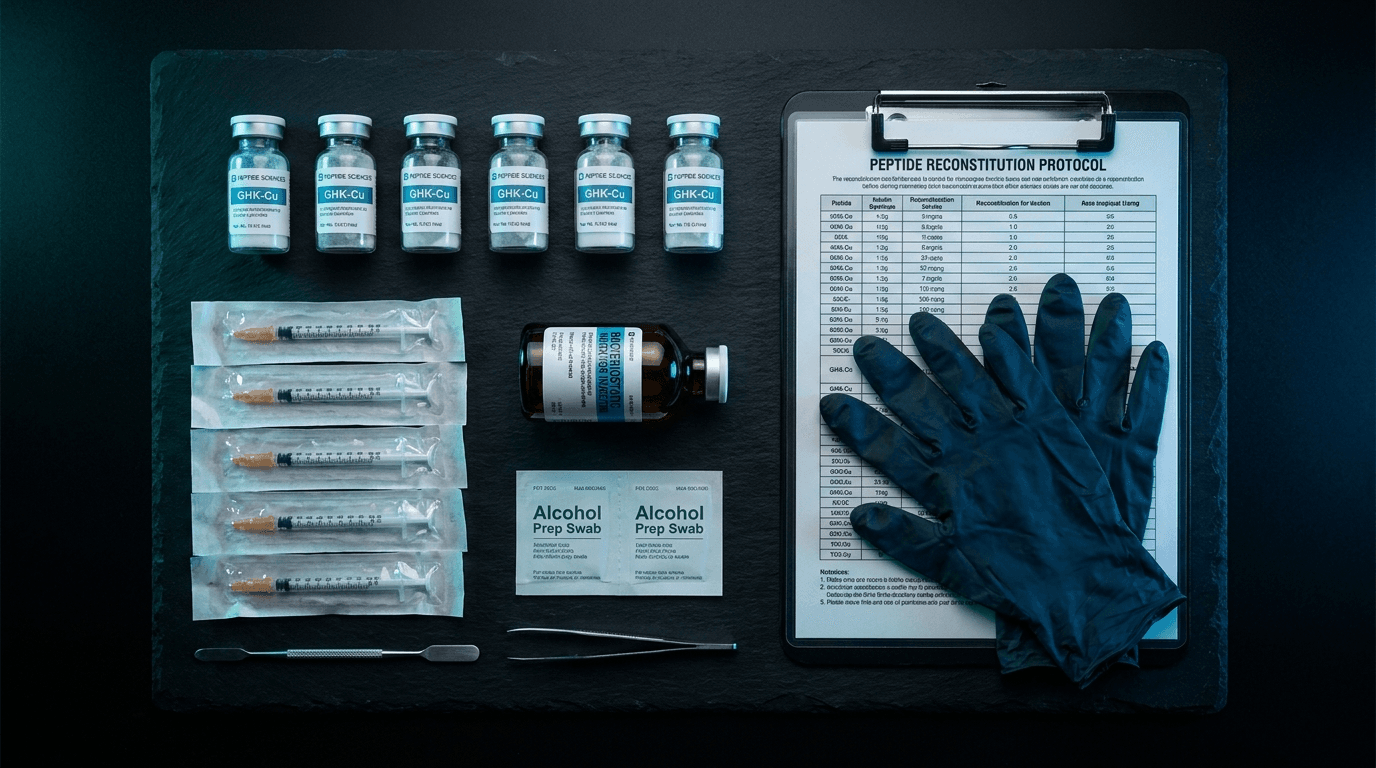
Cutting corners on equipment is the fastest route to either a compromised research compound or a safety incident. Here is everything required for sterile reconstitution and subcutaneous injection:
Reconstitution Equipment:
- Bacteriostatic water for injection (BAC water) — Not regular sterile water, not saline, not tap water. Bacteriostatic water contains 0.9% benzyl alcohol, which inhibits bacterial growth during the repeated needle punctures that come with a multi-dose vial. [1] VANDL Labs includes free BAC water with orders over $200. It is also available separately from most research peptide suppliers.
- 18-23G drawing needle — A large-bore needle used only to draw BAC water into the syringe from the BAC water vial. The larger bore makes filling easier and reduces mechanical force on the stopper. Do not use this needle to inject.
- U-100 insulin syringes — 1cc capacity, 29-31 gauge, ½ inch length. The U-100 graduation (100 units per mL) maps directly to the concentration calculations covered below and makes dosing math significantly cleaner. Buy individually sealed — one per injection, never reuse.
- Alcohol preparation swabs — 70% isopropyl alcohol to sterilize rubber stoppers before every puncture. Allow 30 seconds of air-drying after wiping; wet alcohol is not fully bactericidal on wet surfaces and introduces moisture.
- Sterile gloves — Optional but recommended when handling multi-dose vials over a multi-week protocol. Reduces contamination risk from hand flora.
- Clean, non-porous work surface — A paper towel is insufficient. Use a clean ceramic tile, glass cutting board, or any non-porous surface wiped with 70% IPA before setup.
Injection and Disposal:
- Fresh insulin syringe per injection — Reusing needles causes microbial contamination, damages the precision bevel tip (substantially increasing injection pain), and risks rubber stopper particle contamination in the vial. A box of 100 insulin syringes runs $12-20.
- Sharps container — Required for safe needle disposal. Do not place used needles in household trash.
Step-by-Step Reconstitution Protocol
The reconstitution process takes approximately 5 minutes when done properly. Precision at each step protects the compound's bioactivity and the sterility of the multi-dose vial across its full 28-day use window.
Step 1: Calculate Your Target Concentration Before Touching Anything
Do the math first. The concentration calculation determines how much bacteriostatic water to add and how many units to draw for each dose. The formula is:
Concentration (mcg per unit) = Total peptide (mcg) ÷ Water volume (mL) ÷ 100
The division by 100 converts from mL to U-100 syringe units (1 mL = 100 units). Choose a water volume that produces a concentration where your typical dose falls in the 10–50 unit range — small enough to measure precisely, large enough to draw comfortably. The dilution reference table below shows precomputed values for all common combinations. Work out the math before reconstituting so you don't have to redo the addition later.
Step 2: Prepare a Sterile Workspace
Wipe your work surface with 70% isopropyl alcohol and allow it to dry for 60 seconds. Wash hands thoroughly with soap for 20 seconds, or put on sterile gloves. Remove the flip-top caps from both the BAC water vial and the peptide vial — the rubber stoppers remain in place. Wipe both stoppers with fresh alcohol swabs and allow them to air-dry for 30 seconds before any needle insertion. This single preparation step prevents surface bacteria from the stopper entering the vial.
Step 3: Draw the Bacteriostatic Water
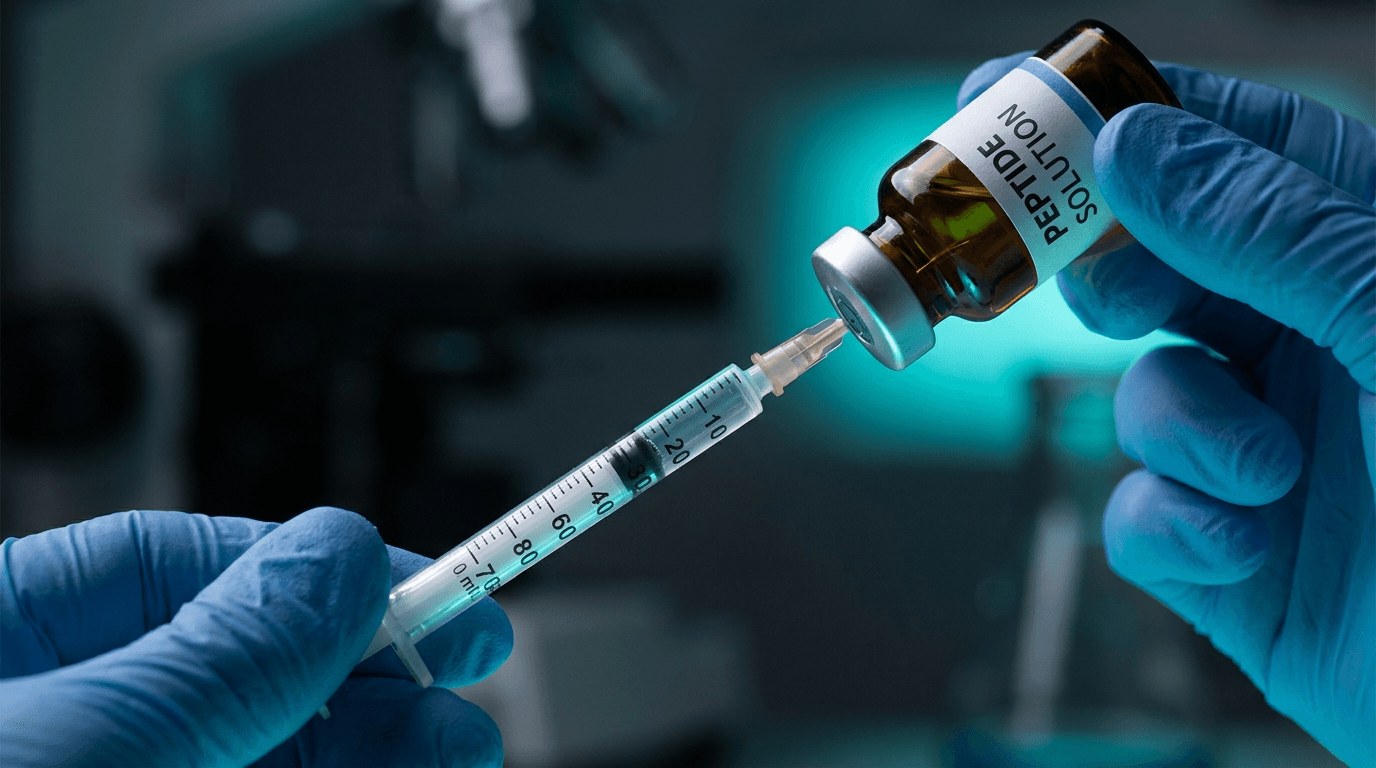
Using a drawing needle (18-23G) on your syringe, pull the plunger back to the target water volume to fill the syringe barrel with air. Insert the needle through the center of the BAC water stopper and inject this air into the vial — this creates positive pressure that makes drawing easier. Invert the BAC water vial and slowly draw the target volume (e.g., 100 units = 1 mL, 200 units = 2 mL). Remove and discard the drawing needle. Attach a fresh 29-31G insulin needle for the next step.
Step 4: Inject Water Into the Peptide Vial — Slowly and Against the Wall
Insert the insulin needle through the peptide vial stopper at a slight angle. Direct the stream of water toward the inside wall of the vial, not directly onto the peptide powder — this prevents the mechanical agitation of water hitting the dry powder, which can cause immediate aggregation in some compounds. Inject the water slowly over 5-10 seconds, not in a single push. Some researchers take advantage of the internal vacuum in lyophilized vials: after puncturing the stopper, allow the vial's vacuum to pull the water in naturally with minimal plunger pressure. This is the gentlest possible delivery method. [6]
Step 5: Dissolve Fully — Swirl, Never Shake
Remove the needle and gently roll the vial between your palms or swirl it in slow circles. Most peptides dissolve fully within 30-90 seconds at room temperature. Some compounds — GHK-Cu, certain GHRPs, and longer peptide sequences — may require 2-3 minutes. The solution must be completely clear with no visible particulates before use. If cloudiness persists after 3 minutes, allow the vial to rest at room temperature for an additional 15 minutes. Do not refrigerate until dissolution is confirmed complete — cold slows the process and can cause incomplete dissolution to look complete.
The reason shaking is destructive: Mechanical agitation creates air-water interfaces at the liquid surface and on air bubbles within the solution. Peptides are surface-active molecules that preferentially adsorb to these interfaces, where they unfold and denature — losing their functional secondary structure permanently. This is not recoverable. Agitation-induced aggregation of research peptides has been documented in pharmaceutical stability literature as one of the leading causes of activity loss in reconstituted peptide formulations. [4]
Reconstitution Math: Calculating Your Concentration and Dose
This is where most guides leave researchers guessing. The math isn't complicated, but the units are unfamiliar, and errors here undermine every dose in the protocol.
Worked example — BPC-157, 5 mg vial, 2 mL BAC water:
- Total peptide: 5 mg = 5,000 mcg
- Water added: 2 mL
- Concentration: 5,000 mcg ÷ 2 mL = 2,500 mcg/mL
- Per U-100 unit: 2,500 ÷ 100 = 25 mcg per unit
- For a 250 mcg dose: 250 ÷ 25 = draw 10 units
- For a 500 mcg dose: 500 ÷ 25 = draw 20 units
- For a 1 mg (1,000 mcg) dose: 1,000 ÷ 25 = draw 40 units
The table below covers common peptide vial sizes paired with typical water volumes, precomputed to show the resulting concentration and draw volumes for three standard dose levels. Use it as a quick reference — bookmark this page or photograph the table before your next reconstitution session. [8]
| Vial Size | BAC Water Added | Concentration | Units per 250 mcg | Units per 500 mcg | Units per 1 mg |
|---|---|---|---|---|---|
| 2 mg (2,000 mcg) | 1 mL (100 units) | 2,000 mcg/mL | 12.5 units | 25 units | 50 units |
| 2 mg (2,000 mcg) | 2 mL (200 units) | 1,000 mcg/mL | 25 units | 50 units | 100 units |
| 5 mg (5,000 mcg) | 1 mL (100 units) | 5,000 mcg/mL | 5 units | 10 units | 20 units |
| 5 mg (5,000 mcg) | 2 mL (200 units) | 2,500 mcg/mL | 10 units | 20 units | 40 units |
| 5 mg (5,000 mcg) | 5 mL (500 units) | 1,000 mcg/mL | 25 units | 50 units | 100 units |
| 10 mg (10,000 mcg) | 2 mL (200 units) | 5,000 mcg/mL | 5 units | 10 units | 20 units |
| 10 mg (10,000 mcg) | 5 mL (500 units) | 2,000 mcg/mL | 12.5 units | 25 units | 50 units |
| 10 mg (10,000 mcg) | 10 mL (1,000 units) | 1,000 mcg/mL | 25 units | 50 units | 100 units |
Units to Draw for a 500 mcg Dose at Different Concentrations
Syringe Units Required for a 500 mcg Dose (U-100 Insulin Syringe)
Higher concentrations require fewer units for the same dose. The "sweet spot" for practical accuracy is 10–50 units per dose — small enough to minimize total injection volume, large enough to draw without precision errors. A 500 mcg dose at 2,500 mcg/mL (20 units) is the easiest to measure accurately on a standard U-100 syringe.
How to Inject Peptides Subcutaneously: Complete Technique
Subcutaneous (SubQ) injection deposits the compound into the adipose (fat) layer directly beneath the skin, where it absorbs gradually into systemic circulation. SubQ is the standard route for most research peptides because it provides reliable bioavailability (typically 60-100% for most peptides in this class), predictable pharmacokinetics, and is far less painful and technically demanding than intramuscular injection for repeated dosing. [3]
Why SubQ rather than IM for most peptides? Intramuscular injection offers faster peak absorption but higher infection risk at depth, greater discomfort, and no practical advantage for compounds whose half-lives are already measured in minutes to hours. The exception is protocols specifically targeting localized IM effects — for example, some BPC-157 and TB-500 protocols for musculoskeletal injury use injection proximal to the injury site rather than systemic SubQ. [6] Most growth hormone peptides (ipamorelin, CJC-1295, sermorelin), nootropic peptides (semax, selank), and healing peptides default to SubQ.
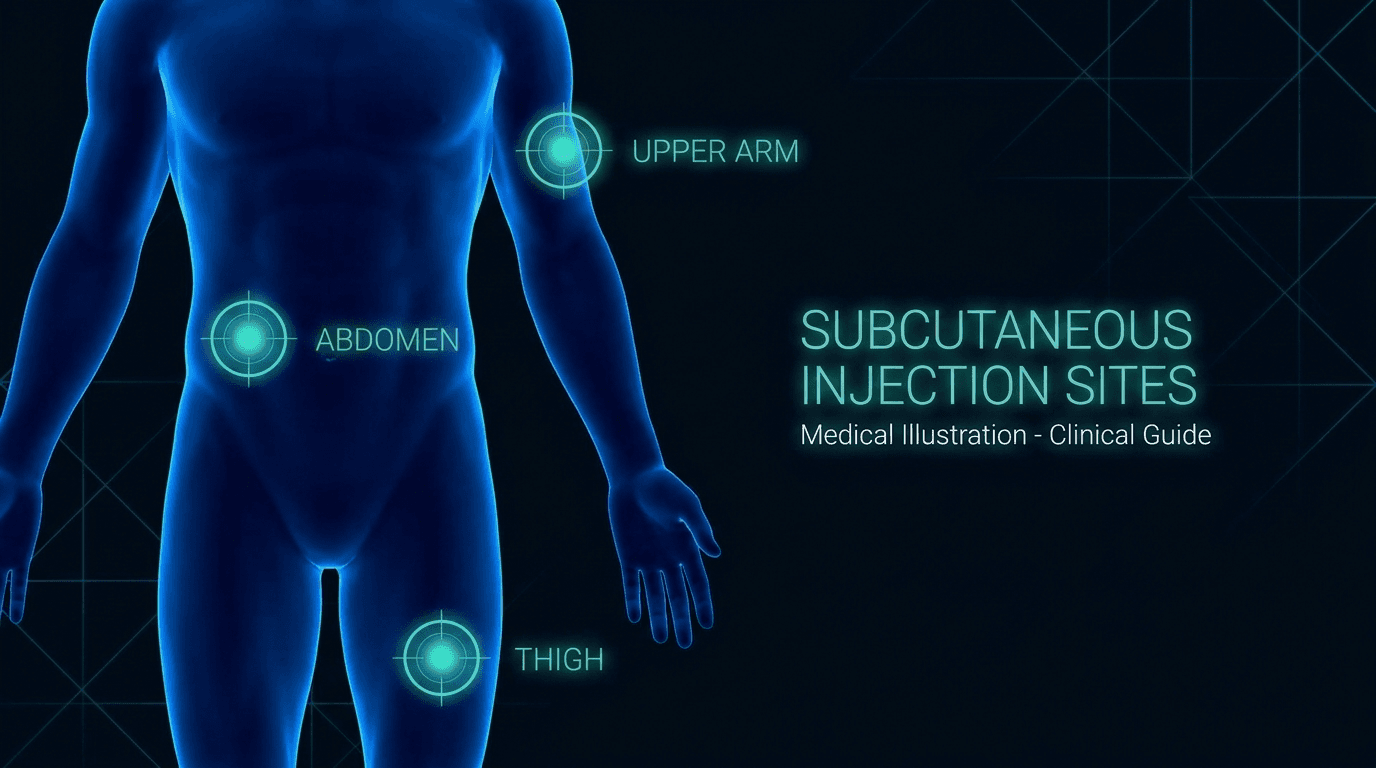
The Three Primary Subcutaneous Injection Sites
Each site has distinct advantages and appropriate use cases based on fat depth, accessibility, and sensitivity: [2,3]
Abdomen (preferred primary site): The abdomen has the largest subcutaneous fat depot of any injection site, easy visual access for self-injection, and generally produces the lowest injection discomfort. Rotate between the left and right sides, staying at least 5 cm (2 inches) from the navel where subcutaneous fat is thinnest. Avoid the waistline crease area. The abdomen is the most forgiving site for beginners and is recommended for daily injection protocols.
Outer thigh (best secondary site): The lateral (outer) surface of the thigh, midway between hip and knee, provides reliable fat depth and easy self-injection access. Good for alternating with abdominal sites to prevent lipohypertrophy at any single location. Avoid the inner thigh and the area within 5 cm of the knee joint.
Posterior upper arm (partner or mirror-assisted): The back of the upper arm (posterior triceps area) works well with partner assistance or a mirror for self-injection. Fat depth here is more variable — leaner individuals have limited subcutaneous tissue in this area, and inadvertent IM injection is more likely if technique is imprecise.
Step-by-Step Injection Technique
1. Draw the dose. Using a fresh insulin syringe, draw the calculated unit volume from the reconstituted vial (flip the vial, insert needle, draw slowly). Check for air bubbles — flick the syringe barrel gently two or three times, then push out any bubbles by gently depressing the plunger until a small drop appears at the needle tip. Small air bubbles are not dangerous SubQ but reduce dose accuracy.
2. Prep the site. Clean a 2×2 cm area of skin at the chosen site with an alcohol swab. Allow the skin to air-dry for a full 30 seconds. Injecting through wet alcohol increases stinging on needle entry and provides less reliable surface sterilization than allowing the IPA to dry completely.
3. Pinch and insert. Using your non-dominant hand, pinch a fold of skin and underlying subcutaneous tissue between thumb and forefinger — this lifts the SubQ layer away from the muscle beneath. Insert the needle at 45° for leaner individuals (less SubQ fat depth) or 90° for those with adequate adipose depth. A 29-31G × ½ inch needle reaches the SubQ layer comfortably in most adults at either angle.
4. Inject slowly. Depress the plunger at a steady rate over 3-5 seconds. Rapid injection creates local pressure that increases discomfort and is associated with higher rates of local bruising and site reactions. A 10-40 unit dose injects comfortably in 3-4 seconds at this rate.
5. Withdraw and apply pressure. Remove the needle at the same angle used for insertion. Apply gentle pressure with a clean cotton ball or swab for 10-15 seconds. Do not rub — rubbing causes local bruising and may disperse the compound from the SubQ depot before absorption occurs. Dispose of the used needle in the sharps container immediately.
Peptide Storage: The Conditions That Preserve Activity
Storage is where most research compounds die a quiet, undocumented death. Understanding the underlying mechanisms makes the rules easy to follow — and easier to defend when others suggest shortcuts.
Lyophilized peptide (before reconstitution):
- Room temperature (20-25°C): Stable for 2-4 weeks in a sealed vial. Acceptable during shipping; avoid heat and high humidity.
- Refrigerated (2-8°C): Stable for 6-12 months. The recommended condition for medium-term storage before planned use.
- Frozen (-20°C): Stable for 12-24+ months. Best for long-term storage of large inventories. Limit freeze-thaw cycles — each cycle subjects the powder to mechanical stress as ice crystals form and melt, which can cause aggregation over many cycles. Maximum 3 freeze-thaw cycles is a reasonable conservative limit. [5]
Reconstituted peptide (after adding BAC water):
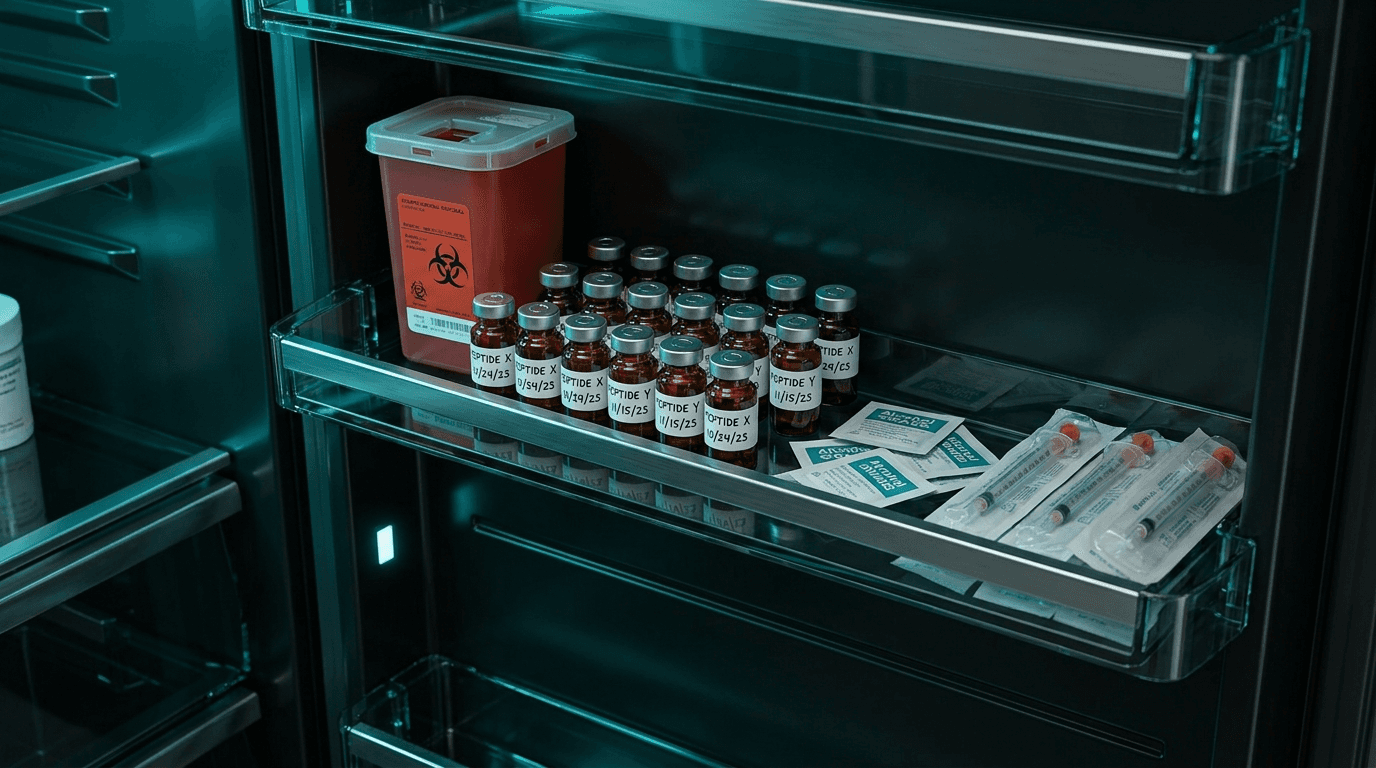
- Refrigerated (2-8°C): 3-4 weeks with bacteriostatic water. This is the only appropriate storage condition after reconstitution.
- Frozen (-20°C): Not recommended. Freezing reconstituted peptide solutions causes ice crystal formation that disrupts peptide secondary structure and reduces biological activity. Unlike lyophilized powder (where peptides are protected by glassy excipient matrices), peptides in aqueous solution have no protection against crystal-induced mechanical stress. This damage does not reverse on thawing. [4,5]
- Room temperature: Avoid entirely. Enzymatic activity, hydrolysis, and bacterial growth accelerate rapidly at ambient temperature. Reconstituted peptides should never be stored at room temperature beyond a few hours.
Light and UV sensitivity: Many peptides are photosensitive. GHK-Cu (copper-containing compounds are particularly UV-reactive), PT-141, and several GHRP peptides degrade measurably under light exposure. Store all reconstituted vials in the dark, wrapped in foil, or in an opaque vial box. Amber glass vials offer UV protection — clear glass does not. [4]
| Peptide State | Temperature | Estimated Stability | Key Notes |
|---|---|---|---|
| Lyophilized (sealed vial) | Room temp (20-25°C) | 2-4 weeks | Shipping tolerance; avoid heat and humidity above 40% |
| Lyophilized (sealed vial) | Refrigerated (2-8°C) | 6-12 months | Recommended for medium-term storage |
| Lyophilized (sealed vial) | Frozen (-20°C) | 12-24+ months | Limit freeze-thaw cycles to maximum 3 |
| Reconstituted in BAC water | Refrigerated (2-8°C) | 3-4 weeks | Only appropriate post-reconstitution storage |
| Reconstituted in BAC water | Frozen (-20°C) | Not recommended | Ice crystals disrupt peptide secondary structure |
| Reconstituted in BAC water | Room temp (20-25°C) | Under 24 hours | Avoid entirely; degradation and contamination risk |
The 7 Most Common Mistakes That Ruin Expensive Peptides
These errors appear repeatedly across research communities, and every one of them can silently destroy a compound without any visible indication that damage has occurred:
1. Shaking instead of swirling. Covered above. Agitation-induced denaturation at air-water interfaces is irreversible. The vial looks normal after shaking — the compound does not perform normally. Always swirl slowly or roll between palms.
2. Using plain sterile water instead of bacteriostatic water. Plain sterile water is appropriate only for single-dose use with immediate discard. It contains no preservative. After a single stopper puncture, bacteria introduced from the needle surface begin multiplying. By day 7, contamination is measurable. Bacteriostatic water with 0.9% benzyl alcohol inhibits this growth for the life of the vial. [1]
3. Over-concentrating to avoid "wasting" water. Adding too little BAC water creates a high-concentration solution that requires drawing 2-5 units per dose. At this scale, a 1-unit syringe error represents a dosing error of 50-100 mcg — significant for compounds with narrow effective ranges. Target 10-50 units per dose for practical accuracy.
4. Directing the water stream onto the dry powder. Mechanical force of liquid impacting dry peptide powder causes immediate aggregation in some compounds, particularly hydrophobic sequences. Direct the stream toward the glass wall of the vial and let it flow down to the powder gently.
5. Refrigerating before full dissolution. Cold slows dissolution kinetics. A solution that appears clear at room temperature may show precipitation after refrigeration if dissolution was incomplete. Always confirm complete clarity at room temperature before refrigerating. Warming a refrigerated partially-dissolved vial back to room temperature for 15 minutes and swirling gently often resolves this.
6. Reusing syringes across injections or research sessions. Once used, a needle tip is microscopically deformed — substantially increasing injection discomfort on reuse. More critically, the needle carries skin flora bacteria into the vial on re-entry, contaminating a multi-dose preparation that otherwise remains sterile. This is never worth the cost savings.
7. Freezing the reconstituted vial. This happens when researchers incorrectly equate "the lyophilized form was frozen, therefore freezing the reconstituted form is also fine." It is not. The lyophilized form is protected by glassy excipient matrices during freezing. The reconstituted aqueous solution is not. Freezing causes ice crystal formation that destroys peptide secondary structure. Always refrigerate reconstituted vials — never freeze them.
Sourcing Verified Peptides and Bacteriostatic Water for Injection
Peptide Tech
Best ValueFull catalog: BPC-157, TB-500, GHK-Cu, Ipamorelin + 50 more
From $19.99 per vial
Automated daily price-matching against major US competitors
VANDL Labs
BAC Water IncludedPeptides + Bacteriostatic Water (free on orders >$200)
From $29.00 per vial
Free BAC water and free shipping on orders over $250
Modified Aminos
Full TraceabilityResearch Peptides + Bioregulators (USA-made)
Competitive — contact for current pricing
QR-scannable vials link directly to the batch CoA data
AminoUSA
US-MadeResearch-Grade Peptides
Competitive pricing
US-based fulfillment with focus on research-grade standards
Frequently Asked Questions
Can I use sterile water instead of bacteriostatic water?
Only if the reconstituted solution will be used in a single session and the remaining volume discarded immediately. Plain sterile water contains no preservative — after the first needle puncture, bacteria introduced from the stopper surface or the needle itself begin multiplying in the solution. For any multi-dose vial accessed over multiple days or weeks, bacteriostatic water with 0.9% benzyl alcohol is required to maintain sterility across the full use window.
How long do reconstituted peptides remain stable?
With bacteriostatic water, stored at 2-8°C and protected from light: 3-4 weeks for most research peptides. Some shorter peptide sequences maintain activity for up to 6 weeks under optimal refrigeration conditions. Label each vial with the reconstitution date and treat 28 days as a conservative standard. If the solution becomes cloudy, develops visible particulates, or shows any color change before the 28-day mark, discard it — these are signs of aggregation or microbial contamination.
My peptide won't dissolve after adding BAC water — what do I do?
Allow 5-10 minutes of gentle rolling at room temperature before concluding it is not dissolving. Many peptides — particularly GHRPs, hydrophobic sequences, and some growth factors — dissolve slowly. For stubborn compounds, adding a small quantity of dilute acetic acid (0.1% solution prepared with sterile water) before adding BAC water helps solubilize hydrophobic peptides by protonating the peptide backbone. Add the acetic acid first, allow partial dissolution, then add BAC water to reach the target volume. Never apply heat or shake to force dissolution.
How many units do I draw for a 250 mcg dose from a 5 mg vial reconstituted with 2 mL of BAC water?
At that concentration (2,500 mcg/mL), each unit on a U-100 syringe contains 25 mcg. For 250 mcg: draw 10 units. For 500 mcg: draw 20 units. For 1 mg: draw 40 units. Use the dilution reference table in this article for other vial sizes and water volumes — it covers all common combinations with precomputed unit values.
Should I inject at a 45-degree or 90-degree angle?
90° is appropriate for individuals with sufficient subcutaneous fat depth at the chosen site — typically anyone with a BMI above 22-23 or clearly visible adipose tissue at the injection site. 45° with a skin pinch is safer for leaner individuals where the distance between the skin surface and muscle is small, reducing the risk of inadvertent intramuscular injection. Both angles are correct given appropriate patient body composition — choose based on the site and the individual.
Is it safe to freeze reconstituted peptide vials?
No. Freezing an aqueous peptide solution causes ice crystal formation that mechanically disrupts peptide secondary structure — the precise folded conformation responsible for biological activity. This damage is not reversible on thawing. Lyophilized peptides (the dry powder form) can be frozen because they are protected by glassy excipient matrices (mannitol, sucrose, trehalose). Reconstituted solutions in aqueous form have no such protection. Always refrigerate reconstituted vials at 2-8°C, never freeze them.
What gauge and length needle is best for subcutaneous peptide injection?
29-31 gauge, ½ inch (12.7 mm) length. This gauge is fine enough for minimal tissue trauma and low injection pain, and ½ inch is sufficient to reliably reach the subcutaneous layer in most body sites without intramuscular depth. 32G ultra-fine needles can be used but are prone to bending under the pressure required for more viscous reconstitutions. Avoid anything coarser than 27G for subcutaneous injection — the larger bore causes unnecessary tissue damage and increases post-injection bruising.
Sources & References
- 1.United States Pharmacopeia (USP). "Bacteriostatic Water for Injection, USP — Monograph and General Chapter <1> Injections and Implanted Drug Products" — United States Pharmacopeia and National Formulary (USP–NF), 2024.View source
- 2.World Health Organization. "WHO Best Practices for Injections and Related Procedures Toolkit" — WHO Press, Geneva, 2010.View source
- 3.Usach I, Garcés A, Solinis MA, Del Pozo-Rodríguez A, Perez-Fernandez R. "Subcutaneous injection of drugs: Literature review of factors influencing pain, site reaction, and bioavailability" — Advances in Therapy, 2019. DOI: 10.1007/s12325-019-01054-0.View source
- 4.Manning MC, Chou DK, Murphy BM, Payne RW, Katayama DS. "Stability of protein pharmaceuticals: an update" — Pharmaceutical Research, 2010. DOI: 10.1007/s11095-009-0045-6.View source
- 5.Kasper JC, Friess W. "The freezing step in lyophilization: physico-chemical fundamentals, freezing methods and consequences on process performance and quality attributes of biopharmaceuticals" — European Journal of Pharmaceutics and Biopharmaceutics, 2011. DOI: 10.1016/j.ejpb.2011.03.010.View source
- 6.Tomas D, Drmic-Hofman I, Holik AK, et al.. "Stable Gastric Pentadecapeptide BPC 157 and Wound Healing: Reconstitution Protocol and Stability Considerations in Research Setting" — Frontiers in Pharmacology, 2024. DOI: 10.3389/fphar.2024.1246682.View source
- 7.Freitas D, Palmeira A, Vasconcelos MW, et al.. "Coadministration of compounds that modulate the intestinal barrier as a strategy to enhance oral peptide drug delivery" — Advanced Drug Delivery Reviews, 2023. DOI: 10.1016/j.addr.2022.114532.View source
- 8.ClinicalTrials.gov — National Library of Medicine. "BPC 157 in Participants With Inflammatory Bowel Disease (NCT05022095)" — ClinicalTrials.gov, 2021.View source