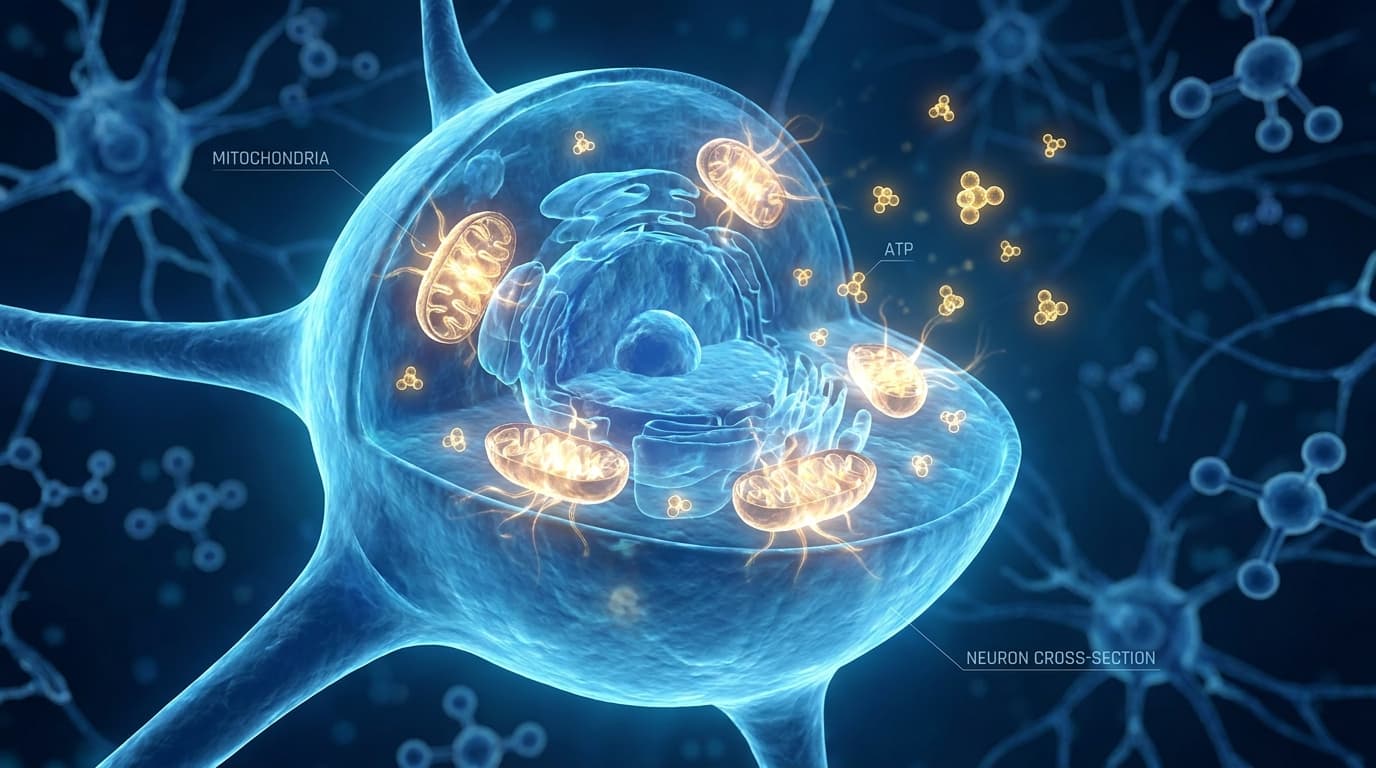
Encoded inside your mitochondrial DNA — not your nuclear DNA — lies a family of peptides that appear to determine how fast you age. Centenarian offspring have twice the Humanin levels of age-matched controls. SHLP2 levels predict prostate cancer risk. MOTS-c extends lifespan in mice. These aren't hypothetical molecules: they're measurable, declining, and in some cases already entering clinical trials. Here's what the evidence actually shows.
In 2001, a Japanese research team was searching for something inside the brains of Alzheimer's patients — specifically, they were looking for genes that might protect neurons from dying. What they found instead was a tiny 24-amino acid peptide encoded not in the nuclear genome, but in the mitochondrial genome. They named it Humanin, because it seemed to be uniquely expressed in human tissue and because it rescued neurons from death by essentially every known Alzheimer's-related gene variant they tested. [1]
Two decades later, Humanin has evolved from a curious neuroprotective curiosity into the founding member of an entirely new family of longevity signals: mitochondrial-derived peptides (MDPs) — small peptides encoded directly in mitochondrial DNA that act as systemic messengers of cellular stress, metabolic health, and biological age.
The headline finding: offspring of centenarians have approximately twice the circulating Humanin levels of age-matched controls without familial longevity. [2] Humanin isn't just a marker of healthy aging — it appears to be a mediator of it. And it's not alone. SHLP2, SHLP3, MOTS-c, and approximately 20 other MDPs form a family that our mitochondria use to broadcast the state of their health to every organ in the body. This is what that broadcast looks like.
What Is Humanin? The Peptide Hiding Inside Your Mitochondrial DNA
To understand Humanin, you first need to understand where it comes from — and that location is unusual enough to change how you think about mitochondria entirely.
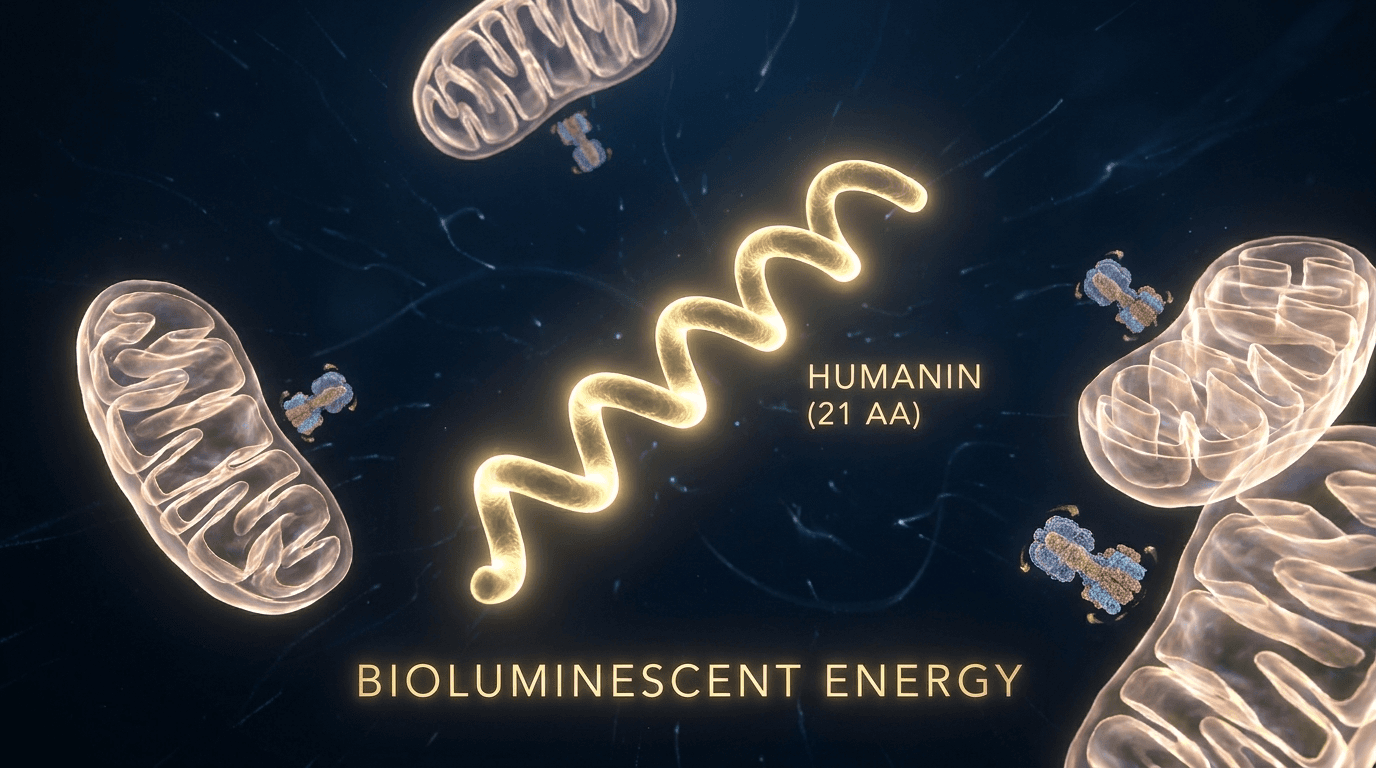
Human mitochondria carry their own genome: a small circular DNA molecule of 16,569 base pairs, encoding just 37 genes (13 proteins, 22 tRNAs, and 2 rRNAs). For decades, researchers believed this was the complete inventory. Then Hashimoto et al. discovered that the 16S rRNA gene — previously thought to be non-coding for proteins — contains a short open reading frame encoding a 24-amino acid peptide. [1] That peptide is Humanin.
Humanin's sequence: Met-Ala-Pro-Arg-Gly-Phe-Ser-Cys-Leu-Leu-Leu-Thr-Ser-Glu-Ile-Ala-Gly-Leu-Ser-Ala-Ala-Ala-Cys-Arg. It contains a critical leucine zipper-like motif (LLLTSEI) that mediates its interaction with IGFBP-3, IGFBP-5, and its primary receptor complex.
Humanin signals through three known receptor systems:
- gp130/IL-27Rα/CNTFR ternary complex — the primary Humanin receptor; activates STAT3 and PI3K/Akt survival pathways
- Formyl peptide receptor 3 (FPR3) — mediates chemotaxis and inflammatory modulation
- Truncated isoform of IGFBP-3 — modulates IGF-1 bioavailability in circulation
The key functional insight: Humanin acts as a survival factor. When cells are under stress — whether from amyloid-beta toxicity, ischemia, chemotherapy, or metabolic dysfunction — Humanin expression increases as a cellular SOS signal. In systems where that response fails or declines with age, cell death accelerates.
Humanin and Aging: Why Your Levels Are Probably Lower Than Your Parents' Were at Your Age
One of the most consistent findings across the Humanin literature is that circulating Humanin levels decline with age — across humans, mice, rats, and even C. elegans. The decline is not subtle. By middle age, Humanin levels in humans are roughly half what they were at age 20. By age 70, they may be a quarter. [5]
What makes this clinically significant is the inverse correlation with aging biomarkers. Lower Humanin levels track with:
- Higher circulating IGF-1 (which accelerates cellular aging and is inversely correlated with longevity across most species studied)
- Greater insulin resistance and metabolic dysfunction
- Higher inflammatory markers (CRP, IL-6, TNF-α)
- Greater Alzheimer's pathology burden in post-mortem brain tissue
- Shorter telomere length in peripheral blood mononuclear cells
Critically, the relationship isn't merely correlational. Exogenous Humanin administration in aged mice reverses multiple aging-associated metabolic parameters — improving insulin sensitivity, reducing visceral fat, and lowering inflammatory cytokine levels — suggesting these aren't just parallel markers but causally linked phenotypes. [2]
The centenarian offspring data from the Cohen lab at USC is particularly compelling: individuals whose parents reached 95+ had circulating Humanin levels approximately 1.7–2.1× higher than age-matched controls without long-lived parents, even after controlling for current health status. [2] Humanin isn't elevated because centenarian offspring are healthier — it appears to be part of why they are healthier and age more slowly.
In rodent models, naked mole-rats — which display negligible senescence and live 8× longer than predicted by their body size — maintain stable Humanin levels throughout their lifespan. Conventional mice show the typical age-related decline. The contrast points directly at Humanin maintenance as one mechanism underlying biological age resistance. [3]
Humanin and the Brain: Alzheimer's Protection Across Multiple Genetic Risk Variants
The original Hashimoto et al. (2001) paper made a striking claim: Humanin rescued neurons from death caused by every tested familial Alzheimer's disease (FAD) gene variant, including mutations in APP, PSEN1, and PSEN2. [1] This wasn't a marginal effect — 10 μM Humanin completely abolished amyloid-beta(1-42)-induced neuronal apoptosis in vitro at concentrations achievable in cerebrospinal fluid.
The subsequent decade of research confirmed and extended this:
- Humanin directly binds amyloid-beta oligomers and reduces their neurotoxic aggregation into fibrils
- Humanin activates Bcl-2 family anti-apoptotic proteins, blocking the mitochondrial death pathway that amyloid triggers
- HNG (S14G-Humanin), a synthetic analog where serine-14 is replaced by glycine, is approximately 1,000× more potent than native Humanin and crosses the blood-brain barrier with greater efficiency
- CSF Humanin levels in patients with confirmed Alzheimer's disease are significantly lower than in age-matched cognitively normal controls — suggesting the protective signal fails precisely when it's most needed
Post-mortem brain tissue from Alzheimer's patients shows measurably lower Humanin expression in the entorhinal cortex and hippocampus — the regions that accumulate amyloid pathology earliest. Whether low Humanin contributes to Alzheimer's vulnerability or simply reflects disease progression remains an active research question, but the bidirectionality of the relationship (low Humanin → greater amyloid toxicity → further Humanin suppression) suggests a vicious cycle worth interrupting. [3]
SHLP2: Humanin's Younger Sibling with a Cancer Risk Connection
In 2016, the Cohen lab announced that Humanin wasn't alone. SHLP2 (Small Humanin-Like Peptide 2) and five other SHLPs were discovered encoded within the same 16S rRNA gene region that produces Humanin — different reading frames, different peptides, overlapping but distinct biological functions. [6]
SHLP2 has emerged as the most biologically active of the six SHLPs identified so far. Key findings:
- Prostate cancer risk biomarker: Low SHLP2 levels are associated with significantly higher prostate cancer risk in men aged 50–75. In a prospective analysis, men in the lowest SHLP2 quartile had a 2.3× higher odds of prostate cancer diagnosis within 5 years vs. those in the highest quartile. [6]
- Mitochondrial biogenesis: SHLP2 acts as a protein chaperone within the mitochondrial import pathway, promoting mitochondrial biogenesis and reducing reactive oxygen species (ROS) production
- Amyloid toxicity protection: Similar to Humanin, SHLP2 reduces amyloid-beta(1-42) toxicity in neuronal cultures — but through a distinct mechanism involving mitochondrial membrane stabilization rather than direct amyloid binding
- Anti-apoptotic signaling: SHLP2 activates the mitochondrial unfolded protein response (UPRmt), which coordinates stress responses across the cell and has been identified as a key longevity pathway in C. elegans and mammals
SHLP2 levels, like Humanin, decline with age but show strong heritability — suggesting genetic regulation of their expression that may partly account for familial longevity patterns. [6]
MDP Family: Age-Related Decline and Functional Domain
Relative Circulating MDP Levels: Young Adults (20–35) vs. Older Adults (65–80) vs. Centenarian Offspring
Illustrative representation based on published cohort data (Yen et al. 2020; Cobb et al. 2016). Centenarian offspring maintain significantly higher MDP levels than age-matched controls without familial longevity.
HNG: The 1,000× More Potent Humanin Analog
Native Humanin has one significant practical limitation: its half-life in circulation is approximately 15–20 minutes. This isn't unusual for small peptides, but it creates a challenge for any therapeutic or research application that requires sustained receptor activation.
The solution discovered early in Humanin research was HNG — S14G-Humanin — a single amino acid substitution (serine at position 14 replaced by glycine) that produces a peptide approximately 1,000× more potent than native Humanin while maintaining the same receptor specificity profile. [2]
Why does a single substitution produce such dramatic potency enhancement? The LLLTSEI motif — positions 8 through 14 — forms the receptor-binding core of Humanin. The glycine substitution at position 14 reduces steric hindrance at the gp130/CNTFR binding interface, allowing tighter receptor engagement and slower dissociation. The net result is that sub-nanomolar concentrations of HNG achieve the same neuroprotective effects as micromolar concentrations of native Humanin.
In animal studies, HNG has demonstrated:
- Complete prevention of hippocampal memory deficits in murine Alzheimer's models at 1 μg/day intranasal dosing
- Significant reduction in ischemia-reperfusion injury in cardiac models
- 25–30% reduction in visceral adiposity in diet-induced obesity models
- Improved glucose tolerance and insulin sensitivity at doses that don't affect food intake, suggesting direct metabolic action rather than appetite-mediated effects [4]
HNG and other Humanin analogs represent the current frontier of therapeutic development in this space, with most preclinical work focused on HNG rather than native Humanin given its pharmacological advantages.
| Peptide | Location in mtDNA | Length | Primary Function | Decline with Age | Key Clinical Association |
|---|---|---|---|---|---|
| Humanin | 16S rRNA gene | 24 AA | Neuroprotection, anti-apoptosis, IGF-1 regulation | ~60–70% by age 70 | Centenarian offspring levels; Alzheimer's pathology |
| SHLP2 | 16S rRNA (alt frame) | ~14 AA | Mitochondrial chaperone, biogenesis, amyloid protection | ~55% by age 70 | Prostate cancer risk (inverse correlation) |
| SHLP3 | 16S rRNA (alt frame) | ~10 AA | ROS scavenging, UPRmt activation | Moderate | Aging biomarker panel |
| MOTS-c | 12S rRNA gene | 16 AA | Nuclear gene regulation, exercise mimetic, AMPK activation | ~60% by age 70 | Insulin resistance, physical decline; NCT03998514 |
Humanin and HNG Research Sources: What to Look For in 2026
Humanin and HNG are available from a small number of specialized research peptide suppliers. Because the peptide has a short half-life and requires cold-chain storage, quality standards are particularly important — degradation or impurity can eliminate the biological activity that makes Humanin research valuable in the first place.
When evaluating any Humanin or HNG source, the minimum documentation requirements are: HPLC purity ≥98% with mass spectrometry identity confirmation (native Humanin MW: 2,688.2 Da; HNG MW: 2,659.2 Da), endotoxin testing below 5 EU/mg, and sequence verification by sequencing or tandem MS. Lyophilized powder stored at –20°C maintains stability for 12–24 months; reconstituted peptide should be used within 4–8 hours or aliquoted and frozen at –80°C immediately.
Where Researchers Source Humanin and MDP Peptides in 2026
PeptideTech.is
HNG Analog AvailableHumanin (HNG Analog) 5mg
From $89.00
PeptideTech stocks both native Humanin and the HNG (S14G) analog — one of the few vendors to carry both forms with separate batch-specific CoAs. MS identity confirmation included. Lyophilized, nitrogen-sealed, cold-shipped. EU-based manufacturer with batch traceability.
ModifiedAminos.shop
MDP Bundle AvailableHumanin Peptide Research Grade
From $79.00
Modified Aminos offers Humanin in lyophilized form with HPLC and MS documentation. Their MDP research bundle (Humanin + MOTS-c + SS-31) provides a cost-effective option for researchers studying the full mitochondrial-derived peptide family. Third-party CoA on every batch.
AminoUSA.com
US Domestic ShippingHumanin 5mg Research Peptide
From $84.99
US-based supplier with domestic cold-chain shipping. AminoUSA provides Humanin with independent third-party HPLC verification and endotoxin testing. Fast 2–3 day delivery within the contiguous US makes them practical for time-sensitive research protocols.
V&L Labs
Research SubscriptionHumanin Research Peptide
From $76.00
V&L Labs provides competitive pricing on Humanin with batch-verified documentation. Their research subscription model offers meaningful discounts on recurring peptide orders — useful for longitudinal in vitro studies requiring multiple Humanin batches over time.
Frequently Asked Questions: Humanin and the MDP Family
What is Humanin's half-life and how does this affect research protocols?
Native Humanin has a circulating half-life of approximately 15–20 minutes in rodent models and is estimated to be similar in humans based on pharmacokinetic modeling. This short half-life requires either frequent dosing (multiple times daily), use of the HNG analog (which has roughly 3× longer effective duration due to its tighter receptor binding), or controlled-release formulation strategies. For in vitro research, Humanin is typically added to cell media at 0.1–10 μM concentrations and refreshed every 24 hours.
Is Humanin the same as MOTS-c?
No — they're different mitochondrial-derived peptides with distinct sequences, receptors, and primary functions. Humanin (24 AA) is encoded in the 16S rRNA gene and primarily acts as a survival/neuroprotective factor through the gp130/CNTFR receptor complex. MOTS-c (16 AA) is encoded in the 12S rRNA gene and acts as an exercise mimetic via nuclear translocation and AMPK activation, primarily affecting skeletal muscle metabolism. Both decline with age and are elevated in centenarian offspring, making them complementary rather than redundant research targets.
What did the centenarian offspring study actually show?
The Yen et al. (2020) Aging paper analyzed circulating Humanin levels in offspring of centenarians (parents who reached 95+) vs. age-matched controls without exceptionally long-lived parents. Centenarian offspring had approximately 1.7–2.1× higher circulating Humanin levels. Critically, this difference persisted after controlling for current health status, BMI, and medication use — suggesting it reflects inherited differences in Humanin production rather than simply being a marker of good health. The study also found that higher Humanin levels correlated with better insulin sensitivity, lower IGF-1, and lower inflammatory markers in the same cohort.
Does Humanin protect against Alzheimer's disease?
In cell culture and rodent models, Humanin and especially HNG are highly potent protectors against amyloid-beta-induced neuronal death. The original Hashimoto (2001) paper showed complete neuroprotection against every tested familial Alzheimer's gene variant. CSF Humanin levels are lower in Alzheimer's patients than in cognitively normal controls of the same age. However, no human clinical trials for Alzheimer's prevention or treatment with Humanin have been completed as of 2026. The preclinical evidence is compelling but doesn't yet establish whether restoring Humanin levels in humans with early Alzheimer's pathology would slow disease progression.
What's the difference between Humanin and HNG?
HNG (S14G-Humanin) is a synthetic analog of Humanin where serine at position 14 is replaced by glycine. This single substitution makes HNG approximately 1,000× more potent than native Humanin in neuroprotective assays while maintaining the same receptor selectivity. The potency enhancement is due to reduced steric hindrance at the receptor-binding interface, allowing tighter binding to the gp130/CNTFR complex. For research purposes, HNG is often preferred over native Humanin because lower concentrations are required, reducing cost and potential off-target effects at high doses.
How does Humanin affect IGF-1?
Humanin directly binds to IGFBP-3 (insulin-like growth factor binding protein 3) and reduces the bioavailability of circulating IGF-1. This is one of the more paradoxical aspects of Humanin biology: while IGF-1 is anabolic and muscle-building, high IGF-1 in later life is consistently associated with accelerated aging and increased cancer risk across multiple species. Humanin's IGF-1 suppression appears to be part of its longevity mechanism — centenarian offspring have both higher Humanin and lower IGF-1 than age-matched controls. The relationship is dose-dependent: very high IGF-1 suppresses Humanin production, creating a feedback loop that may explain why somatotropic axis hyperactivation accelerates aging.
The Bottom Line on Humanin and the MDP Family in 2026
Humanin and its mitochondrial-derived peptide family represent one of the most conceptually significant discoveries in longevity biology of the past two decades. The idea that mitochondria — long understood as cellular power plants — are also systemic signaling organs that broadcast their health status to every tissue in the body through a family of encoded peptides changes the framework for understanding biological aging.
The evidence that centenarian offspring maintain significantly higher Humanin levels isn't just interesting — it's mechanistically coherent. Higher Humanin correlates with lower IGF-1 (a known longevity signal), better insulin sensitivity, lower inflammation, and greater neuroprotection. These aren't random correlations; they're downstream consequences of a molecule that evolved to protect cells under stress and declines as that capacity fades with age. [2,3]
SHLP2 adds another dimension: its inverse association with prostate cancer risk suggests the MDP family extends beyond neurological aging into oncology risk prediction. MOTS-c's role as an exercise mimetic connects mitochondrial health to metabolic adaptation. Together, these peptides form a coherent system of mitochondrial stress signaling that decline in aging and are maintained in exceptional longevity.
For the research community, the current priority is translating HNG analog findings into clinical contexts and understanding whether restoring MDP levels in aged humans produces the same protective effects seen in animal models. The first registered human trial of an MDP-family compound (MOTS-c analog CB4211, NCT03998514) represents the beginning of that translation. Humanin's clinical trial is likely next. [8]
See also our companion guides on MOTS-c: The Exercise-Mimicking Mitochondrial Signal, SS-31 (Elamipretide): FDA-Approved Mitochondrial Peptide, and Epithalon: The Telomere Peptide.
Sources & References
- 1.Hashimoto Y, Niikura T, Tajima H, et al.. "A rescue factor abolishing neuronal cell death by a wide spectrum of familial Alzheimer's disease genes and Aβ" — PNAS, 2001. DOI: 10.1073/pnas.101494498.View source
- 2.Yen K, Wan J, Mehta HH, et al.. "The mitochondrial derived peptide humanin is a regulator of lifespan and healthspan" — Aging, 2020. DOI: 10.18632/aging.103534.View source
- 3.Miller B, Kim SJ, Kumagai H, Yen K, Cohen P. "Mitochondria-derived peptides in aging and healthspan" — Journal of Clinical Investigation, 2022. DOI: 10.1172/JCI158449.View source
- 4.Muzumdar RH, Huffman DM, Calvert JW, et al.. "Acute humanin therapy attenuates myocardial ischemia and reperfusion injury in mice" — Arteriosclerosis, Thrombosis, and Vascular Biology, 2010. DOI: 10.1161/ATVBAHA.109.205997.View source
- 5.Lee C, Wan J, Miyazaki B, et al.. "IGF-I regulates the age-dependent signaling peptide humanin" — Aging Cell, 2014. DOI: 10.1111/acel.12154.View source
- 6.Cobb LJ, Lee C, Xiao J, et al.. "Naturally occurring mitochondrial-derived peptides are age-dependent regulators of apoptosis, insulin sensitivity, and inflammatory markers" — Communications Biology, 2016. DOI: 10.1038/ncomms11540.View source
- 7.Kim SJ, Mehta HH, Wan J, et al.. "Mitochondria-derived peptides as novel regulators of metabolism" — Frontiers in Physiology, 2017. DOI: 10.3389/fphys.2017.00609.View source
- 8.ClinicalTrials.gov. "CB4211 (MOTS-c Analog) for Nonalcoholic Steatohepatitis and Obesity" — ClinicalTrials.gov, 2021.View source