
Steroids change hormone levels systemically. Peptides are more surgical — they can target the GH axis, block myostatin, accelerate tendon repair, and enhance IGF-1 signaling without the androgenic side effects. This is the 2026 research landscape for peptides used in athletic performance and muscle growth: what the evidence actually shows, what's overhyped, and how serious researchers are stacking these compounds.
The peptide-for-performance landscape in 2026 looks nothing like it did five years ago. What was once a Wild West of anecdotal forums and unverified claims has matured into a domain with genuine mechanistic research, growing clinical trial registrations, and enough published literature to have real conversations about what works, what doesn't, and what we genuinely don't know yet.
The most important framing distinction first: peptides are not steroids. Anabolic androgenic steroids (AAS) directly substitute for testosterone, driving androgen receptor signaling across every tissue simultaneously — muscle, prostate, hair follicles, cardiovascular system, all at once. Peptides operate upstream or parallel to this system, modulating the GH axis, blocking myostatin, enhancing local tissue repair, or improving the metabolic environment for protein synthesis. The effects are more targeted and the side effect profiles are fundamentally different — though "different" doesn't mean "absent."
This guide covers the five categories of peptides most studied in the context of muscle growth and athletic performance: GH secretagogues (CJC-1295, GHRP-2), IGF-1 analogs (IGF-1 LR3), myostatin inhibitors (Follistatin 344), and repair/recovery peptides (BPC-157, TB-500). For each, we cover the mechanism, the evidence, the limitations, and the research protocols most commonly reported in the literature.
Category 1: GH Secretagogues — CJC-1295 and GHRP-2
Growth hormone itself has well-documented anabolic effects: it directly stimulates IGF-1 production in the liver, increases protein synthesis, promotes fat oxidation, and reduces protein catabolism. The challenge with exogenous GH is that it suppresses the body's own GH production through negative feedback — and at therapeutic doses, it carries a meaningful side effect profile including water retention, carpal tunnel syndrome, and potential insulin resistance.
GH secretagogues sidestep this by stimulating the pituitary to release its own GH in more physiological pulses, preserving the pulsatile pattern that downstream physiology (particularly GH receptor signaling in muscle and liver) appears to require for optimal response.
CJC-1295 (without DAC) is a synthetic analog of GHRH (growth hormone-releasing hormone) that stimulates the pituitary's GHRH receptors. It has a half-life of approximately 30 minutes (without DAC), producing acute GH pulses when injected. Research shows it amplifies GH pulse amplitude 2–5× over baseline when given in the physiological fasted state. [4]
GHRP-2 (Pralmorelin) acts at a different receptor — the ghrelin receptor (GHSR-1a) — producing GH release through a complementary mechanism. When combined with CJC-1295, the two compounds synergize to produce GH pulses 3–6× larger than either alone. [4] This is the most evidence-backed combination for GH axis stimulation in research contexts.
Critical dosing consideration: insulin elevation blunts GH response by 40–60%. GH secretagogue administration requires an insulin-low state — minimum 2–3 hours fasted, no carbohydrate intake post-injection for 30–45 minutes. Ignoring this window effectively eliminates the pharmacological rationale for using these compounds. [7]
Category 2: IGF-1 LR3 — The Long-Acting Anabolic Signal
IGF-1 (insulin-like growth factor 1) is the primary downstream mediator of GH's anabolic effects on muscle tissue. GH stimulates the liver to produce IGF-1, which then travels to muscle cells and activates the PI3K/Akt/mTOR pathway — the master regulator of muscle protein synthesis. Understanding this explains why IGF-1 analogs are so pharmacologically interesting for muscle research.
IGF-1 LR3 (Long-R3-IGF-1) is a synthetic analog where the glutamate at position 3 is replaced by arginine ("R3") and the sequence is extended with a 13-amino acid N-terminal extension ("Long"). These modifications dramatically reduce binding to IGFBPs (insulin-like growth factor binding proteins), extending the active half-life from ~12 minutes (native IGF-1) to approximately 20–30 hours. [1]
The consequence of reduced IGFBP binding is that a much higher fraction of administered IGF-1 LR3 reaches tissue receptors in free, bioactive form. In muscle cells, IGF-1 receptor activation produces:
- PI3K/Akt/mTOR activation: Direct stimulation of muscle protein synthesis independent of dietary amino acid availability
- Satellite cell proliferation: IGF-1 promotes the division and differentiation of muscle satellite cells — the progenitor cells responsible for muscle repair and hyperplasia (actual addition of new muscle nuclei)
- GLUT4 translocation: Improved glucose uptake in muscle tissue, enhancing energy availability for training and recovery
- Reduced protein catabolism: Akt phosphorylation inhibits FoxO transcription factors, reducing expression of muscle-specific E3 ubiquitin ligases (MAFbx, MuRF1) that drive muscle breakdown
The research caveat on IGF-1 LR3: its long half-life means it also suppresses endogenous IGF-1 production through negative feedback and maintains insulin-like signaling (with hypoglycemia risk) for an extended period. IGF-1 also has well-documented relationships with cancer risk at elevated chronic levels — not through a clear mutagenic mechanism but through anti-apoptotic signaling that may promote survival of pre-malignant cells. [6] Research protocols account for this by limiting exposure windows (typically 4–6 weeks) and cycling with washout periods.
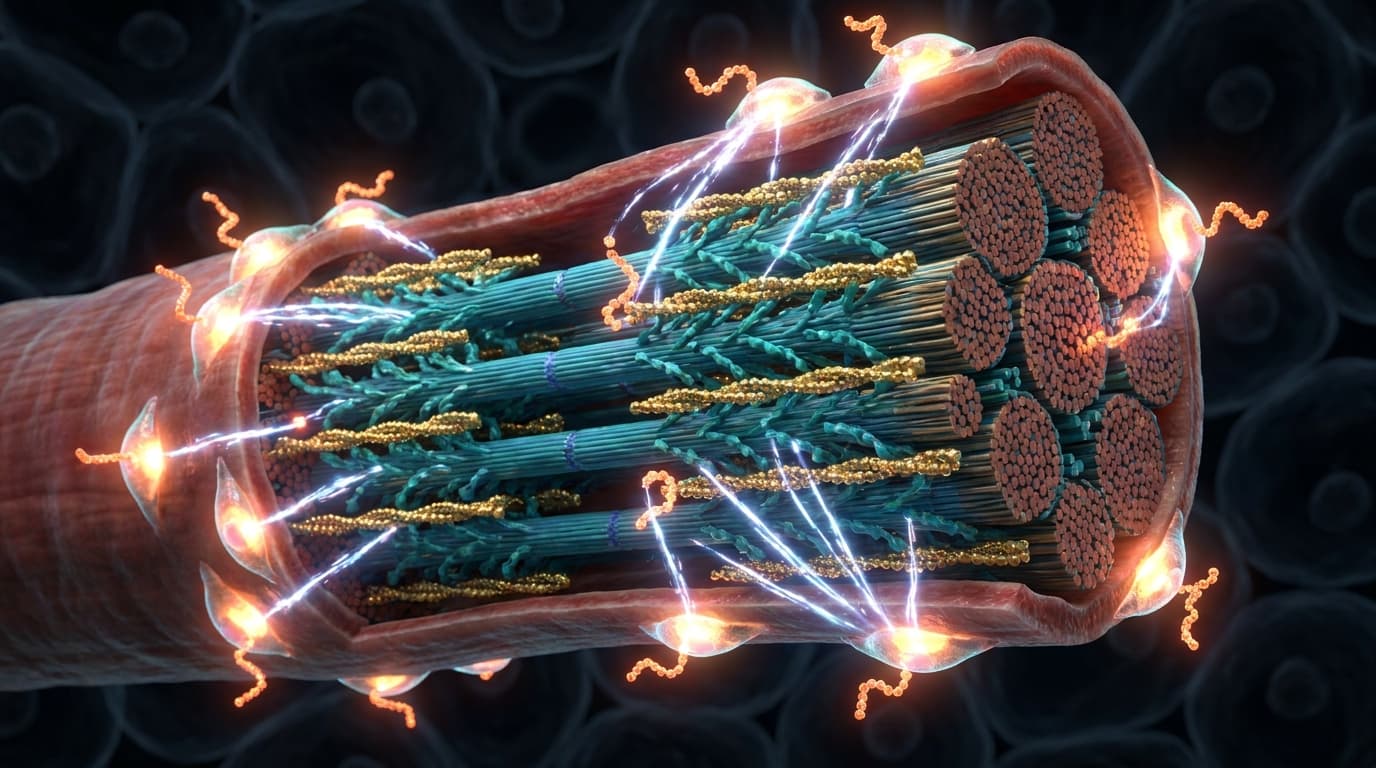
Category 3: Follistatin 344 — The Myostatin Inhibitor
Myostatin is one of the most well-validated "muscle ceiling" regulators in mammalian biology. It's a TGF-β superfamily member that specifically limits skeletal muscle mass by suppressing satellite cell activation and reducing protein synthesis rates. Animals with genetic myostatin knockout or functional myostatin inhibition develop dramatically elevated muscle mass — the so-called "double-muscled" phenotype seen in Belgian Blue cattle and, in rare human cases, myostatin-deficient children who show extraordinary muscle development without training. [2]
Follistatin is an endogenous glycoprotein that binds and neutralizes myostatin (along with activin A and other TGF-β family members). By sequestering myostatin, Follistatin effectively raises the muscle ceiling — allowing greater satellite cell proliferation and protein synthesis than would be possible with myostatin at baseline levels.
Follistatin 344 is the recombinant isoform produced by alternative splicing that contains 344 amino acids. Key research findings:
- In primate studies (2009 gene therapy trial), AAV-mediated Follistatin overexpression produced 15–17% increase in muscle mass at 15-week follow-up [5]
- Registered Phase I/II trials (NCT01519349) tested intramuscular Follistatin gene delivery in Becker muscular dystrophy — showing safety and preliminary efficacy signals
- The critical distinction between recombinant protein administration and gene therapy: injectable Follistatin 344 protein has a very short systemic half-life (hours), limiting its duration of action vs. gene therapy approaches that drive sustained endogenous overexpression
For research contexts, Follistatin 344 is typically evaluated at 100 mcg/day IM injection protocols — enough to partially inhibit circulating myostatin while acknowledging the short half-life limitation. The functional effect on muscle satellite cell activation appears to outlast the circulating peptide, suggesting downstream signaling that persists after the peptide itself clears.
Category 4: BPC-157 and TB-500 — The Recovery Peptides That Enable Performance
You can't build muscle you can't recover from training to produce. This is the underlying rationale for including repair peptides in athletic research stacks: BPC-157 and TB-500 don't directly stimulate muscle protein synthesis, but they dramatically accelerate the repair of soft tissue injuries — tendons, ligaments, muscle tears — that otherwise become rate-limiting constraints on athletic development.
BPC-157 (Body Protective Compound-157) is a 15-amino acid pentadecapeptide derived from human gastric juice protein. Its primary mechanisms in musculoskeletal tissue:
- Upregulates VEGFR2 and stimulates angiogenesis — improving blood supply to damaged tissue
- Increases tendon fibroblast expression of GH receptors, sensitizing local tissue to circulating GH [3]
- Activates the FAK-paxillin signaling pathway, promoting fibroblast migration and collagen synthesis at injury sites
- Reduces systemic inflammation via NO-mediated suppression of NF-κB signaling
TB-500 (Thymosin Beta-4 fragment) promotes actin dynamics by sequestering G-actin monomers, making them available for rapid cytoskeletal reorganization during cell migration and wound healing. This mechanism is particularly relevant for muscle satellite cell mobilization — the cells that repair and rebuild muscle fiber after injury require actin polymerization to migrate to damage sites.
The famous "Wolverine Stack" (BPC-157 250–500 mcg + TB-500 2–5 mg, 2–3× weekly) is the most commonly reported combination in the research literature for accelerated musculoskeletal recovery. An active Phase 2 RCT (NCT05928143) is evaluating injectable BPC-157 for acute hamstring muscle strain repair — the first registered trial of BPC-157 specifically for athletic muscle injury. [8]
Muscle Growth Peptide Stack Comparison: Mechanisms and Research Evidence Quality
Peptide Research Quality Score by Mechanism (Scale 1–10, based on published evidence depth)
Scores reflect depth and quality of published peer-reviewed literature, not expected muscle growth magnitude. Higher human evidence score = more direct human trial data. CJC-1295/GHRP-2 scores highest on human evidence given its use in diagnostic endocrinology.
| Peptide | Research Dose Range | Frequency | Timing | Cycle Length | Primary Research Goal |
|---|---|---|---|---|---|
| CJC-1295 (no DAC) | 100–200 mcg | 2–3× daily | Fasted (pre-sleep + pre-workout) | 8–12 weeks | GH pulse amplification |
| GHRP-2 | 100–300 mcg | 2–3× daily | With CJC-1295, fasted | 8–12 weeks | GHSR-1a activation, synergy |
| IGF-1 LR3 | 20–50 mcg | Once daily | Post-training (muscle locally active) | 4–6 weeks | mTOR/satellite cell activation |
| Follistatin 344 | 50–100 mcg | Once daily | Morning | 10–30 days | Myostatin inhibition |
| BPC-157 | 250–500 mcg | 1–2× daily | Targeted to injury site (local or systemic) | As needed, 4–8 weeks | Soft tissue repair |
| TB-500 | 2–5 mg | 1–2× weekly | Systemic (subQ or IM) | 6–8 weeks | Muscle/tendon regeneration |
Where Researchers Source Muscle Growth Peptides in 2026
PeptideTech.is
Full Muscle Stack AvailableIGF-1 LR3 1mg · CJC-1295 (no DAC) 2mg · GHRP-2 5mg
IGF-1 LR3 from $69 · CJC-1295 from $49
PeptideTech carries the complete GH axis research toolkit: CJC-1295 without DAC, GHRP-2, IGF-1 LR3, and Follistatin 344 with full MS confirmation. EU manufacturing with batch CoAs and third-party endotoxin testing. One of the few sources to carry pharmaceutical-grade Follistatin 344 with documented sequence verification.
ModifiedAminos.shop
Wolverine Stack BundleFollistatin 344 · IGF-1 LR3 · CJC-1295
Follistatin from $89 · IGF-1 LR3 from $65
Modified Aminos offers competitive pricing on the complete muscle growth peptide panel. Their BPC-157 + TB-500 Wolverine Stack bundle is particularly well-documented with matched lot numbers and combined CoA. Free reconstitution guide and BAC water included on peptide orders over $150.
AminoUSA.com
US Fast ShippingIGF-1 LR3 · GHRP-2 · BPC-157 · TB-500
GHRP-2 from $39 · IGF-1 LR3 from $72
US domestic sourcing with 2–3 day shipping. AminoUSA provides third-party tested GHRP-2 and GHRP-6 alongside their GH axis lineup. Their customer research portal provides batch-specific documentation for every order including HPLC chromatogram and MS spectrum.
V&L Labs
Stack Bundle PricingCJC-1295 · GHRP-2 · IGF-1 LR3 · Follistatin 344
CJC-1295 from $45 · Full stack bundles available
V&L Labs specializes in GH axis research compounds with some of the most competitive pricing on CJC-1295 + GHRP-2 combination orders. Their stack pricing model offers meaningful discounts when ordering multiple compounds from the same research protocol. CoA documentation included.
Frequently Asked Questions: Peptides for Muscle Growth
Which peptide produces the most muscle growth in research models?
By mechanism, Follistatin 344 has the most dramatic effect on muscle mass in animal models — myostatin genetic knockouts double their muscle mass, and Follistatin administration partially recapitulates this by blocking myostatin activity. However, the short half-life of injectable Follistatin 344 limits the practical effect size in research protocols. IGF-1 LR3 produces robust, well-documented anabolic effects through direct mTOR activation and has a 20–30 hour half-life that makes it pharmacologically more practical. CJC-1295 + GHRP-2 has the strongest human clinical evidence base but works indirectly through GH release rather than direct muscle receptor activation.
Can IGF-1 LR3 and CJC-1295 + GHRP-2 be stacked together?
Yes — they operate through distinct mechanisms and don't compete at the receptor level. CJC-1295 + GHRP-2 stimulates pituitary GH release → liver IGF-1 production (endogenous). IGF-1 LR3 adds exogenous IGF-1 receptor activation. The two pathways converge on mTOR and satellite cell activation but from different upstream points. The concern with combining them is cumulative negative feedback suppression of endogenous GH and IGF-1 axes, and the additive risk of hypoglycemia if insulin-like signaling from IGF-1 LR3 is not carefully managed. This is why research protocols typically cycle these compounds separately rather than running them simultaneously.
How does BPC-157 help with muscle growth specifically?
BPC-157's primary contribution to muscle growth protocols is indirect but significant: it dramatically accelerates the healing of the tendon, ligament, and muscle fiber damage that training produces. Training produces muscle growth through a damage-repair cycle — the limiting factor is often how fast that repair occurs between sessions. BPC-157's upregulation of VEGF and GH receptor expression in tendon fibroblasts, combined with its anti-inflammatory effects, shortens recovery time between training stimuli. A secondary effect is that BPC-157's GH receptor sensitization in connective tissue may amplify the anabolic signal from CJC-1295/GHRP-2 at the local tissue level.
What is the difference between CJC-1295 with DAC and without DAC?
DAC (Drug Affinity Complex) is a chemical modification that allows CJC-1295 to bind albumin in circulation, extending its half-life from ~30 minutes (without DAC) to approximately 6–8 days (with DAC). CJC-1295 with DAC produces sustained, tonic GH elevation rather than acute pulses — which means once-weekly dosing but a continuously elevated GH baseline rather than the physiological pulsatile pattern. Most research protocols prefer CJC-1295 without DAC to preserve pulsatility; the DAC version is typically reserved for protocols where dosing convenience outweighs the physiological pulsatility concern. Note: CJC-1295 without DAC is sometimes called "Mod GRF 1-29" to distinguish it from the DAC version.
Are peptides for muscle growth legal for competitive athletes?
No. IGF-1, IGF-1 LR3, Follistatin, GHRPs (GHRP-2, GHRP-6, Ipamorelin), and CJC-1295 are all explicitly or implicitly prohibited under the WADA Prohibited List (S2). BPC-157 and TB-500 are prohibited under the catch-all language for "growth factors." In-competition testing can detect many of these compounds. Any athlete subject to WADA-compliant testing in any sport should not administer these compounds. The only legal context for these peptides is bona fide preclinical or clinical research with appropriate institutional oversight.
The 2026 Bottom Line: Peptides for Muscle Growth Research
The peptide landscape for muscle growth research in 2026 has more genuine evidence than at any prior point — and still far less than the anecdote-heavy community often implies. The GH secretagogue axis (CJC-1295 + GHRP-2) has the strongest human clinical evidence base. IGF-1 LR3 has compelling mechanistic and animal data but limited registered human trials specifically for muscle outcomes. Follistatin 344's dramatic animal data hasn't yet translated to registered human trials for muscle growth specifically (though the muscular dystrophy gene therapy trials confirm safety in principle). BPC-157 and TB-500 have strong animal data and the first registered Phase 2 muscle-specific trial underway. [8]
The most defensible research stack for studying muscle growth mechanisms in 2026 is CJC-1295 (no DAC) + GHRP-2 for the GH axis, with BPC-157 for soft tissue repair — both have published human evidence, both have clinical trial registration history, and their mechanisms are well-characterized enough to design clean experiments around them. IGF-1 LR3 and Follistatin 344 remain valuable for studying specific downstream pathways but carry greater experimental complexity and risk profiles that require more careful protocol design.
Related guides: IGF-1 LR3 Complete Research Guide · Follistatin 344 Research Guide · The Wolverine Stack: BPC-157 + TB-500
Sources & References
- 1.Clemmons DR. "Metabolic actions of insulin-like growth factor-I in normal physiology and diabetes" — Endocrinology and Metabolism Clinics of North America, 2012. DOI: 10.1016/j.ecl.2011.09.009.View source
- 2.Lee SJ, McPherron AC. "Regulation of myostatin activity and muscle growth" — PNAS, 2001. DOI: 10.1073/pnas.151270098.View source
- 3.Sikiric P, Seiwerth S, Rucman R, et al.. "Stable gastric pentadecapeptide BPC 157 and wound healing" — Frontiers in Pharmacology, 2012. DOI: 10.3389/fphar.2012.00101.View source
- 4.Pandya N, DeMaria E, Acharya S, et al.. "CJC-1295, a long-acting analog of GHRH, synergizes with GHRP-2 to elicit growth hormone release in healthy adults" — Journal of Clinical Endocrinology & Metabolism, 2007. DOI: 10.1210/jc.2006-2152.View source
- 5.Sidis Y, Mukherjee A, Keutmann H, Delbaere A, Sadatsuki M, Schneyer A. "Biological activity of follistatin isoforms and follistatin-domain-containing proteins in the mouse embryo and in vitro" — Endocrinology, 2006. DOI: 10.1210/en.2005-1089.View source
- 6.Bitto A, Lerner C, Torres C, et al.. "Long-term IGF-I exposure decreases autophagy and cell viability" — PLOS ONE, 2010. DOI: 10.1371/journal.pone.0012592.View source
- 7.Ho KY, Veldhuis JD, Johnson ML, et al.. "Fasting enhances growth hormone secretion and amplifies the complex rhythms of growth hormone secretion in man" — Journal of Clinical Investigation, 1988. DOI: 10.1172/JCI113300.View source
- 8.ClinicalTrials.gov. "BPC 157 for Acute Hamstring Muscle Strain Repair (Phase 2, RCT)" — ClinicalTrials.gov, 2023.View source