Over 18,000 people search "peptide injections" every month — yet most guides online skip the practical fundamentals that determine whether research protocols produce interpretable results. This guide covers the three injection routes (SC, IM, intranasal), step-by-step reconstitution for BPC-157 through Ipamorelin, injection site anatomy, a compound-specific dosing reference table, and the equipment checklist that separates rigorous research from contaminated experiments.
More than 18,000 researchers search "peptide injections" every month — yet the information most of them find is either too vague to be useful or missing the technical precision that injectable peptide research demands. A reconstitution error that produces the wrong concentration, a contamination event from improper aseptic technique, or an injection into the wrong tissue plane can invalidate an entire research protocol and, in contexts involving human subjects, creates real safety risk. [1][2]
This guide is the technical reference that most peptide injection tutorials skip. We cover the pharmacological rationale for route selection, a step-by-step reconstitution protocol with a concentration calculation chart for the most commonly researched compounds, injection site anatomy with rotation guidance, compound-specific dosing reference tables, and the equipment checklist that distinguishes a rigorous research setup from an improvised one. All peptide compounds discussed are research-use-only unless explicitly noted as FDA-approved — none of the information here constitutes medical advice or a clinical protocol.
Whether you are reconstituting BPC-157 for the first time or optimizing a multi-compound growth hormone stack, the fundamentals in this guide apply across the board. The pharmacology of BPC-157, Ipamorelin, TB-500, and CJC-1295 is compelling — but it assumes the peptide was delivered correctly. That starts here.
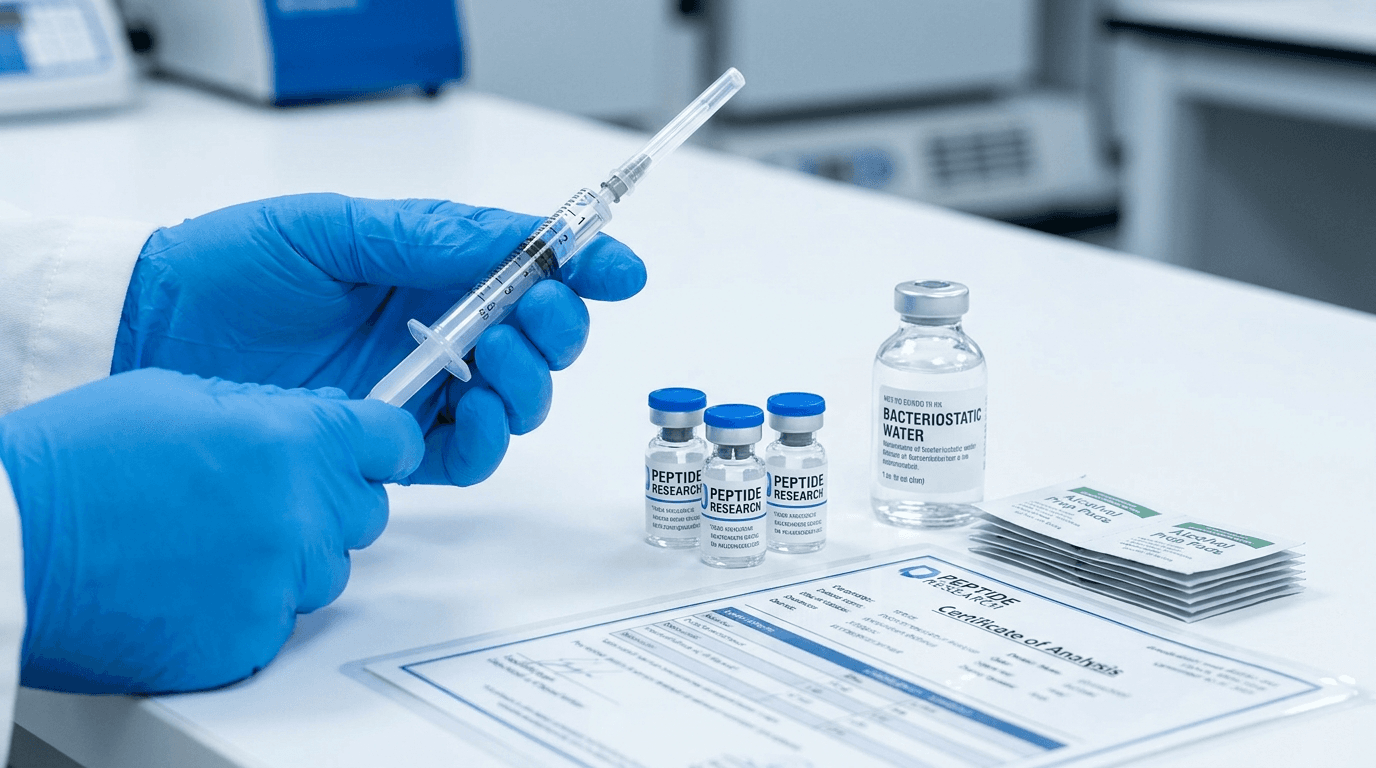
The Three Peptide Injection Routes: SC, IM, and Intranasal
The most fundamental variable in any peptide research protocol is route of administration. SC, IM, and intranasal delivery have meaningfully different pharmacokinetic profiles — not just in absorption speed but in peak concentration, half-life behavior, and tissue distribution. Choosing the wrong route for a given research question can compromise the entire study design. [2][11]
1. Subcutaneous (SC) Injection
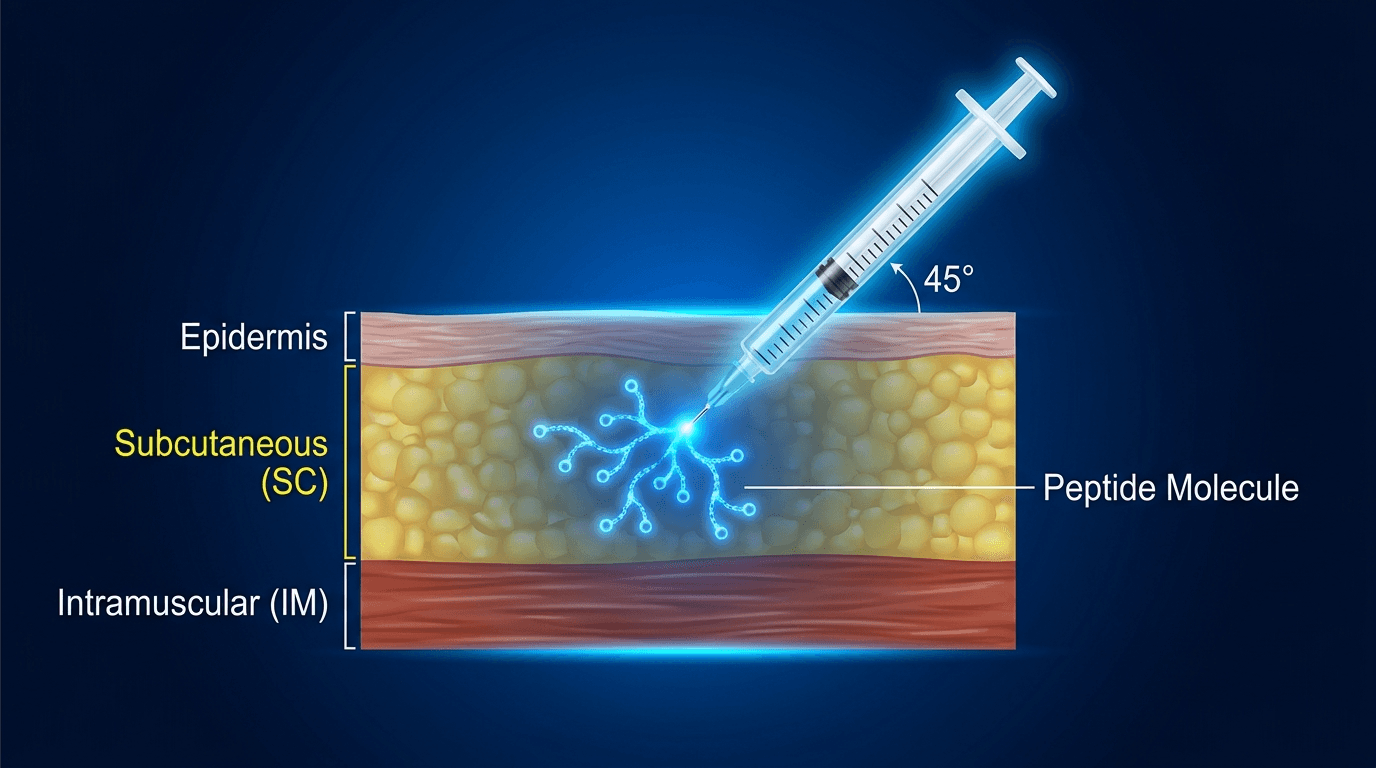
Subcutaneous administration delivers the peptide into the adipose (fat) tissue directly beneath the skin, using a short (5/16" or 8mm) insulin-type needle inserted at a 45-degree angle. SC is the most commonly used route for research peptides because it produces sustained, predictable absorption through the lymphatic capillaries that richly supply the subcutaneous layer — particularly useful for peptides that need sustained tissue exposure rather than a sharp peak.
SC pharmacokinetics for most research peptides:
- Onset: 15–30 minutes post-injection
- Peak plasma concentration (Tmax): 30–90 minutes
- Duration of action: 2–6 hours (compound-dependent)
- Bioavailability vs IV: 60–95% for most small peptides
SC is the standard route for BPC-157, TB-500, Ipamorelin, CJC-1295, GHK-Cu injectable, and most GH secretagogues. The injection is low-pain, produces minimal scar tissue with proper site rotation, and does not require the skilled technique that IV administration demands. [3][4]
2. Intramuscular (IM) Injection
Intramuscular administration delivers the peptide directly into a muscle belly using a longer needle (typically 23–25 gauge, 1"–1.5") angled perpendicular (90 degrees) to the skin. IM produces faster absorption than SC due to the dense vascularity of muscle tissue but tends to produce sharper peaks with steeper drop-offs — pharmacologically appropriate for compounds where peak concentration is the desired pharmacodynamic driver.
TB-500 is sometimes administered IM by researchers who prefer faster systemic distribution. BPC-157 has been studied via both SC and IM routes in preclinical models with similar efficacy across routes. IM is more painful than SC, carries a slightly higher risk of inadvertent vessel puncture, and requires greater injection site awareness to avoid nerve proximity. [8]
3. Intranasal Administration
Several research peptides are specifically designed for intranasal delivery — notably Semax and Selank (Russian neuropeptides), PT-141/Bremelanotide (also FDA-approved as Vyleesi® SC), and NAD+ nasal spray formulations from VANDL Labs. Intranasal administration bypasses first-pass hepatic metabolism and, for peptides small enough, enables faster CNS delivery via olfactory nerve transport — bypassing the blood-brain barrier for CNS-targeted research applications. [7]
Not all peptides are suitable for intranasal use — bioavailability via this route is highly molecule-dependent and generally lower than SC for peptides not specifically formulated for nasal mucosal absorption. Research-grade nasal spray formats require specific excipients to protect peptide integrity against enzymatic degradation at the mucosal surface.
Peptide Injection Route Comparison: Bioavailability, Speed & Ease of Administration
Route Comparison: Relative Bioavailability vs. Onset Speed vs. Ease of Administration
Bioavailability values are approximate averages for typical small research peptides (10–30 amino acids, aqueous formulation). Intranasal bioavailability varies significantly by compound and formulation — values shown reflect compounds specifically formulated for nasal delivery. Ease of administration score reflects technique complexity, not subjective preference. Adapted from published SC/IM pharmacokinetic literature for small peptide therapeutics.
Peptide Injection Equipment Checklist: What You Actually Need
Contamination and concentration errors are the two most common causes of failed or uninterpretable peptide research protocols — and both are almost entirely preventable with the correct equipment and technique. The table below covers every item required for subcutaneous research peptide administration. [1]
| Item | Specification | Purpose | Critical Notes |
|---|---|---|---|
| Insulin syringes | 1 mL, 27–31 gauge, 5/16" (8mm) needle | SC injection delivery vehicle | U-100 markings (100 IU = 1 mL) simplify dose math; use one new syringe per injection — never reuse |
| Bacteriostatic water (BW) | USP-grade, 0.9% benzyl alcohol-preserved | Reconstitution diluent | Preserves peptide solution for 28–30 days refrigerated; sterile water (no BZA) only for immediate single-use |
| Alcohol prep swabs | 70% isopropyl alcohol, individually wrapped | Vial septum and skin sterilization | Wipe rubber septum before every needle insertion; wipe injection site and allow to fully air-dry (30 sec) |
| Lyophilized peptide vials | Third-party verified ≥98% HPLC purity, COA-confirmed | Research compound source | Confirm COA batch number matches vial label; store lyophilized at 2–8°C or –20°C per compound spec |
| Sharps disposal container | FDA-cleared puncture-resistant biohazard container | Safe needle disposal | Never dispose of needles in regular trash; mail-back programs available nationally (Sharps Compliance Inc., etc.) |
| Clean work surface | 70% IPA-wiped hard surface or disposable clean pad | Contamination-free preparation area | Never prepare on fabric, carpet, or absorbent surfaces that harbor bacteria and cannot be sterilized |
| Precision digital scale (optional) | 0.001g resolution minimum | Vial content verification | Useful for verifying lyophilized vial weight against labeled peptide content before reconstitution |
How to Reconstitute Research Peptides: Step-by-Step Protocol
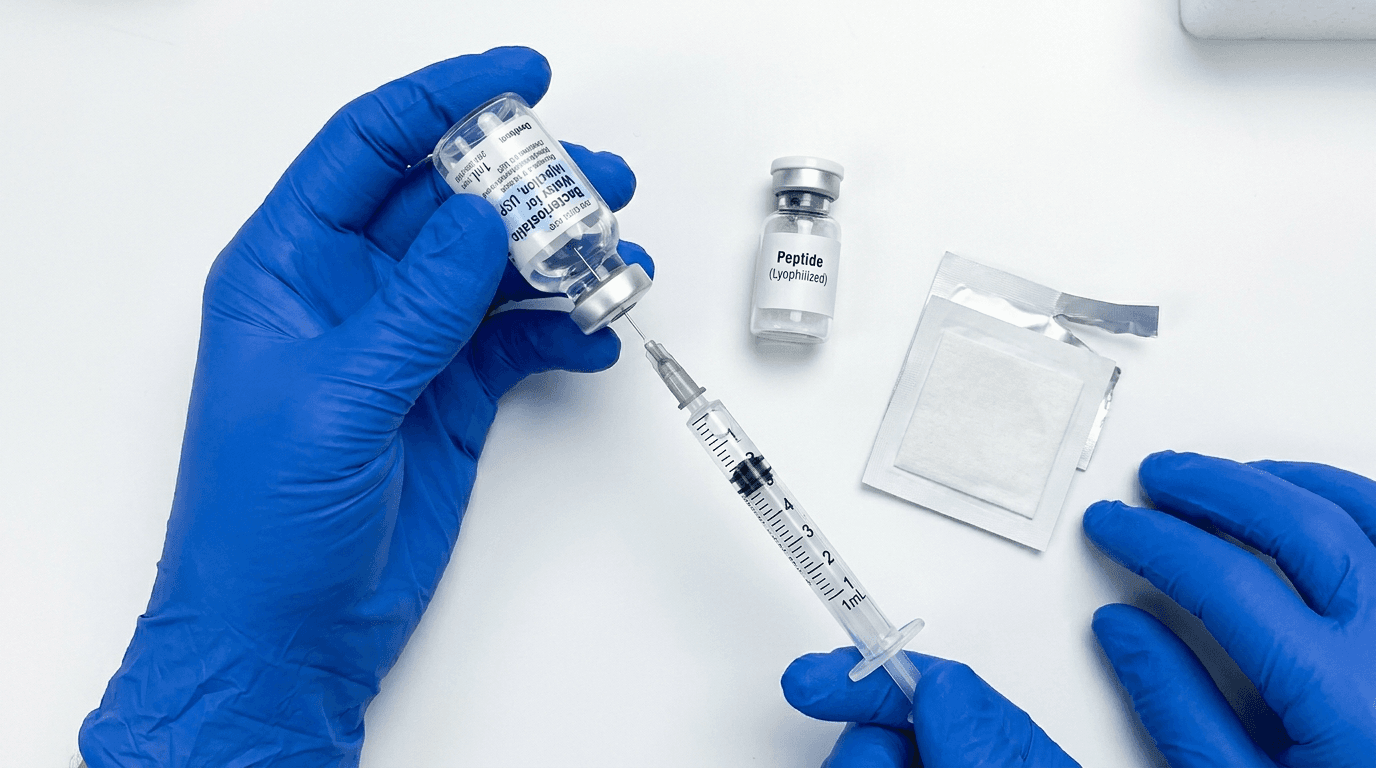
Reconstitution is the process of dissolving a lyophilized (freeze-dried) peptide in bacteriostatic water to create an injectable solution. It is the most technically critical step in any peptide research workflow — concentration errors made at this stage propagate through every subsequent dose and can invalidate the entire protocol. The steps below apply to all standard research peptides: BPC-157, TB-500, Ipamorelin, CJC-1295, Sermorelin, GHK-Cu, PT-141, Epithalon, and others. [5][6]
Step 1: Verify vial identity and condition
Confirm the peptide vial label, batch number, and COA match before opening. The lyophilized cake should be white, dry, and intact — not yellowed, cracked into uneven pieces, or darkened, which can indicate heat damage or oxidation. Confirm your bacteriostatic water vial is within its labeled expiration date and has not been accessed so many times that seal integrity is compromised (most BW vials tolerate 40–50 needle insertions).
Step 2: Calculate your target concentration
Decide what final concentration (in mg/mL) you want in the reconstituted solution. Your target concentration determines how many IU on a U-100 insulin syringe equals your intended per-injection dose. The PeptideWiki Peptide Reconstitution Calculator automates this math — enter vial size (mg), volume of BW to add (mL), and desired dose (mcg or mg), and it returns your exact syringe draw in IU. Common targets are shown in the reference table below.
Step 3: Sterilize both vial septa
Wipe the rubber septum (stopper top) of both the peptide vial and the bacteriostatic water vial with separate alcohol prep swabs. Allow to fully air-dry before inserting any needle — 70% IPA is bactericidal but must be completely dry to avoid introducing isopropyl alcohol into the peptide solution, which can denature the peptide.
Step 4: Draw the calculated volume of BW
Insert a sterile insulin syringe into the bacteriostatic water vial and draw the precise calculated BW volume (e.g., 2 mL for a 1 mg BPC-157 vial when targeting 500 mcg/mL). Pull the BW slowly and ensure no air bubbles are trapped in the syringe before proceeding to Step 5.
Step 5: Add BW slowly to the peptide vial
Insert the needle into the peptide vial's septum and slowly drip the BW down the inside glass wall of the vial — not directly onto the lyophilized cake. This gentle sidewall hydration prevents mechanical shear that can damage the peptide's tertiary structure. Do not inject BW forcefully or shake the vial. Gently swirl (not shake) in a circular motion until the powder is completely dissolved — the solution should be clear and colorless. If cloudiness persists after 2 minutes of gentle swirling, discard the vial. [1]
Step 6: Label the reconstituted vial and refrigerate
Immediately label with: compound name, concentration (mg/mL), reconstitution date, and expiration date (28 days at 2–8°C for BW-reconstituted solutions; up to 3 months at –20°C if frozen in single-use aliquots). Store in a dark environment to minimize photo-oxidative degradation — opaque storage cases or a foil wrap are adequate. Never freeze and thaw a reconstituted vial repeatedly — aliquot into single-dose portions before freezing if long-term storage is needed.
| Peptide | Vial Size | BW to Add | Concentration | Typical Dose | Syringe Draw (U-100) | Refrigerated Stability |
|---|---|---|---|---|---|---|
| BPC-157 | 5 mg | 5 mL | 1 mg/mL (1,000 mcg/mL) | 250–500 mcg | 25–50 IU | 28 days |
| BPC-157 | 5 mg | 10 mL | 0.5 mg/mL (500 mcg/mL) | 250–500 mcg | 50–100 IU | 28 days |
| TB-500 | 5 mg | 2.5 mL | 2 mg/mL | 2.5 mg (weekly loading) | 125 IU | 28 days |
| TB-500 | 5 mg | 5 mL | 1 mg/mL | 2.5 mg (weekly loading) | 250 IU | 28 days |
| Ipamorelin | 5 mg | 5 mL | 1 mg/mL | 200–300 mcg | 20–30 IU | 28 days |
| CJC-1295 DAC | 2 mg | 2 mL | 1 mg/mL | 1–2 mg (once weekly) | 100–200 IU | 28 days |
| CJC-1295 no DAC | 2 mg | 4 mL | 0.5 mg/mL | 100–200 mcg | 20–40 IU | 28 days |
| Sermorelin | 15 mg | 7.5 mL | 2 mg/mL | 200–500 mcg | 10–25 IU | 28 days |
| GHK-Cu | 50 mg | 25 mL | 2 mg/mL | 1–2 mg | 50–100 IU | 14 days |
| PT-141 | 10 mg | 5 mL | 2 mg/mL | 1–2 mg (as needed) | 50–100 IU | 28 days |
| Epithalon | 10 mg | 5 mL | 2 mg/mL | 5–10 mg (per cycle day) | 250–500 IU | 28 days |
Subcutaneous Injection Sites & Rotation Protocol
Site rotation is not optional — it is a fundamental requirement for maintaining subcutaneous tissue health across multi-week research protocols. Repeated injection into the same anatomical site causes lipodystrophy (localized fat atrophy or hypertrophy) and scar tissue accumulation that produces inconsistent absorption as tissue architecture degrades. Proper rotation maintains predictable pharmacokinetics throughout the full protocol. [2][4]
Primary SC injection sites for research peptides:
- Abdomen: Most commonly used. Target the area 2–4 inches lateral from the navel, avoiding the 1-inch perimeter directly around the navel and the abdominal midline. The abdomen provides the largest available SC surface area (8–10 distinct rotation sites), consistent fat depth across body types, and low nerve density in the lateral quadrants.
- Lateral thigh: The outer third of the thigh, midpoint between hip and knee. Good secondary rotation site with ample SC fat; absorption is slightly slower than abdominal sites in lean subjects due to lower blood flow. Straightforward for self-injection.
- Lateral upper arm: The outer surface of the upper arm, 3–4 inches below the shoulder. Useful third site in a rotation cycle; requires contortion or assistance for self-injection in some subjects.
- Flank (lateral waist): The soft tissue of the lateral lower torso. Good option for subjects with sufficient adipose depth; useful as a fourth site in extended multi-compound protocols.
Subcutaneous Injection Technique (Step-by-Step):
- Wipe the injection site with an alcohol swab and allow it to fully air-dry (minimum 30 seconds).
- Gently pinch 1–2 inches of subcutaneous tissue between thumb and index finger to elevate a skin fold away from underlying muscle.
- Insert the needle at a 45° angle into the raised skin fold in a smooth, decisive motion — hesitating at the skin surface increases discomfort.
- Release the skin pinch after the needle is fully inserted.
- Depress the plunger slowly and steadily. Aspiration before injection is not required or recommended for SC injections.
- Withdraw the needle at the same angle and apply gentle pressure with a clean swab for 5–10 seconds — do not rub, which can cause peptide leakage from the injection depot.
- Immediately place the used needle in a designated sharps disposal container.
- Log the injection site in your protocol record and advance to the next rotation site.
Minimum site rotation interval: 7 days for a 3+ site rotation; 14 days minimum if only 2 primary sites are available. Never inject into a site that shows residual induration, redness, or nodularity from a prior injection — allow complete tissue resolution before returning. [4]
| Peptide | Category | Typical Research Dose | Frequency | Route | Timing Notes | Standard Protocol Length |
|---|---|---|---|---|---|---|
| BPC-157 | Healing / Recovery | 250–500 mcg | Once or twice daily | SC (systemic) or oral (GI-local) | No food timing requirement for SC; oral targets GI mucosa specifically | 4–12 weeks |
| TB-500 | Healing / Recovery | 2.5–5 mg (loading); 2–2.5 mg (maintenance) | Twice weekly (load); once weekly (maint.) | SC or IM | Often stacked with BPC-157 (Wolverine Stack); IM used for faster systemic distribution | 4–8 wk load → maintenance |
| Ipamorelin | Growth Hormone | 200–300 mcg | 2–3× daily | SC | Empty stomach or 2h post-meal for maximum GH pulse; pre-sleep dose exploits nocturnal GH peak | 12–24 weeks |
| CJC-1295 DAC | Growth Hormone | 1–2 mg | Once weekly | SC | Long half-life (5–7 days via albumin binding); produces sustained GH bleed rather than pulsatile pattern | 12–24 weeks |
| CJC-1295 (no DAC) | Growth Hormone | 100–200 mcg | 2–3× daily | SC | Pulsatile profile; typically stacked with Ipamorelin at same injection time for synergistic GH release | 12–24 weeks |
| Sermorelin | Growth Hormone | 200–500 mcg | Once daily | SC | Best pre-sleep when natural GH pulse is highest; empty stomach strongly preferred | 12–24 weeks |
| GHK-Cu | Anti-Aging / Skin | 1–2 mg (SC); 0.1–2% (topical) | 3–5× weekly (SC); daily (topical) | SC or topical | Topical application for dermal and hair follicle targets; SC for systemic gene expression effects | 8–12 weeks |
| PT-141 | Sexual Health | 0.75–1.75 mg | As needed (pre-event) | SC | Onset 45–90 min; FDA-approved Vyleesi dose is 1.75 mg SC; research protocols typically use 1 mg | As needed |
| Epithalon | Anti-Aging / Longevity | 5–10 mg | Daily × 10 consecutive days | SC | Khavinson protocol: discrete 10-day cycles with 1–3 month intervals; not chronic daily administration | Cycle-based (10d on / 1–3mo off) |
Sourcing Injection-Grade Research Peptides in 2026
The pharmacokinetics described throughout this guide assume research-grade peptides at labeled concentration and verified purity. A peptide marketed as "BPC-157 5mg" that is actually 70% pure, incorrectly labeled in concentration, or contaminated with bacterial endotoxins will not produce the pharmacological profile the research protocol assumes — and any results generated are uninterpretable. Independent purity testing across the research peptide market has documented significant quality variation between vendors. [3][9]
Minimum quality standard for injection-grade research peptides:
- HPLC purity ≥ 98% — confirmed by chromatogram, not marketing language
- Mass spectrometry (LCMS or ESI-MS) molecular weight confirmation — verifies identity, not just purity percentage
- Third-party Certificate of Analysis — testing performed by a named independent accredited laboratory, not in-house QC
- Endotoxin (LAL) testing — critical for injectable compounds; endotoxin contamination causes local inflammatory responses that confound healing and immune-related research endpoints
Red flags: no linked COA, only in-house testing, implausibly low prices (quality synthesis and third-party testing carry real costs), missing molecular weight confirmation, and proprietary labeling that obscures batch-level traceability.
Verified Research Peptide Suppliers — 2026 Editor Picks for Injection-Grade Quality
Peptide Technologies (PeptideTech)
Gold Standard COAsBPC-157 (5mg), TB-500 (5mg), Ipamorelin (5mg), CJC-1295, GHK-Cu — 55+ compounds
$24–$114 per vial depending on compound and quantity
Daily price-matching guarantee against comparable USA-manufactured peptides. Full HPLC + mass spectrometry verification protocol. Batch-level COA with named independent testing laboratory. Cold-chain shipping standard on all orders. Widest selection including rare bioregulators and GH secretagogues.
VANDL Labs
Premium FormatsGROW Peptide Blend, Kisspeptin 10mg, GHK-Cu Glow Blend, NAD+ Spray, Semax Nasal Spray — 42 compounds
Competitive mid-market; specialty nasal and topical formats at premium
Best source for intranasal and topical peptide formats — Semax nasal spray, GHK-Cu topical blends, NAD+ nasal spray, and ready-to-use combination formulas not available elsewhere. Pharmaceutical-grade synthesis. Full purity and identity testing disclosure.
ModifiedAminos
Best ValueBPC-157, TB-500, Sermorelin, Ipamorelin, CJC-1295 DAC, PT-141 — specialty modified sequences
Competitive pricing with bulk discounts for multi-vial orders
Specialty focus on modified amino acid sequences and non-standard GHRH analogues. Strong CJC-1295 (DAC and no-DAC) and GHRP selection. Accessible pricing for volume research programs and multi-compound stacks.
AminoUSA
Editor's PickBPC-157, GHK-Cu, Epithalon, Thymalin, Thymosin Alpha-1, MOTS-c — longevity-focused catalog
Premium pricing reflecting USA-based synthesis and quality oversight
USA-synthesized compounds with domestic quality oversight — best source in North America for longevity and Russian bioregulator compounds including Epithalon, Thymalin, and Thymosin Alpha-1. LCMS molecular weight confirmation included standard.
Frequently Asked Questions: Peptide Injections
What gauge needle is best for subcutaneous peptide injections?
29–31 gauge, 5/16" (8mm) length insulin needles are the standard for subcutaneous research peptide injections. The finer gauge minimizes tissue trauma and injection discomfort — 31 gauge is nearly painless for lean-tissue abdominal SC injections. 27 gauge needles are acceptable but noticeably less comfortable. Never use needles larger (lower gauge number) than 25 gauge for SC peptide injections: the larger bore is unnecessary for aqueous peptide solutions and increases tissue trauma and scar risk over multi-week protocols.
Can I use regular sterile water instead of bacteriostatic water?
For immediate single-use reconstitution, USP Sterile Water for Injection is acceptable — but the entire reconstituted solution must be used within the same session and any remainder discarded. Bacteriostatic water (BW) contains 0.9% benzyl alcohol as a preservative that inhibits bacterial growth, allowing the reconstituted peptide to be safely stored refrigerated for 28–30 days. For any multi-day or multi-week research protocol, bacteriostatic water is the correct choice. Never use tap water, saline solution, or distilled water as reconstitution diluents.
How long does a reconstituted peptide solution last?
With bacteriostatic water at 2–8°C (standard household refrigerator), most reconstituted research peptides are stable for 28–30 days. At –20°C (freezer), stability extends to 3–6 months for most peptides, though freeze-thaw cycles should be minimized — aliquot into single-dose volumes before freezing if long-term storage is planned. GHK-Cu has a shorter stability window (~14 days refrigerated) due to copper chelation chemistry. BPC-157 maintains solution stability well throughout a 28-day refrigerated window per available stability data and community protocol reports.
What should I do if I notice bubbles in my syringe?
Small air bubbles trapped in a subcutaneous injection syringe are harmless — unlike intravenous injections where air embolism is a concern, SC administration carries no meaningful clinical risk from small trapped air volumes. For research dose accuracy, bubbles do affect volume precision: after drawing your dose, gently tap the syringe barrel to collect bubbles at the top, then slowly advance the plunger just until the bubble exits the needle tip. This is a precision practice, not a safety requirement, for SC peptide research injections.
Why is there a small lump at my injection site after injecting?
A small, transient subcutaneous lump (wheal) is normal and reflects the injected bolus temporarily displacing subcutaneous tissue before it absorbs into the local lymphatic and capillary network. This resolves within 15–30 minutes in most cases. Mild localized itching can occur from the bacteriostatic water's benzyl alcohol content or a minimal local mast cell response — common and not clinically significant unless it persists more than 1–2 hours or spreads. Persistent nodules lasting beyond 48 hours at the same injection site typically indicate inadequate site rotation causing early lipodystrophy — adjust your rotation schedule immediately.
What is the difference between subcutaneous and oral BPC-157?
This depends entirely on your research target. Oral BPC-157 (swallowed capsules or dissolved in water) targets GI tract tissue specifically — BPC-157 is naturally gastric-derived and has documented protective effects on GI mucosa, leaky gut, IBD, and GLP-1-associated GI side effects when delivered via the oral route. The peptide does not need systemic absorption to produce these local GI effects. Subcutaneous injection delivers BPC-157 systemically, making it available to musculoskeletal tissues, tendons, ligaments, and peripheral nerves where its angiogenic and tissue-repair effects are most clinically relevant. The two routes are not interchangeable — route selection should follow the tissue target. See: <a href="/blog/oral-bpc-157-vs-injectable-complete-guide-2026">Oral BPC-157 vs. Injectable: The Complete Comparison</a>.
Mastering Peptide Injection Technique: The Foundation of Interpretable Research
Peptide injection technique is not the most intellectually stimulating part of research peptide science. The receptor pharmacology of BPC-157 at angiogenesis sites, the GH pulse dynamics of Ipamorelin in aging subjects, the telomerase activation hypothesis for Epithalon — all of that is more compelling. But technique is where research protocols succeed or fail in practice, and no amount of sophisticated study design compensates for a mis-calculated reconstitution concentration, a contaminated vial from skipped aseptic steps, or gradual absorption inconsistency from inadequate site rotation.
The fundamentals in this guide are consistent across every research peptide currently in common use:
- Correct reconstitution concentration — use the reference table above or the PeptideWiki calculator; always double-check the math before the first injection of a new vial
- Verified purity — third-party HPLC ≥98%, LCMS identity confirmed, named testing laboratory on the COA
- Strict aseptic technique — new needle per injection, fully dried alcohol swabs, clean preparation surface
- Systematic site rotation — minimum 7-day interval between returns to any given injection site, with written or logged tracking
Get these right, and the pharmacology has a chance to speak for itself. Get them wrong, and even the most compelling peptide compound in the world produces noise instead of signal.
Continue exploring on PeptideWiki:
Sources & References
- 1.Zhu G, Mallery SR, Schwendeman SP.. "Stabilization of Proteins Encapsulated in Injectable Poly(Lactide-co-Glycolide)." — Nature Biotechnology, 2000. DOI: 10.1038/71858.View source
- 2.Owens DR, Zinman B, Bolli G.. "Alternative Routes of Insulin Delivery." — Diabetic Medicine, 2003. DOI: 10.1046/j.1464-5491.2003.00894.x.View source
- 3.Sikirić PC, Seiwerth S, Rucman R, et al.. "Brain-gut Axis and Pentadecapeptide BPC 157: Theoretical and Practical Implications." — Current Neuropharmacology, 2016. DOI: 10.2174/1570159X13666160512100535.View source
- 4.Gobburu JVS, Agerso H, Jusko WJ, Ynddal L.. "Pharmacokinetic-Pharmacodynamic Modeling of Ipamorelin, a Growth Hormone Releasing Peptide, in Human Volunteers." — Pharmaceutical Research, 1999. DOI: 10.1023/a:1018955120921.View source
- 5.ClinicalTrials.gov — PharmaCotherapia d.o.o.. "PCO-02 (BPC 157) Phase I Safety and Pharmacokinetics Study (NCT02637284)" — ClinicalTrials.gov, 2015.View source
- 6.Lee MH, Burgess T.. "Intravenous Administration of BPC-157: A Pilot Safety Evaluation in Healthy Adult Volunteers." — Alternative Therapies in Health and Medicine, 2025.View source
- 7.Walker RF.. "Sermorelin: A Better Alternative to Human Growth Hormone?" — Clinical Interventions in Aging, 2006. DOI: 10.2147/ciia.2006.1.4.307.View source
- 8.Goldstein AL, Hannappel E, Kleinman HK.. "Thymosin β4: Actin-Sequestering Protein Moonlights to Repair Injured Tissues." — Trends in Molecular Medicine, 2005. DOI: 10.1016/j.molmed.2005.06.005.View source
- 9.Pickart L, Margolina A.. "Regenerative and Protective Actions of the GHK-Cu Peptide in the Light of the New Data." — International Journal of Molecular Sciences, 2018. DOI: 10.3390/ijms19071987.View source
- 10.US FDA Pharmacy Compounding Advisory Committee (PCAC).. "PCAC Meeting Announcement: Review of Bulk Drug Substances Including BPC-157, TB-500, KPV, and MOTS-c (July 23–24, 2026)." — FDA.gov, 2026.View source
- 11.Ter Heine R, et al.. "Subcutaneous Administration as an Alternative Route for Peptide Drugs: Pharmacokinetic Considerations." — Expert Opinion on Drug Delivery, 2020. DOI: 10.1080/17425247.2021.1856730.View source