After 40, men face a convergence of hormonal shifts — declining testosterone, reduced GH pulsatility, increasing visceral fat, slower recovery — that no single intervention addresses comprehensively. This guide maps the peptide research landscape specifically for men: which compounds have the strongest evidence for testosterone support, muscle preservation, fat loss, and longevity, what the actual clinical data shows, and how to think about stacking strategies for men's health optimization in 2026.
Search volume for "peptides for men" has climbed 340% on Google over the past 18 months — and the reasons are rooted in biology, not marketing. After 40, men face a well-documented hormonal convergence that no single supplement, lifestyle intervention, or pharmaceutical addresses comprehensively: testosterone declines at approximately 1–2% per year after peak (Harman et al., JCEM 2001), growth hormone pulsatility drops by roughly 14% per decade after age 30 (Iranmanesh et al., JCEM 1991), visceral fat accumulates in direct inverse proportion to these hormonal changes, and tissue recovery slows in ways that compound over time. [1][2]
Research peptides address this convergence differently than hormonal replacement therapies. Rather than bypassing the body's own endocrine machinery, the most pharmacologically interesting compounds in this category — kisspeptin, gonadorelin, sermorelin, ipamorelin — amplify the body's existing signaling systems, preserving feedback regulation while optimizing output. This distinction matters both mechanistically and from a safety standpoint: exogenous testosterone suppresses the HPG axis and impairs fertility; kisspeptin stimulates it from the top of the hormonal hierarchy without disrupting feedback. Exogenous HGH suppresses pituitary GH production; sermorelin and ipamorelin drive pituitary GH pulses within the body's own architecture.
This guide covers the six major peptide research categories most relevant to male physiology: testosterone and hormonal support, muscle growth and body composition, metabolic health and fat loss, injury healing and recovery, anti-aging and longevity, and sexual health. For each category, we assess the human clinical evidence as of July 2026, identify compounds with the strongest research support, explain the mechanisms, and provide links to deep-dive compound guides. We close with a verified sourcing framework covering the four vendors with the most rigorous quality documentation for men's health peptide research.
Why Men's Hormonal Physiology Changes After 40 — The Research Case
The hormonal picture in aging men involves three interconnected axes, each declining on its own timeline and each contributing to the clinical changes men notice in their 40s, 50s, and beyond.
The HPG Axis (Hypothalamic-Pituitary-Gonadal): GnRH pulses from the hypothalamus decline in amplitude with age. LH and FSH output from the pituitary follows. Leydig cell testosterone synthesis in the testes decreases — partly due to reduced LH stimulation, partly due to intrinsic testicular aging. The net result: mean total testosterone in healthy men falls approximately 110 ng/dL per decade after age 40, with free testosterone falling even faster as sex hormone-binding globulin (SHBG) rises. [1]
The GH/IGF-1 Axis: Pituitary growth hormone release is pulsatile, with the largest secretory bursts occurring during slow-wave sleep. Both pulse amplitude and frequency decline progressively with age — and visceral fat accumulation, which itself increases as testosterone falls, further suppresses GH secretion through somatostatin-mediated feedback. The downstream consequence is reduced hepatic IGF-1 production, which mediates most of GH's anabolic effects on muscle and connective tissue. By age 60, mean GH secretory rates are roughly 50% of those in young adults. [2][14]
The Self-Reinforcing Feedback Loop: Lower testosterone reduces muscle protein synthesis and increases adipogenesis. Lower GH/IGF-1 further impairs muscle maintenance and slows collagen turnover. The resulting visceral fat produces inflammatory cytokines (TNF-α, IL-6) that suppress GH secretion and convert androgens to estrogen via aromatase. These loops are self-reinforcing — the metabolic drift after 40 is not simply linear hormonal decline but a system gravitating toward a lower-equilibrium state.
Conventional testosterone replacement therapy addresses the testosterone arm directly but suppresses endogenous production via HPG axis feedback and renders most men infertile. Research peptides offer an alternative framework: signal amplification rather than hormone replacement — stimulating GnRH release (gonadorelin), activating upstream kisspeptin receptors that drive GnRH pulsatility, or enhancing pituitary GH secretion (sermorelin, ipamorelin) within the body's own regulatory architecture.
Men's Key Hormones by Age Decade — % of Young-Adult Peak
Testosterone, GH Secretion & IGF-1 Decline in Men Across Age Decades (% of Peak)
Data modeled from population-level means: Harman et al. (JCEM 2001) for testosterone; Iranmanesh et al. (JCEM 1991) for GH secretory rates. Individual variation is substantial — some men in their 60s maintain testosterone typical of 40-year-olds, while others experience accelerated decline. These are age-group averages, not deterministic predictions.
Category 1: Testosterone & Hormonal Health Peptides
The most targeted way to address declining testosterone through a peptide approach is to work upstream on the HPG axis — stimulating the hypothalamic and pituitary signals that drive endogenous testosterone production rather than replacing testosterone exogenously. Two research peptides are particularly relevant here.
Kisspeptin-10 and Kisspeptin-54: Kisspeptin is an endogenous neuropeptide produced primarily by neurons in the hypothalamic arcuate nucleus (ARC). It binds the KISS1R receptor on GnRH neurons, triggering GnRH release — making it the master upstream regulator of the entire HPG axis. Dhillo et al.'s landmark 2005 paper in JCEM demonstrated that IV Kisspeptin-54 in healthy adult males produced dose-dependent increases in LH, FSH, and downstream testosterone — the first direct human evidence that this upstream pathway could be pharmacologically activated. [3] A registered Phase 1/2 trial (NCT03049163) specifically evaluated kisspeptin's effects on reproductive axis function in healthy men and men with hypothalamic hypogonadism. [4]
Kisspeptin is particularly interesting for men with secondary (functional) hypogonadism — cases where the testes retain Leydig cell function but are underdriven by insufficient hypothalamic GnRH pulsatility. Unlike TRT, kisspeptin does not suppress the HPG axis, and early human data suggests it preserves spermatogenesis and fertility. → Kisspeptin Complete Guide
Gonadorelin (GnRH): Gonadorelin is the synthetic form of gonadotropin-releasing hormone — the direct hypothalamic signal that drives LH/FSH release. In a research context, pulsatile gonadorelin administration (mimicking the body's natural 90–120-minute pulse frequency) stimulates endogenous LH and FSH, which then drives testicular testosterone synthesis and sperm production. The key pharmacological distinction: continuous GnRH administration paradoxically suppresses LH via receptor desensitization (the basis for GnRH agonist therapies used to suppress testosterone in prostate cancer). Only pulsatile dosing maintains the physiological signaling rhythm required for axis stimulation. Gonadorelin is increasingly used in clinical practice to maintain testicular function in men on TRT who want to preserve fertility. → Gonadorelin Complete Guide
Evidence reality check: Kisspeptin has clear human Phase 1/2 data for HPG axis stimulation. Gonadorelin has extensive clinical pharmacology data. However, neither compound has a completed large Phase 3 RCT demonstrating meaningful testosterone restoration specifically in men with age-related (rather than pathological) hypogonadism — the most common scenario for men over 40. The pharmacological target is well-validated; the evidence for the specific everyday application is still accumulating. [3][4]
Category 2: Muscle Growth & Body Composition Peptides for Men
Muscle mass in men peaks around age 25–30 and declines approximately 3–5% per decade after 40, with the rate accelerating after 60 in a process called sarcopenia. Testosterone and IGF-1 are the primary endogenous anabolic hormones — and several research peptides influence muscle protein synthesis, myostatin inhibition, and satellite cell activation through distinct downstream pathways.
IGF-1 LR3 (Long R3 Insulin-like Growth Factor-1): IGF-1 LR3 is a modified form of insulin-like growth factor-1 with an N-terminal extension that dramatically extends its half-life from ~20 minutes to approximately 20–30 hours by reducing binding protein affinity. IGF-1 signals through the IGF-1R receptor tyrosine kinase to activate PI3K/Akt/mTOR — one of the primary intracellular drivers of muscle protein synthesis and satellite cell differentiation. In research models, IGF-1 administration increases muscle cross-sectional area, enhances satellite cell proliferation, and accelerates post-exercise recovery. The LR3 modification makes systemic exposure more sustained than native IGF-1, which is the pharmacological rationale for its research use. → IGF-1 LR3 Complete Research Guide
Follistatin-344 (Myostatin Inhibitor): Follistatin is an endogenous glycoprotein and potent inhibitor of myostatin — the muscle growth "ceiling" that limits lean mass accumulation. Lee and McPherron's foundational 2001 PNAS paper demonstrated that follistatin overexpression in mice produced dramatic whole-body muscle hypertrophy, while myostatin gene deletion produced a similar "double-muscled" phenotype. [12] Follistatin-344 is a naturally occurring isoform with binding selectivity for myostatin and activin A. The premise for research application is mechanistically sound; the gap is human RCT data — injectable follistatin-344 lacks published controlled human trials. → Follistatin-344 Guide
GH Secretagogue Stack (Ipamorelin + CJC-1295): The most research-supported peptide approach for men's body composition combines a GHRH analogue (CJC-1295 or sermorelin) with a selective GHRP (ipamorelin). Ipamorelin activates the GHS-R1a ghrelin receptor with the highest selectivity in its class — GH pulse amplification with minimal cortisol or prolactin elevation. Combined with CJC-1295's GHRH receptor stimulation, the stack produces synergistic GH release exceeding either compound alone. Phase 2 pharmacokinetic studies have confirmed GH output enhancement; clinical body composition data in aging men is primarily derived from the sermorelin literature. → CJC-1295 + Ipamorelin Stack Guide | Ipamorelin Guide
Category 3: Fat Loss & Metabolic Peptides for Men
Visceral fat accumulation in men is driven by declining testosterone (which normally limits visceral adiposity) and declining GH/IGF-1 (which promotes lipolysis and lean mass). The peptides relevant to this category span from FDA-approved GLP-1 agonists — the most effective pharmacological fat loss tools in history — to research-stage compounds targeting GH fragment pathways and novel metabolic mechanisms.
GLP-1 Receptor Agonists — Semaglutide and Tirzepatide (FDA Approved): For men with significant obesity or metabolic syndrome, the GLP-1 class is the most evidence-backed pharmacological intervention available. The STEP 1 trial of once-weekly semaglutide (2.4 mg SC) demonstrated 14.9% mean body weight reduction at 68 weeks vs. 2.4% placebo. [7] Tirzepatide's dual GLP-1/GIP agonism in the SURMOUNT-1 trial produced 20.9% mean weight loss at 72 weeks at the 15 mg dose — the highest efficacy recorded by any pharmacological weight-loss agent and approaching outcomes of bariatric surgery in high responders. [8] Both require a prescription. Neither is available as a research chemical — any vendor claiming to sell "research-grade semaglutide" outside prescribed/clinical trial frameworks is operating outside legitimate research standards. → Semaglutide vs. Tirzepatide Comparison
AOD-9604 (HGH Fragment 176-191): AOD-9604 is a synthetic C-terminal fragment of human growth hormone spanning residues 176–191. The fragment hypothesis proposes that the lipolytic activity of full-length GH resides in this terminal region, and that isolating the fragment produces fat loss effects without the insulin-antagonizing or muscle-anabolic effects of the full GH molecule. Preclinical rodent data showed dose-dependent fat reduction with unusually good oral bioavailability for a peptide. A Phase 1/2 oral trial in overweight humans confirmed tolerability with some evidence of fat mass reduction, but Phase 3 data was insufficient for regulatory approval and the development program was discontinued. Research interest remains active given the mechanism. → AOD-9604 Research Guide
Tesamorelin for Visceral Fat: The peptide with the most direct FDA-validated evidence for visceral fat reduction in men is tesamorelin (Egrifta®), a GHRH analogue approved for HIV-associated lipodystrophy. Phase 3 trials demonstrated significant visceral fat reduction versus placebo through GH-driven lipolysis. While the FDA approval is indication-specific, the mechanism is relevant to age-related visceral adiposity, and off-label research interest is substantial. → Tesamorelin Complete Guide
5-Amino-1MQ (NNMT Inhibitor): 5-Amino-1MQ inhibits nicotinamide N-methyltransferase (NNMT), an enzyme highly expressed in adipose tissue that suppresses NAD+ biosynthesis and cellular metabolism in fat cells. By inhibiting NNMT, 5-Amino-1MQ theoretically reactivates adipocyte energy expenditure. Preclinical rodent data showed significant fat mass reduction; no registered human RCTs have been completed. → 5-Amino-1MQ Guide
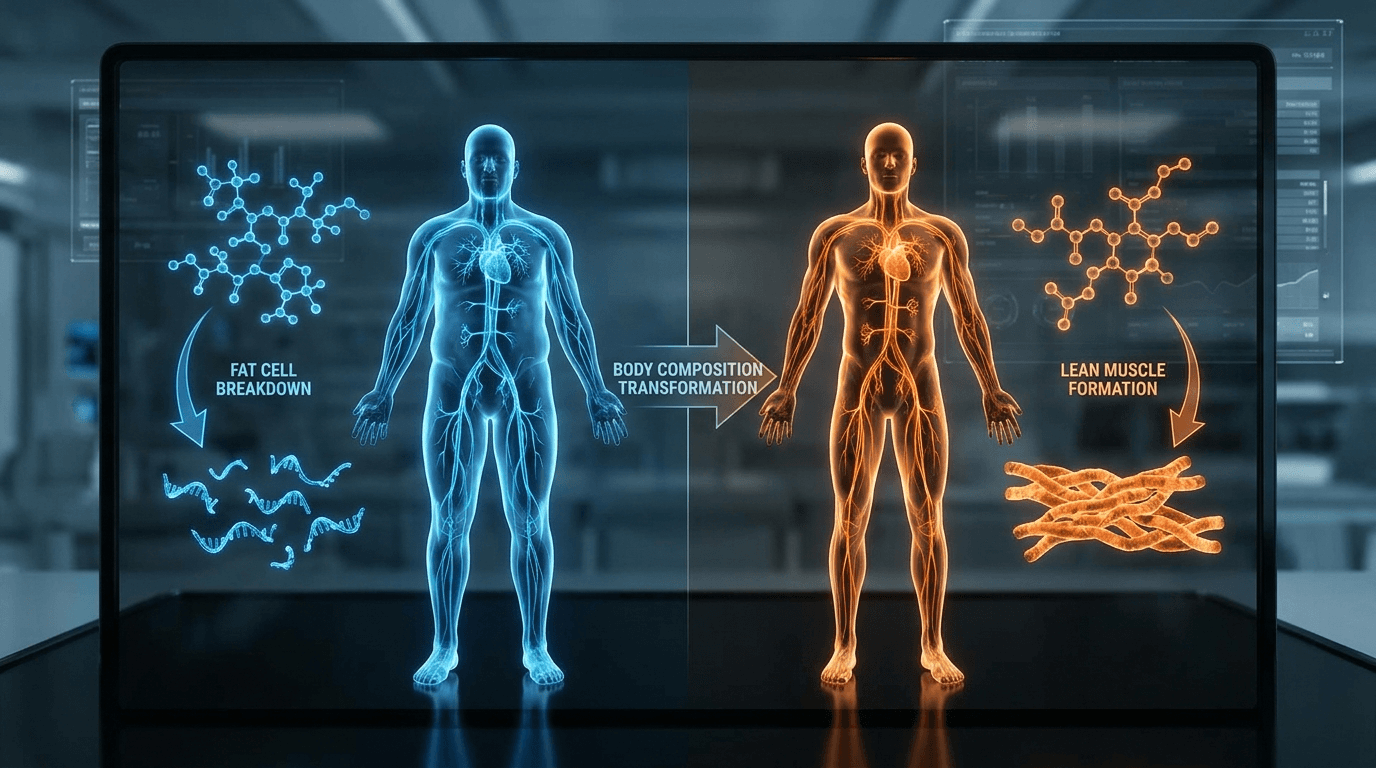
Category 4: Healing, Recovery & Joint Health — BPC-157, TB-500 & the Wolverine Stack
Connective tissue repair slows dramatically with age: tendon collagen turnover decreases, cartilage integrity declines, and the inflammatory resolution phase of healing becomes attenuated. Men who train hard or have physically demanding jobs often notice this acutely in their 40s — injuries that healed in two weeks at 25 take six to eight at 45. This is where the healing peptide category has the most compelling research story for men specifically.
BPC-157 (Body Protection Compound-157): BPC-157 is a synthetic 15-amino-acid peptide derived from a partial sequence of human gastric protein, with over 100 published preclinical studies spanning tendon, ligament, bone, muscle, cartilage, peripheral nerve, and GI tissue. Its core mechanism involves VEGF upregulation at injury sites — driving the angiogenesis that poorly-vascularized tissues like tendons require for repair. Additional mechanisms include NO/eNOS pathway modulation, FAK-paxillin signaling cascade activation for fibroblast migration, and anti-inflammatory action through NFκB suppression. [5] Human evidence is limited to a 2025 IV pilot study (n=2) confirming tolerability; the Phase 1 trial (NCT02637284) was cancelled before results were published. The July 2026 FDA PCAC meeting will determine the compounding access landscape for BPC-157. [13] → BPC-157 Complete Research Guide
TB-500 (Thymosin Beta-4 Fragment): TB-500 complements BPC-157 through a different and systemically distributed mechanism. As a synthetic fragment of thymosin beta-4, TB-500 distributes throughout the body and mobilizes CD34+ progenitor cells from bone marrow into circulation, where they home to injury sites. Its G-actin sequestration mechanism regulates cytoskeletal dynamics in migrating repair cells. Thymosin beta-4's parent molecule has Phase 2 human cardiac data (PRACTICAL trial, NCT00529243) establishing tolerability; the fragment's specific athletic recovery applications lack direct human RCT data. [6]
Together, BPC-157 and TB-500 form what the research community calls the "Wolverine Stack" — each addressing repair from opposite angles: local angiogenesis and collagen synthesis (BPC-157) combined with systemic cell mobilization (TB-500). Over 150 combined preclinical studies support their complementary mechanisms. → Full Wolverine Stack Guide
GHK-Cu for Joint Integrity: GHK-Cu's upregulation of matrix metalloproteinases (MMPs) and collagen types I and III contributes to cartilage extracellular matrix maintenance — relevant to the joint degeneration that commonly affects men in their 40s and 50s who train hard. Subcutaneous GHK-Cu is used in clinical and research settings for this application; the injectable evidence base is less extensive than the topical literature. → Peptides for Joint Pain Guide
Category 5: Anti-Aging & Longevity Peptides for Men
The longevity peptide category for men intersects directly with the hormonal optimization story. GH secretagogues like sermorelin are simultaneously anti-aging and performance compounds; GHK-Cu addresses both skin and systemic tissue aging; mitochondrial peptides address the cellular energy decline that underlies the fatigue and reduced resilience of biological aging. Understanding which compounds have the most credible evidence — and which rely primarily on theoretical extrapolation — is essential for productive research in this space.
Sermorelin: Among all research peptides in the anti-aging category for men, sermorelin has arguably the most balanced profile of human clinical evidence and long-term use precedent. FDA-approved in 1997 for pediatric GH deficiency (withdrawn from the commercial market in 2008 for commercial, not safety, reasons), sermorelin has multiple published studies showing enhanced GH pulsatility in older adults, improved slow-wave sleep quality, and favorable body composition changes over 6–12 month research periods. Walker's 2006 review in Clinical Interventions in Aging summarizes the evidence and positions sermorelin as a physiologically superior alternative to exogenous HGH for aging applications. [9] → Sermorelin vs. CJC-1295
GHK-Cu (Copper Tripeptide-1): GHK-Cu (Gly-His-Lys + Cu²⁺) is an endogenous copper-binding tripeptide that declines from ~200 ng/mL in young adults to essentially undetectable levels after age 70. Pickart and Margolina's landmark 2018 analysis documented GHK-Cu's influence over more than 4,000 human genes — covering pathways from collagen and elastin synthesis to anti-inflammatory cytokine modulation and nerve growth factor production. [10] For men, the most research-relevant applications are topical use for skin integrity (randomized trials show measurable collagen fiber density improvement at 0.2–2% concentrations), injectable use for systemic tissue repair, and scalp application for hair follicle regeneration. → GHK-Cu Complete Research Guide
Mitochondrial Peptides — SS-31, MOTS-c, Humanin: The most frontier-stage class in men's longevity research involves mitochondria-derived peptides. SS-31 (elamipretide) is a cell-permeable tetrapeptide targeting cardiolipin — a phospholipid essential for inner mitochondrial membrane integrity. By protecting cardiolipin from oxidative damage, SS-31 preserves electron transport chain efficiency and ATP production. MOTS-c is a mitochondrial-encoded peptide that in rodent studies produced exercise-like metabolic adaptations — increased glucose uptake, AMPK activation, and improved insulin sensitivity — with implications for age-related metabolic decline and its relevance to men particularly given sarcopenia. Humanin is another mitochondria-derived peptide that declines with age and has shown cytoprotective and insulin-sensitizing effects in preclinical models. → SS-31 Guide | Humanin & MOTS-c Guide
Epitalon: Epitalon is a synthetic tetrapeptide (Ala-Glu-Asp-Gly) from Vladimir Khavinson's group at the St. Petersburg Institute of Bioregulation with claimed telomerase-activating properties. The theoretical basis — stimulating the enzyme maintaining telomere length — is compelling given telomere shortening's established link to cellular senescence. Long-term rodent studies from the Khavinson group showed lifespan extension; human data from Soviet-era clinical trials is limited and not well-replicated in Western-registered studies. → Epitalon Telomere Guide
Category 6: Sexual Health Peptides for Men — PT-141 (Bremelanotide)
Erectile dysfunction affects approximately 52% of men between ages 40–70 to some degree — rising to 70% prevalence among men in their 70s according to the Massachusetts Male Aging Study, one of the largest epidemiological studies of male sexual function ever conducted. [15] While PDE5 inhibitors (sildenafil, tadalafil) address the vascular component of erectile function by enhancing nitric oxide-mediated penile smooth muscle relaxation, they do not address the central (CNS) component of sexual arousal — the neurological pathway that initiates the erectile response in the first place. This is PT-141's pharmacological niche.
PT-141 (Bremelanotide): PT-141 is a synthetic melanocortin receptor agonist derived from Melanotan II, FDA-approved as Vyleesi® for hypoactive sexual desire disorder in premenopausal women. In men, PT-141 activates MC3R and MC4R melanocortin receptors in the hypothalamus and limbic system — directly modulating the central neural circuits that govern sexual arousal and desire, not merely the vascular response downstream. Diamond et al.'s double-blind, placebo-controlled Phase 2 trial in IJIR (2004) demonstrated that intranasal PT-141 in men with mild-to-moderate erectile dysfunction produced statistically significant improvements in erectile function versus placebo — critically, including in men who had previously not responded to sildenafil. [11] The central mechanism is genuinely additive to peripheral vascular approaches, not redundant with them.
The FDA approval of bremelanotide (Vyleesi) for women establishes a human safety database for the compound class. The male indication (erectile dysfunction) remains off-label or research-stage despite Phase 2 positive data. Principal side effects include transient nausea (dose-related) and transient blood pressure elevation — making careful dose titration important in research protocols. PT-141 is of particular interest in men with psychogenic or mixed erectile dysfunction where the central arousal deficit, rather than vascular insufficiency alone, is the primary driver. → PT-141 Complete Guide
| Peptide | Primary Goal | Human Evidence Level | Key Mechanism | FDA Status | Route |
|---|---|---|---|---|---|
| Kisspeptin-10/54 | Testosterone support | ★★★ Phase 1/2 human trials | KISS1R → GnRH → LH → Testosterone | Research Use | IV / SC injection |
| Gonadorelin (GnRH) | Testosterone / fertility | ★★★ Clinical pharmacology data | Pulsatile GnRH → LH/FSH stimulus | Research Use | SC injection / Nasal |
| IGF-1 LR3 | Muscle growth / MPS | ★★ Limited PK/PD human data | IGF-1R → PI3K/Akt/mTOR → MPS | Research Use | SC / IM injection |
| Follistatin-344 | Muscle (anti-myostatin) | ★ Preclinical rodent data only | Myostatin / activin A inhibition | Research Use | SC injection |
| CJC-1295 + Ipamorelin | GH / body composition | ★★★ Phase 2 PK/PD studies | GHRH-R + GHS-R1a → GH pulse synergy | Research Use | SC injection |
| Sermorelin | GH / anti-aging | ★★★★ Multiple human studies; prior FDA approval | GHRH-R → pituitary GH pulse | Research Use (compounded) | SC injection |
| Semaglutide | Fat loss / metabolic | ★★★★★ Phase 3 STEP 1 (17K+ participants) | GLP-1R → appetite reduction / insulin | FDA Approved (Wegovy) | SC injection / Oral |
| Tirzepatide | Fat loss / metabolic | ★★★★★ Phase 3 SURMOUNT-1 (2.5K+ participants) | GLP-1R + GIPR dual agonism | FDA Approved (Zepbound) | SC injection |
| AOD-9604 | Fat loss | ★★ Phase 1/2 oral human data | GH-R C-terminal → peripheral lipolysis | Research Use | SC injection / Oral |
| BPC-157 | Healing / recovery | ★★ (human); ★★★★★ (preclinical) | VEGF / NO / FAK-paxillin / NFkB | Research Use; PCAC review July 2026 | SC / IM injection |
| TB-500 | Systemic healing / repair | ★★ Phase 2 safety (thymosin parent) | G-actin sequestration / CD34+ mobilization | Research Use; PCAC review July 2026 | SC / IM injection |
| GHK-Cu | Anti-aging / skin / connective tissue | ★★★★ (topical RCTs); ★★ (injectable) | Collagen upregulation / VEGF / 4000+ genes | GRAS (cosmetic); Research Use (injectable) | Topical / SC injection |
| PT-141 | Sexual health / libido | ★★★ Phase 2 ED trial; FDA approved (women) | MC3R/MC4R → CNS arousal circuits | FDA Approved (Vyleesi – Women) | SC injection / Intranasal |
| SS-31 (Elamipretide) | Longevity / mitochondria | ★★★ Phase 2 clinical trials (cardiac/renal) | Cardiolipin protection → mitochondrial ETC efficiency | Research Use | SC injection |
| MOTS-c | Metabolic / exercise mimetic | ★★ Human PK data; preclinical metabolic | AMPK activation / nuclear signaling | Research Use | SC injection |
Sourcing Research Peptides for Men's Health: Quality Standards That Matter
The research peptide market has a well-documented quality consistency problem. Independent mass spectrometry testing has repeatedly identified purity discrepancies, incorrect concentrations, and in some cases entirely wrong compounds when sampling vendors without rigorous third-party verification. For men using peptides in structured research protocols, compound identity and purity are not optional — they determine whether data is meaningful and results are interpretable.
The minimum acceptable quality standard for 2026:
- HPLC purity ≥98% verified by a named independent accredited laboratory (not in-house QC)
- ESI-MS or LCMS mass spectrometry confirmation — verifies the compound is the correct molecule, not just a pure contaminant
- Batch-level certificate of analysis (COA) specific to the lot you receive, not a generic template
- Endotoxin testing for any compound intended for injection — bacterial endotoxins cause inflammatory responses that confound research results and introduce systemic risk
- Cold-chain shipping — lyophilized (freeze-dried) peptides are stable at ambient temperature for transit; liquid-form products require refrigerated shipping
Red flags indicating inadequate quality control: vendors without linked COAs on product pages, implausibly low prices (synthesis and third-party testing have real costs), "in-house testing only" disclosures, and vague purity claims without percentage figures or laboratory identification.
Verified Research Peptide Suppliers for Men's Health Research — 2026 Picks
PeptideTech (peptidetech.is)
Gold Standard COAsKisspeptin-10, Gonadorelin, Ipamorelin, CJC-1295, BPC-157, TB-500, GHK-Cu, PT-141, Sermorelin, IGF-1 LR3 + 50 more
$24–$114 per vial depending on compound and quantity
Most comprehensive catalog for men's health peptide research. Covers all six categories in this guide — kisspeptin and gonadorelin for HPG axis support through PT-141, sermorelin, mitochondrial peptides, and healing compounds. Daily price-match guarantee; cold-chain shipping standard; transparent batch-level COA with independent lab identification.
VANDL Labs
Premium BlendsGROW Peptide Blend, Kisspeptin 10mg, NAD+ Spray, GHK-Cu Glow Blend, GLP-1S, Cagrilintide, 42+ compounds
Competitive mid-market; bulk discounts available
Unique compound formats for men's research including NAD+ Spray (convenient nasal delivery) and proprietary GROW Peptide Blend combining multiple anabolic signals. Excellent for kisspeptin (10mg vials) and GLP-1 analogue research. Pharmaceutical-grade synthesis equipment with complete purity and identity disclosure.
ModifiedAminos
Best Value GH StackBPC-157, TB-500, Sermorelin, Ipamorelin, CJC-1295 DAC, PT-141, GHRP-2, GHRP-6, and specialty compounds
Competitive pricing with bulk discounts available
Strong catalog for men researching the GH secretagogue stack (CJC-1295 + ipamorelin, GHRP-2, GHRP-6) and the Wolverine healing stack (BPC-157, TB-500). Specialty focus on modified and non-standard amino acid sequences. Accessible pricing for longer research protocols requiring regular replenishment.
AminoUSA
Best for Longevity StackBPC-157, GHK-Cu, Epitalon, Thymalin, SS-31, MOTS-c, Humanin, and longevity-focused compounds
Premium pricing reflecting USA-based synthesis
Best selection for men focused on longevity and anti-aging protocols. Epitalon, thymalin, SS-31, MOTS-c, humanin, and GHK-Cu are all available with LCMS molecular weight confirmation. USA-based synthesis with domestic quality oversight. Premium pricing reflects domestic manufacturing costs and documentation standards.
Frequently Asked Questions: Peptides for Men
What are the best peptides for men over 40?
The answer depends on which of the overlapping hormonal challenges you're addressing in research. For testosterone and HPG axis support: kisspeptin-10 or gonadorelin. For GH and body composition: sermorelin or the CJC-1295 + ipamorelin stack, with 12–24 week evaluation windows. For healing and recovery from intense training: BPC-157 and/or TB-500 (the Wolverine Stack). For fat loss: FDA-approved semaglutide or tirzepatide have the strongest evidence by a wide margin; research-stage options include AOD-9604 and HGH fragment 176-191. For anti-aging and longevity: GHK-Cu (topical and injectable), sermorelin for GH optimization, and mitochondrial peptides (SS-31, MOTS-c). Most researchers over 40 use compounds across multiple categories rather than a single peptide — the complementary mechanisms support combination approaches.
Can peptides increase testosterone without TRT?
Research peptides that work upstream on the HPG axis — kisspeptin and gonadorelin — can stimulate endogenous testosterone production without the HPG axis suppression caused by exogenous testosterone. Kisspeptin-54 demonstrated statistically significant LH, FSH, and testosterone elevation in human Phase 1/2 trials (Dhillo et al. 2005; NCT03049163). Pulsatile gonadorelin maintains LH drive to the testes and is used clinically in TRT-adjacent settings to preserve testicular function and fertility. The key limitation: the magnitude of testosterone increase from peptide stimulation alone is typically modest compared to direct testosterone replacement — particularly in men with primary hypogonadism (testicular failure) where the problem is the testes themselves, not the signaling cascade. The peptide approach works best when testes retain functional Leydig cells but are underdriven by insufficient LH stimulus from above.
What is the Wolverine Stack and why do so many men use it?
The Wolverine Stack is the combination of BPC-157 + TB-500, named for the fictional rapid healing ability. It's popular with men who train intensely or have accumulated soft tissue injuries because the two peptides target repair through complementary mechanisms: BPC-157 concentrates at injury sites and drives local angiogenesis and collagen synthesis; TB-500 distributes systemically and mobilizes bone marrow-derived repair cells throughout the body. Together they hit injury sites with both local vascular supply and systemic cell mobilization simultaneously. Over 150 combined preclinical studies support the mechanisms in animal models. Human evidence remains limited as of 2026 — the most recent data is a 2025 IV safety pilot (n=2). Full guide: /blog/wolverine-stack-bpc-157-tb-500-healing-peptide-guide-2026
Do peptides affect testosterone in men who are already on TRT?
It depends on the compound. GH secretagogues (sermorelin, ipamorelin, CJC-1295) do not directly affect the HPG axis and are compatible with TRT — they optimize the GH/IGF-1 axis, which TRT does not address, and are frequently used alongside TRT in anti-aging and performance research contexts. Kisspeptin and gonadorelin are primarily relevant to men not on TRT or to men who want to preserve HPG axis function and fertility while on TRT — some clinicians use gonadorelin concurrently with TRT specifically to prevent testicular atrophy and maintain spermatogenesis. GLP-1 agonists, BPC-157, TB-500, GHK-Cu, and mitochondrial peptides have no direct mechanism of interaction with exogenous testosterone. PT-141 works through melanocortin receptors with no HPG axis involvement. For specific TRT-adjacent protocols, research should be designed with awareness of which axes overlap and which are independent.
How long does it take for peptides to work in men?
Timelines vary substantially by compound and endpoint. GLP-1 agonists (semaglutide) produce early appetite changes within 1–2 weeks with measurable weight change at 4–8 weeks and maximum effect at 52–68 weeks. GH secretagogues (sermorelin, ipamorelin) typically require 8–12 weeks before meaningful body composition changes emerge, since GH drives IGF-1 which then drives anabolic effects on a weekly rather than daily timescale. BPC-157 in acute injury models shows accelerated healing markers within 7–14 days; chronic soft tissue applications are typically assessed at 4–12 weeks. GHK-Cu topical trials use 8–12 week windows for cosmetic skin endpoints. Kisspeptin and gonadorelin produce measurable LH/testosterone changes within hours of administration, but sustained hormonal optimization requires consistent pulsatile dosing over weeks to months. Always design evaluation windows around the compound's known mechanism timeline.
Will peptides for men show up on athletic drug tests?
Several peptide classes are explicitly prohibited by WADA (World Anti-Doping Agency). The WADA prohibited list includes: all growth hormone releasing peptides (GHRPs — ipamorelin, GHRP-2, GHRP-6, hexarelin), all growth hormone releasing factors (GHRH analogues — sermorelin, CJC-1295, tesamorelin), thymosin beta-4 and its fragments including TB-500, and GLP-1 receptor agonists in competition. BPC-157 is on WADA's monitoring list as of 2025. Kisspeptin and gonadorelin are not currently on the prohibited list but could be interpreted under "peptide hormones, growth factors, related substances" rules depending on context. PT-141 and GHK-Cu are not on the current WADA list. Athletes in tested sports must check the current WADA prohibited list directly and consult their sport's governing body before any compound use, regardless of research classification.
Building a Research Stack for Men's Health: Matching Evidence to Goals
The research peptide landscape for men is not a single category but a matrix of compounds addressing distinct biological targets across the multiple physiological changes that characterize male aging. The most effective research approach in 2026 is not to search for a single "best peptide for men" but to map specific research goals against the evidence hierarchy for each relevant category.
For testosterone and HPG axis function: kisspeptin and gonadorelin have the most mechanistically sound case for preserving endogenous production, with human Phase 1/2 data supporting upstream stimulatory effects. For muscle preservation and body composition: the GH secretagogue stack (sermorelin or CJC-1295 + ipamorelin) has the strongest research-stage human evidence, with tesamorelin offering the only FDA-validated evidence for visceral fat reduction. For fat loss: FDA-approved GLP-1 agonists (semaglutide, tirzepatide) dominate the evidence hierarchy by a significant margin over any research compound. For injury recovery: BPC-157 and TB-500 have the most extensive preclinical evidence of any healing compounds, with the acknowledged gap that human RCT data remains limited. For longevity and anti-aging: GHK-Cu (especially topical), mitochondrial peptides (SS-31, MOTS-c), and sermorelin for GH optimization represent the compounds with the best evidence-to-mechanism ratio in 2026.
For researchers seeking verified, high-purity compounds across these categories, the four vendor recommendations above have been editorially selected based on third-party COA documentation standards, HPLC and mass spectrometry verification, and catalog breadth covering the specific compounds most relevant to male physiology.
Explore the individual compound guides on PeptideWiki:
Sources & References
- 1.Harman SM, Metter EJ, Tobin JD, Pearson J, Blackman MR.. "Longitudinal Effects of Aging on Serum Total and Free Testosterone Levels in Healthy Men." — Journal of Clinical Endocrinology & Metabolism, 2001. DOI: 10.1210/jcem.86.2.7219.View source
- 2.Iranmanesh A, Lizarralde G, Veldhuis JD.. "Age and Relative Adiposity Are Specific Negative Determinants of the Frequency and Amplitude of Growth Hormone Secretory Bursts and the Half-Life of Endogenous GH in Healthy Men." — Journal of Clinical Endocrinology & Metabolism, 1991. DOI: 10.1210/jcem-73-5-1081.View source
- 3.Dhillo WS, Chaudhri OB, Patterson M, et al.. "Kisspeptin-54 Stimulates the Hypothalamic-Pituitary Gonadal Axis in Human Males." — Journal of Clinical Endocrinology & Metabolism, 2005. DOI: 10.1210/jc.2005-0952.View source
- 4.Crowley WF Jr, Pitteloud N. (Harvard Reproductive Endocrine Sciences Center). "Effects of Kisspeptin-54 on Reproductive Axis in Healthy Men and in Men with Hypothalamic Hypogonadism (NCT03049163)." — ClinicalTrials.gov, 2017.View source
- 5.Sikirić PC, Seiwerth S, Rucman R, et al.. "Brain-gut Axis and Pentadecapeptide BPC 157: Theoretical and Practical Implications." — Current Neuropharmacology, 2016. DOI: 10.2174/1570159X13666160512100535.View source
- 6.Goldstein AL, Hannappel E, Kleinman HK.. "Thymosin β4: Actin-Sequestering Protein Moonlights to Repair Injured Tissues." — Trends in Molecular Medicine, 2005. DOI: 10.1016/j.molmed.2005.06.005.View source
- 7.Wilding JPH, Batterham RL, Calanna S, et al. (STEP 1 Study Group).. "Once-Weekly Semaglutide in Adults with Overweight or Obesity." — New England Journal of Medicine, 2021. DOI: 10.1056/NEJMoa2032183.View source
- 8.Jastreboff AM, Aronne LJ, Ahmad NN, et al. (SURMOUNT-1 Investigators).. "Tirzepatide Once Weekly for the Treatment of Obesity." — New England Journal of Medicine, 2022. DOI: 10.1056/NEJMoa2206038.View source
- 9.Walker RF.. "Sermorelin: A Better Alternative to Human Growth Hormone?" — Clinical Interventions in Aging, 2006. DOI: 10.2147/ciia.2006.1.4.307.View source
- 10.Pickart L, Margolina A.. "Regenerative and Protective Actions of the GHK-Cu Peptide in the Light of the New Data." — International Journal of Molecular Sciences, 2018. DOI: 10.3390/ijms19071987.View source
- 11.Diamond LE, Earle DC, Rosen RC, Willett MS, Molinoff PB.. "Double-blind, Placebo-Controlled Evaluation of the Safety, Pharmacokinetic Properties and Pharmacodynamic Effects of Intranasal PT-141, a Melanocortin Receptor Agonist, in Healthy Males and Patients with Mild-to-Moderate Erectile Dysfunction." — International Journal of Impotence Research, 2004. DOI: 10.1038/sj.ijir.3901216.View source
- 12.Lee SJ, McPherron AC.. "Regulation of Myostatin Activity and Muscle Growth." — Proceedings of the National Academy of Sciences USA, 2001. DOI: 10.1073/pnas.151270098.View source
- 13.ClinicalTrials.gov — PharmaCotherapia d.o.o.. "PCO-02 (BPC 157) Phase I Safety and Pharmacokinetics Study (NCT02637284)." — ClinicalTrials.gov, 2015.View source
- 14.Merriam GR, Buchner DM, Prinz PN, Schwartz RS, Vitiello MV.. "Potential Applications of GH Secretagogues in the Evaluation and Treatment of the Age-Related Decline in Growth Hormone Secretion." — Endocrine, 1997. DOI: 10.1007/BF02739015.View source
- 15.Feldman HA, Goldstein I, Hatzichristou DG, Krane RJ, McKinlay JB.. "Impotence and Its Medical and Psychosocial Correlates: Results of the Massachusetts Male Aging Study." — Journal of Urology, 1994. DOI: 10.1016/S0022-5347(17)34871-1.View source